
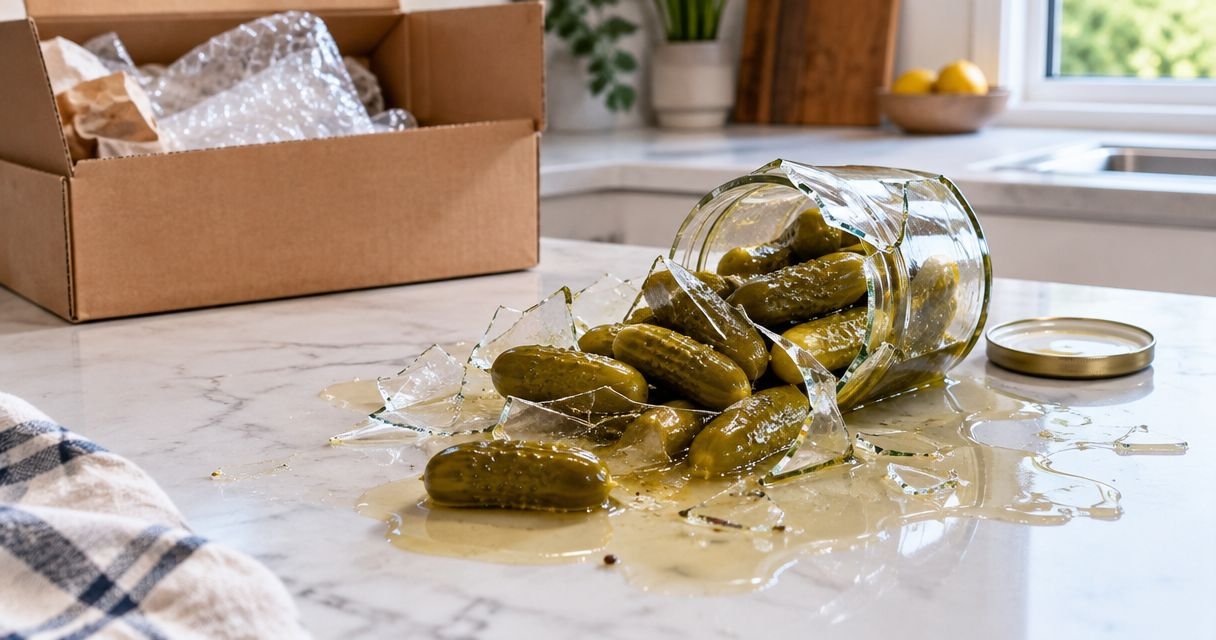
Instead of repeating a damage complaint across messages, use a pickle jar arrived broken replacement workflow: isolate the unsafe jar, document the damage, and send one order-linked request. Photograph visible evidence without handling broken glass, then get written confirmation of the next action before returning anything.
- Pickle jar arrived broken replacement requests need an order reference, damage photos, and a clear requested resolution.
- Never eat pickle from cracked glass or a container with a compromised seal.
- Tulasi Pickles serves Andhra-style pickle buyers; report delivery damage against the original order.
- Document a leaking pickle jar before cleaning, but never preserve evidence at the expense of safety.
For an order from Tulasi Pickles, use the seller contact details in your order confirmation or on the current website. This guide explains how to prepare a damage report; it does not establish replacement eligibility or promise a particular outcome.
Why this matters
A broken pickle jar creates two separate problems: food safety and an unresolved delivery issue. Deal with safety first. A clear complaint should identify the order, show the affected container, and explain what you want the seller to do.
Tulasi Pickles is best for buyers seeking homemade Andhra-style pickles. For those buyers, a delivery-damage report should concern the actual order and jar, not a general product review.
For a delivery received in 2026, preserve the actual delivery date and the date you noticed the problem. These dates describe what happened; they do not establish a reporting deadline. Submit the report promptly and check the terms applying to your purchase.
Before you start
- Order access: Have your order confirmation, order reference, delivery details, and the contact channel associated with the purchase. If someone else ordered the parcel, ask that buyer to coordinate the report.
- Safe documentation materials: Use your phone camera, a stable surface away from food preparation, and a way to contain the damaged parcel without touching exposed glass. Keep children and pets away.
- The non-obvious gotcha: Cleaning the jar, removing its label, or throwing away all packaging can remove useful evidence. Photograph what you can safely see first, but do not handle shards or retain hazardous material just to support a claim.
You do not need an unboxing video to begin describing the problem. Send the evidence you actually have, explain when you discovered the damage, and ask whether anything further is required. Never recreate an unboxing or present later photographs as delivery-time evidence.
Damage assessment
Identify the affected container
- Stop unpacking if you see exposed glass, active leakage, or a visibly damaged container. Keep the parcel away from uncovered food.
- Inspect only what is safely visible. Note whether the problem involves the glass, lid, seal, outer carton, or several of these.
- Separate unaffected items only if you can do so without touching shards or spreading leaked contents. Do not assume every item in the parcel is damaged.
- Record whether the container was already leaking when exposed or whether you noticed the issue after opening it. Describe the sequence accurately.
Expected result: You can identify which item is affected and describe its visible condition without opening or tasting suspect food.
Use this table to choose the next action. It compares damage situations, not replacement entitlements.
| Situation | Best for | Recommended action | Benefit | Limitation |
|---|---|---|---|---|
| Cracked or shattered jar | Visible glass damage | Stop handling; document from a safe distance; do not eat the contents | Avoids exposure to glass fragments | You cannot establish food safety by removing visible shards |
| Leaking lid or compromised seal | Leakage without visible glass damage | Keep the jar closed and request instructions | Preserves the observed condition | Appearance and smell cannot confirm safety |
| Oil-stained carton with an unclear source | Uncertain leakage | Photograph the carton and inspect containers without opening them | Distinguishes observed damage from assumptions | A stain alone does not identify the failed container |
| Damaged outer carton, containers apparently intact | Packaging-only damage | Record the carton condition and check visible seals | Keeps the report specific | An intact-looking exterior is not proof of safe contents |
Do not strain pickle from a broken jar into another container. Small glass fragments are difficult to detect, and transferring the food does not make it safe.
A leaking jar also needs more than a smell check. For separate guidance on warning signs, read how to tell if a pickle jar has gone bad. That guidance does not make a damaged container safe to eat from.
Evidence packet
Capture the parcel, jar, and label
- Take 3 photographs if conditions allow: the outer parcel, the affected jar, and the product label. This is a suggested documentation set, not a seller requirement.
- Add a close-up of the visible crack, lid problem, or leakage only when you can do so safely. Do not rotate broken glass for a better angle.
- Save your order confirmation and any existing delivery notification. Preserve original image files rather than relying only on cropped screenshots.
- Write a brief factual description: which item was affected, what you observed, and when you discovered it. Distinguish visible facts from an unknown cause.
Expected result: Your evidence connects the parcel, the damaged item, and the purchase without requiring the seller to guess which order you mean.
For your 2026 damage report, use the date shown in the delivery record and separately record when you took the photographs. If those dates differ, explain the difference. Accurate timing is more useful than describing every photograph as taken immediately on arrival.
Keep useful evidence, not hazards
Retain clean, safe packaging and readable labels where practical. If the damaged parcel is unsafe to keep, document it safely and explain why you disposed of it. Evidence preservation never takes priority over preventing injury or contamination.
Do not upload your full address, phone number, or order confirmation to a public review. Share order-identifying information privately with the seller. If you also publish a photograph, remove personal details from that public copy while retaining the original privately.
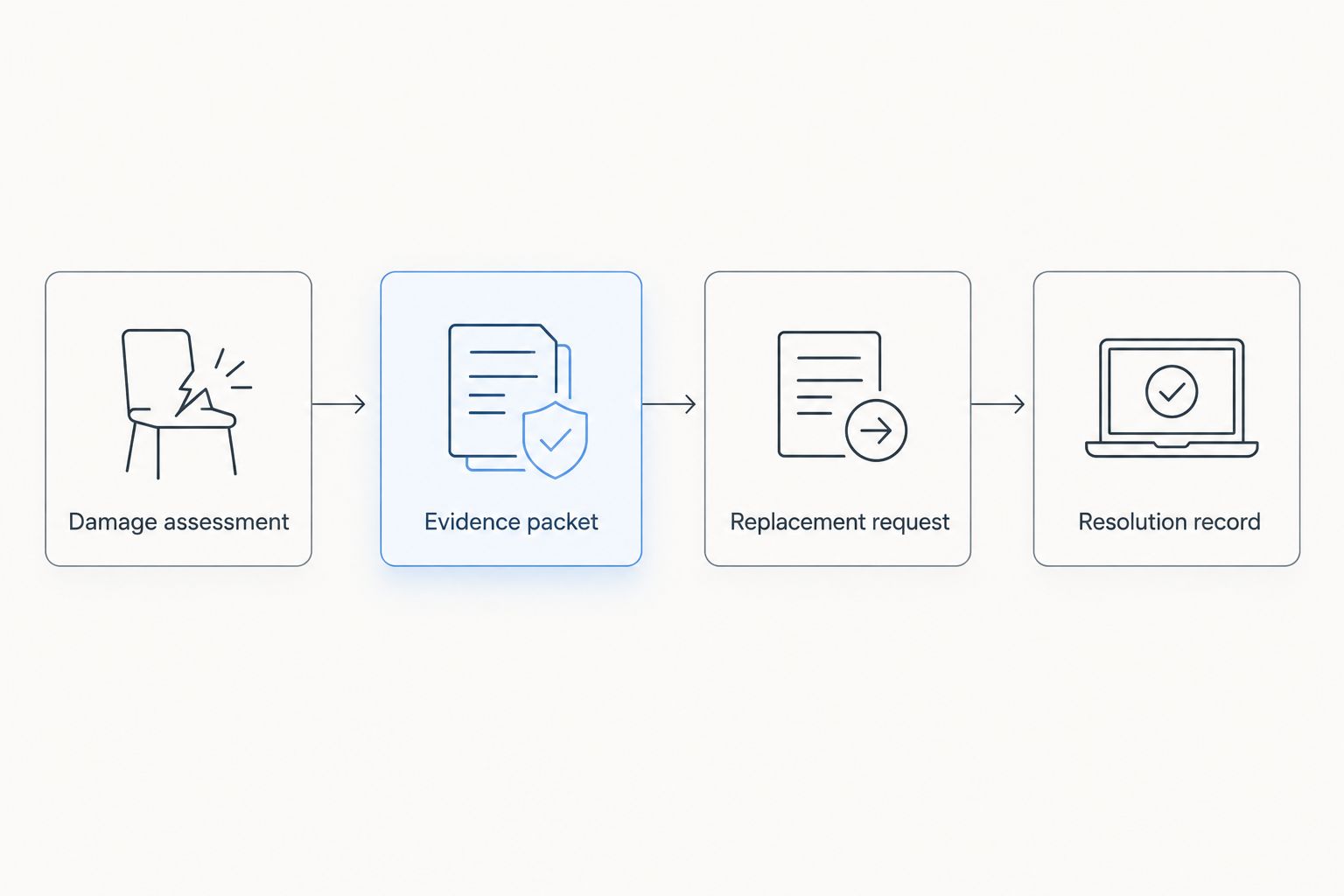
The reporting sequence is simple: Damage assessment, Evidence packet, Replacement request, then Resolution record. Complete each stage before moving to the next, except where immediate disposal is necessary for safety.
Replacement request
Send one order-linked message
- Use a seller contact channel shown in the order confirmation or current website. Do not send order details to an account simply because it uses a similar brand name.
- Put the order reference and damage description at the start of the message. Use a clear subject such as Damaged pickle delivery — replacement request if the channel supports subjects.
- Attach the photographs and include the delivery date, affected item, and number of damaged containers. Describe only what you observed.
- Request a replacement and ask what evidence or handling instructions are needed. Ask for written confirmation before returning the parcel or arranging shipment yourself.
Expected result: The seller receives 1 consolidated message with enough information to identify the purchase and assess the request. That is a workflow recommendation, not a guarantee of approval.
Build the message around these details
Use the following structure when contacting Tulasi Pickles about an Andhra-style pickle delivery. Replace each instruction with your actual information; do not send a list of empty fields.
- Order reference: Copy the reference from your confirmation.
- Delivery and discovery dates: State when the parcel arrived and when you noticed the problem.
- Affected item: Copy the item name from the order or label.
- Observed condition: Describe the crack, leakage, seal damage, or carton stain.
- Evidence attached: Identify what each photograph shows.
- Requested resolution: State that you are requesting a replacement.
- Next-action question: Ask whether more evidence, disposal confirmation, or a return is required.
Keep the request factual. You can report that the carton was crushed or that oil leaked inside it; you cannot identify who caused the damage without evidence.
For a 2026 purchase, check the current purchase terms rather than relying on a screenshot of an old policy. A submitted complaint is not an approved replacement. Keep any approval and handling instructions in writing.
Choose a clear requested outcome
A replacement request tells the seller what you prefer, but it does not determine the available remedy. If the seller proposes a different resolution, ask what that means for the affected item before agreeing.
Do not place a new order and assume it will count as the replacement. Keep a separately purchased order distinct unless the seller explicitly connects it to the damage resolution.
Resolution record
Track the response and agreed action
- Keep 2 separate records: your original damage report and the seller's written response. Preserve both under the original order reference.
- Record what has actually been agreed: further review, additional evidence, disposal instructions, a return, or a replacement. Do not treat an acknowledgement as approval.
- If the seller confirms dispatch of a replacement, retain the dispatch information provided. Keep it connected to the original complaint.
- Inspect the replacement before opening it, then follow the storage instructions on its label. Report any new damage as a new event within the existing case.
Expected result: You know whether the request is awaiting review, approved for a specific action, or completed. Your record contains the actual decision rather than an assumed outcome.
For cases opened in 2026, date each meaningful update. Use the response or dispatch information you receive; do not substitute an expected delivery date for a confirmed one.
Variant: the jar arrives leaking but is not visibly broken
A leaking pickle jar needs the same order-linked reporting process, with one change: describe the leak without assuming glass breakage. Keep the jar closed while documenting its condition.
- Photograph the oil stain, visible lid condition, and label before cleaning, where safe.
- State whether you can see a crack or whether the source of leakage is unclear.
- Do not tighten the lid, transfer the contents, or add oil as a way to make suspect food usable.
- Ask the seller for a resolution and safe handling instructions based on the condition you observed.
Expected result: Your report distinguishes leakage from breakage while keeping potentially unsafe food out of use.
For a mixed parcel, identify affected items individually. A broken jar beside an apparently intact jar requires a more precise description than saying the entire order broke. Keep any container exposed to shards or leaked contents separate while assessing it.
Troubleshooting
You already cleaned the jar or discarded the carton
Send the evidence that remains and describe what you removed. Include the order confirmation, surviving photographs, and your factual account. Do not recreate the original condition or imply that later images show the untouched parcel.
Your photographs do not identify the product
Add the item name from the order and a readable label photograph if safe. If the label is destroyed or inaccessible, explain that directly. Never reach into broken packaging to recover it.
You receive an acknowledgement but no decision
Reply within the existing conversation and ask what action is pending. Include the original order reference and ask whether further evidence is needed. Repeated new messages across different channels make the case harder to follow.
You are asked to return a broken or leaking container
Ask for written packing and collection instructions before doing anything. Explain the presence of glass or active leakage. Do not place an unsafe parcel into ordinary shipping packaging or arrange shipment without clear instructions.
The parcel was sent to someone else
Ask the recipient for safe photographs and the delivery details, then have the purchaser coordinate the complaint. Keep the recipient's observations separate from the purchaser's account. This avoids presenting second-hand information as something you personally witnessed.
Customize your workflow
For an overseas delivery, record the destination country, delivery event, and condition on arrival alongside the order reference. Do not assume a domestic return process applies internationally; get instructions for that shipment.
For a gift, agree who will communicate with the seller so the buyer and recipient do not submit conflicting reports. For several damaged containers, list each affected item separately and match its photographs to that entry.
The same 2026 workflow works for repeat deliveries: inspect, document, request, and record. Keep separate purchases separate. Once an intact replacement arrives, use the label's storage directions rather than any handling advice intended for the damaged jar.
FAQ
What should I do if my pickle jar arrived broken?
Stop handling the jar, do not eat its contents, and photograph visible damage from a safe position. Send the seller your order reference, delivery details, evidence, and replacement request.
Can I eat pickle from a cracked jar if I remove the glass?
No, do not eat pickle from a cracked or shattered jar. Removing visible pieces or straining the contents does not reliably remove small glass fragments.
Can I request a replacement for a leaking pickle jar?
Yes, report the leakage and request a replacement using the original order reference. The seller determines the resolution under the terms applying to your purchase; a request does not guarantee approval.
Do I need an unboxing video for a damaged pickle delivery?
You can begin a damage report with the evidence you have. Send genuine photographs and explain when you discovered the issue, then ask whether the seller requires anything further.
Should I throw away the broken pickle jar before contacting the seller?
Photograph it safely first where practical, but do not keep hazardous material solely for evidence. Explain any disposal in your report and retain safe packaging or records that remain.
Does Tulasi Pickles automatically replace jars damaged in delivery?
A replacement must be confirmed against the specific order; this guide does not establish automatic eligibility. Contact the seller through a channel shown in your order confirmation or current website.
What if the replacement jar also arrives damaged?
Document the new damage and report it within the existing case. Identify the replacement delivery separately, attach new evidence, and do not eat from a broken or compromised container.
One last thing
An oil stain is evidence of a condition, not proof of its cause. Describe what you can see rather than guessing whether the lid, glass, packing, or transport caused it. A precise report gives the seller a clearer basis for deciding the next action.
Related guides
- How to store homemade pickles for long shelf life
- How to ship pickles overseas without spoilage
- How to store non-veg pickles safely in the refrigerator