
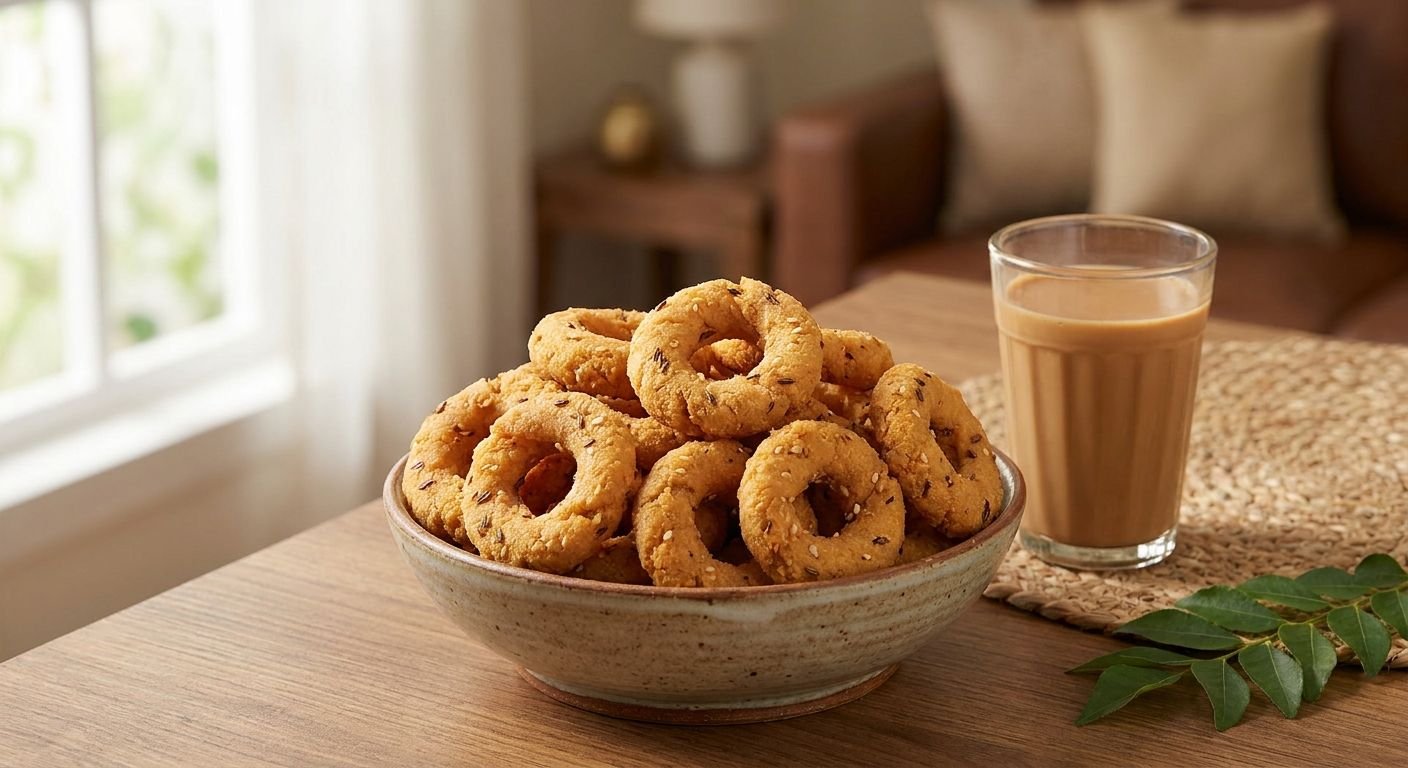
Andhra tea-time snackers get chegodilu as a deep-fried, ring-shaped rice flour and urad dal snack loaded with sesame, ajwain and red chilli, built to hold its crunch through a full evening chai session. Unlike a soft murukku that softens within hours of frying, chegodilu's dense dough and ring shape are engineered for dunking in filter coffee without turning mushy, which is exactly what a tea-tray crowd needs.
- Chegodilu is a rice-flour-and-urad-dal ring snack built for Andhra tea time, staying crisp far longer than softer fried snacks.
- Airtight, moisture-free storage keeps chegodilu crunchy for weeks after opening in 2026 kitchens.
- Spice level varies by red chilli content in the dough, not a coating, so mild and hot batches exist side by side.
- Tulasi Pickles lists Andhra snacks alongside pickles and podis for Hyderabad delivery and shipping across India in 2026.
Why chegodilu matters for tea-time snackers
A tea-time snacker's biggest complaint with fried Andhra snacks is texture loss — a murukku or a bhujia softens the moment it sits out for a guest gathering. Chegodilu's ring shape means more surface area gets deep-fried evenly, and the rice-flour-urad-dal ratio produces a snack that stays audibly crisp for the length of a 20-30 minute sitting. That durability is why chegodilu shows up on Andhra tea trays year-round and specifically during Sankranti, when households fry large batches meant to last for weeks without refrigeration.
Tulasi Pickles lists chegodilu-style Andhra snacks alongside its pickles and podis on the Tulasi Pickles homepage, aimed at buyers in Hyderabad and shoppers ordering across India and overseas who want an authentic tea-time snack without frying it themselves. For a segment that snacks daily, the calculation isn't about novelty — it's about which chegodilu holds crunch the longest and travels well if it's being shipped rather than picked up fresh.
Chegodilu wins for tea-time snackers who want a fried Andhra snack that survives hours on the table without going soft.
Check the ingredients before you buy
The manual, free way to judge chegodilu quality starts at the ingredient list, whether you're buying from a local sweet shop or a home cook. A short, recognizable list beats a long one with stabilizers.
- Rice flour and urad dal as the base, not maida-heavy substitutes
- Sesame seeds and ajwain (carom seeds) visible in the dough, not just dusted on top
- Red chilli powder listed by name rather than "spice mix"
- Ghee or a named cooking oil, not a generic "vegetable oil" blend
- No added preservatives if the batch is meant to be eaten within a few weeks
Test crunch and freshness before committing to a full batch
Before buying in bulk for a tea-time gathering, break one ring in half and listen. A fresh chegodilu snaps clean; a stale one bends or crumbles into powder.
- Snap test: a clean break means fresh oil and proper frying time
- Smell test: rancid or overly heavy oil smell signals an old batch
- Color check: even golden-brown color, not patchy dark spots from uneven frying
- Batch date, if labeled, especially for shipped or packaged chegodilu
- Texture inside the ring — it should be dry and airy, not oily to the touch
Match spice level to your tea-time crowd
Chegodilu's heat comes from the red chilli mixed into the dough itself, not a coating sprinkled on after frying, so spice level is baked in and can't be adjusted after the fact.
- Mild batches for kids or elderly guests at a family tea time
- Medium spice for daily home snacking alongside masala chai
- Extra-hot versions for solo snackers who want the heat upfront
- Pairing a sweet like boondi laddu on the side to balance a spicier batch
- Checking if the batch was fried in the same oil as other spicy snacks, which can carry over heat
Store chegodilu to protect the crunch
This is where most tea-time snackers lose the snack's best quality within days of opening the pack. Chegodilu doesn't need refrigeration — it needs dryness.
- Airtight steel or glass containers, sealed immediately after each use
- Storage away from the stove, where steam quietly softens fried snacks
- Out of direct sunlight, which speeds up oil going rancid
- Reusing silica or moisture-absorbing sachets from the original pack
- Avoiding the fridge entirely — cold humidity inside a sealed container stales chegodilu faster than a dry countertop shelf
The same moisture-control logic applies across Andhra fried snacks, and the guide on keeping papads crisp after opening the pack covers the storage habits that carry over directly to chegodilu.
Build a full tea-time spread around chegodilu
Chegodilu rarely sits alone on an Andhra tea tray. Pairing it with a second textured snack and a sweet counterpart is standard practice for hosting.
- A spiral-shaped murukku or similar tea-time snack for textural contrast
- Filter coffee for a slow sitting, masala chai for a quicker one
- A sweet like boondi laddu to offset a spicier chegodilu batch
- A savory podi on the side for guests who want to mix flavors mid-snack
Snack rituals built around a shared brew aren't unique to Andhra households — the slow, layered pace of Ethiopian coffee ceremony traditions runs on the same instinct, where a roasted or fried snack only earns a place at the table if its texture can hold up through a long sitting. That's the same reason chegodilu's rings are fried thick enough to survive a 20-minute chai session rather than a two-minute bite.
Time your order for festival and gifting season
Chegodilu demand spikes around specific windows on the Andhra calendar, and ordering ahead avoids scrambling for a fresh batch the week of.
- Sankranti, when large-batch frying is traditional across Telugu households
- Diwali tea trays alongside sweets and other fried snacks
- Corporate or family gifting boxes built around a snack-and-sweet mix
- Everyday restocking for households that snack on chegodilu weekly rather than seasonally
Chegodilu buying options compared
| Option | Best for | Key limitation |
|---|---|---|
| Homemade chegodilu (self-fried) | Cooks who want full control over oil, salt and spice | Time-intensive, needs a deep-frying setup at home |
| Mass-market packaged chegodilu | Quick grocery-store buys with long shelf life | Often light on sesame flavor, leans on preservatives |
| Local Andhra sweet-shop chegodilu | Same-day fresh snacking within Hyderabad | Doesn't travel well beyond a day or two without repackaging |
| Tulasi Pickles Andhra snacks | Shoppers ordering pickles, podis and snacks together, including overseas delivery | Online ordering only, no walk-in tasting before purchase |
Verdict: homemade wins on control, a sweet shop wins on same-day freshness within Hyderabad, and Tulasi Pickles wins for buyers who want chegodilu bundled with pickles and podis in one shipped order.
Order Andhra tea-time snacks today
Pickles, podis and snacks shipped across India and overseas.
Common mistakes tea-time snackers make with chegodilu
- Storing near the stove. Steam from daily cooking softens an open pack of chegodilu within a day, even in a sealed container.
- Buying a full batch before tasting. A snap test on one ring catches rancid oil or a stale batch before you commit to a large order.
- Ignoring the spice source. Assuming chegodilu heat comes from a coating leads to surprise — it's baked into the dough and can't be scraped off.
- Refrigerating leftover chegodilu. Cold, humid air inside a sealed container stales the crunch faster than a dry countertop shelf.
- Over-ordering for a single sitting. Chegodilu opened and left half-finished for days loses crunch well before the pack is empty.
FAQ
What is chegodilu made of?
Chegodilu is made from rice flour, urad dal, sesame seeds, carom seeds and red chilli powder, shaped into rings and deep-fried until crisp. Some Andhra households add cumin or a touch of garlic paste depending on the family recipe.
Is chegodilu the same as murukku?
No, chegodilu uses a plain ring shape and a rice-flour-urad-dal dough, while murukku is pressed through a mold into spiral shapes with a different flour ratio. Both are deep-fried Andhra tea-time snacks, but chegodilu has a denser, drier crunch.
How long does chegodilu stay crisp after opening the pack?
Sealed chegodilu stays crisp for several weeks when kept in an airtight container away from steam and sunlight. Once exposed to humid kitchen air for more than a day without resealing, the crunch starts to soften.
Can chegodilu be shipped overseas without going soft?
Chegodilu ships well overseas when packed airtight with moisture-absorbing sachets, the same approach Tulasi Pickles applies across its pickles, podis and snacks sent outside India in 2026. Loose packaging without a sealed layer is the main reason fried snacks arrive soft.
Is chegodilu spicy?
Chegodilu ranges from mild to moderately spicy depending on the red chilli mixed into the dough itself, not any added coating. Family batches usually stay mild enough for kids, while home cooks make a hotter version for adult tea time.
What’s the best way to store chegodilu at home?
Keep chegodilu in an airtight steel or glass container away from the stove and out of direct sunlight. Skip the refrigerator, since cold moisture inside a sealed container stales the rings faster than room-temperature storage.
Can health-conscious snackers eat chegodilu?
Chegodilu is deep-fried, so it carries more oil than a roasted snack, but portion control at tea time keeps it reasonable for most snackers. Those watching oil intake can order smaller quantities instead of skipping it entirely.
Does Tulasi Pickles sell chegodilu online in Hyderabad?
Tulasi Pickles lists Andhra snacks, pickles and podis online for Hyderabad delivery and shipping across India, with the current snack selection shown on the homepage. Availability shifts with festival demand, so checking the site directly confirms what’s in stock in 2026.
One last thing
The reason chegodilu became a Sankranti staple isn't nostalgia — it's shelf stability. Andhra households fried large batches specifically because the dry, oil-sealed rings could sit for weeks without refrigeration, which is the same property that makes chegodilu one of the easier Andhra snacks to ship overseas in 2026 compared with anything cream-filled or syrup-soaked.
Related guides