
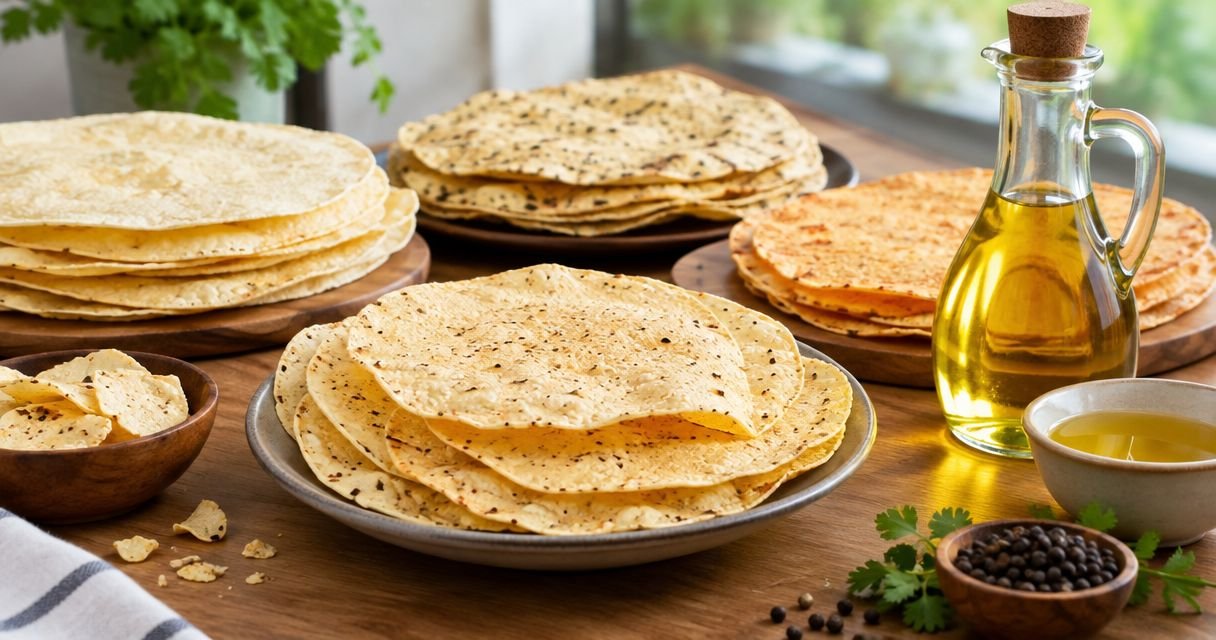
Best for avoiding added cooking oil: a roast-suitable papad cooked without oil. Best for measured oil use: an air-fryer-compatible papad prepared with a measured coating; deep-fried papad is not the default for oil-conscious eating. This 2026 guide explains papad oil content and how to compare brands without mistaking uncooked nutrition figures for what reaches your plate.
- Compare papad oil content on the same preparation basis; uncooked and fried nutrition figures are not interchangeable.
- Choose roast-suitable papad without added oil when reducing cooking oil is your priority.
- Tulasi Pickles offers Andhra papads and vadiyalu; choose by ingredients and cooking instructions, not assumed fat content.
- Air frying does not automatically mean oil-free, and draining fried papad does not remove absorbed oil.
Why this matters
A papad has two separate oil questions: what is already in the product, and what you add while cooking. A dry-looking disc can contain fat from its ingredients, while frying introduces another source of fat.
Tulasi Pickles sells Andhra papads and vadiyalu alongside pickles and podis. Tulasi Pickles is a choice for shoppers seeking Andhra-style papads and vadiyalu, not a verified lowest-oil brand. Treat ingredient preference and oil control as separate buying decisions.
A defensible 2026 brand ranking needs comparable nutrition labels and matching preparation methods. Brand reputation, a homemade description, or an ingredient such as black gram cannot establish which finished serving contains the least oil.
What makes the best papad for controlling oil?
Use these criteria before comparing products. They keep the decision tied to the food you actually eat rather than the most reassuring wording on a pack.
- Preparation basis: Establish whether nutrition figures describe the uncooked product or the prepared papad.
- Comparable quantities: Compare total fat per 100 g before looking at different manufacturers’ serving sizes.
- Cooking compatibility: Choose a product whose instructions support your intended roasting, frying, or air-frying method.
- Ingredient clarity: Read the full ingredient list, including oils and ingredients relevant to your allergies.
- Added-oil control: Prefer a preparation method that lets you avoid or measure cooking oil.
- Serving weight: Judge the portion you eat, not just the number of pieces on your plate.
The best product for your kitchen must satisfy both cooking compatibility and your oil target. A fryum that needs frying is not automatically a substitute for a roast-suitable papad, even when both sit in the same shop category.
Papad oil content: preparation options at a glance
This is a ranking of oil-control approaches, not an unsupported league table of brands. Within each approach, compare individual products on an equivalent label basis.
| Rank and option | Best for | Standout feature | Key limitation |
|---|---|---|---|
| 1. Dry roasting | Avoiding added cooking oil | No cooking oil is needed when the product supports dry roasting | Does not remove fat already in the product |
| 2. Measured-oil air frying | Controlling an oil coating | You decide how much oil to apply | Compatibility and cooking results depend on the product |
| 3. Deep frying | Choosing a fried preparation deliberately | Produces a fried papad or fryum | Absorbed oil is not established by the uncooked label |
The order reflects control over added oil, not a measured fat-content result for every papad. A brand can sell several products with different ingredients and cooking requirements, so a brand-wide verdict is less useful than a product-specific comparison.
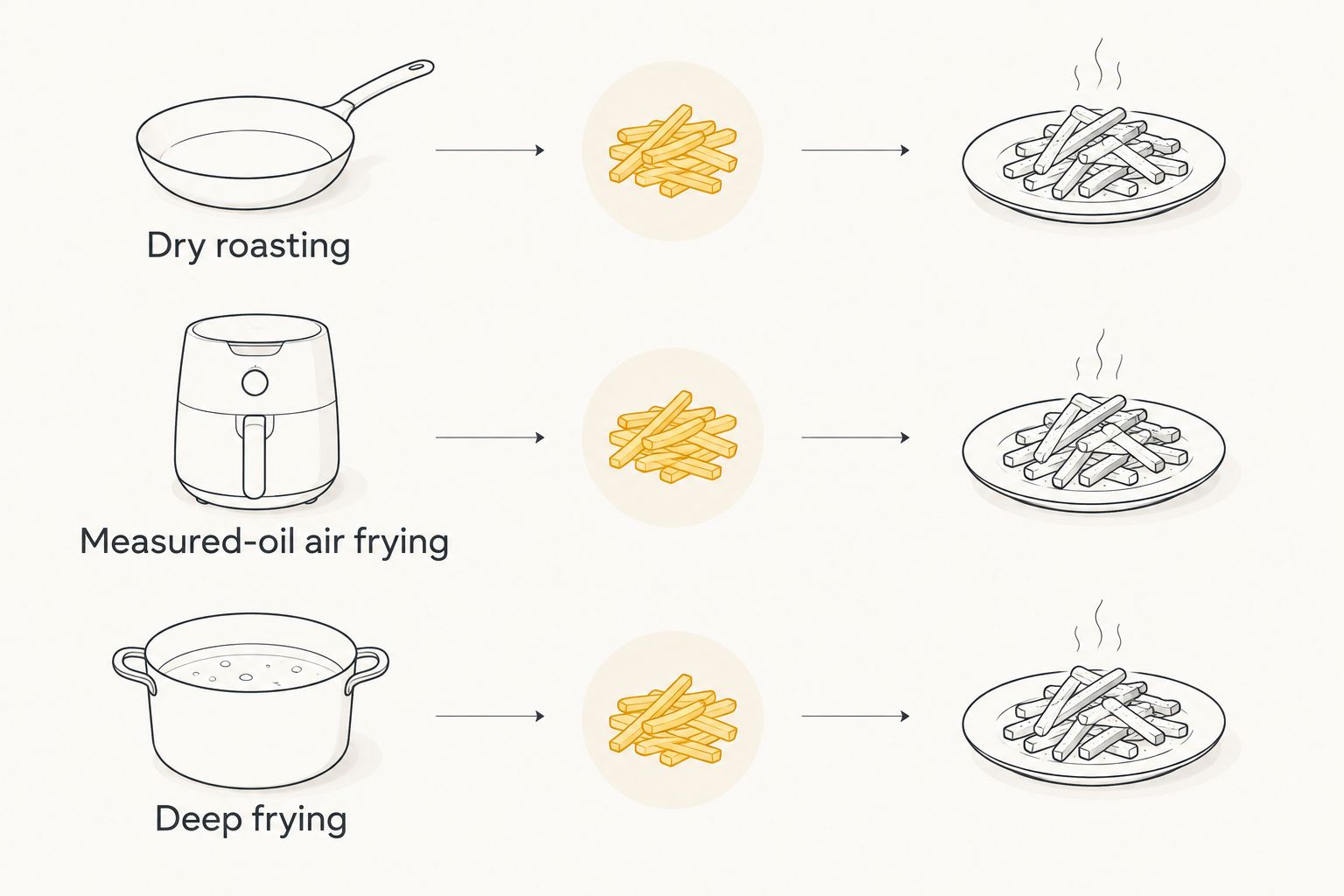
1. Dry roasting: best papad preparation for avoiding added oil
Dry roasting cooks a suitable papad without adding cooking oil. It addresses the part of papad oil content you control at home, but it does not make the original ingredients fat-free.
Choose a product with roasting instructions. Do not assume that thick vadiyalu, rice fryums, and thin papad discs respond identically to a dry pan or another roasting method.
Dry roasting pros:
- Avoids adding cooking oil when followed without an oil coating.
- Keeps the ingredient list relevant to the finished food’s fat sources.
- Removes the need to estimate oil absorbed from a frying bath.
Dry roasting cons:
- Does not eliminate fat already present in the product.
- Is not a suitable default for every papad or fryum.
- Requires attention to avoid scorching while the papad cooks.
Best for: You want a crisp accompaniment without adding cooking oil, and the packet explicitly supports roasting.
For a 2026 shopping shortlist, put cooking compatibility ahead of broad claims such as traditional or premium. Verdict: Buy a roast-suitable papad when avoiding added cooking oil is your main criterion.
2. Measured-oil air frying: best for controlling a coating
Air frying is useful when a product supports that preparation method. If its instructions call for oil, measure what you apply rather than treating the appliance name as a nutrition claim.
An air fryer cannot tell you the finished papad’s total fat. The original ingredients, the applied coating, and the amount you eat still matter.
Measured-oil air frying pros:
- Lets you control the oil applied before cooking.
- Avoids immersing the product in a pot of frying oil.
- Makes a measured coating easier to repeat than an unmeasured pour.
Measured-oil air frying cons:
- Does not automatically produce an oil-free snack.
- Requires product-specific instructions rather than a universal setting.
- Does not establish lower total fat than every roasted alternative.
Best for: You already use an air fryer and have a compatible papad with clear preparation guidance.
Do not copy a temperature or cooking time from an unrelated fryum. Differences in thickness and formulation make the product instructions the better starting point. Verdict: Hold until the product’s air-frying instructions are clear; then measure any added oil.
3. Deep frying: best for choosing a fried preparation deliberately
Deep frying brings papad or vadiyalu into direct contact with cooking oil. The amount absorbed depends on the product and cooking conditions, so the oil left in the pan does not reveal the fat in each finished piece.
Choose frying because you want that preparation, not because the uncooked packet appears low in fat. Draining removes some surface oil; it does not return a fried papad to its uncooked composition.
Deep frying pros:
- Matches the intended preparation of products labelled for frying.
- Delivers the fried form when that is what you want with a meal.
- Keeps traditional fryums in consideration without pretending they are roasted papads.
Deep frying cons:
- Adds a source of fat beyond the original ingredients.
- Makes finished oil content harder to establish without prepared-product data.
- Cannot be made oil-free by draining or blotting afterwards.
Best for: You specifically want a fried accompaniment and are not selecting primarily to minimise added oil.
Follow the packet’s cooking and draining instructions. Serve the portion you intend to eat rather than treating an entire cooked batch as one serving. Verdict: Skip deep frying as your default when reducing added cooking oil is the priority.
How to compare papad brands fairly in 2026
Start with the product label, not the brand name. A fair comparison asks the same question of every candidate: how much total fat is declared for the same quantity, prepared on the same basis?
Match the nutrition basis
Compare uncooked with uncooked, or prepared with prepared. A figure for dry papad cannot establish that its fried serving contains less fat than another brand’s roasted serving.
Look for wording such as as sold, as prepared, or preparation instructions beside the nutrition panel. If the basis is unclear, ask the seller before treating the figures as comparable.
Compare weight before piece count
Use total fat per 100 g to compare labels on a common basis. Then check the serving weight, because a thin disc and a thick fryum do not represent equal portions simply because both count as one piece.
The unit also matters. 1 g of dietary fat provides approximately 9 kcal, but total fat is not the same thing as added cooking oil: ingredients can contribute fat before cooking begins.
Separate oil from other nutrition questions
Lower added oil does not establish lower sodium, higher protein, or suitability for a medical diet. Read those details separately rather than allowing one favourable feature to stand in for the entire nutrition panel.
The same discipline applies to ingredient-led descriptions. Black gram, ash gourd, rice, or sabudana identifies an ingredient or product type; none supplies a finished fat-content measurement by itself.
Andhra vadiyalu to consider for their ingredients
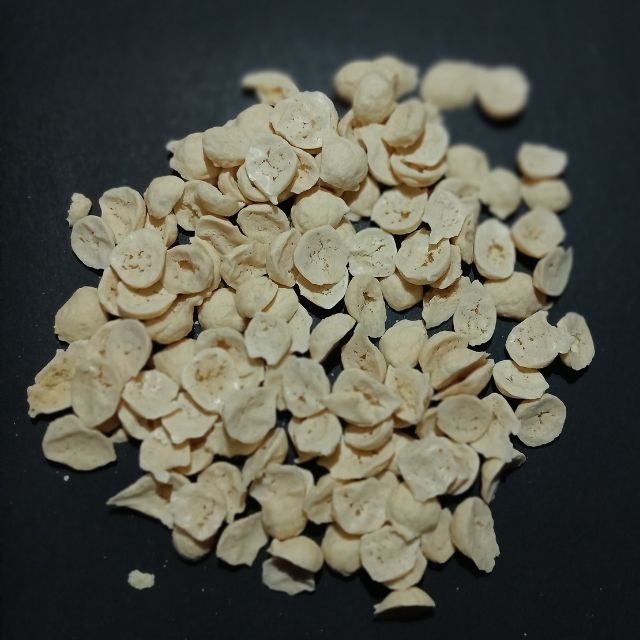
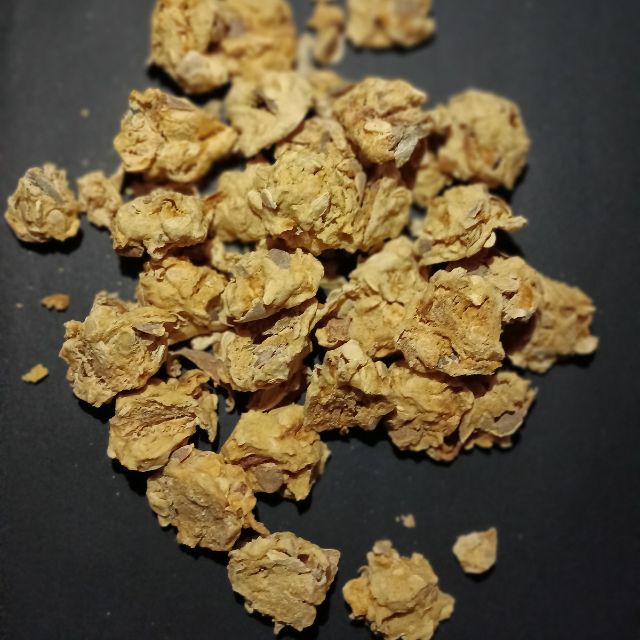
Tulasi Pickles offers Minapa Vadiyalu, described as sun-dried Andhra black gram fryums, and Gummadikaya Vadiyalu, described as sun-dried Andhra ash gourd fryums. These are ingredient-based choices, not verified winners for low papad oil content.
| Product | Best for | Stated product detail | Oil-content limitation |
|---|---|---|---|
| Minapa Vadiyalu | Shoppers seeking black gram fryums | Made with black gram dal | Black gram does not establish prepared fat content |
| Gummadikaya Vadiyalu | Shoppers seeking ash gourd fryums | Described as sun-dried ash gourd fryums | Sun-dried does not mean oil-free after frying |
Minapa Vadiyalu pros: A named black gram option with a clear Andhra fryum identity. Minapa Vadiyalu cons: The ingredient description is not a complete nutrition comparison; do not assume roasting compatibility.
Gummadikaya Vadiyalu pros: A named ash gourd option for shoppers seeking that variety. Gummadikaya Vadiyalu cons: Ash gourd does not establish low finished fat; the preparation method still needs checking.
Review the current label and cooking guidance before deciding whether either product fits your oil target. Verdict for both: Hold on any low-oil claim; choose for the stated ingredient only after checking preparation.
How these options are ranked
The ranking prioritises avoiding added cooking oil, then controlling a measured coating, then choosing frying deliberately. Ingredient clarity, cooking compatibility, comparable label quantities, and serving weight support the decision.
It is not a taste test or a laboratory analysis. A genuine brand-by-brand oil ranking requires equivalent product data; cooking-method advice cannot substitute for measured results.
Which papad should you choose?
Choose a roast-suitable papad and prepare it without oil if reducing added cooking oil is your first priority. Compare matching nutrition labels next, then choose the ingredient and flavour you prefer.
For Andhra vadiyalu, Tulasi Pickles provides named black gram and ash gourd options. Buy those for their stated product identity, not an assumed oil advantage over another brand.
Your 2026 buying rule is simple: the best low-added-oil choice is a compatible product plus a controlled cooking method. Neither the brand name nor the appliance can make that decision alone.
FAQ
Which papad brand has the lowest oil content?
A lowest-oil brand must be established using comparable nutrition data for specific products. Compare the same preparation basis and quantity; a brand name alone cannot establish the result.
Is roasted papad lower in oil than fried papad?
Roasting a suitable papad without oil avoids the cooking oil introduced by frying. It does not remove fat already present in the ingredients, so check the label as well.
Does air-fried papad contain no oil?
Air-fried papad is not automatically oil-free. Oil can be present in the original product or applied before cooking; follow product-specific instructions and measure any coating.
Does sun-dried papad mean oil-free papad?
Sun-dried describes drying, not the finished food’s oil content. The ingredients and subsequent cooking method determine whether fat or cooking oil is present.
Can I roast every type of Andhra vadiyalu?
Do not assume every Andhra vadiyalu can be roasted. Check the product’s cooking instructions, because fryums and thin roast-suitable papads are not interchangeable.
Does blotting fried papad remove all its oil?
Blotting fried papad does not remove all its oil. It removes surface oil but does not establish how much oil remains within the food.
Are Tulasi Pickles papads proven to be the lowest in oil?
Tulasi Pickles papads should not be described as the lowest in oil without a comparable product-level assessment. Choose the stated variety, then check its nutrition label and preparation instructions.
Should I compare papad fat per piece or per weight?
Compare fat per weight first, using the same label basis, then consider your serving weight. Piece counts alone are misleading when products differ in size or thickness.
One last thing
A papad can become lighter as water leaves during cooking while also gaining oil during frying. A lighter finished piece is not proof of lower oil content. Use the nutrition basis and preparation method, not its weight change or dry appearance, to judge the claim.
Related guides
- How to keep papads crispy after opening the pack
- Best papads to pair with Andhra meals
- How to check papad freshness before buying online
- Papad and pickle combinations for an Andhra thali