
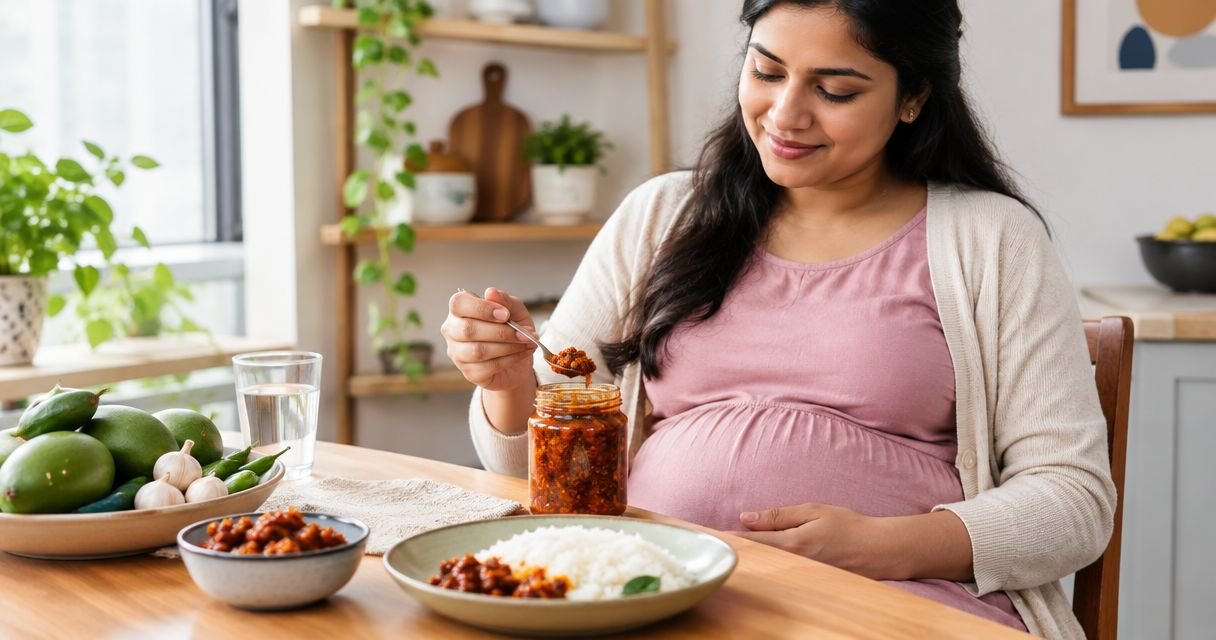
Pregnant women can eat non-veg Andhra pickle only when the meat or seafood is fully cooked, the preparation is hygienic, and storage follows reliable food-safety instructions. Skip any jar with an uncertain cooking or storage history: chilli, salt and oil do not prove it is safe. Your antenatal care team should guide any restrictions related to blood pressure, allergies or pregnancy complications.
- Can pregnant women eat non veg pickle? Only with verified cooking, hygienic handling and correct storage.
- Chicken pickle and seafood pickle need food-safety checks; chilli and oil do not guarantee preservation.
- Tulasi Pickles sells Andhra-style non-veg pickles, but a product listing is not pregnancy-specific safety clearance.
- Choose freshly cooked food instead when a pickle’s preparation, transport or refrigeration history is uncertain.
Why this matters
Pregnancy increases the importance of preventing foodborne illness. A pickle can taste normal and still contain harmful microorganisms, so tasting a spoonful is not a safety test.
This 2026 guide separates three questions: whether the ingredients suit pregnancy, whether the food has been handled safely, and whether the seasoning agrees with you. Start with the practical principles in how to store non-veg pickles safely in the refrigerator, then follow the instructions for your particular jar.
Can pregnant women eat non-veg Andhra pickle safely?
Yes, conditionally—not every non-veg pickle is a suitable pregnancy choice. Fully cooked meat or seafood can form part of a pregnancy diet, but pickling does not remove the need for safe cooking, handling and storage.
Use this comparison when deciding what to eat. These are ingredient-level checks, not approval of any individual recipe or brand.
| Pickle type | Potential advantage | Main limitation | Best suited to |
|---|---|---|---|
| Chicken pickle | A meat option without the fish-species mercury question | Poultry must be fully cooked and protected from contamination afterwards | People who eat chicken and can verify preparation and storage |
| Mutton pickle | Another cooked-meat option | Meat preparation and safe handling still matter; rich seasoning can aggravate reflux | People who tolerate mutton and have no relevant dietary restriction |
| Prawns pickle | Cooked prawns can fit a pregnancy diet | Shellfish allergy and thorough cooking need attention | People without shellfish allergy who can verify safe preparation |
| Fish pickle | Cooked fish can contribute to a varied diet | Species identification matters because mercury levels differ | People who can identify the fish and check pregnancy fish guidance |
None of these options wins on safety simply because it is boneless, homemade or strongly spiced. If you cannot answer the preparation and storage questions, choose a freshly cooked alternative.
What evidence supports this advice in 2026?
The relevant reference points are the US Food and Drug Administration’s Food Safety for Moms-to-Be and Advice About Eating Fish, alongside US Department of Agriculture Food Safety and Inspection Service guidance on cooking temperatures and leftovers. These address pregnancy, fish selection and general food handling—not the safety of a particular Andhra pickle recipe.
USDA guidance sets 74°C as the minimum internal temperature for poultry and for reheating leftovers. FDA guidance recommends keeping a refrigerator at 4°C or below. These are handling benchmarks, not proof that a stored pickle is safe or that it has a particular shelf life.
Check a non-veg pickle before eating it
Work through these checks before serving, rather than after opening a jar at the table. An attractive label or familiar family recipe does not answer them automatically.
- Check cooking. Confirm that the meat or seafood was thoroughly cooked. A description such as marinated, cured or pickled does not establish that cooking happened.
- Check ingredients. Identify the meat or fish, relevant allergens and any ingredients your antenatal care team has asked you to limit. For fish, confirm the species rather than relying on a broad name.
- Check storage. Read the unopened and after-opening instructions separately. Do not assume that every oil-based meat pickle can sit on a kitchen shelf.
- Check handling. Consider transport, time outside refrigeration where refrigeration is required, and whether clean utensils have been used. Unknown storage history is a reason to pass.
- Check symptoms. If the seasoning triggers heartburn or nausea, stop eating it. If illness follows, contact your maternity care team rather than assuming it is ordinary pregnancy discomfort.
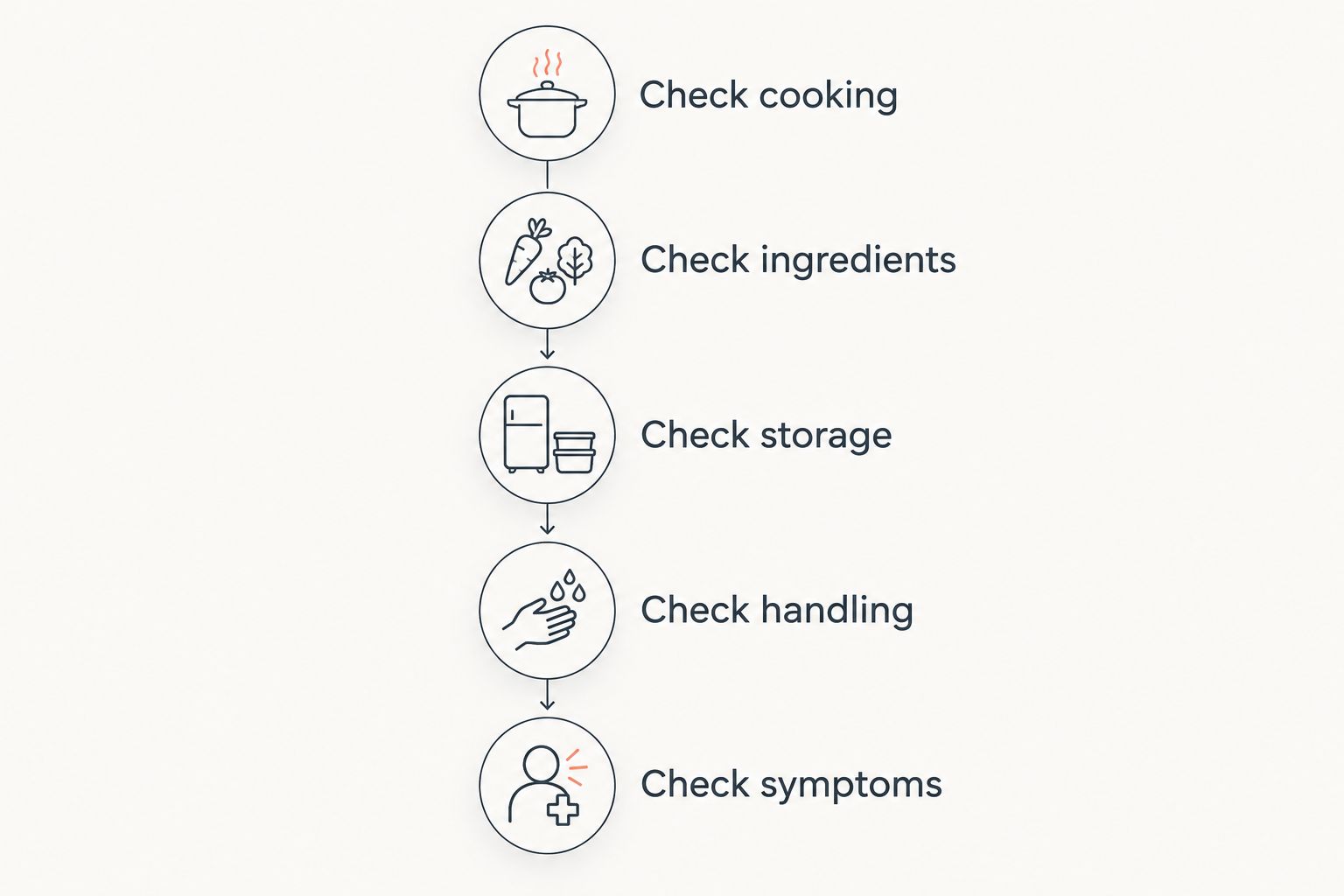
For your 2026 pregnancy food checklist, keep those questions separate. A jar can pass the ingredient check and fail the storage check; being comfortable with chicken does not make an unrefrigerated chicken preparation safe.
Why the answer varies between jars and people
The main differences are practical, not whether a recipe is called Andhra-style. Check these factors instead of treating all non-veg pickle as one food.
- Cooking method: Raw or undercooked meat and seafood are not appropriate pregnancy choices. Salt, sourness and spice do not substitute for cooking.
- Preservation process: A tested commercial shelf-stable process is different from simply covering cooked meat with oil. Do not infer shelf stability from appearance.
- Storage history: A refrigerator cannot reverse earlier unsafe handling. Transport and time on the dining table matter alongside storage at home.
- Seafood identity and allergies: Fish species affects mercury advice, while prawns introduce shellfish-allergy considerations. Cooking does not remove a food allergy.
- Seasoning and your care plan: Salt intake matters when your clinician recommends a restriction, while chilli and rich meals can worsen reflux. The right choice depends on your symptoms and medical advice.
How should you store and serve it during pregnancy?
Follow the maker’s instructions, and do not invent a shelf life from a general pickle recipe. If a product requires refrigeration, keep it refrigerated; if the label is unclear about meat or seafood storage, ask before eating it.
For foods that require refrigeration, FDA guidance uses a 2-hour limit at room temperature, reduced to 1 hour when the temperature exceeds 32°C. These limits concern perishable foods; they do not establish whether a particular sealed product has undergone a validated shelf-stable process.
Use a clean, dry spoon to remove a portion, then close the container promptly. Keep serving utensils away from raw meat, and do not return food from your plate to the jar.
If you reheat a suitable portion as leftovers, USDA’s benchmark is 74°C throughout. Reheating is not a rescue method for spoiled food or a jar with an unsafe storage history, because some hazards are not removed by ordinary reheating.
Discard a jar with mould, leakage, a bulging lid or other signs of spoilage. The absence of those signs does not prove safety, and scraping mould off the top is not an acceptable fix.
Does spicy pickle harm the baby?
Spicy food is not generally prohibited during pregnancy, and eating chilli is not the same issue as eating contaminated meat. The common practical concern is discomfort: spicy or rich food can aggravate heartburn in susceptible people.
If pickle brings on burning, nausea or regurgitation, leave it out rather than pushing through the symptoms. Eating it alongside a meal can change how it feels, but rice, curd or extra oil does not neutralise a food-safety hazard.
For a 2026 meal plan, treat pickle as an optional accompaniment—not a required response to cravings. You do not need to eat it to satisfy a nutritional requirement, and a craving does not identify a deficiency.
How much non-veg pickle can you eat while pregnant?
There is no universal pregnancy-safe serving size for non-veg pickle. Recipes differ in salt, oil and meat content, so a fixed spoonful recommendation would give false precision.
If a safely prepared product fits your care plan, keep it a small accompaniment rather than your main protein source. Do not assume that removing visible oil also removes salt or makes the food suitable for a sodium-restricted diet.
Ask your obstetrician or dietitian for individual advice if you have high blood pressure, kidney disease, significant reflux or another condition affecting food choices. Restricting salt is not a substitute for assessment or treatment of pregnancy-related hypertension.
Is homemade non-veg pickle safer than shop-bought pickle?
Homemade non-veg pickle is not automatically safer than shop-bought pickle. Knowing the cook can make preparation easier to discuss, but familiarity does not validate preservation or storage.
A commercially prepared jar is not automatically suitable either. Clear ingredients, traceable production details and specific storage instructions are useful checks; claims such as traditional or homemade do not replace them.
Ask whoever prepared the pickle how it was cooked and how it should be stored. If the answers remain uncertain, choose freshly cooked meat or seafood instead.
What should you check when buying from Tulasi Pickles?
Tulasi Pickles is best suited to shoppers seeking Andhra-style pickles, not pregnancy-specific dietary advice. The brand sells homemade veg and non-veg pickles, but that description does not certify a recipe for pregnancy.
Before eating a Tulasi Pickles non-veg pickle, confirm its complete ingredients, cooking information and storage instructions. Use the contact page for product-specific questions, then discuss any medical restrictions with your antenatal care team.
The benefit is access to the Andhra-style food you want; the limitation is that a catalogue description cannot establish individual medical suitability. No product recommendation in this 2026 guide replaces those checks.
When should you get medical advice after eating pickle?
Contact your maternity care team promptly if you develop fever, persistent vomiting, diarrhoea, significant abdominal pain or difficulty keeping fluids down after eating a questionable food. Mention the suspected food and when you ate it.
Seek urgent help for trouble breathing, facial or throat swelling, fainting or other signs of a severe allergic reaction. Follow your maternity unit’s urgent advice for reduced fetal movement or other pregnancy warning symptoms, regardless of what you last ate.
If you ate a small amount and feel well, do not assume harm has occurred. Stop eating any suspect jar, retain its label or batch details, and ask your clinician whether further action is needed.
FAQ
Can I eat chicken pickle in my first trimester?
Chicken pickle is not automatically prohibited in the first trimester, but it needs fully cooked chicken, hygienic preparation and correct storage. Avoid it when those conditions are uncertain or your antenatal care team has advised otherwise.
Can pregnant women eat prawns pickle?
Pregnant women can eat properly cooked prawns when they have no shellfish allergy, but a prawns pickle also needs safe preparation and storage. Pickling does not make undercooked or poorly handled prawns safe.
Is fish pickle safe during pregnancy?
Fish pickle needs both food-safety checks and a species check during pregnancy. Choose fish consistent with pregnancy mercury guidance, and avoid a product if you cannot identify the fish or verify safe handling.
Does oil on top mean non-veg pickle is preserved safely?
Oil on top does not prove that non-veg pickle is safely preserved. Shelf stability depends on the preparation and preservation process, not just an oil layer.
Can I heat an old pickle to make it safe?
Heating does not reliably make an old or improperly stored pickle safe. Discard food with an uncertain storage history or signs of spoilage rather than trying to rescue it.
Is vegetarian pickle always a safer pregnancy choice?
Vegetarian pickle removes the meat or seafood ingredient, but it is not automatically safe. Hygiene, storage, allergens, salt and your individual dietary restrictions still matter.
Can I eat non-veg pickle every day while pregnant?
Daily non-veg pickle is not a pregnancy nutrition requirement, and no universal daily portion suits every recipe or person. Consider its salt content, your overall diet and any advice from your antenatal care team.
What if I already ate pickle from a questionable jar?
Stop eating the questionable pickle and contact your maternity care team for advice, especially if symptoms develop. Feeling well after eating it does not require assuming harm, but fever, vomiting or diarrhoea needs prompt attention during pregnancy.
One last thing
A normal smell cannot clear a jar for pregnancy. The most useful question is not whether it tastes fresh, but whether you can establish how it was cooked, preserved and stored.
If that chain is unclear, skip the pickle and have a freshly cooked meal. You can satisfy a craving another time without gambling on an uncertain jar.
Related guides
- How to tell if a pickle jar has gone bad
- How to choose the right spice level in pickles
- How much sodium is in a typical serving of Andhra pickle?