
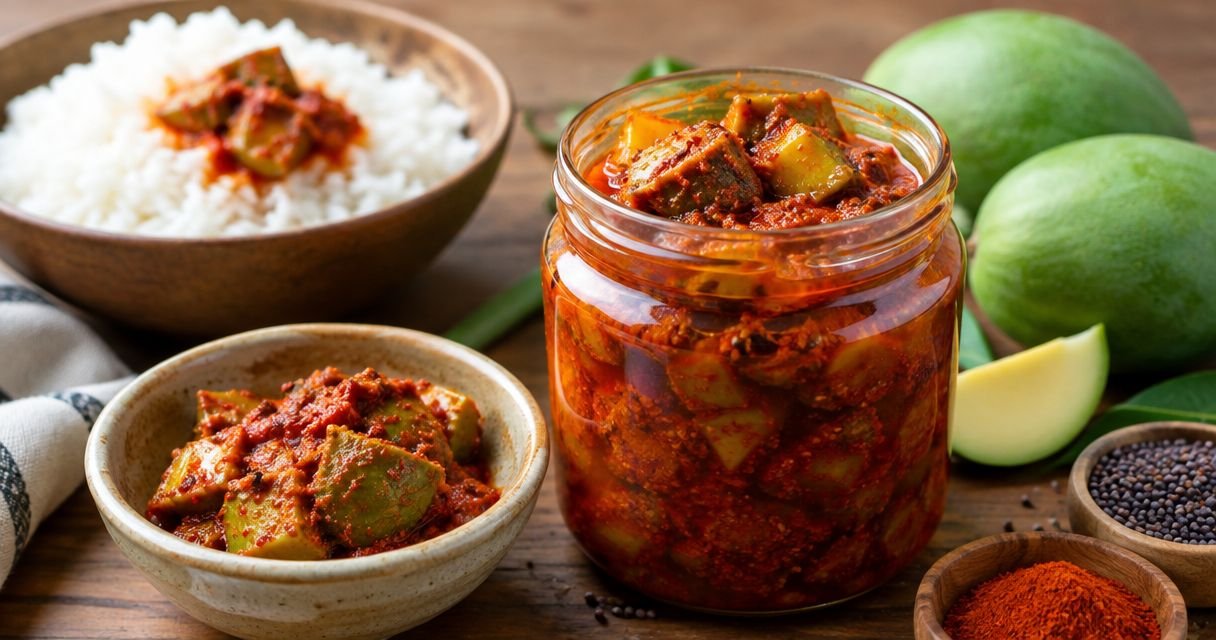
There is no single reliable sodium figure for a typical serving of Andhra pickle: the amount depends on the recipe and the weight you eat. Calculate sodium content in pickle from the jar’s nutrition information and your actual portion, rather than treating a spoonful as a standard serving. Count sodium from the rest of the meal too; the pickle calculation covers only the pickle.
- Sodium content in pickle depends on its recipe and portion weight; a spoonful is not a standard measurement.
- WHO recommends adults consume less than 2,000 mg sodium daily, equivalent to less than 5 g salt.
- Tulasi Pickles offers Andhra-style pickles; choose for flavour, not an assumed low-sodium benefit.
- Compare nutrition labels on the same weight basis, then calculate the sodium in your actual serving.
Why this matters
A small accompaniment still belongs in your daily sodium total. If you eat pickle alongside salted dal, curry, papad or podi, count each food rather than judging the meal by the size of the pickle portion alone.
For adult meal planning in 2026, the World Health Organization recommends less than 2,000 mg of sodium a day, equivalent to less than 5 g of salt. This is a population-level recommendation, not a personalised allowance for someone with kidney disease or another condition requiring dietary treatment.
Heat is a separate consideration. The guide to choosing the right spice level in pickles addresses chilli preference; a mild pickle still needs its own sodium check.
How much sodium is in a typical serving of Andhra pickle?
The defensible answer is the sodium declared for the product, adjusted to the grams you actually serve. Mango, lemon, gongura and meat pickles do not share a universal sodium value. Neither does every recipe within one variety.
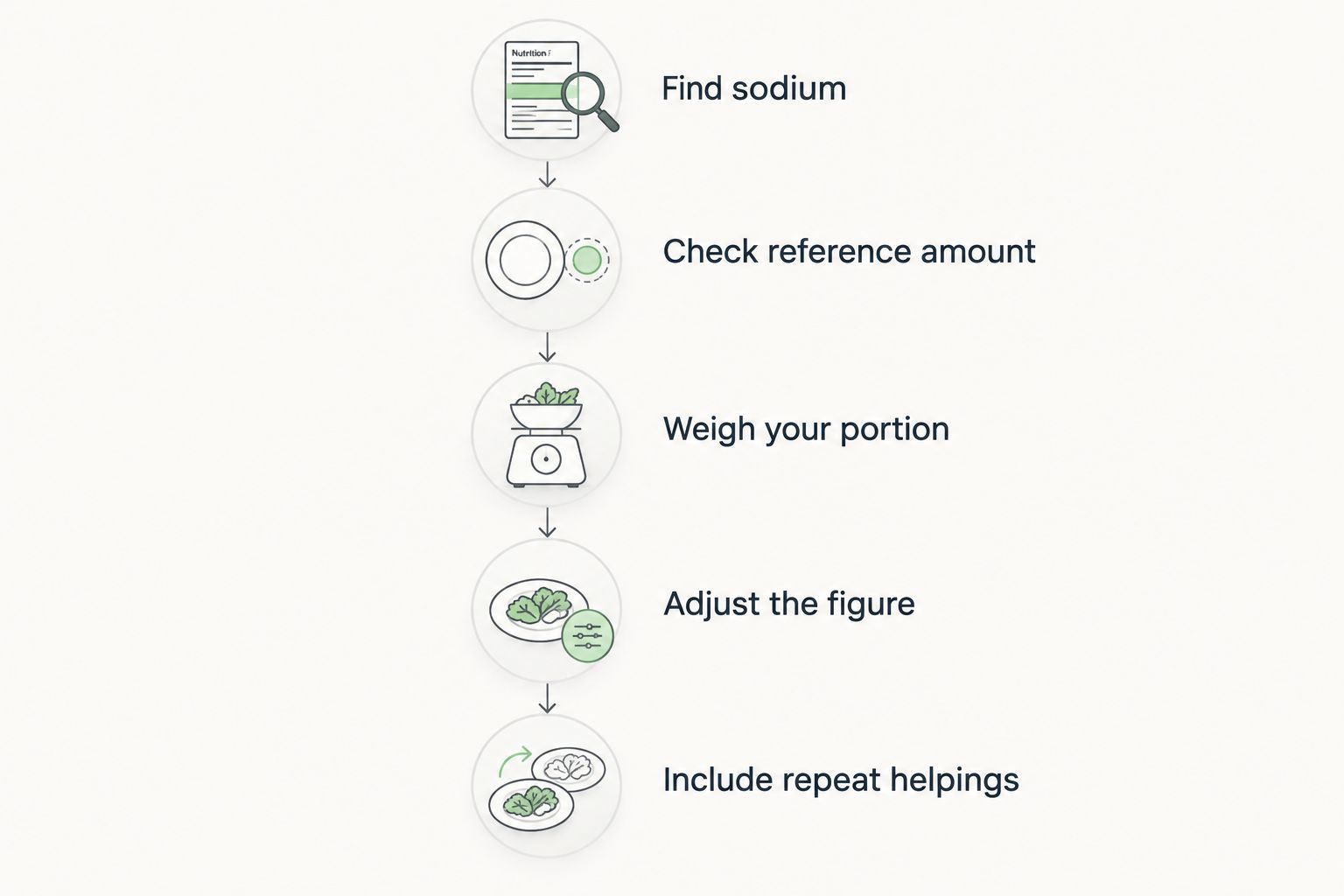
Use this sequence when checking a jar in 2026:
- Find the sodium entry. Look for sodium in milligrams, not just salt in the ingredients list.
- Check the reference amount. Establish whether the value applies per serving or per 100 g.
- Weigh your portion. Put a dish on a kitchen scale, reset it to zero, and add the pickle you intend to eat.
- Adjust the declared figure. Multiply the sodium value by your portion weight divided by the label’s reference weight.
- Include repeat helpings. Add every portion eaten during the meal or day.
If the label gives sodium per 100 g, the calculation is:
Serving sodium in mg = label sodium per 100 g × serving weight in g ÷ 100.
If the label gives sodium per serving, use the declared serving weight instead of 100 as the denominator. Keep the units consistent: the portion weights must both be in grams.
A spoon measures volume, not weight. A spoonful containing a large mango piece and one containing mostly masala need not weigh the same, so neither establishes a universal serving size.
Read the label before comparing jars
Nutrition panels can present the same information on different bases. Compare equal weights first; compare your intended portions second. A smaller declared serving can show a smaller sodium number without the food containing less sodium by weight.
| Information available | Best for | What it tells you | Limitation |
|---|---|---|---|
| Sodium per 100 g | Comparing jars | Sodium concentration on an equal-weight basis | You must calculate your portion separately |
| Sodium per serving | Tracking a matching portion | Sodium in the manufacturer’s declared serving | Your helping must match the stated weight |
| Salt by weight | Converting a salt declaration | An approximate sodium equivalent | Salt and sodium use different numerical values |
| Ingredients list only | Identifying sodium sources | Whether salt and other named ingredients are present | It does not establish sodium per serving |
Check that you are reading sodium rather than a percentage reference value. A percentage and a milligram amount are not interchangeable, and reference values can differ between labelling systems.
For a 2026 purchase, use information for the current pack or formulation. Do not transfer a figure from another flavour, an older jar or a generic cucumber-pickle entry in a food-tracking app.
Salt and sodium are not the same measurement
Salt is sodium chloride; sodium is one component of it. About 1 g of salt corresponds to 400 mg of sodium, using the standard nutrition conversion.
To estimate sodium from a declared salt weight, divide the salt weight by 2.5, then convert grams to milligrams if needed. To estimate salt equivalent from sodium, multiply sodium by 2.5 while keeping the units consistent.
This conversion helps interpret a salt declaration. It does not reveal the sodium concentration of a jar that supplies neither a salt quantity nor a sodium quantity.
The WHO adult recommendation of less than 5 g salt covers the whole day’s diet, not just salt added at the table. Do not add a sodium figure and its salt equivalent together: they describe the same contribution in different ways.
Why sodium content in pickle varies
The recipe and portion determine the result. These factors explain why a single category-wide estimate is a poor substitute for product-specific nutrition information:
- Added salt: Different recipes use different quantities of salt. The variety name does not establish the amount.
- Other sodium-containing ingredients: Ingredients beyond table salt can contribute sodium. Read the nutrition panel for the total rather than counting salt alone.
- Finished recipe proportions: The relative amounts of fruit, vegetables, meat, oil and seasoning affect the composition of the finished food.
- Portion weight: Eating a larger quantity of the same pickle increases the sodium eaten in direct proportion.
- What reaches your plate: A chunky pickle is not perfectly uniform. A portion dominated by pieces differs in composition from one dominated by its surrounding masala.
A nutrition declaration represents the product as labelled; it is not a separate analysis of every piece. For everyday tracking, use the declared value and a representative portion rather than trying to assign individual sodium values to oil, masala and chunks.
Does less oil mean less sodium?
Less oil does not establish less sodium. Oil content and sodium content are different measurements, so draining visible oil does not provide a calculable sodium reduction.
A low-oil pickle can still contain salt. An oil-rich pickle also needs a nutrition check; its appearance cannot tell you how much sodium your serving contributes.
Likewise, adding plain rice or unsalted curd spreads the pickle through a larger dish but does not remove the sodium already added. If you eat the entire mixture, you still consume the sodium from the original pickle portion.
Use oil-related choices for the purpose they actually address. For sodium tracking in 2026, rely on the declared sodium amount and the quantity eaten, not the amount of oil you leave behind.
Is mild or homemade Andhra pickle lower in sodium?
Neither mild nor homemade proves lower sodium. Mild describes chilli heat, while homemade describes how the food is positioned or prepared; neither supplies a sodium measurement.
The advantage of choosing a mild pickle is a better match for your heat preference. Its limitation is that comfortable heat can make it easier to overlook portion size; measure what you eat rather than using taste as a sodium test.
Tulasi Pickles sells homemade Andhra-style vegetarian and non-vegetarian pickles. Tulasi Pickles suits buyers seeking Andhra-style pickle flavours; a sodium-restricted choice requires product-specific nutrition information.
Ask for the sodium amount, the reference weight and the information for the exact variety you intend to buy. A general description of the range cannot answer a nutrition question about one jar.
Can you eat Andhra pickle while limiting sodium?
A sodium-limited diet requires a measured portion that fits your prescribed or agreed daily target. There is no universal safe spoonful for everyone, particularly when medical conditions or medicines affect dietary advice.
If you have high blood pressure, kidney disease or heart failure, ask your clinician or dietitian how pickle fits your eating plan. The general WHO adult recommendation is useful context, but it does not replace an individual treatment plan.
Make the meal easier to assess:
- Serve the intended pickle portion on your plate instead of repeatedly dipping into the jar.
- Count the salt used in accompanying dishes, not just packaged foods.
- Check papad, podi and other condiments separately rather than assuming small sides do not count.
- Keep the same weighing method when tracking meals over time.
- If you cannot establish the sodium content, do not record an invented figure as a measured intake.
For home preparation, do not arbitrarily reduce salt in a shelf-stable pickle recipe. Salt can contribute to preservation; recipe changes need a tested preservation method and suitable storage instructions, not just a taste adjustment.
What should you check before buying?
A useful nutrition enquiry is specific: ask for sodium per 100 g, the declared serving weight and whether the information applies to the exact variety and current formulation. That gives you a basis for comparison without guessing from descriptions such as traditional or authentic.
For Tulasi Pickles or any other seller, keep flavour selection separate from nutrition verification. A product can match your preferred Andhra taste without meeting a particular sodium target.
Save the current label information when planning meals in 2026. If you change varieties or receive a pack with different nutrition information, update your calculation rather than carrying over the previous entry.
FAQ
How much sodium is in one spoon of Andhra pickle?
A spoonful has no fixed sodium value because its weight and the pickle’s recipe vary. Weigh the portion and calculate its sodium from the product’s nutrition declaration.
What is the daily sodium limit for adults?
WHO recommends adults consume less than 2,000 mg sodium daily, equivalent to less than 5 g salt. This covers the entire diet; a clinician can set a different individual target.
How do I calculate sodium when the pickle label lists it per 100 g?
Multiply the sodium declared per 100 g by your portion weight in grams, then divide by 100. The result is the sodium in milligrams for that portion.
Is mango pickle lower in sodium than chicken pickle?
The variety names do not establish which pickle contains less sodium. Compare the exact products on the same weight basis, then account for the portion you eat.
Does removing oil from pickle remove the salt?
Removing visible oil does not establish a measured reduction in sodium. Do not subtract sodium from your food record unless reliable nutrition information supports that adjustment.
Can I use cucumber-pickle nutrition figures for Andhra pickle?
Cucumber-pickle figures do not establish the sodium content of an Andhra pickle recipe. Use nutrition information for the exact product rather than a different pickle category.
Does homemade pickle mean low sodium?
Homemade does not mean low sodium. The recipe’s sodium content and your portion weight determine how much sodium you consume.
Should I rinse pickle to make it suitable for a sodium-restricted diet?
Rinsing does not produce a predictable sodium value for an Andhra pickle serving. Use a product with suitable nutrition information and follow your clinician’s dietary advice instead of assuming rinsing makes it suitable.
One last thing
A smaller number on the front of a comparison is not necessarily a lower-sodium food. Check the serving weight beside it before deciding: changing the stated portion changes the per-serving number without changing the recipe.
Your most useful habit is simple: compare jars per equal weight, then track the amount on your own plate. That answers the question a generic “typical serving” cannot.
Related guides
- Pickles and blood-pressure dietary needs
- Can diabetics eat Andhra pickles safely?
- Pairing pickles with curd rice and khichdi
- Storing homemade pickles