
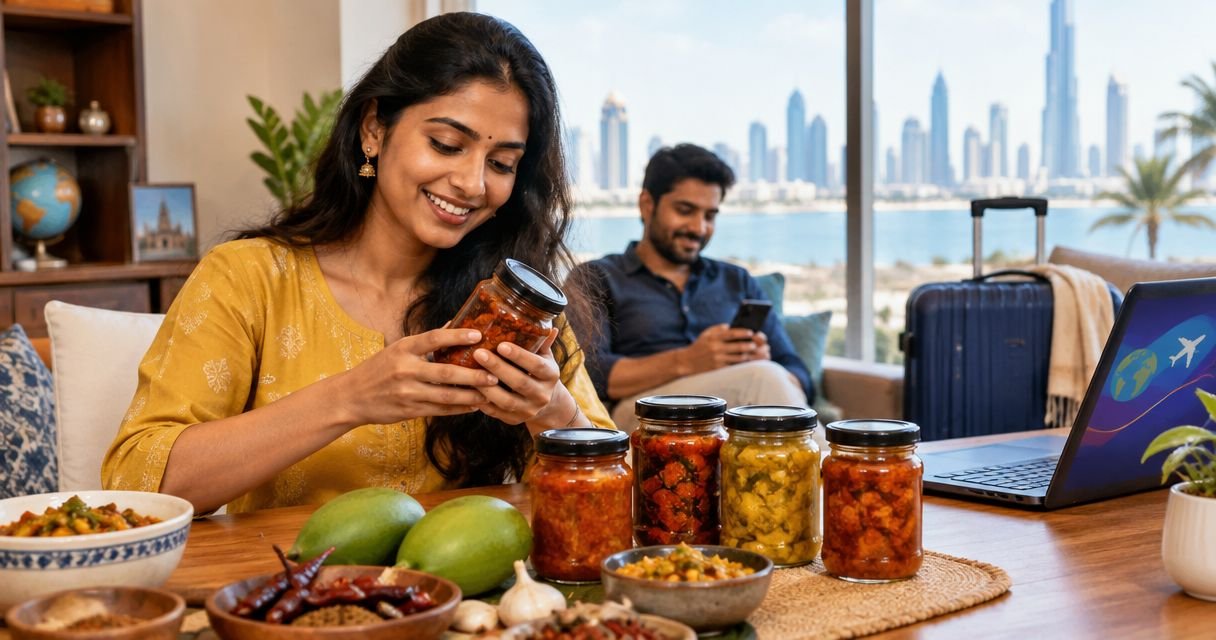
Telugu diaspora pickle shopping is choosing Andhra-style pickles for meals abroad with the aim of keeping familiar flavours in your Gulf kitchen. This 2026 guide explains how to select veg and non-veg varieties, verify destination rules, arrange transport and follow the right storage instructions after delivery.
- Andhra pickles for Telugu diaspora in Gulf households need destination checks before checkout, especially for meat and seafood.
- Tulasi Pickles suits buyers seeking homemade Andhra-style pickles from a Hyderabad-based seller that ships overseas.
- Choose veg pickles, non-veg pickles and podis around your actual meals, not just nostalgic favourites.
- Confirm product-specific storage and transport requirements; oil, chilli and a sealed jar do not prove shelf stability.
Why Andhra pickles matter for Telugu diaspora households
An Andhra pickle gives you a familiar accompaniment without preparing a separate chutney for every meal. For your Gulf household, the buying decision also includes a border crossing, a delivery address and the storage space you actually have. Taste is only one part of the order.
Tulasi Pickles is best for Telugu diaspora shoppers seeking homemade Andhra-style pickles from a Hyderabad-based seller that ships overseas. Tulasi Pickles sells veg and non-veg pickles, podis, papads, dry fruits and sweets/snacks. Confirm the exact destination and product requirements before treating overseas shipping as confirmation for your particular Gulf order.
A vegetarian household, a shared bachelor kitchen and a family that eats seafood need different selections. They also need different ingredient checks. Buying the pickle you remember from home is useful only when everyone eating it understands what is inside and how to store it.
For a 2026 order, separate the decision into three questions: what you want to eat, what you can bring into the destination, and what you can safely keep after arrival. Answer them in that order before increasing the quantity.
How to choose and receive Andhra pickles in the Gulf
1. Match your selection to everyday meals
Start with a handwritten meal list or a note on your phone. Record the dishes you actually prepare: rice and dal, curd rice, idli, dosa or a weekend meat meal. This is more useful than choosing a large assortment without a plan for using it.
Traditional categories give you a starting point. Avakaya is an Andhra mango pickle associated with mustard; gongura provides a sour leafy flavour. Lemon pickle offers another tangy accompaniment, while podi is a spice powder rather than a pickle. These descriptions identify styles, not the ingredients of any particular seller's recipe.
Best for everyday eating: choose by meal pairing first, then by variety. If you share a kitchen, agree on vegetarian boundaries and spice preferences before placing the order. A favourite flavour is not automatically a household favourite.
- List your regular rice meals and breakfast dishes.
- Choose a familiar pickle style for your most frequent meal.
- Treat a new flavour as a separate taste experiment.
- Ask each household member about spice tolerance and dietary restrictions.
2. Check the destination before choosing the transport route
Find the destination customs authority's current food-import guidance yourself. Then check the carrier's rules for the exact contents and packaging. A country admitting a food category does not mean every courier accepts it, and airline baggage acceptance does not settle customs admissibility.
The UAE, Saudi Arabia, Qatar, Oman, Kuwait and Bahrain are separate destinations. Do not use a successful delivery to one as proof for another. Meat and seafood products need particular attention to the destination's rules and any documentation requirements.
For 2026 travel, use current guidance rather than a remembered airport experience. Ask specifically about processed meat or seafood when buying non-veg pickle; calling the contents only a condiment leaves out information the authority or carrier needs.
Best for avoiding an unsuitable order: verify the exact food category before paying or packing. Keep the answer attached to your order notes so the person arranging transport uses the same information.
- Check the destination country rather than searching only for Gulf rules.
- Identify whether the pickle contains vegetables, meat or seafood.
- Distinguish passenger baggage from a courier shipment.
- Ask about declarations, documentation and personal-use conditions.
- Save the relevant guidance and carrier response.
3. Compare sellers using product information, not slogans
The manual approach is straightforward: read each product description and build a short comparison sheet. Record ingredients, allergens, storage directions and the information supplied for overseas transport. Homemade describes a preparation style; it does not replace these checks.
Tulasi Pickles offers a direct-seller route for homemade Andhra-style veg and non-veg pickles and accompanying foods. That makes the brand relevant to this audience, but the specific Gulf address, chosen food and transport requirements still need confirmation. A seller's overseas-shipping statement is not a product-specific customs clearance.
For your 2026 shortlist, ask the same questions of every seller. That exposes differences without relying on unsupported claims about freshness, preservatives or how long an unopened jar lasts. Reject a storage answer that treats every recipe as identical.
Best for comparing sellers: prefer clear, product-specific answers over broad assurances. A missing instruction is a reason to ask, not a reason to assume the familiar family recipe applies.
- Request the full ingredient and allergen information.
- Ask for unopened and after-opening storage instructions separately.
- Confirm the exact delivery destination with the seller.
- Ask how the chosen product must be transported.
- Retain the product label and written answers.
4. Choose quantities around your storage space
Count the people who will eat each variety, not just the people living at the address. A mixed household can finish a shared vegetarian pickle while using a separate non-veg jar less often. Opening everything together creates more storage decisions without improving the meal.
Ask what pack sizes the seller offers, then choose according to your cupboard or refrigerator space and expected use. Do not assign yourself a universal monthly quantity. Consumption depends on serving habits, meal frequency and who shares the jar.
Keep categories distinct in your plan: veg pickles, non-veg pickles and dry accompaniments. Podis and papads give you different meal options, but their labels still determine storage. A dry appearance does not make every food suitable for any cupboard.
Best for smaller households: order a manageable selection and open it gradually. Keep the product's stated date limits in view even while unopened; opening fewer jars does not extend those limits.
- Identify who will eat each variety.
- Check space before selecting the pack size.
- Keep vegetarian and non-vegetarian items clearly identifiable.
- Open the next jar when you need it, within its labelled date limits.
- Include podi or papad only when it fits your usual meals.
5. Agree on packaging and handover arrangements
If you arrange transport yourself, make a packaging checklist before handing over the food. Keep the original ingredient and storage information readable. Ask the carrier about container requirements, leak containment and any restrictions affecting the route.
For seller-arranged transport, request the same details rather than assuming packaging solves every problem. The guide to shipping pickles overseas covers a relevant part of the planning process. Product instructions and carrier requirements remain the deciding checks.
Plan who receives the parcel and where it goes immediately afterward. A refrigerated product needs a temperature-controlled plan, not merely an extra layer around the jar. Do not improvise a cold-chain method from a photograph of someone else's shipment.
Best for a clear handover: give the sender, carrier and recipient the same product information. Record the receiving plan alongside the address, especially when someone else is accepting the parcel.
- Keep original labels attached and readable.
- Ask how the carrier requires containers to be secured.
- Confirm protection against leakage and breakage.
- Establish temperature control when the product requires it.
- Arrange a recipient who can follow the storage instructions.
Compare buying and transport options
Choose the route that gives you the clearest answers for your exact product. No route removes the need to check ingredients and storage. The table compares practical benefits and limitations rather than assuming one method suits every Gulf household.
| Option | Best for | Practical benefit | Key limitation |
|---|---|---|---|
| Direct order from Tulasi Pickles | Buyers seeking homemade Andhra-style foods from a Hyderabad-based seller | Veg and non-veg pickles and several accompaniment categories are part of the brand's offering | Exact Gulf destination and product-specific transport conditions need confirmation |
| Purchase from a Gulf grocery shop | Buyers who want to inspect a label before taking food home | You can examine the pack and instructions in person | A label and familiar flavour name still need careful checking |
| Bring food in passenger baggage | Travellers able to verify airline and customs requirements | You control the handover and can retain the original labels | Baggage acceptance does not establish customs admissibility or safe storage |
| Arrange shipment independently | Buyers prepared to coordinate sender, carrier and recipient | You can document each stage yourself | You take responsibility for confirming acceptance, packing and temperature requirements |
Direct ordering fits buyers who want seller coordination; independent transport fits buyers prepared to manage each handover. Compare the actual answers you receive, not assumptions about which route is easier.
6. Inspect the parcel and follow the storage label
Prepare the storage location before arrival. At handover, check the container, closure and label before serving anything. Leakage, broken packaging, mould or unexpected swelling requires action; do not taste a questionable product to decide whether it is safe.
For products requiring refrigeration, USDA consumer guidance uses a refrigerator temperature of 4°C or below. The same guidance limits unrefrigerated holding of perishable foods to 2 hours, shortened to 1 hour when the surrounding temperature is above approximately 32°C. These are general perishable-food handling limits, not validated transit allowances or shelf-life claims for every pickle.
Apply the product's instructions and any stricter handling requirements. A sealed, oil-covered pickle is not automatically shelf-stable. If a chilled product arrives without a clear temperature history, do not treat normal appearance as evidence of safe transport.
Best for shared kitchens: preserve the label and make the storage rule visible. Use a clean, dry serving utensil, close the container after use and avoid returning served food to the jar.
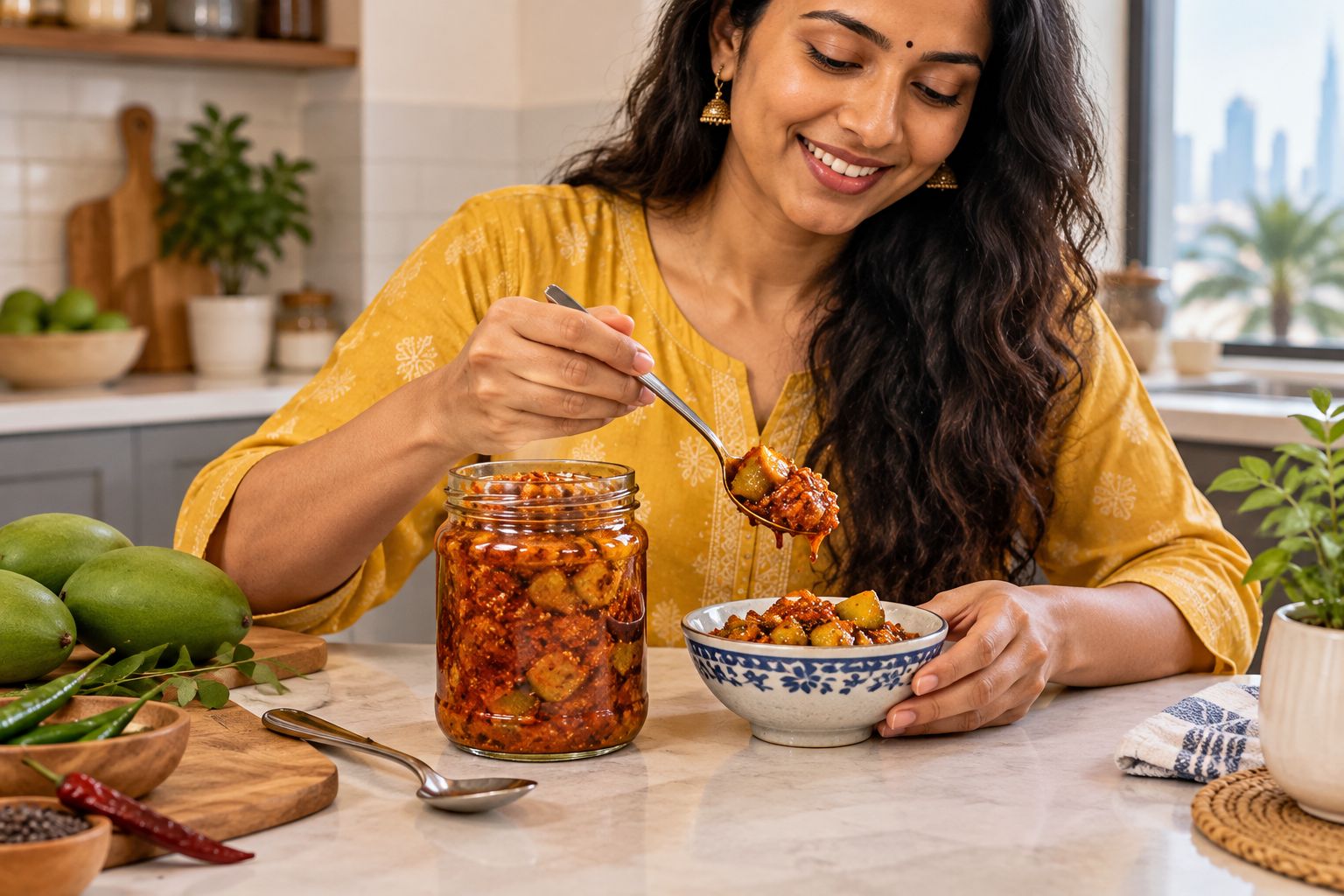
Keep these checks separate from flavour preferences. Sourness and chilli intensity belong to taste selection; container damage and uncertain refrigeration belong to food handling.
- Inspect the closure and container before opening.
- Read the product-specific storage instructions.
- Refrigerate products that require refrigeration promptly.
- Use a clean, dry spoon and a separate serving bowl.
- Contact the seller about damaged or questionable food without tasting it.
7. Record what works before ordering again
Use a simple phone note after the first order. Record the flavour, ingredient suitability, storage instructions and whether the chosen quantity matched your meals. Keep transport observations separate so you do not confuse a favourite pickle with a reliable shipping route.
For a repeat order in 2026, check destination and carrier requirements again. Your own previous delivery is useful experience, but it is not current permission for a different product, quantity or route. Reconfirm the details whenever the order changes.
Best for repeat buying: reorder from evidence about your own household's use. A jar that everyone enjoys and can store correctly is a better repeat choice than a larger assortment chosen only for variety.
- Record which meals suited each pickle.
- Note ingredients that affected household suitability.
- Track whether the quantity matched actual consumption.
- Keep delivery and handling observations separately.
- Recheck requirements before changing the product or transport route.
Common mistakes Telugu diaspora buyers make
- Treating the Gulf as one destination. Confirm the particular country's requirements; another household's delivery elsewhere does not answer your import question.
- Calling non-veg pickle only a condiment. Tell the carrier and relevant authority that the food contains meat or seafood so the answer covers the actual contents.
- Buying for nostalgia rather than meals. Choose around what you cook abroad, and separate shared household favourites from personal preferences.
- Assuming oil means shelf-stable. Follow the label. Appearance, chilli and oil do not establish safe transport or after-opening storage.
- Discarding labels after decanting. Keep ingredients, date information and instructions with the food, particularly in shared kitchens or when giving a jar to someone else.
FAQ
What’s the best way to buy Andhra pickles for a Telugu household in the Gulf?
Choose a seller or local retailer that provides clear ingredients, storage instructions and destination-specific answers. Tulasi Pickles is a relevant direct-seller option for homemade Andhra-style pickles, but confirm your exact Gulf address and chosen food before ordering.
Can I take Andhra pickles on a flight to the Gulf?
Check both the airline’s baggage requirements and the destination’s food-import rules before packing pickles. Describe the contents accurately, especially when the pickle contains meat or seafood; airline acceptance alone does not settle customs admissibility.
Are vegetarian pickles automatically allowed into every Gulf country?
No; vegetarian ingredients do not replace a destination-specific import check. Verify the current rules for the country, transport route and food you intend to carry or ship.
Can chicken or seafood pickle be shipped to my Gulf address?
Confirm the exact product with the destination authority, carrier and seller before arranging shipment. Meat and seafood require checks that a general overseas-shipping statement does not answer.
Do Andhra pickles need refrigeration after delivery?
Follow the storage instructions for the exact product. Do not infer shelf stability from oil, chilli, a sealed jar or the word homemade; ask the seller when instructions are unclear.
Which Andhra pickle should I choose for everyday rice meals?
Choose a familiar flavour that suits your household’s rice meals and spice tolerance. Avakaya, gongura and lemon are distinct traditional styles, so check the actual recipe and ingredients before deciding.
What should I do if my pickle parcel arrives leaking or swollen?
Do not taste food from a leaking, damaged or unexpectedly swollen container. Photograph the packaging, retain the label and contact the seller; follow the product’s handling instructions rather than judging safety by smell alone.
One last thing
Keep a photograph of the label before you open the jar. It preserves the ingredient and storage information when a label becomes oily, a container is decanted or someone else takes over the kitchen. Familiar flavour is the reason to buy; usable instructions are what let the whole household handle it correctly.
Related guides
- How to store homemade pickles
- Carrying pickles on flights: what to check
- Choosing the right pickle spice level