
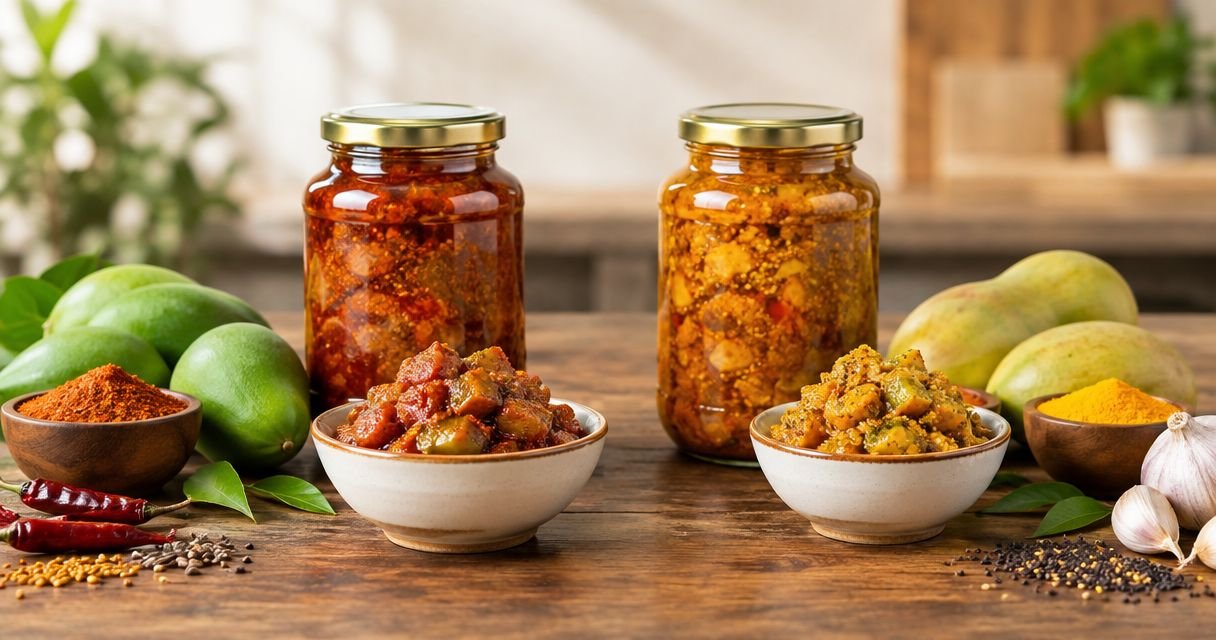
Choose Tulasi Pickles if you want a Hyderabad-based seller of homemade Andhra-style pickles, podis, papads and sweets with shipping across India and overseas; choose Amaravathi Pickles if you have already tried its pickle and prefer that exact recipe. This 2026 comparison separates a first-order decision from a repeat purchase: a known product range helps you shortlist, but your own taste preference should decide the reorder.
- Tulasi Pickles vs Amaravathi Pickles: choose a confirmed Andhra-style range for discovery, or a personally preferred recipe for reorders.
- Tulasi Pickles suits buyers shopping for homemade Andhra-style pickles alongside podis, papads, sweets and snacks.
- Amaravathi Pickles is the stronger personal choice if you already prefer its exact pickle recipe.
- Compare ingredients, storage instructions and destination delivery before choosing either seller.
For a first order, start with Tulasi Pickles and choose the food category you actually need. Do not treat a longer shopping list as proof that every pickle will suit your palate.
Why this matters
A pickle comparison has two separate questions: which seller fits your shopping needs, and which recipe you enjoy eating. Combining them produces an unhelpful overall winner. A seller can suit an overseas shopping basket without winning your personal taste test.
For your 2026 purchase, establish the non-negotiables first: vegetarian or non-vegetarian, ingredients you avoid, the destination, and storage after opening. Then compare flavour. That order prevents a tempting description from distracting you from whether the product fits your household.
Choose by product fit first and personal taste second—not by the brand name alone. A recommendation for an Andhra-style food basket is not a verdict on every jar inside it.
At a glance
| Dimension | Tulasi Pickles | Amaravathi Pickles |
|---|---|---|
| Best for | Buyers seeking a homemade Andhra-style food range from Hyderabad | Repeat buyers who already prefer its exact recipe |
| Standout feature | Pickles alongside podis, papads, dry fruits, sweets and snacks | Your established preference, if you have tried the product |
| Taste decision | Andhra-style positioning; choose the individual recipe | Choose the exact recipe you personally prefer |
| Dietary fit | Veg and non-veg pickle categories; inspect individual ingredients | Inspect the individual product and its ingredients |
| Ingredient confidence | Read the product declaration before ordering | Read the product declaration before ordering |
| Delivery fit | Shipping across India and overseas; confirm destination details | Confirm the destination and product before ordering |
| Storage decision | Follow the purchased product's instructions | Follow the purchased product's instructions |
| Pricing decision | Review the current basket and delivery terms | Review the current basket and delivery terms |
The table distinguishes a stated range from a personal purchasing condition. It does not turn familiarity into a universal quality score. Use the rows as a checklist for the exact products you are considering, rather than awarding points for names or descriptions.
A broad Andhra-style basket suits a first-time category buyer
The Hyderabad brand sells homemade vegetarian and non-vegetarian pickles, podis, papads, dry fruits, and sweets or snacks. That range gives you a clear starting point when your shopping need extends beyond a single pickle. You can consider accompaniments for meals as well as snacks without changing the purpose of your search.
Best for: a buyer discovering Andhra-style foods across several categories. The benefit is category breadth. The limitation is that breadth does not establish the heat, texture or ingredient profile of any individual recipe.
A repeat buyer has a different task. If an Amaravathi Pickles product already gives you the flavour you want, keep that exact product on your shortlist. Switching sellers simply to try a wider range is a discovery decision, not evidence that your usual pickle needs replacing.
Write down what you are buying for: everyday rice meals, breakfast accompaniments, or a gift recipient's preferences. A clear purpose makes the comparison smaller and more useful.
Category breadth helps mixed shopping, not recipe comparisons
Pickles, podis and papads serve different roles in a meal. A pickle is an accompaniment; a podi is a spice powder used with foods such as rice, idli or dosa; a papad adds a separate crisp component when prepared. Those differences explain why a broad food basket can be useful without proving that one seller makes a better pickle.
For a mixed household, separate the shopping list by person and meal. Keep vegetarian choices distinct from non-vegetarian choices, and identify who will eat each item. Do not assume that everyone who likes an Andhra-style meal wants the same chilli intensity.
The practical advantage of breadth is choice across categories. Its drawback is decision overload: adding more foods does not help if you have not identified your preferred pickle. Begin with the central meal accompaniment, then consider extras that have a clear use.
A familiar Amaravathi recipe remains a reasonable choice for someone shopping for that recipe alone. A broader basket is unnecessary when your goal is simply to reorder a favourite.
Amaravathi Pickles wins when you already prefer its exact recipe
Best for: a repeat buyer with a personally established flavour preference. If you have eaten an Amaravathi Pickles product and prefer it with your usual meals, that experience is a genuine reason to choose it again. No generic brand comparison should overrule a preference you have already established.
The limitation is scope. Liking one recipe does not establish that you will like every product from the same seller, and it does not settle delivery or ingredient questions. Repeat the product that worked, not an assumption about the whole range.
For a first-time buyer in 2026, compare flavour descriptions through specific questions:
- Heat: Does the description address chilli intensity?
- Sourness: What ingredient contributes the tang?
- Texture: Is the description clear about the form of the main ingredient?
- Meal pairing: Will you eat it with plain rice, curd rice or another familiar meal?
These are purchasing questions, not a substitute for tasting. If spice tolerance is your main concern, read the guide to choosing the right spice level in pickles before building a large basket.
Neither brand name settles dietary suitability
Vegetarian and non-vegetarian are useful starting categories, but they do not answer every dietary question. A vegetarian product is not automatically suitable for every allergy, ingredient restriction or personal eating pattern. Assess the recipe rather than relying on the category heading.
The stated range includes both veg and non-veg pickles. That helps a mixed household begin its search, but you still need the declaration for the individual product. Apply the same standard to an Amaravathi product you are considering.
The verdict is a tie on the decision rule: ingredients outrank category labels. Check the main ingredient, the oil, and any ingredients you avoid. For a serious food allergy, also seek clear information about relevant handling and cross-contact before purchasing.
Do not infer suitability from words such as homemade, traditional or authentic. Those words describe positioning or preparation style; they are not an allergen declaration or a medical recommendation.
Neither homemade positioning nor familiarity replaces ingredient checks
Homemade positioning tells you how a seller describes its food. It does not, by itself, establish that a product contains no preservatives, uses a particular oil, or follows a recipe your family recognises. Treat each of those as a separate product-level question.
For either seller, look for clear ingredient information and instructions that match the product you intend to purchase. An attractive photograph cannot tell you everything in the recipe, and a familiar name cannot answer questions about a different product.
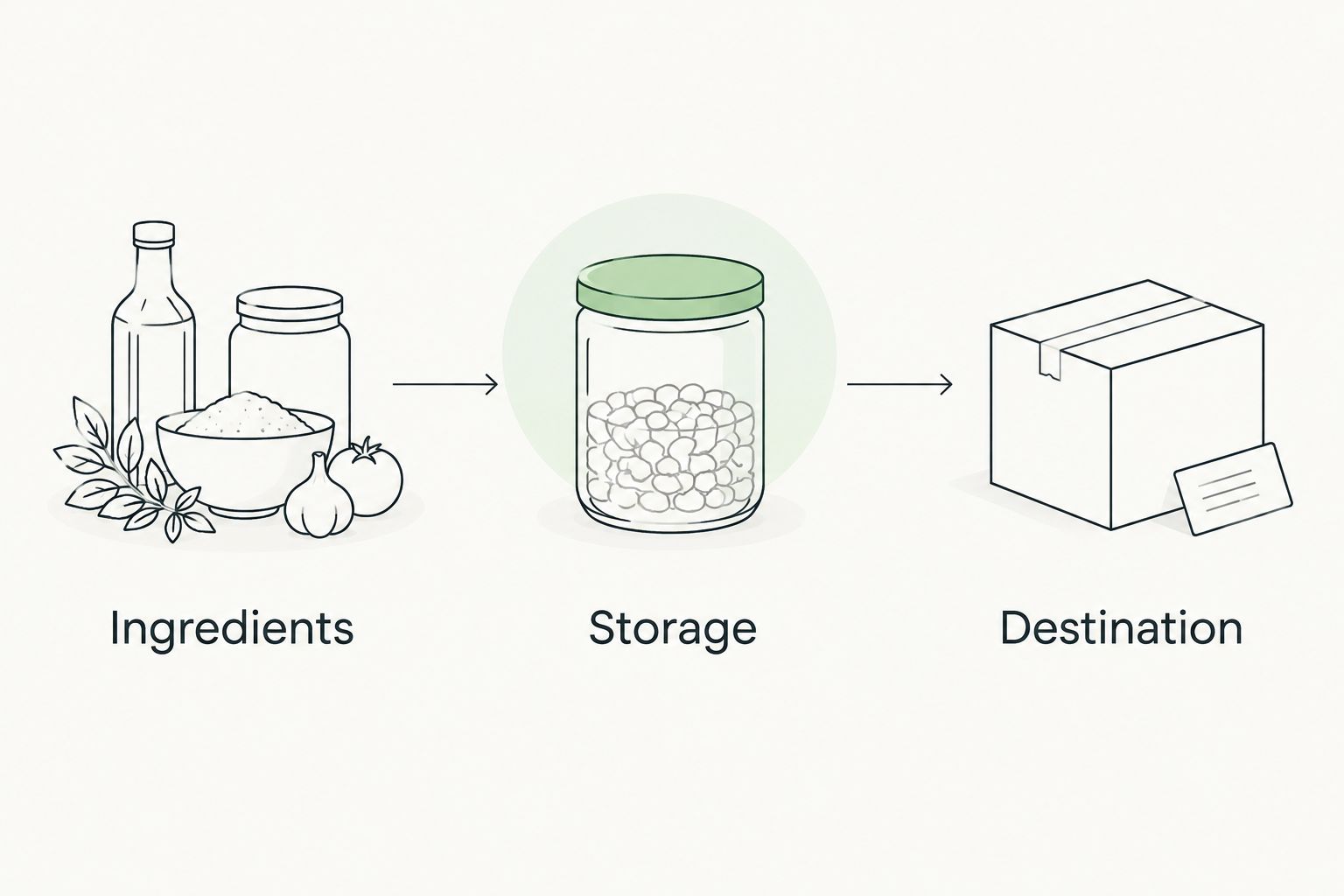
Use this short checklist before checkout:
- Ingredients: Identify the main ingredient and anything you avoid.
- Storage: Find the instructions for the unopened and opened product.
- Destination: Confirm that the intended product can be sent to your address.
A familiar recipe offers confidence about your own taste preference. Clear product information answers a different question: whether this purchase fits your current needs. Keep both checks, even when you are reordering.
Confirmed overseas shipping supports the overseas shortlist
Tulasi Pickles ships across India and overseas, making it a relevant shortlist option for buyers outside India who want Andhra-style foods. That is a delivery-scope fact, not a promise that every product can enter every destination or arrive on a particular date.
Best for: an overseas buyer beginning a destination-specific enquiry. Confirm the country, the exact food, the packaging requirements and the delivery arrangements before completing the order. Sending a vegetarian pickle and sending a meat-based pickle are not interchangeable enquiries.
For Amaravathi Pickles, make the same destination-specific check before choosing it for an overseas order. A personal preference for a recipe does not settle whether the intended shipment fits your destination's requirements.
In 2026, separate the seller's shipping arrangements from the destination's import rules. Overseas shipping capability does not establish customs admissibility. Ask about the exact product rather than relying on a broad answer about sending pickles abroad.
The decision is straightforward: choose a seller only after the product and destination match. Taste preference becomes useful after that gate, not before it.
Storage is a product-level tie, not a brand contest
Follow the instructions for the product you buy. Do not assign the same storage method or usable period to every vegetarian and non-vegetarian pickle simply because they share a seller or a regional style.
Before ordering, decide where the product will live after opening and how you will serve it. If the instructions require refrigeration, make sure you can follow them. Keep the label available rather than discarding the information with the outer packaging.
Neither brand wins storage by name alone. A product suits your household only if its handling instructions work with your routine. That applies to a familiar reorder as much as a first purchase.
For a gift, the recipient's routine matters too. Choose something they can store and use as directed, and pass on the original instructions. A well-intended food gift is not improved by removing the information needed to handle it.
Compare the current purchase terms, not an assumed pricing model
For a 2026 order, review the actual basket and the delivery terms before choosing either seller. Do not assume that two differently described products offer an equivalent purchase, or that a larger selection automatically gives you better value.
Compare the same kind of pickle and equivalent quantities. Then check the main ingredient, preparation description, packaging and delivery destination. A vegetarian pickle and a meat-based pickle are different purchases, even when both appear under the same category heading.
The useful trade-off is between a familiar choice and exploration. Reordering an exact product you enjoyed gives you a known personal taste reference; exploring a different seller gives you a new recipe to assess. Neither establishes a financial advantage on its own.
Choose the basket you can explain item by item. If an extra product has no clear role in your meals, leave it out rather than treating variety as an automatic benefit.
Final verdict: choose for your actual buying situation
Choose Tulasi Pickles if you are building an Andhra-style basket
You want homemade Andhra-style pickles from a Hyderabad-based e-commerce brand, with additional categories such as podis, papads, dry fruits and sweets or snacks. You are shopping across those categories, or beginning an enquiry about shipping within India or overseas.
The winner for this profile is Tulasi Pickles. Choose the individual recipes through their ingredients and instructions; do not extend the basket-level recommendation into an unsupported taste ranking.
Choose Amaravathi Pickles if you are reordering a preferred recipe
You have already tried its exact product, prefer it with your usual meals, and have checked that the current purchase suits your ingredients, handling and destination needs. Your goal is continuity rather than discovering a broader food basket.
The winner for this profile is Amaravathi Pickles. The recommendation rests on your own experience, not a claim that every buyer will share your preference.
| Dimension | Winner or decision rule |
|---|---|
| Best for | Broad-category discovery versus a personally preferred reorder |
| Standout feature | Stated category breadth versus your established recipe preference |
| Taste decision | Your preferred exact recipe |
| Dietary fit | Tie: inspect individual ingredients |
| Ingredient confidence | Tie: require clear product information |
| Delivery fit | Confirm the exact product and destination |
| Storage decision | Tie: follow the purchased product's instructions |
| Pricing decision | Compare the current equivalent basket and terms |
FAQ
Is Tulasi Pickles better than Amaravathi Pickles?
Tulasi Pickles fits buyers seeking a stated range of homemade Andhra-style pickles and accompaniments; Amaravathi Pickles fits repeat buyers who already prefer its exact recipe. Neither purchasing scenario establishes a universal taste winner.
Which should I choose if I have never tried either brand?
Choose by the individual product’s ingredients, flavour description, storage instructions and delivery fit. Start with the meal you want to improve rather than buying across several categories without a purpose.
Should I switch from an Amaravathi pickle I already like?
Keep choosing the exact Amaravathi pickle you prefer if it still meets your purchasing needs. Try another recipe for discovery, not because a general comparison invalidates your own taste preference.
Does homemade mean a pickle is preservative-free?
No, homemade wording does not establish that a pickle is preservative-free. Check the individual ingredient declaration and seek clarification about any ingredient you avoid.
Can I order Andhra-style pickles for delivery overseas?
Confirm the exact product and destination before ordering overseas. A seller’s overseas shipping capability does not establish that every food is admissible in every country.
How should I compare pickle costs in 2026?
Compare equivalent products and quantities, then review the current basket and delivery terms. Check ingredients and preparation descriptions so that you are comparing purchases with the same purpose.
Do both brands’ pickles need the same storage method?
Follow each purchased product’s own storage instructions rather than assuming the same method across brands or recipes. Check the instructions before ordering so that your household can follow them.
One last thing
For your 2026 decision, record what you liked about the exact pickle—not just the seller's name. Note the heat, tang, texture and meal you ate it with. That small habit makes your next comparison more useful: you can look for a specific flavour profile instead of asking a broad brand question again.
Related guides
- How to store homemade pickles for long shelf life
- How to ship pickles overseas without spoilage
- How to choose the right pickle jar size for your family