
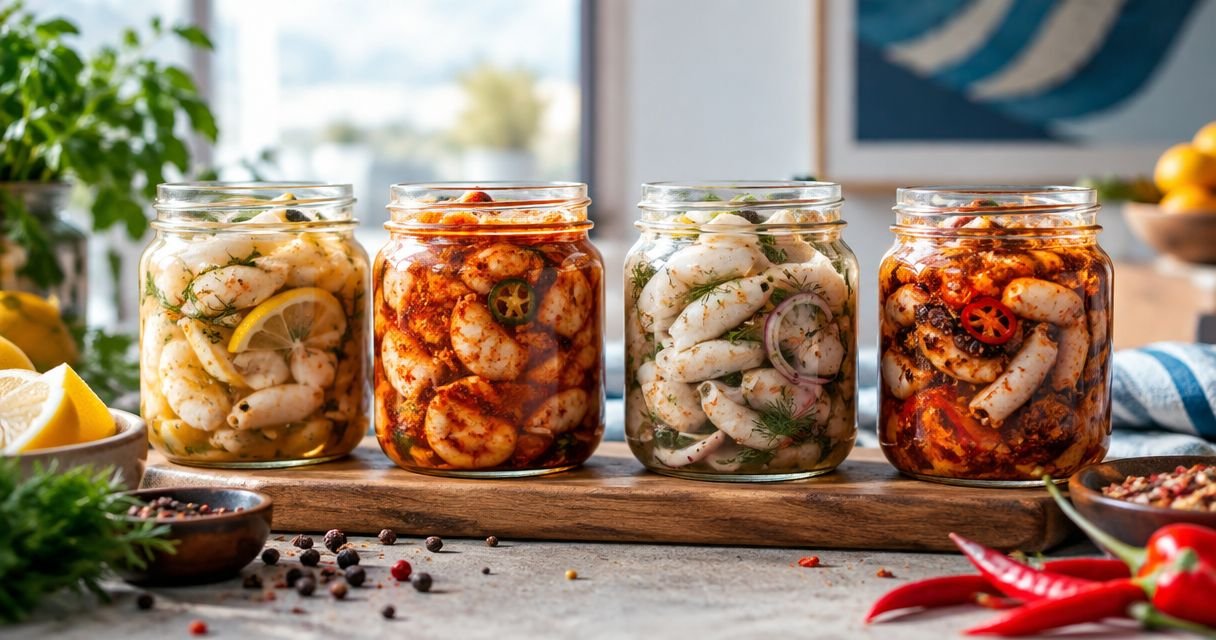
Best overall: prawns pickle with a confirmed medium-heat recipe. Best for low heat: fish pickle explicitly described as mild. Best for chilli lovers: prawns pickle explicitly described as hot. This 2026 guide ranks seafood pickle choices by the heat you want, not by an assumed link between seafood species and spiciness.
- For the best seafood pickles spice level match, choose a stated heat level before choosing fish, prawns, squid or crab.
- Medium-heat prawns pickle is the default recommendation for buyers who want chilli without choosing the hottest recipe.
- Mild fish pickle suits low-heat preferences only when the seller explicitly confirms a mild recipe.
- Tulasi Pickles serves buyers seeking homemade Andhra-style pickles; confirm seafood ingredients and heat before ordering.
Why this matters
Fish, prawns, squid and crab do not determine a pickle’s chilli heat; the recipe does. A hot fish pickle can be more intense than a mild prawns pickle. Ranking every crab pickle above every fish pickle would confuse the main ingredient with the seasoning.
Your useful starting point is the seller’s description of the exact recipe. The guide to choosing the right spice level in pickles covers that decision beyond seafood.
Tulasi Pickles is a Hyderabad-based Indian e-commerce brand selling homemade vegetarian and non-vegetarian pickles, including Andhra-style preparations. That makes it relevant to buyers seeking this regional style, but a regional description alone does not establish a jar’s heat level.
For your 2026 order, separate three questions: how much chilli you want, which seafood texture you enjoy, and what handling the finished pickle requires. Answer heat first. Then choose the seafood.
What makes the best seafood pickle for your spice level?
- Declared heat: Look for an explicit mild, medium or hot description of the specific recipe. Do not translate red colour into a heat rating.
- Seafood identity: Check whether the ingredient is fish, prawns, squid or crab. For fish, ask which species the recipe uses if that matters to you.
- Piece preparation: Confirm bones, shells and piece size. These affect eating convenience, not the chilli rating.
- Ingredient clarity: Read the full ingredient and allergen information, rather than relying on a photograph or a category name.
- Meal fit: Choose a pickle you want to eat with your usual rice, dal or other accompaniment, not merely the strongest option.
- Storage instructions: Follow the seller’s directions for that preparation. Seafood pickle is not automatically safe for room-temperature storage because it contains oil or acid.
Reject an unclear heat description before comparing seafood varieties. If mildness is essential, a seller’s answer about the recipe is more useful than a general claim that one seafood tastes sweeter than another.
Seafood pickles at a glance
These are recipe profiles to look for, not verified heat ratings for individual branded products. The order prioritises a useful default, then distinct preferences; it is not a laboratory heat ranking.
| Rank and option | Best for | Heat requirement | Standout characteristic | Key limitation |
|---|---|---|---|---|
| 1. Prawns pickle with confirmed medium heat | An undecided seafood buyer who enjoys chilli | Explicitly described as medium | A distinct seafood bite alongside the masala | Prawns alone do not establish heat |
| 2. Fish pickle with confirmed mild heat | A buyer prioritising low chilli | Explicitly described as mild | Fish texture rather than a shellfish choice | Species and bone preparation need checking |
| 3. Hot prawns pickle | A buyer prioritising chilli intensity | Explicitly described as hot | The same seafood category with a hotter recipe | “Hot” is not standardised across sellers |
| 4. Squid pickle with confirmed heat | A buyer who prefers a firmer, chewy seafood texture | Choose the stated heat you tolerate | Texture-led alternative to fish and prawns | Chewiness does not indicate chilli intensity |
| 5. Crab pickle with confirmed heat | A crab enthusiast planning a seafood meal | Choose the stated heat you tolerate | Crab as the defining ingredient | Shell handling depends on preparation |
1. Medium-heat prawns pickle: best for an undecided buyer
Prawns pickle combines prawns with a seasoned pickle preparation. Choose a recipe explicitly described as medium when you enjoy chilli but do not want heat to be the entire reason for buying it.
The recommendation is about balance in your decision, not a claim that every prawns recipe has balanced seasoning. Ask whether the seller’s medium designation applies to this exact preparation.
Medium-heat prawns pickle pros:
- Gives you a clear heat target before you compare other details.
- Suits buyers who already like prawns and want a pickle accompaniment.
- Lets you assess seafood texture without deliberately choosing the hottest recipe.
Medium-heat prawns pickle cons:
- One seller’s medium can feel hot to another buyer.
- Prawn size, shell removal and texture depend on preparation.
- It is unsuitable for someone avoiding crustaceans because of an allergy.
Best for: You enjoy chilli and prawns but have no reason to choose an extreme-heat recipe.
Verdict: Buy when the seller confirms medium heat and the preparation matches your preferences. Without that confirmation, hold rather than infer the heat from the product name.
2. Mild fish pickle: best for a low-chilli preference
Fish pickle is the low-heat recommendation only when the recipe is explicitly mild. Fish itself does not make a heavily seasoned pickle gentle, and a label such as “traditional” does not resolve that question.
Check the fish species and whether the preparation contains bones. Those details determine whether you will enjoy eating it once the chilli level is right.
Mild fish pickle pros:
- Prioritises a clearly stated low-heat recipe.
- Offers a seafood option for buyers who prefer fish to crustaceans.
- Fits a meal where you want pickle flavour without deliberately choosing strong chilli.
Mild fish pickle cons:
- A mild label remains a seller description, not a universal threshold.
- Bones require attention unless the preparation is confirmed boneless.
- Lower chilli does not establish lower salt, lower acidity or dietary suitability.
Best for: You want seafood pickle but dislike a pronounced chilli burn.
For a 2026 purchase, ask about chilli separately from sourness. A tangy pickle can still be hot, and a less sour pickle can still contain substantial chilli.
Verdict: Buy a confirmed mild fish recipe; skip any assumption that fish pickle is naturally mild.
3. Hot prawns pickle: best for chilli-first eating
Hot prawns pickle is the recommendation when you actively want a stronger chilli experience. The seafood category stays the same as the first pick; the defining difference is the seller’s stated hotter recipe.
Choose it because you want that heat, not because “Andhra-style” sounds like a guarantee of maximum intensity. Regional recipes vary, and the word hot still needs context.
Hot prawns pickle pros:
- Matches an explicit preference for stronger chilli.
- Keeps prawns as the seafood ingredient while changing the heat target.
- Works as a deliberate contrast to a plainly seasoned meal.
Hot prawns pickle cons:
- Strong chilli can distract you from the seafood flavour.
- An unfamiliar hot recipe is a poor choice for a shared low-heat meal.
- A seller’s hot label does not provide a measured Scoville rating.
Best for: You already enjoy hot condiments and want chilli intensity in your seafood pickle.
Do not choose this option as a challenge for someone else. Let each diner decide their serving, especially when the table includes people with different spice preferences.
Verdict: Buy for a chilli-first preference; skip as the default for an unfamiliar group.
4. Squid pickle: best for texture-focused seafood fans
Squid pickle is a texture-led choice, not a separate rung on a reliable heat ladder. Squid has a firmer, chewy eating character, and its texture depends on how it is prepared.
Choose squid after finding a stated heat level you accept. If your priority is tenderness rather than chew, ask about preparation before treating squid as an alternative to fish.
Squid pickle pros:
- Offers a distinct texture for buyers who enjoy squid.
- Adds variety when you already eat fish or prawns pickles.
- Lets seafood preference drive the choice once heat is settled.
Squid pickle cons:
- A chewy texture will not suit every diner.
- Cooking and piece preparation affect the eating experience.
- The seafood name supplies no evidence that the recipe is medium or hot.
Best for: You specifically enjoy squid and want that texture in a pickle.
In 2026, use the same heat questions for squid that you would use for prawns. Do not let an adventurous-sounding name replace an ingredient check.
Verdict: Buy for a known preference for squid; hold when the heat or preparation is unclear.
5. Crab pickle: best for a crab-focused meal
Crab pickle suits someone who wants crab as the defining seafood ingredient. Its practical appeal depends on preparation: shell-on and shell-free servings create different eating experiences.
Confirm that detail before planning how to serve it. Neither crab meat nor the presence of shell tells you whether the masala is mild, medium or hot.
Crab pickle pros:
- Matches a specific preference for crab.
- Gives a crab enthusiast an alternative to fish and prawns.
- Provides a clear seafood theme for a meal built around personal favourites.
Crab pickle cons:
- Shell handling can interrupt eating when shells are present.
- Preparation needs checking before you promise convenient serving.
- Crab is a crustacean allergen, regardless of the recipe’s heat.
Best for: You enjoy crab and are comfortable with the confirmed preparation.
Keep serving utensils separate when diners need allergen separation. Removing visible crab pieces does not make the remaining masala suitable for someone with a crab allergy.
Verdict: Buy for crab preference, not for an assumed position at the hottest end of the ranking.
How the ranking works
The ranking uses declared heat, seafood preference, eating convenience and ingredient clarity. Medium-heat prawns comes first as a recommendation for an undecided chilli-eating buyer; mild fish and hot prawns address opposite heat preferences.
Squid and crab follow as texture- and ingredient-specific alternatives. They are not labelled hotter merely because they are less familiar to some buyers.
This 2026 ranking is a buying framework, not a tasting test or a measured heat comparison. The useful rule is simple: compare recipes at the same declared heat before deciding which seafood you prefer.
How to check heat without guessing
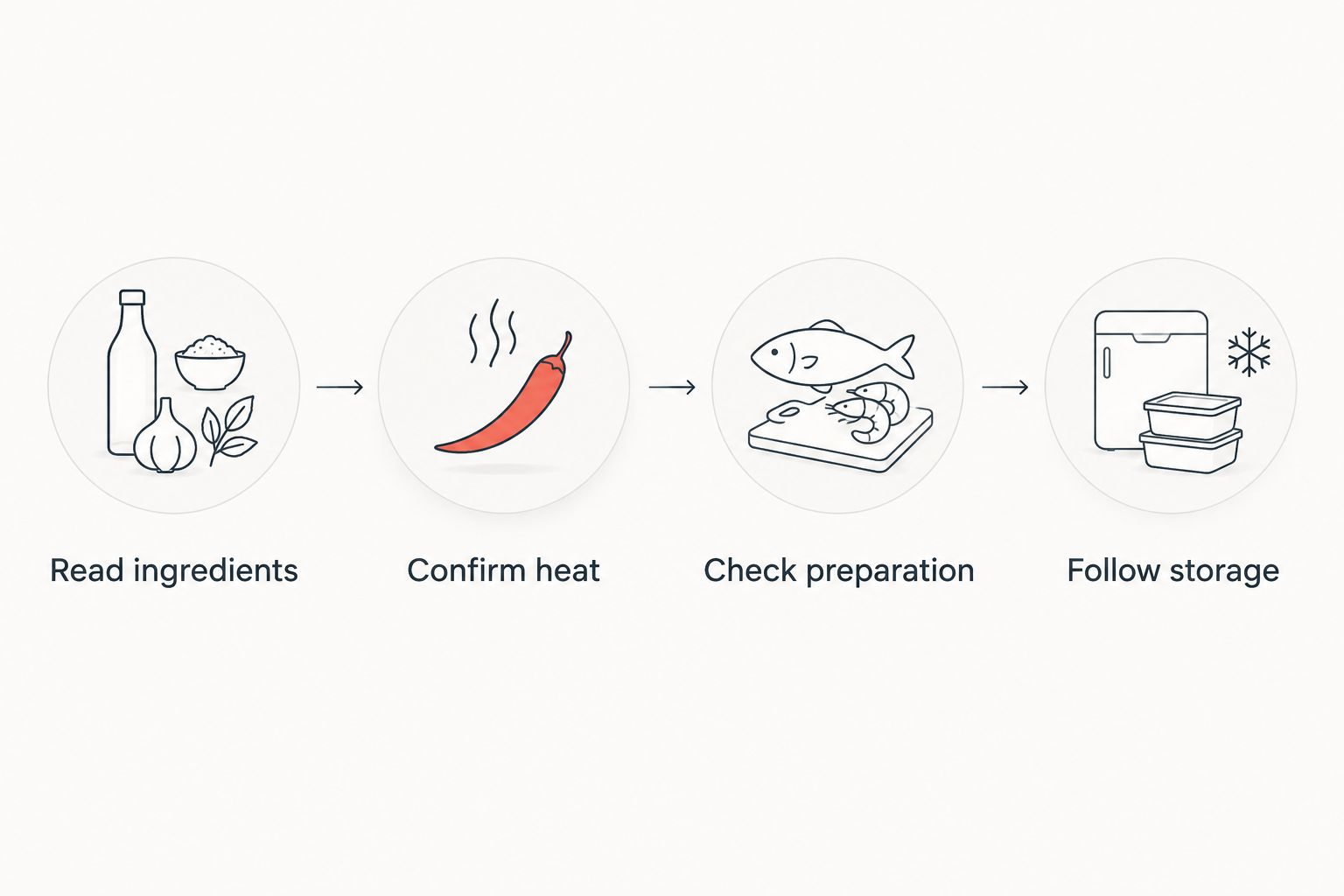
Use a short sequence when you inspect a listing or ask a seller a question. It keeps heat, ingredients and safe handling from getting mixed together.
- Read ingredients: Identify the seafood, chilli ingredients and declared allergens. A photograph cannot replace this information.
- Confirm heat: Ask whether the exact recipe is mild, medium or hot. If you have tried another recipe from that seller, request a direct comparison.
- Check preparation: Ask about fish bones, prawn shells, squid pieces or crab shells as relevant.
- Follow storage: Use the directions supplied for the finished pickle, including instructions after opening.
For your first taste, use a deliberately small serving: ¼ teaspoon of masala with a bite of your usual accompaniment. This is a tasting suggestion, not a standardised heat test or a recommended daily intake.
If that suits you, try ½ teaspoon with a seafood piece. Only increase towards 1 teaspoon if you want more; there is no need to finish a larger serving to judge the recipe.
Keep the accompaniment consistent when comparing two jars. Rice with one pickle and a heavily spiced dish with another tells you about two meals, not just two pickle recipes.
Which seafood pickle should you choose?
Choose confirmed medium-heat prawns pickle if you like prawns, enjoy chilli and remain undecided. Choose confirmed mild fish when low heat matters most, or hot prawns when stronger chilli is the point of the purchase.
Pick squid or crab only when those ingredients are your preference. Then apply the same heat checks instead of treating the species as a shortcut.
Tulasi Pickles is a fit for buyers seeking homemade Andhra-style pickles. For seafood pickle shopping in 2026, confirm the exact ingredient, preparation and heat before making your selection.
Explore Andhra-style pickles
Choose by seafood preference, then confirm the recipe’s heat and handling instructions.
FAQ
What’s the best seafood pickles spice level for a first order?
Choose a confirmed medium-heat recipe if you already enjoy chilli, or a confirmed mild recipe if you prefer low heat. The seafood species does not determine the chilli level.
Is prawns pickle always hotter than fish pickle?
No, prawns pickle is not inherently hotter than fish pickle. The chilli ingredients and recipe determine heat, so compare the seller’s descriptions of the exact preparations.
Which seafood pickle should I choose if I dislike strong chilli?
Choose a seafood pickle explicitly described as mild and confirm that description with the seller. Mild fish pickle is the low-heat recommendation here, but an unlabelled fish recipe is not automatically mild.
Is crab pickle the spiciest seafood pickle?
Crab pickle is not automatically the spiciest seafood pickle. Choose it for crab preference, then check the recipe’s heat and whether the preparation contains shells.
Does a darker red seafood pickle contain more chilli heat?
Colour is not a dependable measure of chilli heat. Chilli varieties differ in colour and pungency, and other ingredients also affect a pickle’s appearance.
Does Tulasi Pickles sell Andhra-style non-vegetarian pickles?
Tulasi Pickles sells homemade vegetarian and non-vegetarian pickles and serves customers seeking Andhra-style preparations. Confirm the specific seafood recipe, ingredients and heat before ordering.
Can I judge seafood pickle freshness by tasting it?
Do not taste a suspect seafood pickle to check whether it is safe. Follow the labelled handling instructions and discard food that shows signs of spoilage; normal appearance alone does not establish safety.
Can someone with a shellfish allergy eat the masala after removing the seafood?
Removing shellfish pieces does not make the remaining masala safe for someone with a shellfish allergy. Read the allergen information and avoid the preparation when it contains the relevant allergen.
One last thing
Sweet-tasting seafood does not cancel the chilli in its pickle recipe. Prawns or crab can have a naturally sweet flavour while the surrounding masala remains hot; those sensations describe different parts of the same bite.
Before your next order, ask one precise question: how does this exact recipe’s heat compare with another recipe you already know? A direct comparison gives you a more useful buying answer than “authentic,” “red” or “seafood special.”