
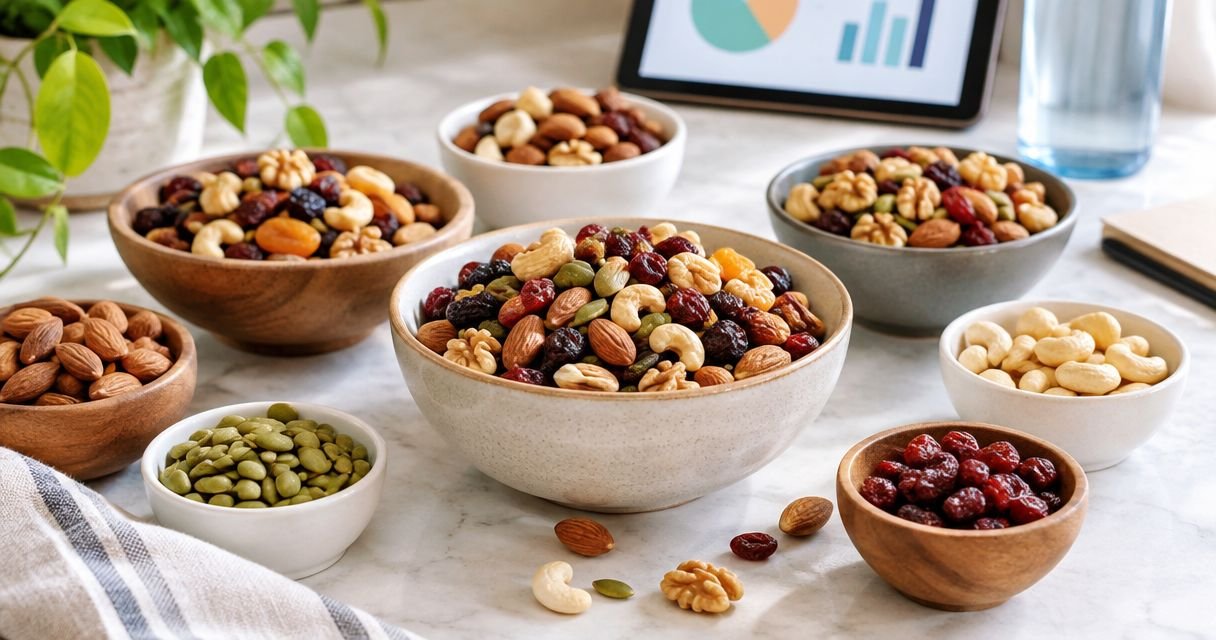
Best overall for protein: an equal-weight peanut–almond mix. Best peanut-free option: almond–pistachio. Best for sweetness: almond–raisin. This 2026 guide ranks defined recipes rather than packaged products; Tulasi Pickles sells dry fruits alongside its Andhra-style foods, but these recipes are not claims about its catalogue.
- For the best dry fruit and nut mix protein ranking, peanut–almond wins among these five defined recipes.
- Almond–pistachio is the highest-protein peanut-free recipe here; it still contains tree nuts.
- Compare protein per 100 g before comparing serving sizes or package descriptions.
- Tulasi Pickles sells dry fruits; use each product’s ingredient list and nutrition label for purchase decisions.
Why this matters
A mix called dry fruit can contain mostly nuts, mostly dried fruit, or both. Those differences matter more than the name on the front. Almonds and raisins do not contribute the same amount of protein, so replacing almonds with raisins changes the result even when the packet weight stays identical.
Choose by composition, not by the words premium, fitness or protein snack. For a 2026 purchase, compare the ingredient list, protein declaration and serving weight together. A large serving can make a lower-protein blend look stronger than a smaller serving of a nut-heavy recipe.
This ranking answers a narrow question: which of five equal-weight, two-ingredient recipes provides the most protein by weight? It does not rank taste, medical suitability or every possible nut-and-seed combination.
What makes the best dry fruit and nut mix for protein?
Use these criteria before choosing your blend:
- Protein density: Compare grams of protein per 100 g, not differently sized servings.
- Ingredient proportions: A named ingredient contributes little if it makes up only a small share of the mix.
- Dried-fruit content: Raisins add sweetness, but replacing higher-protein nuts with raisins lowers protein density.
- Allergen suitability: Peanuts and tree nuts require separate attention; peanut-free does not mean allergy-safe.
- Preparation: Raw, roasted, coated and sweetened versions need their own nutrition comparisons.
- Portion practicality: Choose a blend you can measure and enjoy without treating the entire pack as one serving.
The ranking uses equal weights so each recipe has a clear, reproducible definition. A different ratio is a different recipe—and deserves a fresh calculation.
Protein ranking at a glance
The nutrition basis for this 2026 guide is USDA FoodData Central’s standard-reference data for raw peanuts, almonds, pistachios, cashews and English walnuts, plus seedless raisins. The ingredient protein values are approximately 25.8, 21.2, 20.2, 18.2, 15.2 and 3.1 g per 100 g, respectively.
Each recipe combines equal weights of its two ingredients. The figures below are calculated estimates, rounded to one decimal place—not laboratory measurements or nutrition declarations for a commercial product.
| Rank and recipe | Best for | Protein per 100 g | Protein per 30 g | Standout feature | Key limitation |
|---|---|---|---|---|---|
| 1. Peanut–almond | Maximum protein among these recipes | 23.5 g | 7.0 g | Combines the two highest-protein ingredients used here | Contains peanuts and almonds |
| 2. Almond–pistachio | Peanut-free recipe preference | 20.7 g | 6.2 g | Highest-protein recipe here without peanuts | Contains two tree nuts |
| 3. Almond–cashew | Cashew lovers | 19.7 g | 5.9 g | Keeps almonds alongside cashews | Lower protein than almond–pistachio |
| 4. Cashew–walnut | Walnut flavour and texture | 16.7 g | 5.0 g | Combines creamy cashews with walnuts | Lower protein density than the first three |
| 5. Almond–raisin | Sweet-and-crunchy snacking | 12.1 g | 3.6 g | Includes both a nut and a dried fruit | Lowest protein density in this comparison |
A 30 g portion is a comparison example, not a universal serving recommendation. Your appropriate portion depends on your wider diet and any individual dietary advice.
1. Peanut–almond: best dry fruit and nut mix for maximum protein
An equal-weight peanut–almond mix leads this comparison at approximately 23.5 g protein per 100 g. A 30 g portion supplies about 7.0 g. Peanuts are legumes botanically, but they commonly sit alongside nuts in snack mixes.
This recipe is the default when protein density is your main criterion and both ingredients suit your diet. It contains no dried fruit, so choose it for a nut-style snack rather than a sweet trail mix.
Peanut–almond pros:
- Highest calculated protein density among these five recipes.
- Simple composition makes the ratio easy to reproduce.
- No dried fruit displaces the peanut or almond portion.
Peanut–almond cons:
- Unsuitable for someone who needs to avoid peanuts or almonds.
- Offers no chewy dried-fruit component.
- Coatings and added ingredients change the calculation.
Best for: You want the most protein by weight from the recipes compared here.
Measure ingredients by weight, not by counting pieces: almonds and peanuts differ in size. For an equal-weight batch, place the same mass of each ingredient in your container before mixing.
Verdict: Buy the ingredients for peanut–almond when protein density is your priority and both allergens are suitable.
2. Almond–pistachio: best dry fruit and nut mix for a peanut-free recipe
An equal-weight almond–pistachio mix provides approximately 20.7 g protein per 100 g, or 6.2 g in a 30 g portion. It ranks second overall and first among the peanut-free recipes in this comparison.
Use shelled pistachio kernels when measuring the recipe. Shell weight is not edible ingredient weight, and including it would distort both your ratio and your portion calculation.
Almond–pistachio pros:
- Highest protein density here without peanuts as an ingredient.
- Combines two distinct nut flavours.
- Easy to portion once both ingredients are ready to eat.
Almond–pistachio cons:
- Contains tree nuts and is not an allergy-safe alternative.
- Shell-on pistachios require preparation before weighing.
- Salted or flavoured versions require a separate label check.
Best for: You prefer a recipe without peanuts and enjoy both almonds and pistachios.
For allergy-related avoidance, a recipe without peanuts is only the starting point. Check the supplier’s allergen statement and cross-contact information; ingredient selection alone does not establish safety.
Verdict: Buy almond–pistachio for a peanut-free recipe preference; hold if allergen suitability remains unresolved.
3. Almond–cashew: best dry fruit and nut mix for cashew lovers
An equal-weight almond–cashew mix supplies approximately 19.7 g protein per 100 g, or 5.9 g per 30 g portion. It ranks below almond–pistachio but above cashew–walnut in this defined comparison.
Choose this blend when cashews make the snack more enjoyable for you. Protein density matters, but choosing a flavour you dislike simply because it ranks higher does not make a practical everyday snack.
Almond–cashew pros:
- Includes cashews without making the entire recipe cashew-based.
- Higher calculated protein density than cashew–walnut.
- Straightforward ingredients make homemade mixing simple.
Almond–cashew cons:
- Contains almonds and cashews, both tree nuts.
- Lower protein density than the first two recipes.
- A cashew-heavy commercial blend will not match this equal-weight estimate.
Best for: You want a cashew-containing snack while keeping protein density ahead of the lower-ranked recipes.
Check whether a packaged mix lists cashews or almonds first, but do not infer an exact ratio from ingredient order alone. Use declared percentages when provided, and rely on the finished product’s nutrition panel for its protein figure.
Verdict: Buy almond–cashew for cashew preference, not because it beats the higher-ranked recipes on protein.
4. Cashew–walnut: best dry fruit and nut mix for walnut variety
An equal-weight cashew–walnut mix provides approximately 16.7 g protein per 100 g, or 5.0 g per 30 g portion. Its role is variety: it gives you a walnut-containing option rather than another almond-led recipe.
This blend is a weaker choice when protein per gram is your only goal. That does not make it a poor snack; it means its main reason for selection is flavour and texture, not the top protein position.
Cashew–walnut pros:
- Offers a recipe without almonds or peanuts as ingredients.
- Combines different textures in a simple blend.
- Gives walnut lovers a clearly defined comparison option.
Cashew–walnut cons:
- Contains tree nuts and still requires allergen checks.
- Lower protein density than the first three recipes.
- Broken pieces make visual portion estimates less reliable than weighing.
Best for: You specifically enjoy walnuts and want variety in your snack rotation.
Use the same nutrition basis throughout your comparison. Do not compare a plain homemade cashew–walnut recipe with a heavily coated almond mix and assume the difference comes only from the nuts.
Verdict: Buy cashew–walnut for walnut preference; skip it as the protein-first default.
5. Almond–raisin: best dry fruit and nut mix for sweetness
An equal-weight almond–raisin mix contains approximately 12.1 g protein per 100 g, or 3.6 g per 30 g portion. It is the only recipe here that combines a nut with a dried fruit, rather than using two nut-style ingredients.
Raisins add chewiness and sweetness. They also replace almonds by weight, which explains why this recipe ranks last for protein despite containing a higher-protein nut.
Almond–raisin pros:
- Combines crunchy almonds with chewy dried fruit.
- Provides sweetness without needing a separate confectionery ingredient.
- Easy to adjust if you prefer fewer raisins.
Almond–raisin cons:
- Lowest protein density among the five recipes.
- Contains almonds and is unsuitable for almond avoidance.
- Raisin-heavy versions provide less protein than the equal-weight estimate.
Best for: You want a sweet-and-crunchy snack and protein is a secondary criterion.
Dried fruit contains naturally occurring sugars. A recipe without added sugar is not sugar-free, and this ranking does not establish suitability for diabetes or another medical condition.
Verdict: Buy almond–raisin for sweetness; skip it when maximum protein density is the main requirement.
How the recipes were ranked
The 2026 order follows calculated protein per 100 g, using the same ingredient database and an equal-weight ratio for every recipe. The other criteria explain who each recipe suits; they do not override the protein order.
For an equal-weight blend, average the two ingredient protein values. For another ratio, multiply each ingredient’s protein per 100 g by its share of the recipe, then add the results. Keep edible weights consistent.
This method compares recipes, not suppliers. A packaged mix needs its own label because ingredient proportions, roasting, moisture and coatings affect the finished food.
How to compare a packaged mix before buying
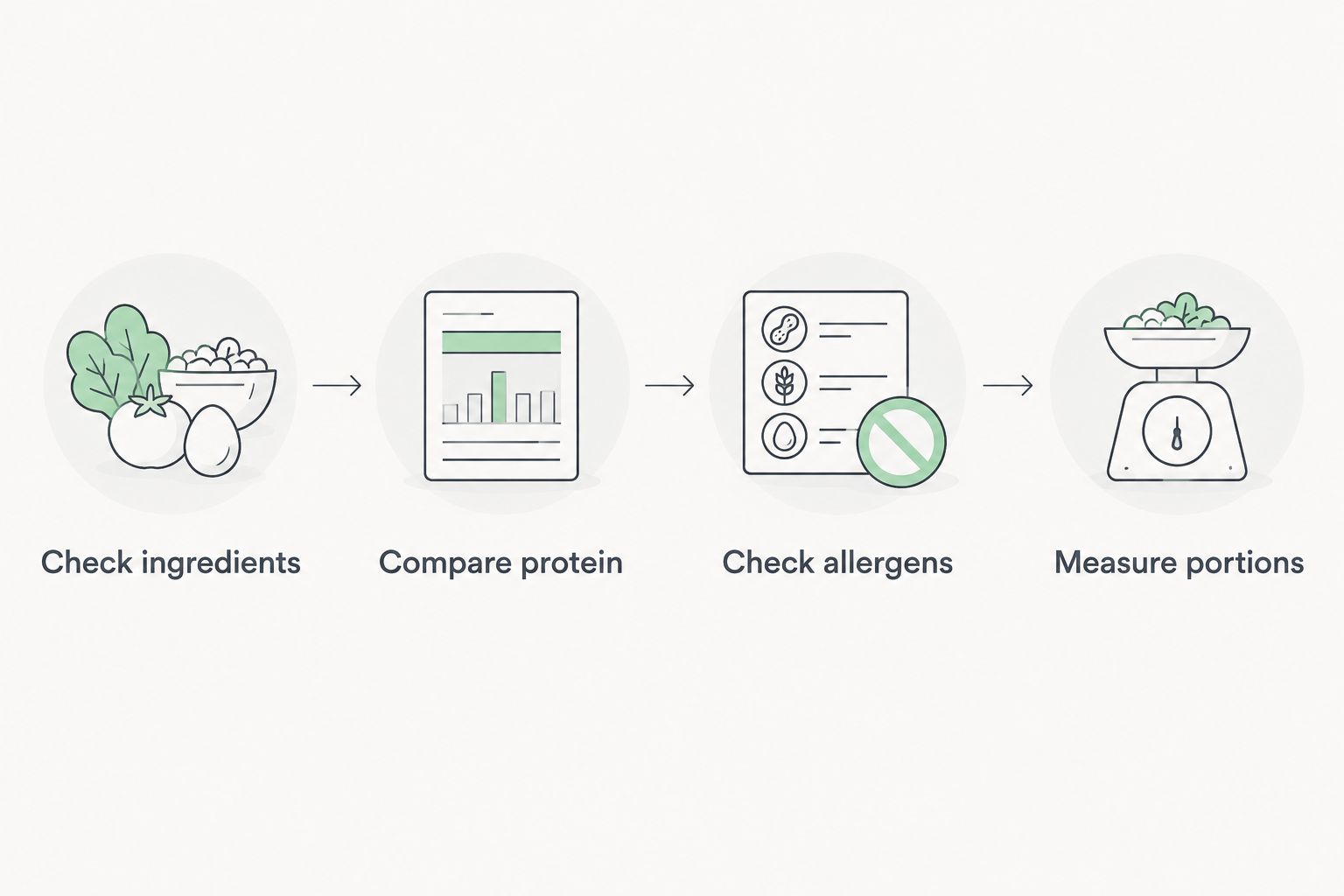
Use this sequence for your 2026 shortlist:
- Check ingredients: Identify the nuts, dried fruits, seeds and coatings. Look for declared proportions rather than guessing from photographs.
- Compare protein: Use the same reference weight for every product. Protein per 100 g is easier to compare than unmatched serving sizes.
- Check allergens: Read both the ingredient list and allergen information. Do not treat a missing ingredient as proof against cross-contact.
- Measure portions: Decide how much you actually plan to eat. Calculate that portion’s protein instead of assuming a handful matches the label serving.
If a seller provides only an ingredient photograph, do not assign the product one of this guide’s calculated values. Ask for the finished product’s nutrition information instead. Visible almonds establish that almonds are present, not how much of the mix they represent.
Tulasi Pickles suits shoppers looking for dry fruits alongside Andhra-style foods. That shopping fit is separate from a protein ranking: evaluate the specific item’s ingredients and nutrition information before choosing it for a protein goal.
Which dry fruit and nut mix should you choose?
Choose peanut–almond as the protein-first default among these recipes. Choose almond–pistachio for a peanut-free recipe preference, almond–cashew for cashew flavour, cashew–walnut for walnut variety, and almond–raisin for sweetness.
For a post-workout snack, consider the rest of the meal as well as the mix. Nuts contribute protein, but a small portion is not interchangeable with a complete meal or a dedicated protein food.
The practical 2026 recommendation is simple: select the recipe that suits your preferences and allergens, then confirm the protein in your actual portion. For a packaged purchase, the finished product’s nutrition declaration takes precedence over a generic recipe estimate.
FAQ
What’s the best dry fruit and nut mix for protein?
An equal-weight peanut–almond mix ranks first among the five recipes in this guide, at approximately 23.5 g protein per 100 g. This is a calculated recipe estimate, not a nutrition claim for a packaged product.
Which peanut-free nut mix has the most protein here?
The equal-weight almond–pistachio recipe leads the peanut-free options here, at approximately 20.7 g protein per 100 g. It contains tree nuts, and packaged ingredients still require allergen and cross-contact checks.
Is almond–cashew better than almond–raisin for protein?
Yes, the equal-weight almond–cashew recipe provides more protein by weight: approximately 19.7 g per 100 g versus 12.1 g for almond–raisin. Changing either recipe’s proportions changes the comparison.
How much protein is in a small portion of peanut–almond mix?
A 30 g portion of the equal-weight peanut–almond recipe provides approximately 7.0 g protein. Weigh the portion rather than assuming every handful contains the same amount.
Does roasting change the protein ranking?
The raw-ingredient ranking does not establish the order for roasted or coated products. Compare their finished nutrition labels on the same weight basis, because preparation and added ingredients change the composition.
Are dry fruit and nut mixes enough after a workout?
A dry fruit and nut mix contributes protein, but its role depends on your portion and the rest of your diet. Assess the whole snack or meal rather than treating the mix alone as a complete recovery plan.
Can I use these protein figures for Tulasi Pickles dry fruits?
No, these figures describe defined equal-weight recipes calculated from generic ingredient data. Use the specific Tulasi Pickles item’s nutrition information rather than assigning it a recipe value from this guide.
Are mixes without added sugar automatically suitable for diabetes?
No, the absence of added sugar does not establish suitability for diabetes. Dried fruit contains naturally occurring sugars, and portion size, total carbohydrate and individual dietary advice still matter.
One last thing
Counting pieces is not the same as measuring proportions. An equal number of almonds and raisins does not create an equal-weight recipe. If you want your homemade blend to match this ranking, weigh the ingredients before mixing—not after a handful has already disappeared.
Related guides
- Dry fruits and nuts for post-workout snacking
- Premium cashews for festive snacking and gifts
- Choosing dry fruits online for daily snacking
- Dry fruits for festive-season gifting