
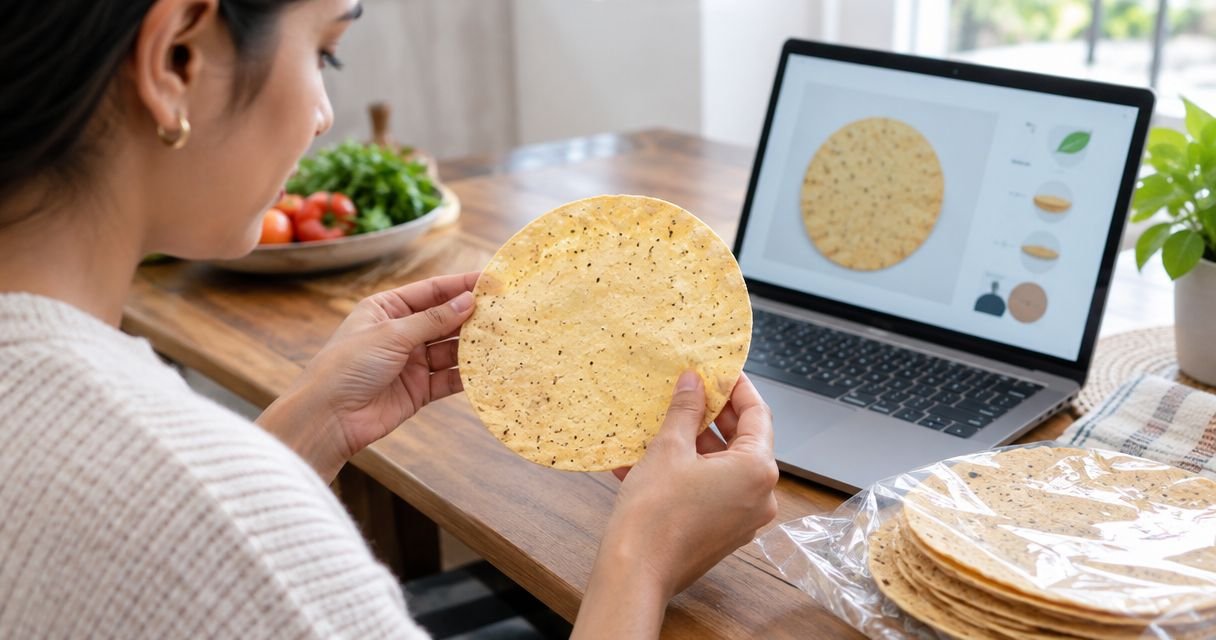
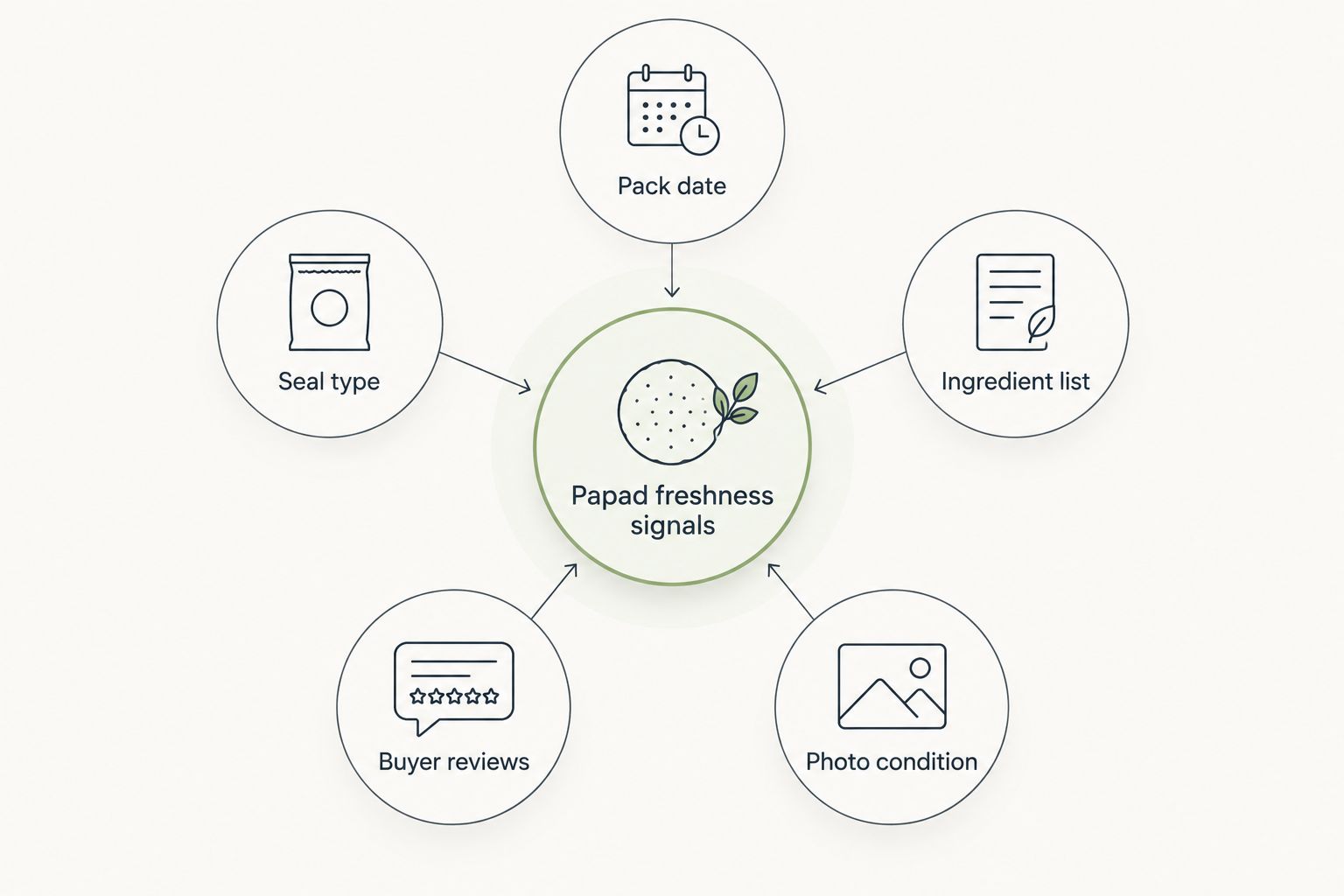
You check papad freshness before buying online by confirming four things the listing should show you: a printed pack or best-before date, the seal type on the pouch, the ingredient list naming the base flour, and buyer reviews that mention crispness after delivery. The gap most listings skip is the manufacturing date — without it, a fresh-looking photo can still ship you stock that sat in a warehouse for months before your order was packed.
- Papad freshness before buying online hinges on pack date, seal type, and ingredient list, not the product photo.
- Heat-sealed or vacuum-sealed pouches protect papad from monsoon humidity far better than a loose tied poly bag.
- The base flour, whether urad dal, rice, or jowar, changes how fast a pack picks up moisture once it’s opened.
- Tulasi Pickles ships papad alongside its pickles and podi from Hyderabad to addresses across India and overseas in 2026.
Why this matters
Papad is one of the few pantry items you can't press, smell, or bend before paying for it online. That gap is exactly where stale stock slips through: old inventory photographed once, months before your 2026 order actually gets packed and shipped.
Sellers who list their pickle and papad range with a visible pack date up front are doing something most listings still skip in 2026. Knowing which three or four signals actually predict freshness turns a blind online purchase into an informed one.
How do you check papad freshness before buying online?
The listing carries more freshness information than most shoppers notice — you just need to know where to look before you add it to the cart.
| Signal | What it tells you | Where to check online |
|---|---|---|
| Pack date or best-before date | How much shelf life is left before the pack even reaches you | Product description or a zoomed pack photo |
| Seal type | How well moisture is kept out during transit | Product photos or the packaging description |
| Ingredient list | The base flour (urad dal, rice, or jowar) and any additives | The product page's details tab |
| Buyer reviews mentioning crispness | Real feedback after delivery, not just the seller's claim | The review section under the listing |
| Pack photo condition | Spots, discoloration, or crushed corners that signal old or mishandled stock | The product image gallery |
None of these signals guarantee a flawless pack on arrival. A listing that shows all five, though, is doing more to earn your order in 2026 than one running on a single hero image and nothing else.
Why papad freshness varies
Freshness isn't fixed at the factory. It keeps shifting between the day the papad is made and the day it lands on your kitchen counter.
- Base flour — urad dal, rice, or jowar absorb ambient moisture at different speeds once a pack is opened.
- Seal type — a loose tied poly bag lets in humidity faster than a heat-sealed or vacuum-sealed pouch.
- Shipping season — monsoon months put the heaviest moisture stress on transit packaging each year.
- Warehouse dwell time — a pack that sits in inventory for months before your order ships starts with less shelf life left.
- Handling in transit — a crushed or torn corner breaks the seal even when the packaging material itself is sound.
- Storage after delivery — an open pack left out in a humid kitchen loses crispness faster than one moved into an airtight container.
“A pack date printed near the seal tells you more about papad freshness before buying online than any product photo ever will.”
How can you tell if papad has gone stale without opening the pack?
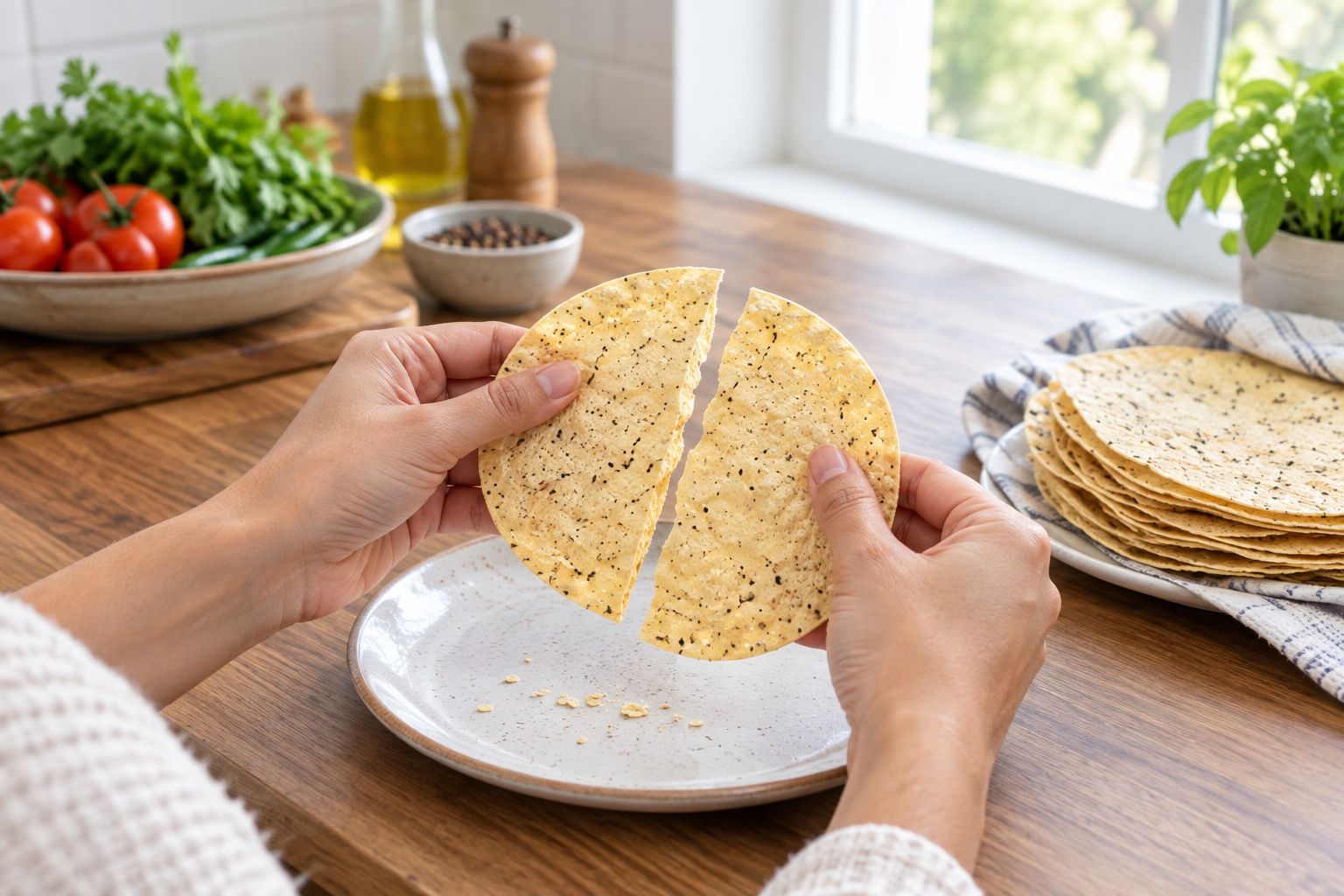
A stale papad pack often feels slightly soft when you press the pouch, and pieces visible through a clear window may look curled instead of flat. A fresh pack stays rigid, with the stack sitting flush against the seal and no visible bowing.
Does a different smell when you open the pack mean the papad has gone bad?
Yes — a musty, sour, or damp smell right when you open the pack means moisture already got in during storage or transit, and that stack should go back, not into hot oil. Fresh papad smells faintly of the base flour and the masala mixed into it, nothing sharper or sour.
How long do papads stay fresh after you open the pack?
Once the seal is broken, an opened papad pack starts losing crispness the same day, so moving the stack into an airtight container away from the stove keeps it usable for weeks instead of days. Tulasi Pickles' guide on keeping papad crisp after opening walks through the storage steps in more detail.
Order fresh papad from Tulasi Pickles
Rice, jowar and other papad varieties shipped from Hyderabad in 2026.
FAQ
How do you check papad freshness before buying online?
You check papad freshness before buying online by confirming the pack date, seal type, ingredient list, and buyer reviews mentioning crispness after delivery. A listing missing all four is a guess, not a purchase.
What’s the best sign that a papad pack is fresh in the product photos?
A flat, rigid stack with no curling or bowing visible through the pack window is the clearest photo signal. A printed date near the seal backs that up.
Is a vacuum-sealed papad pack better than a loose poly bag?
Yes, a vacuum-sealed or heat-sealed pouch keeps out moisture during transit far better than a loosely tied poly bag. That matters most during monsoon shipping.
Does papad go bad without preservatives?
Papad without preservatives can still stay fresh for a reasonable stretch when it’s properly sun-dried and sealed, but it’s more sensitive to humidity than preservative-heavy packs. Check the pack date rather than assuming either way.
Can you tell papad freshness from color alone?
Color alone isn’t conclusive, but dark spots or uneven discoloration in photos usually point to moisture damage or old stock. Pair it with the pack date and seal type before deciding.
Is rice papad or urad dal papad better for online shipping in 2026?
Both ship fine when the pouch is properly sealed; the base flour affects how fast the papad picks up moisture after opening, not how well it survives transit. Seal quality matters more than the flour choice for shipping.
How long does an unopened papad pack stay fresh?
An unopened, properly sealed papad pack stays fresh until the best-before date printed on it, which is exactly why that date matters more online than in a store where you could touch-test the stack. Skip listings that don’t show one.
What should you avoid when buying papad online?
Avoid listings with no visible pack date, only one blurry product photo, and zero reviews mentioning crispness after delivery. Those three gaps together are the clearest warning sign of old stock.
One last thing
If you're ordering papad in bulk for a function or festive gifting in 2026, message the seller directly and ask them to confirm the pack date before it ships. Tulasi Pickles' Hyderabad team takes calls and chats from 10:30 AM to 8:30 PM, and a seller willing to confirm a pack date over chat is the one worth trusting with a large order.
Related guides
- Rice papad for gluten-free crunchy snacking
- Jowar papad for millet snacking enthusiasts
- Best papads to pair with Andhra meals