
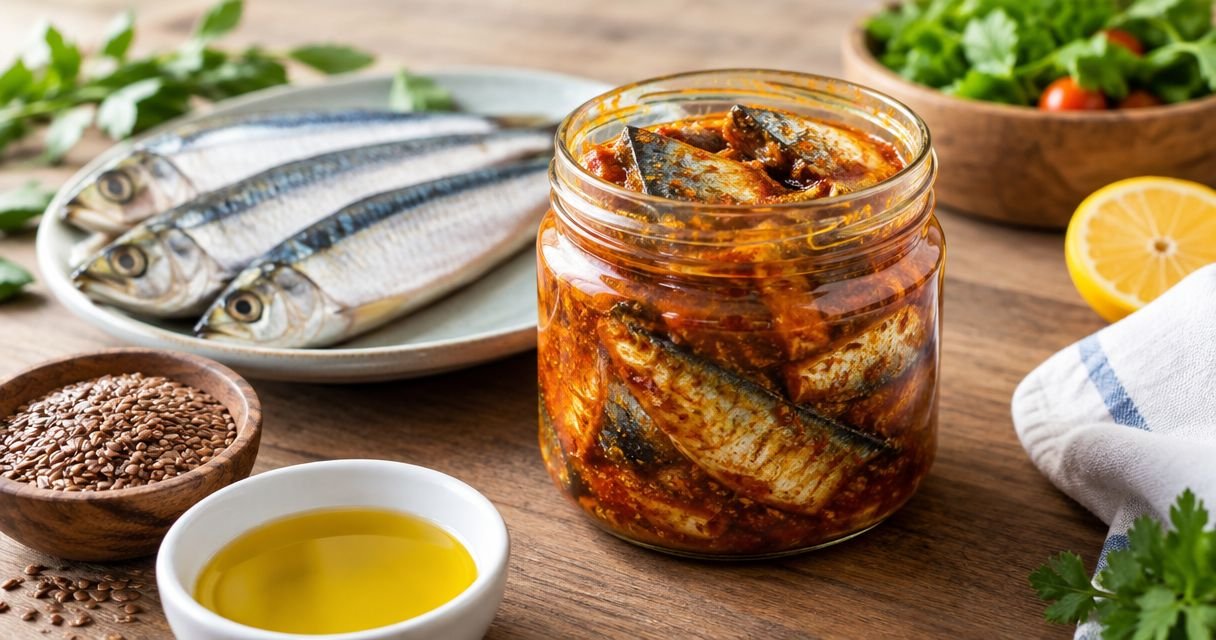
Heart-healthy diet followers use fish pickle omega 3 content as a spicy, shelf-stable way to add fatty-fish nutrition to daily meals without cooking fresh fish every single day. This guide covers which fish variety to pick, how much oil is normal, how to portion it, and how to store it so fish pickle helps a heart-healthy diet in 2026 instead of quietly working against it.
- Fish pickle made from oily fish like vanjaram or sardines carries the same omega-3 fatty acids as fresh fish, concentrated into a condiment.
- Tulasi Pickles’ fish pickle works as a heart-healthy add-on once you portion it to a tablespoon or two, not a side-dish bowl.
- Refrigerate fish pickle within two hours of opening the jar so the oil doesn’t oxidize and lose omega-3 quality.
- Pair fish pickle with low-sodium sides since the pickle itself already carries most of a meal’s salt budget.
- Boneless fish pickle suits heart-healthy eaters who want portion control without picking through bones.
Why this matters
Cardiovascular guidelines exist for a reason, and most people don't eat oily fish twice a week even when they know they should. Fish pickle offers a workaround: it's shelf-stable, needs no stove, and holds the same fish fat profile as the fresh catch it's made from. Tulasi Pickles ships fish pickle across India and overseas in 2026, so location isn't the excuse it used to be.
The American Heart Association recommends eating fish, especially fatty fish, at least twice a week for cardiovascular support. A tablespoon of fish pickle stirred into rice or curd covers part of that habit on a day when cooking fresh fish simply isn't happening.
Why fish pickle matters for heart-healthy diets
Heart-healthy diet followers aren't chasing flavor first, they're managing sodium, saturated fat, and consistency. Fish pickle made from oily fish species carries omega-3 fatty acids (EPA and DHA), and public health guidance from the WHO and EFSA points to roughly 250-500 mg of combined EPA and DHA daily for general cardiovascular support. A jar won't replace a fish dinner, but a spoonful on the side moves the needle on a week when fresh fish doesn't happen.
This segment also cares about details a casual buyer skips: how much oil sits on top, whether the fish is boneless, whether the jar sat unrefrigerated too long. Those three details decide whether fish pickle helps a heart-healthy diet in 2026 or quietly undoes it with excess sodium and oxidized fat.
Choose an oily fish variety over a lean one
- Vanjaram (seer fish/kingfish) and sardines carry more fat than lean river fish, and that fat is where the omega-3 content lives.
- Ask what fish variety a pickle uses before buying; the label "fish pickle" alone doesn't guarantee an oily species.
- Skip jars bulked out mostly with masala and very little visible fish.
- Boneless cuts make it easier to eat a controlled portion without picking around bones mid-meal.
Check the oil layer before you commit to a serving
- A thin oil layer on top is normal and protects the fish underneath from air.
- A jar swimming in oil means more saturated fat riding along with the omega-3s you actually want.
- Drain visible excess oil onto the side of the plate rather than eating it as part of the pickle itself.
- Reuse drained pickle oil in tempering for dal or vegetables instead of throwing it out.
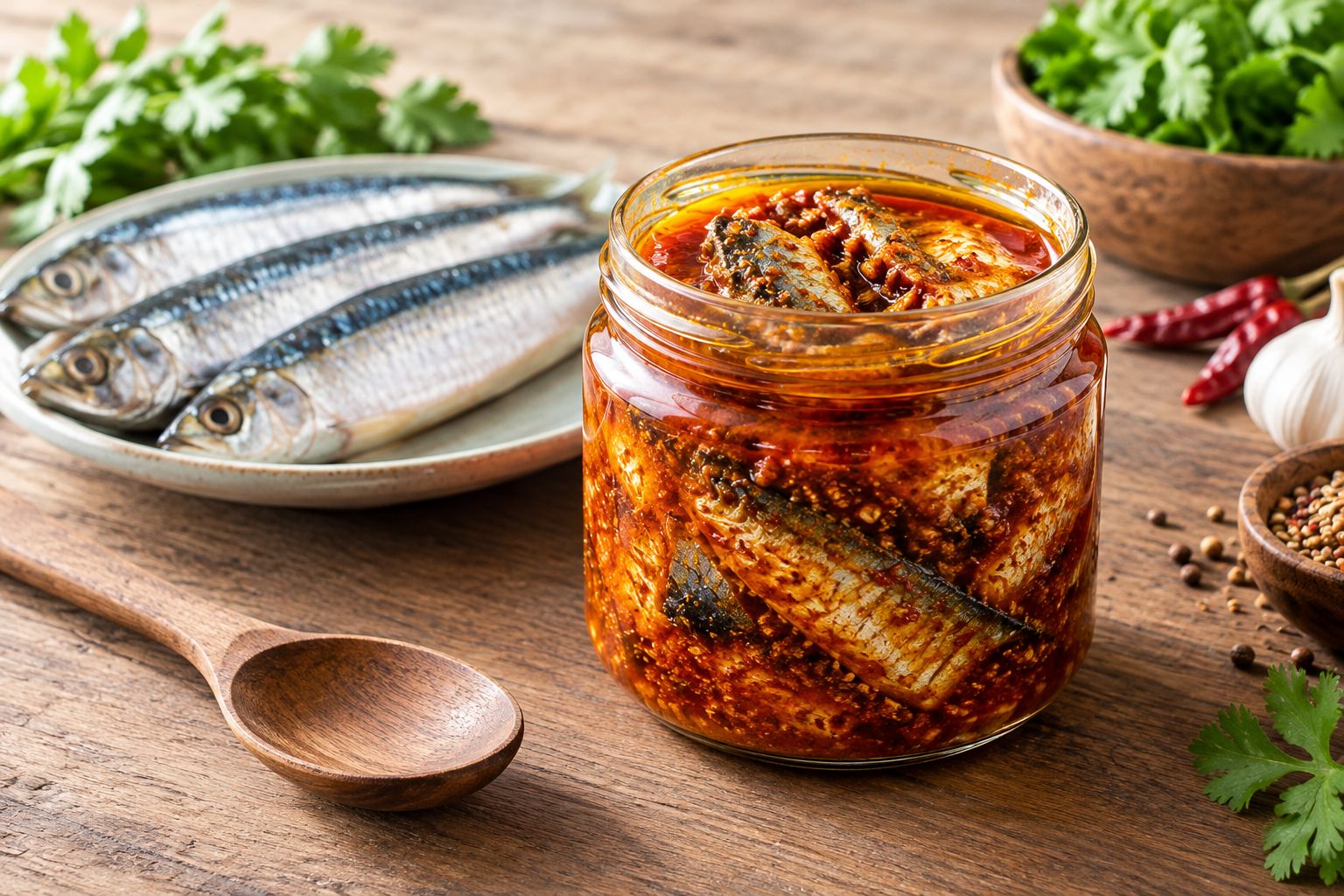
Order fish pickle from a source that names the fish and the batch
- Once you know which fish variety and oil ratio work for a heart-healthy plate, buying from a seller who lists that clearly saves the guesswork.
- Tulasi Pickles' fish pickle page is a faster path once you've settled on a variety and oil preference, since it skips the sourcing research above.
- Compare a jar against homemade batches only if you actually cook fish pickle yourself; most heart-healthy dieters don't have time for the multi-day process.
- Check whether the batch is boneless or bone-in before ordering if portion control without picking bones matters to you.
Watch your sodium load for the rest of the day
- Fish pickle is salted for shelf stability, so it eats into your daily sodium budget faster than a fresh fish fillet does.
- Pair it with unsalted or lightly salted sides like plain curd rice or khichdi instead of another salty side dish.
- If you're also managing blood pressure, alternating fish pickle with a low-sodium pickle on different days keeps the weekly sodium average lower.
- Skip adding extra salt to the rest of the meal when fish pickle is already on the plate.
Store the jar cold once it's opened
- Refrigerate fish pickle within two hours of opening; oil left at room temperature oxidizes faster and the omega-3 fats degrade with it.
- Use a dry spoon every time you serve; moisture in the jar shortens shelf life and invites spoilage.
- Keep the jar sealed tight between servings so air doesn't accelerate oxidation.
- Smell and look before serving each time; a sour smell or a change in oil color means the batch has turned.
Portion it as a condiment, not a main dish
- Treat a tablespoon or two as a full adult serving alongside rice, curd rice, or khichdi.
- Resist scooping straight from the jar with a big spoon; portion control is the entire point for a heart-healthy diet.
- Split a jar across many meals over several weeks rather than finishing it in a handful of sittings.
- Log it as a condiment in any diet tracking you do, not as a protein-heavy main course.
“If you’re scooping fish pickle by the spoonful like a curry, you’re eating a condiment as a main course.”
Rotate with other seafood pickles for variety
- Cycling through fish, prawns, and crab pickle keeps the fat profile varied instead of relying on one species all month.
- Different seafood pickles carry different textures, which keeps a heart-healthy diet from feeling repetitive enough to abandon.
- Keep portions consistent across whichever seafood pickle is on the plate that week.
- Shellfish-based pickles carry more dietary cholesterol than fish pickle, so balance frequency if cholesterol is also being tracked.
Fish pickle options for heart-healthy diets
| Option | Best for | Key limitation |
|---|---|---|
| Traditional bone-in fish pickle | Full traditional flavor with occasional heart-healthy meals | Bones slow down portion control; higher oil content needs draining |
| Boneless fish pickle | Easy portion control without picking bones | More prep work at the source, occasionally less traditional texture |
| Reduced-oil fish pickle | Strict sodium and saturated fat watchers | Shorter shelf life once opened, needs stricter refrigeration |
| Fresh-cooked oily fish (not pickled) | Daily larger omega-3 intake without added salt | Needs a stove and fresh catch every time, doesn't travel or store |
Check the fish pickle batch details
See the fish variety and boneless option on Tulasi Pickles’ fish pickle page before ordering.
Common mistakes heart-healthy dieters make with fish pickle
- Eating it like a fish curry – bowl-sized portions overload sodium and oil for what's meant to be a condiment.
- Skipping refrigeration between servings – oil left out at room temperature oxidizes fast, and oxidized fat loses much of its cardiovascular benefit.
- Draining every drop of oil – the thin layer on top slows spoilage; draining all of it just makes the jar spoil faster for no real health tradeoff.
- Assuming every fish pickle jar has the same omega-3 profile – lean fish varieties and heavily masala-forward recipes carry a lot less fat than an oily-fish jar.
- Pairing it with fried sides – fried papad, fried snacks, or oily curries alongside fish pickle cancel out the heart-healthy intent of the meal.
FAQ
Does fish pickle actually contain omega-3 fatty acids?
Fish pickle made from an oily fish variety like vanjaram or sardines carries the same omega-3 fatty acids the fresh fish had, concentrated into a smaller serving. A lean, low-fat fish variety in a pickle will carry far less.
How much fish pickle can I eat on a heart-healthy diet?
A tablespoon or two per meal is a reasonable serving as a condiment, not a main dish. Eating it in curry-sized bowls defeats the sodium and portion-control point of a heart-healthy diet.
Is boneless fish pickle better for a heart-healthy diet than bone-in?
Boneless fish pickle makes portion control easier since you’re not picking around bones mid-meal. Nutritionally the omega-3 content depends on the fish variety and oil ratio, not on whether it’s boneless.
Can I eat fish pickle every day in 2026?
Daily fish pickle in small, condiment-sized portions is generally fine, but daily large portions push sodium intake too high for most heart-healthy plans. Rotate it with other seafood pickles or fresh fish across the week instead.
Does fish pickle need refrigeration after opening?
Yes. Refrigerate fish pickle within two hours of opening the jar; the oil oxidizes faster at room temperature and the omega-3 fats degrade along with it.
Is fish pickle better than prawns or crab pickle for heart health?
Fish pickle generally carries less dietary cholesterol than shellfish-based pickles like prawns or crab. All three work as heart-healthy condiments in small portions; rotating between them adds variety without one dominating your fat profile.
How much sodium does fish pickle add to a meal?
Fish pickle is salted for shelf stability, so it adds a meaningful share of a meal’s sodium even in small servings. Pair it with unsalted sides like plain curd rice rather than another salty dish.
What’s the best way to store fish pickle for long shelf life?
Keep the jar sealed and refrigerated after opening, use a dry spoon every time, and check the oil color and smell before each serving. Moisture and warm storage are the two fastest ways a jar turns.
One last thing
Most heart-healthy diet plans obsess over which fish variety to buy and ignore the oil layer sitting on top of the jar, but that thin layer is doing more work protecting fat quality than any refrigeration schedule can undo once it's skipped for a week. A jar that sits open on the counter through a warm 2026 afternoon oxidizes faster than one refrigerated within two hours – the two-hour habit matters more than which fish went into the jar.
Related guides