
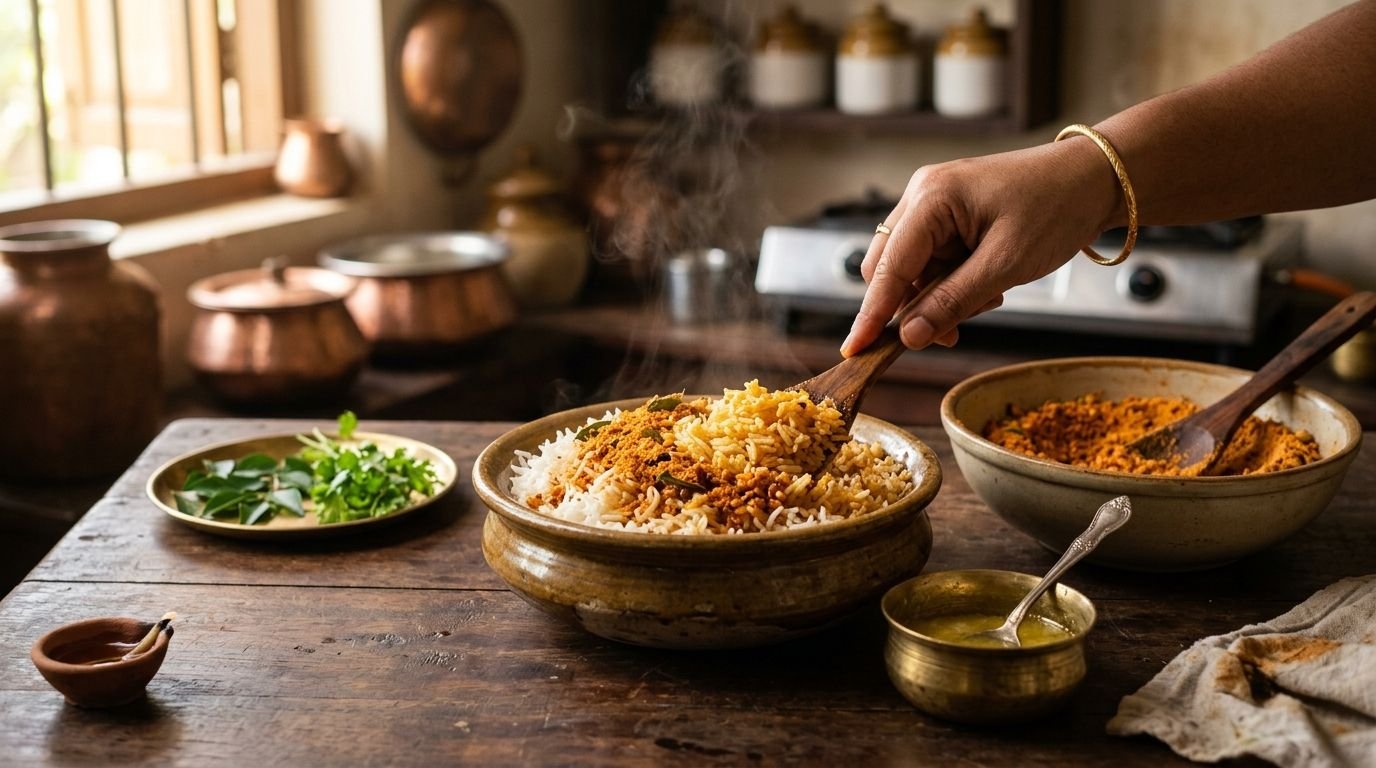
Mixing podi into ghee rice the traditional Andhra way means adding melted ghee to the rice first, while it's still steaming, then folding in podi a spoonful at a time until every grain turns golden brown and fragrant. The order matters more than the quantity: rice cools fast once it hits a plate, and cold rice locks the podi into clumps instead of coating each grain evenly.
- The traditional method is hot rice, ghee first, podi second, mixed in small spoonfuls off the heat.
- A workable ratio is 1-2 teaspoons of ghee and 1-2 tablespoons of podi per cup of cooked rice, adjusted to taste.
- Kandi podi and nuvvula podi need more ghee than karam podi because they’re drier and coarser.
- Mixing podi with ghee rice this way avoids the powdery, dry mouthfeel that comes from adding podi to cold rice.
- Tulasi Pickles grinds its podi varieties fresh in Hyderabad, so they blend without needing extra oil to bind.
Why the mixing order matters
Ghee is a fat, and fat carries flavor only when it's liquid enough to coat starch. Rice that has sat for even five minutes starts to firm up on the surface, so podi added at that point sits on top instead of soaking in. That's the difference between a bowl that tastes like plain rice with dust on it and one where every spoonful carries the podi's roasted, nutty heat.
Andhra households have followed the same sequence for generations: steam or cook the rice, transfer it hot into a wide bowl or plate (not a deep vessel, which traps heat unevenly), pour ghee over it while it's still releasing steam, and only then bring in the podi. Anyone who has grown up eating best Andhra podi for rice and idli knows the podi should almost sizzle faintly when it hits the ghee-coated rice — that faint hiss is the sign the temperature and timing are right.
How to mix podi with ghee rice (step by step)
- Cook the rice slightly firmer than usual. Mushy rice absorbs ghee unevenly and turns gummy once podi is folded in.
- Transfer the hot rice to a wide, shallow bowl. A wide surface lets steam escape instead of turning the rice soggy.
- Pour melted ghee over the rice while it's still steaming. Use 1-2 teaspoons per cup of rice as a starting point in 2026 — you can always add more.
- Mix the ghee through with a fork, not a spoon. A fork separates grains instead of mashing them.
- Add podi in small spoonfuls, one at a time. Start with a tablespoon per cup and taste before adding more.
- Fold, don't stir. Lift the rice from underneath so the podi coats grains instead of collecting at the bottom of the bowl.
- Rest for two minutes before eating. This lets the podi's oils release fully into the ghee coating.
The entire process takes under five minutes, and skipping any single step — cold rice, stirring instead of folding, or dumping all the podi in at once — is the most common reason homemade ghee rice tastes flat compared to what's served at Andhra households and tiffin centers.
“If you can’t smell the ghee before you smell the podi, add another spoon of ghee before you add more podi.”
Kandi podi: needs more ghee to bind
Kandi podi is made from roasted lentils and is naturally coarse and dry. It needs the higher end of the ghee range — closer to 2 teaspoons per cup of rice — because the lentil grains don't dissolve the way finer powders do. Without enough ghee, kandi podi stays gritty instead of forming a coating. Readers who use this podi regularly for kandi podi for protein-rich rice mixing usually mix it into rice that's still visibly steaming, not just warm, because the extra heat helps the ghee spread through the coarser texture.
Nuvvula podi: sesame-based, needs less ghee
Nuvvula podi (sesame powder) already carries natural oil from the sesame seeds, so it needs less added ghee — roughly 1 teaspoon per cup is usually enough. Adding the full 2 teaspoons here often makes the rice taste greasy rather than rich. This is one of the few podis where less ghee produces a better result, not more.
Karam podi: the driest variety, needs the most attention
Karam podi (chilli-based rice powder) is drier and spicier than kandi or nuvvula podi, and it clumps fastest if mixed into rice that has started cooling. It benefits from being added in smaller increments than the other two — start with half a tablespoon per cup and build up, since the chilli heat compounds quickly once oil carries it through the rice.
Why the podi-to-ghee-rice ratio varies
- Podi type: coarser powders like kandi podi need more ghee; oil-rich powders like nuvvula podi need less.
- Rice variety: sona masoori and basmati absorb ghee differently because of grain length and starch content.
- Freshness of the podi: freshly ground podi releases aroma faster and often needs slightly less ghee than podi that's been stored for weeks.
- Personal spice tolerance: karam podi in particular should be added in smaller amounts for anyone new to it.
- How the rice was cooked: pressure-cooked rice holds more moisture and needs less ghee than rice cooked in an open pot.
- Whether pickle oil is added alongside: some households swap a portion of the ghee for leftover pickle oil, which changes the ratio because pickle oil is already spiced.
Verdict: the traditional method for mixing podi with ghee rice is hot rice, melted ghee first, podi folded in gradually — and it works with any podi variety once you adjust the ghee level to match how dry or oily that podi is.
Try authentic Andhra podi at home
Freshly ground kandi, nuvvula and karam podi shipped from Hyderabad.
Which podi is best for ghee rice?
Kandi podi is the most commonly used podi for ghee rice in Andhra households because its roasted lentil flavor holds up against the richness of ghee without getting lost. Nuvvula podi is a close second for anyone who prefers a nuttier, milder result. Best for daily lunch boxes: kandi podi. Best for a lighter, less oily plate: nuvvula podi.
Can you mix podi with ghee rice ahead of time?
Mixing podi with ghee rice ahead of time works for up to a few hours if the rice stays covered, but it's best eaten within 30-45 minutes for the freshest texture. Rice mixed and left uncovered dries out and the podi separates from the grains as moisture escapes.
Does the type of rice change how you mix podi with ghee rice?
Yes, the rice variety changes how you mix podi with ghee rice because grain length and starch affect how much ghee gets absorbed. Sona masoori, the most common rice in Andhra households, absorbs ghee faster than basmati, so it typically needs slightly less ghee to reach the same coating.
Is it traditional to add pickle oil instead of ghee?
Adding pickle oil instead of ghee is a regional variation, not the traditional base method, but it's common in households that want extra tang and spice. The oil from pickles like avakaya carries mustard and chilli flavor that changes the final taste significantly compared to plain ghee.
FAQ
How much podi should I mix with one cup of ghee rice?
Start with 1-2 tablespoons of podi per cup of cooked rice and adjust to taste. Coarser podis like kandi podi may need slightly more to coat every grain.
Should ghee or podi go into the rice first?
Ghee goes in first, while the rice is still hot, followed by podi in small spoonfuls. Adding podi before ghee causes it to clump on cooling rice instead of blending in.
Can I use cold rice to mix podi with ghee rice?
Cold rice is not recommended because ghee doesn’t spread evenly once rice firms up. Reheat the rice until it’s steaming before adding ghee and podi.
What’s the best podi for ghee rice, kandi podi or karam podi?
Kandi podi is the more traditional choice for ghee rice because its roasted lentil flavor pairs directly with ghee’s richness. Karam podi works too but its higher chilli content means it should be added in smaller amounts.
How long does mixed podi ghee rice stay fresh?
Podi ghee rice tastes best within 30-45 minutes of mixing and holds reasonably well for a few hours if covered. Beyond that, the rice dries out and the podi coating separates.
Can nuvvula podi be mixed with ghee rice the same way as kandi podi?
Nuvvula podi can be mixed the same way but needs less ghee, roughly 1 teaspoon per cup instead of 2, because sesame already carries natural oil.
Is store-bought podi different to mix than homemade podi?
Freshly ground podi tends to release aroma faster and blends into ghee rice with slightly less ghee needed than podi that’s been stored for weeks. Checking the grind date matters more than the brand.
One last thing
The detail most people miss isn't the ratio, it's the resting time — podi ghee rice actually tastes better two minutes after mixing than the moment you finish folding it, because the podi's oils need a beat to release fully into the ghee coating. Mix it, wait, then eat; skipping that pause is why some plates taste like rice with powder on top instead of rice that's actually absorbed the podi.
Related guides
- Best podi varieties for mixing with rice at home
- How to use podi with idli, dosa and rice
- Karam podi for spicing up curd rice and khichdi
- How to pair pickles with curd rice and khichdi