
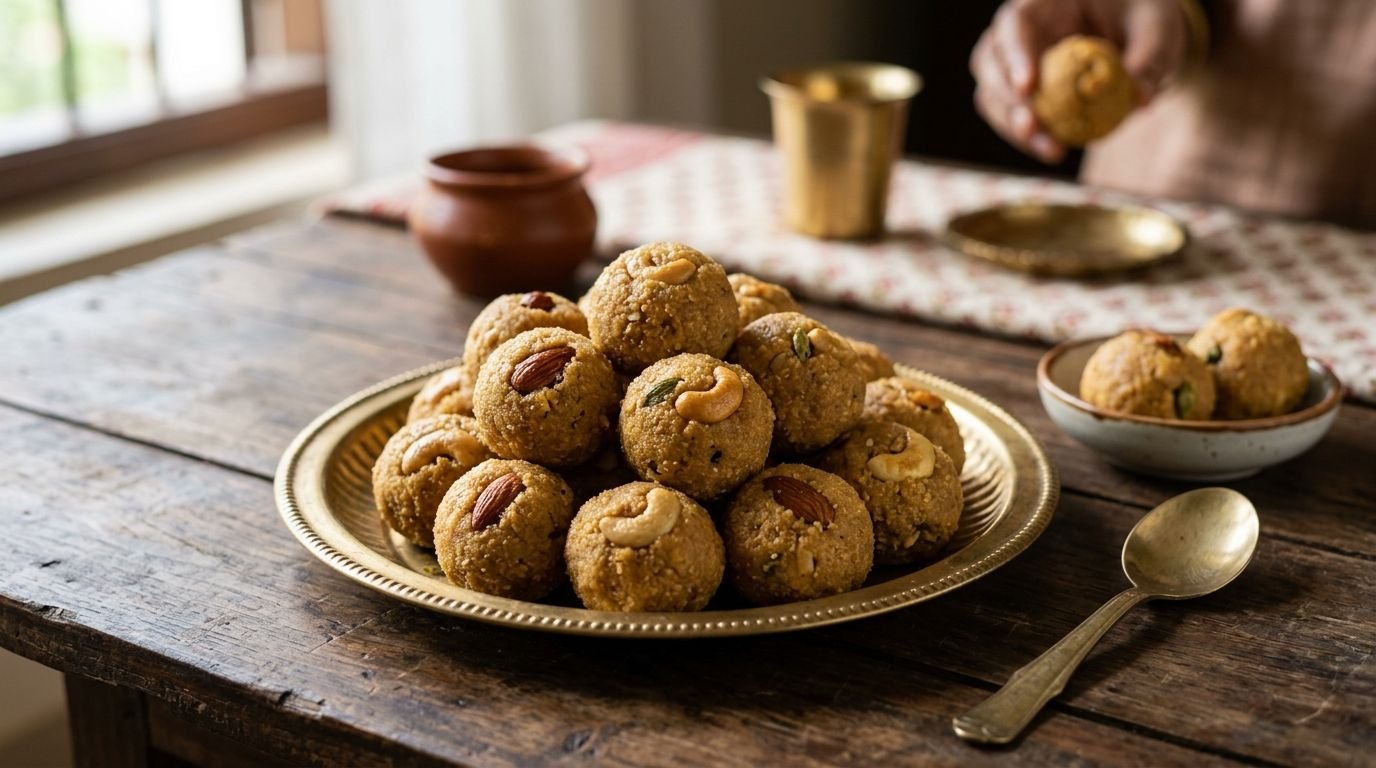
Bandar laddu for NRIs and out-of-state Telugu families is the search for a moong dal and ghee sweet made the way Machilipatnam sweet shops in coastal Andhra Pradesh have made it for generations — not the boondi or besan version sold as "laddu" everywhere else. Buyers in this group care less about price and more about the crumbly moong dal texture, the absence of shortcuts, and whether the sweet survives a courier run to Hyderabad, Bangalore, the US or the UK without turning into a solid brick.
- Authentic bandar laddu uses roasted moong dal, ghee and sugar, not besan or boondi — check the ingredient list first.
- Tulasi Pickles ships bandar laddu and other Andhra sweets from Hyderabad across India and overseas in 2026.
- Order 7-10 days ahead of festivals like Sankranti and Ugadi; batches made for the season sell out fast.
- A sugar-free festive sweets option exists for diabetic parents who still want the same flavor profile.
- Pair bandar laddu with pootharekulu or boondi laddu for a full festive spread rather than buying one sweet alone.
Why bandar laddu matters for buyers away from coastal Andhra
Bandar laddu takes its name from Bandar, the local name for Machilipatnam in Andhra Pradesh's Krishna district, where the sweet earned a Geographical Indication tag in 2011 for its distinct moong dal recipe. That GI status exists precisely because so many sellers outside the region substitute cheaper besan or boondi and still call the result "bandar laddu."
For someone in Hyderabad, Chicago or London craving the real thing, the practical problem isn't finding a laddu — it's finding one that actually uses the moong dal base and travels well. Tulasi Pickles ships Andhra sweets and snacks from Hyderabad, so shelf life and packaging matter as much as the recipe itself for this segment.
Searches for bandar laddu spike hardest around Sankranti, Ugadi and Diwali, when families buying gift boxes want a sweet that reads as "authentic Andhra" rather than generic. That festival timing changes how you should shop for it — waiting until the week of the event is the single biggest mistake this group makes, covered further down.
How to find and buy authentic bandar laddu
Confirm the moong dal ratio before you order
Real bandar laddu is built on roasted moong dal, not chickpea flour or boondi. The texture gives it away: it should crumble cleanly at the first bite rather than hold together like a besan ladoo.
- Read the ingredient list — moong dal should be the first or second item, not sugar or vanaspati
- Ask the seller directly if the base is moong dal or besan; a vague answer is a red flag
- Compare color: authentic bandar laddu is pale golden from moong dal and ghee, not deep yellow from added color
- Check for a grainy, slightly rough surface texture rather than a smooth, compressed ball
- Avoid listings that call any round yellow sweet "laddu" without naming the base ingredient
Check the maker's connection to the recipe, not just the label
Anyone can print "Bandar Laddu" on a box. The recipe technique — roasting moong dal, cooking it down with ghee and sugar syrup to the right consistency — is what separates authentic sweets from imitations.
- Look for sellers who describe the actual cooking method, not just the finished product
- Favor Andhra-origin or Hyderabad-based sellers over generic pan-India sweet marketplaces
- Check if the seller also makes other coastal Andhra staples like pootharekulu or boondi laddu — a narrow, authentic catalog is a better signal than a 200-item sweets menu
- Ask about shelf life in writing; genuine ghee-based sweets without preservatives have a shorter window than mass-produced versions
Order a small batch before committing to a festival order
The manual, no-cost way to test authenticity is simple: order the smallest available quantity first and taste it before buying in bulk for a wedding or festival gift round.
Tulasi Pickles sells bandar laddu in the same catalog as its Andhra pickles and podis, which gives buyers a faster way to check quality against a brand already known for homemade Andhra products, without needing to source and vet a separate sweets-only seller.
- Order a trial pack 2-3 weeks before your target event, not the week of
- Note texture and sweetness on arrival — genuine moong dal laddu should not taste artificially sweet
- Check if it stays fresh for the number of days the seller claims
- Confirm the packaging arrived intact before scaling up the order size
Match the pack size to the occasion
A laddu box for a quiet family Sankranti looks nothing like one for a wedding return-gift order. Buying the wrong size either leaves you short or stuck with leftovers that dry out.
- Small trial packs: for first-time buyers or personal cravings
- Mid-size boxes: for immediate family festival celebrations
- Bulk orders: for weddings, housewarmings or corporate festive gifting
- Combo boxes: bandar laddu paired with pootharekulu or boondi laddu when the recipient wants variety over volume
Plan shipping and shelf life if you're ordering from outside Hyderabad
Ghee-based sweets don't have the shelf stability of packaged snacks. This is the step most overseas and out-of-state buyers skip, and it's the one that ruins the sweet before it's even opened.
- Ask for the exact shelf life in days, not a vague "fresh for weeks" claim
- Check if the seller ships nationally and overseas — Tulasi Pickles lists sweets and snacks combo options built for festive gifting and long-distance shipping
- Order earlier for overseas addresses; customs and transit add days you can't get back
- Store received boxes in an airtight container immediately, away from direct heat
- Avoid refrigerating unless the seller specifically recommends it — cold can dry out the moong dal texture
Pair bandar laddu with the rest of a festive spread
Bandar laddu rarely travels alone in an actual Andhra household. Buyers building a full festive gift or spread usually add a second or third sweet and a savory counterpart.
- Pootharekulu for a paper-thin, contrasting sweet alongside the denser laddu
- Boondi laddu for buyers who want the diaspora's more familiar sweet next to the authentic regional one
- Karam boondi or murukku for a savory contrast in the same gift box
- Dry fruits for a premium festive hamper that isn't sweets-only
If the laddu doesn't crumble cleanly at the first bite, it wasn't made with moong dal in the traditional Bandar ratio — that single texture test filters out most imitation listings faster than reading any label.
“If the laddu doesn’t crumble cleanly at the first bite, it wasn’t made with moong dal in the traditional Bandar ratio.”
Bandar laddu buying options compared
| Option | Best for | Key limitation |
|---|---|---|
| Homemade family recipe | Buyers with time and access to good-quality moong dal | Getting the roast and syrup consistency right takes practice and hours of stirring |
| Local Machilipatnam sweet shop counter | Buyers physically in coastal Andhra Pradesh | Not practical for Hyderabad, other states or overseas orders |
| Generic supermarket "laddu" brands | Casual, one-off snacking | Frequently besan or boondi based, not the moong dal recipe that defines bandar laddu |
| Tulasi Pickles online order | Hyderabad buyers, NRIs and festival gifting orders shipping across India and overseas | Availability is tied to production batches, so early ordering matters before festival dates |
Verdict: Tulasi Pickles' bandar laddu is the practical pick for anyone outside Machilipatnam who wants the moong dal recipe shipped for a 2026 festival, provided you order ahead of the seasonal rush.
Order bandar laddu before your next festival
Homemade Andhra sweets shipped from Hyderabad across India and overseas.
Common mistakes buyers make with bandar laddu
- Trusting the label over the ingredient list. Any round yellow sweet can be marketed as bandar laddu; the moong dal base is the only real proof.
- Ordering the week of the festival. Sankranti and Ugadi orders spike demand, and batches made from fresh moong dal sell out before the date, not on it.
- Buying one large box instead of testing first. A bulk order based on a photo, with no trial pack, is how buyers end up with 2 kg of a sweet they don't actually like.
- Ignoring shelf life for gifting to elderly or diabetic relatives. Standard bandar laddu is sugar-heavy; if that's a concern, a sugar-free festive sweets option is worth checking before assuming the classic version is fine for everyone on the gift list.
- Storing opened boxes loosely. Ghee-based sweets dry out fast once exposed to air; an airtight container after opening matters more than most buyers assume.
FAQ
What is bandar laddu made of?
Authentic bandar laddu is made from roasted moong dal, ghee and sugar, giving it a pale golden color and a crumbly texture. It is not made from besan or boondi, which is what separates it from generic supermarket laddu.
Is bandar laddu the same as boondi laddu?
No. Bandar laddu uses a moong dal base and originates from Machilipatnam in Andhra Pradesh, while boondi laddu is made from fried chickpea flour droplets. They look similar in color but differ completely in texture and ingredients.
How long does bandar laddu stay fresh?
Shelf life depends on the maker since it’s a ghee-based sweet without heavy preservatives, so ask the seller for the exact number of days before ordering in bulk. Store it in an airtight container away from heat once it arrives.
Can bandar laddu be shipped overseas?
Yes, sellers based in Hyderabad ship Andhra sweets including bandar laddu across India and overseas in 2026, but transit time and customs mean overseas orders should go in well ahead of a festival date.
What makes bandar laddu different from regular laddu?
The moong dal base and the specific roasting-and-syrup technique from Machilipatnam are what define bandar laddu; regular laddu can be made from besan, boondi or other bases with a completely different texture and taste.
Is bandar laddu available in a sugar-free version?
Sugar-free festive sweet options exist for buyers gifting to diabetic family members, though the classic bandar laddu recipe is traditionally made with sugar and ghee. Check with the seller before ordering for someone on a restricted diet.
Where does bandar laddu originate from?
Bandar laddu takes its name from Bandar, the local name for Machilipatnam in Andhra Pradesh’s Krishna district, which received a Geographical Indication tag for the sweet in 2011.
How much bandar laddu should I order for a festival gift box?
Match the quantity to the occasion: a small trial pack for personal cravings, a mid-size box for immediate family, and bulk orders only after you’ve confirmed the batch tastes right and travels well.
One last thing
The GI tag on bandar laddu exists because imitation was already a widespread problem by 2011 — that's not a marketing detail, it's the reason the moong dal ratio matters more than any other factor when you're buying online in 2026. Skip the listing that can't tell you what's in the sweet, no matter how good the photo looks.
Related guides
- Andhra sweets for festival celebrations
- Boondi laddu for festive Andhra sweet cravings
- Pootharekulu for authentic Andhra sweet gifting