
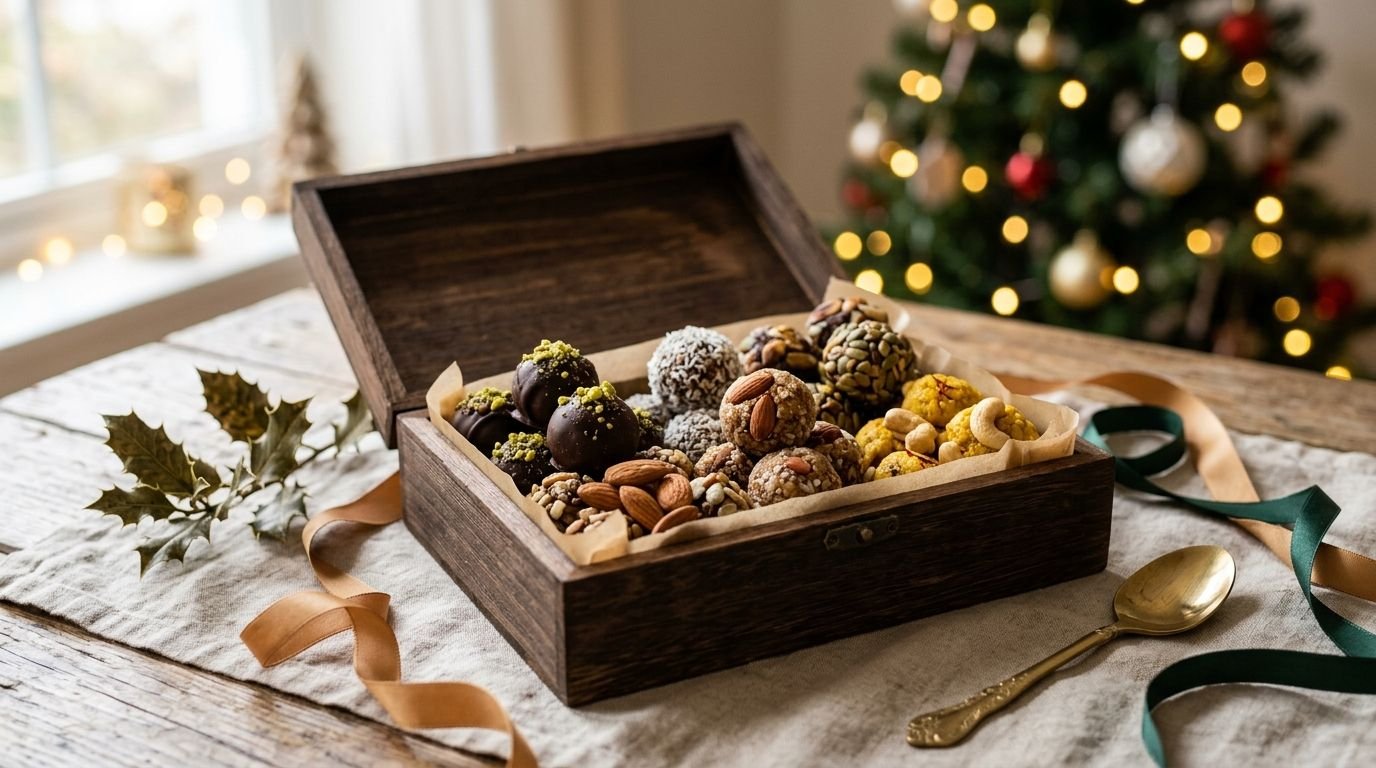
Diabetic-friendly festive gifting means choosing sugar-free sweets — or swapping them out for lower-sugar alternatives entirely — so a recipient managing diabetes can still join Diwali, Rakhi, or wedding-season celebrations without a blood-sugar spike. This segment shops differently from a regular festive-sweets buyer: they read ingredient panels before packaging, they ask about jaggery versus refined sugar, and they often prefer a gift box built around dry fruits, podis, and pickles rather than syrup-soaked mithai.
- Sugar-free sweets for diabetic-friendly festive gifting means checking ingredient labels, not trusting the word ‘sugar-free’ alone.
- Jaggery-based sweets like laddu and pootharekulu still raise blood sugar — they are not a sugar-free substitute.
- Dry fruits, podis and no-added-sugar pickles from Tulasi Pickles work as a safer festive gift base for diabetic recipients in 2026.
- Portion-controlled, individually wrapped formats beat large syrup-heavy tins for this segment every time.
- Ask three questions before ordering: sugar position on the label, shelf life, and shipping method.
Why this matters for diabetic-friendly festive gift buyers
Most festive sweet boxes lean on ghee, sugar syrup, and khoya — the exact three things a diabetic recipient has to avoid. That leaves gift-givers with two real choices for 2026 festive gifting: hunt for a genuinely sugar-free sweet, or build the box around items that were never sugar-heavy to begin with, like dry fruits for festive season gifting, roasted podis, or savory pickles.
The second route is more reliable in 2026 because "sugar-free" claims on packaged sweets often mean sugar alcohols (sorbitol, maltitol) replaced sucrose — not that the sweet is glucose-neutral. A gift box built on dry fruits and no-added-sugar savory items is the safer default for a diabetic recipient than a sweet labelled sugar-free.
1. Read the ingredient label before you buy anything sweet
Don't take a shelf tag's word for it. Pull the nutrition panel and check what's actually inside.
- Check if sugar or sucrose sits in the first three listed ingredients
- Look for jaggery declared separately from refined sugar — both raise blood glucose
- Watch for "sugar-free" claims built on sorbitol or maltitol, which still affect glucose in large servings
- Ask for the nutrition panel per 100g, not per single piece, so servings compare fairly
- Confirm the pack states net carbs, not just "no added sugar"
2. Compare jaggery-based sweets against refined-sugar sweets honestly
Traditional Andhra festive sweets — laddu, pootharekulu, chikki — are built on jaggery or sugar syrup by recipe. That's authentic and it's why they taste the way they do, but jaggery is not a diabetic-safe swap gram for gram.
- Treat jaggery sweets from Andhra sweets for festival celebrations as an occasional, single-bite treat for a diabetic recipient, not a daily gift
- Ask if the sweet uses jaggery syrup or crystallized jaggery — syrup spikes faster
- Skip khoya-heavy sweets for anyone managing blood sugar closely
- Favor sesame or nut-based chikki over syrup-dipped sweets when a sweet has to be included
3. Pick portion-controlled formats over large syrup-heavy tins
A large tin of loose sweets invites over-serving. Individually wrapped, single-piece formats let the recipient control intake themselves.
- Choose single-serve or individually wrapped pieces over loose bulk tins
- Check the printed serving size — many festive sweets list servings far smaller than what people actually eat
- Gift smaller quantities of sweets alongside larger quantities of dry fruits or savory items
- Avoid mixed combo boxes where sweet-to-savory ratio isn't visible on the outer pack
4. Build the gift box around a sugar-free-first base
This is where the manual approach and the practical shortcut meet. Dry fruits, roasted nuts, and spice powders don't carry the added-sugar problem that festive mithai does, so they anchor a diabetic-friendly gift box without any label-reading gymnastics.
- Cashews, almonds, and pistachios carry no added sugar and offer protein alongside fat
- Dates and raisins do carry natural sugars — portion these smaller than nuts
- Roasted, unsweetened dry fruit mixes gift better than candied or sugar-glazed versions
- A box weighted toward nuts and podis, with one small sweet, reads as thoughtful rather than restrictive
5. Round out the box with podis and no-added-sugar pickles
Spice powders and most pickles carry no added sugar in the recipe — sweet mango pickle (bellam pachadi style) is the one exception worth flagging, since it's made with jaggery. Everything else in the savory lineup is a safe add.
- Oil-free pickles for health-conscious buyers work well for recipients also watching fat intake alongside sugar
- Roasted gram or peanut podis add variety without touching the sugar question at all
- Confirm any pickle variety isn't a jaggery-based sweet pickle before adding it to a diabetic gift box
- Pair one savory jar with the dry fruit base so the box doesn't read as sweets-only
6. Confirm shelf life and shipping method before you order
Festive gifting often means shipping across cities or overseas, and dairy-heavy sweets don't travel the way dry fruits and pickles do.
- Ask for printed shelf life on any sweet before shipping it more than a day away
- Prefer vacuum-sealed dry fruit tins and jarred pickles for overseas gifting
- Avoid khoya or milk-based sweets for long-distance shipping — spoilage risk climbs fast
- Check if the seller ships same-day or holds stock before dispatch, since that changes freshness on arrival
7. Ask the seller three direct questions before ordering
- Where does sugar sit on the ingredient list — first three, or further down?
- What's the printed shelf life on the sweet or savory item?
- Is this shipped fresh, or has it been held in cold storage before dispatch?
Comparison: gifting options for a diabetic-friendly festive box in 2026
| Option | Best for | Sugar approach | Verdict |
|---|---|---|---|
| Jaggery-based traditional sweets (laddu, pootharekulu) | A single token bite, not the main gift | Jaggery or sugar syrup — not sugar-free | Hold — only as a small accent |
| Dry fruits and roasted nuts | Everyday diabetic-friendly gifting base | Naturally low in added sugar | Buy |
| Podis and no-added-sugar pickles | Savory-leaning festive variety | No added sugar in most varieties | Buy |
| Commercial polyol-based "sugar-free" sweets | A one-off token sweet | Sugar swapped for sorbitol or maltitol | Wait — check digestive tolerance first |
“If a festive sweet lists sugar or jaggery in the first three ingredients, treat it as an occasional bite, not the main gift.”
Common mistakes diabetic-friendly gift buyers make
- Assuming jaggery means diabetic-safe. Jaggery raises blood glucose almost as fast as refined sugar, gram for gram — it's a flavor swap, not a health swap.
- Buying a mixed combo box without checking contents first. A sweets and snacks combo for festive gifting may lean heavily sweet — ask what's inside before gifting it to a diabetic relative.
- Ignoring the printed serving size. Gifting a large loose tin instead of individually wrapped pieces removes the recipient's ability to control portions.
- Not asking the recipient's sweetener preference. Some diabetics avoid polyols entirely due to digestive side effects; others don't mind them. Guessing wrong wastes the gift.
- Overlooking spoilage risk on long-distance shipping. Dairy-based sweets sent overseas or across states in 2026 without cold-chain handling arrive spoiled far more often than vacuum-sealed dry fruit or jarred pickles.
Build a diabetic-friendly festive box
Browse dry fruits, podis and no-added-sugar pickles from Tulasi Pickles for 2026 festive gifting.
FAQ
What counts as a sugar-free sweet for a diabetic gift in 2026?
A genuinely sugar-free sweet lists no added sucrose or jaggery in its first three ingredients and states net carbs on the pack. Many labelled ‘sugar-free’ still use sorbitol or maltitol, which can affect blood sugar in large servings.
Is jaggery a safe substitute for sugar in diabetic gifting?
No. Jaggery raises blood glucose nearly as fast as refined sugar, gram for gram, so traditional jaggery-based sweets like laddu and pootharekulu should stay an occasional single bite, not the main gift.
Are pickles and podis safe for diabetic-friendly festive gifting?
Most pickles and spice powders carry no added sugar and work well in a diabetic-friendly gift box. The one exception is sweet mango pickle made with jaggery, which should be skipped for this segment.
What’s better for a diabetic recipient — dry fruits or sugar-free sweets?
Dry fruits and roasted nuts are the more reliable choice because they carry no added sugar by default, while commercial sugar-free sweets rely on sugar alcohols that some people tolerate poorly.
How much sugar-free sweet is safe to gift a diabetic in one box?
Keep any sweet, sugar-free or otherwise, to a small individually wrapped portion, and weight the rest of the box toward dry fruits, podis, and pickles for 2026 festive gifting.
Can sugar-free festive sweets be shipped overseas safely?
Dairy-heavy sweets travel poorly overseas regardless of sugar content. Vacuum-sealed dry fruits and jarred pickles hold up far better for long-distance festive gifting in 2026.
Do all dates and raisins count as sugar-free gifting options?
No. Dates and raisins carry natural sugars even though they have no added sugar, so portion them smaller than plain roasted nuts in a diabetic-friendly gift box.
One last thing
The label "sugar-free" on a festive sweet tells you what was removed, not what was added back in its place — check for sorbitol or maltitol before assuming it's a clean swap for a diabetic recipient in 2026. A box built mostly on dry fruits and one savory jar, with a single small sweet as the only sugar exposure, reads as more thoughtful than a full sweets tin anyway.
Related guides