
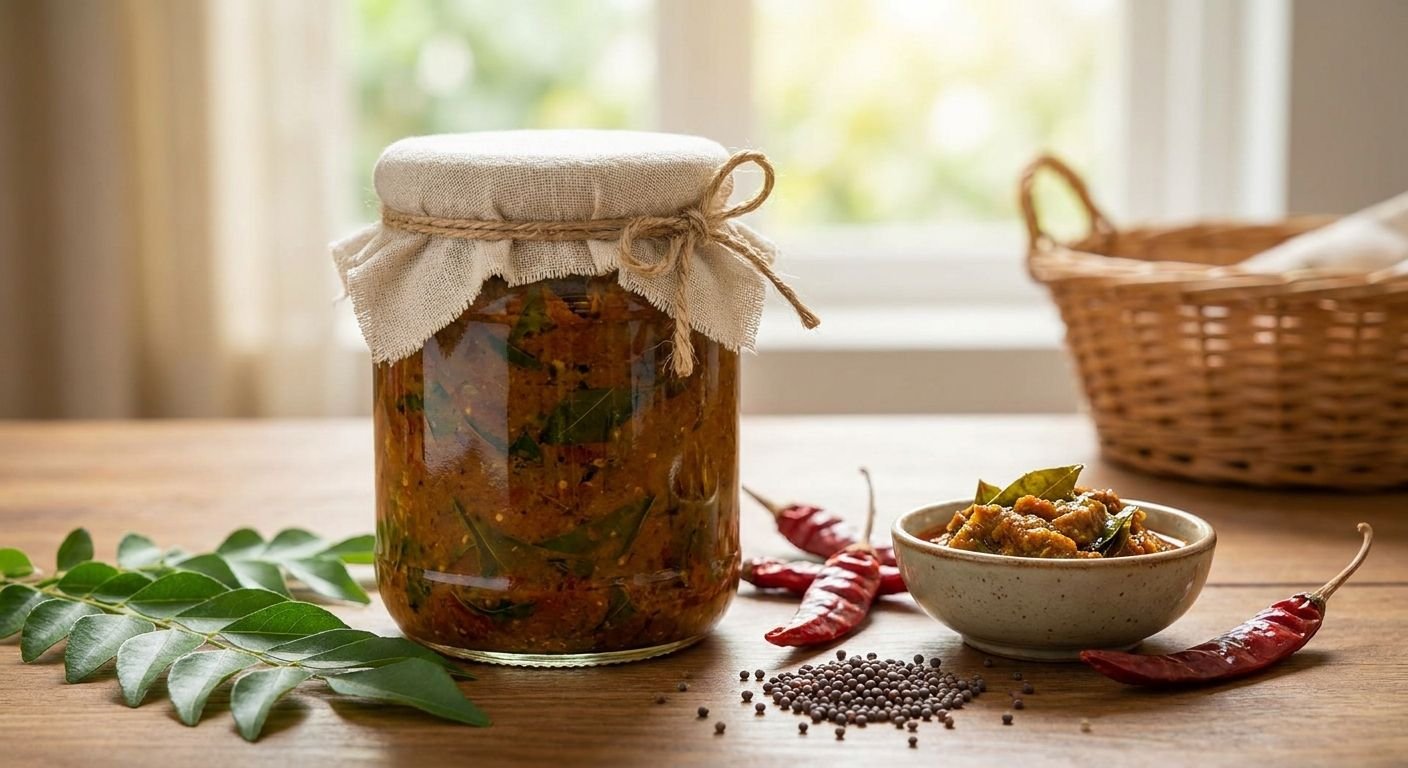
Curry leaf pickle for hair and health conscious buyers is a savory, oil-tempered pickle made from fresh curry leaves, tamarind, and a spice blend, chosen for its iron and antioxidant content rather than sweetness or heat. This segment shops differently than a typical pickle buyer: they read oil percentages before they read spice levels, and they care more about what the jar does for their body than how it tastes with rice.
- Curry leaf pickle wins for buyers who want iron and antioxidants from a savory Andhra staple, not a sweet or fried snack.
- Oil-free versions cut visible fat without dropping the curry leaf content — check the label, not the marketing copy.
- Pair dietary curry leaf pickle with a real hair-care routine; the pickle supports nutrition, it does not replace shampoo or scalp care.
- Buy in small batches (200-250g) if you are testing it for the first time in 2026 — freshness fades faster than spicier pickles.
Why curry leaf pickle matters for health and hair conscious buyers
Curry leaves have been part of Ayurvedic dietary tradition for centuries, valued for iron, calcium, and antioxidant compounds that support hair and skin from within — not applied topically, but eaten regularly as part of a meal. That distinction matters because most buyers searching for "curry leaf pickle for hair" are looking for a dietary habit, not a hair mask.
For this segment, the pickle is a delivery mechanism for a leaf most people don't cook with daily. Curry leaves get used as a tempering garnish and then picked out of the plate — pickling them is the only format that gets the whole leaf eaten, oil and all. If you're choosing between an oil-free pickles range and a traditional tempered jar, that's the first decision this guide walks through.
Step 1: Check the ingredient list before buying
Most jars labeled "curry leaf pickle" vary wildly in oil percentage, salt, and added preservatives. A health-conscious buyer needs to read past the front label.
- Confirm curry leaf is the first or second ingredient, not tamarind or chili filler
- Check for added preservatives (sodium benzoate, citric acid beyond natural souring)
- Look at the oil layer on top of the jar — a thin film is normal, a flooded jar is not
- Verify salt content isn't disguised as "seasoning" on the label
- Ask whether the batch is homemade or factory-blended; homemade batches usually list fewer additives
Step 2: Match the oil level to your health goals
Oil is what makes traditional Andhra pickle shelf-stable, but it's also the first thing health-conscious buyers want to control. Curry leaf pickle without added oil spoils faster and needs refrigeration, while the traditional version lasts longer at room temperature.
- Choose oil-free if you're managing cholesterol or daily fat intake
- Choose traditional tempered pickle if you eat small quantities occasionally, not daily
- Check the shelf-life instructions on both — oil-free jars often need a fridge within days of opening
- If you're unsure, start with a small jar of each and compare texture and taste before committing to a bulk order
- Cross-check against an amla pickle jar if you want a second low-oil, high-antioxidant option to rotate with curry leaf
Step 3: Verify curry leaf sourcing and freshness
Curry leaves lose potency fast once picked — wilted, browned leaves make a duller, less nutrient-dense pickle. Freshness at the sourcing stage decides the final quality more than the spice blend does.
- Ask when the batch was made, not just the expiry date printed on the jar
- Look for a deep green-brown color in the pickle, not a faded olive tone
- Smell test: fresh curry leaf pickle has a sharp, slightly citrusy aroma, not a flat oily smell
- Avoid jars sitting on a shelf for months before shipping — ask the seller about batch frequency
Step 4: Understand what curry leaf pickle can and can't do for hair
This is where buyers overreach. Eating curry leaf pickle supports the iron and antioxidant intake that contributes to healthier hair growth over time, but it is a dietary habit, not a topical treatment. Nobody's hair improves from a jar of pickle alone if the rest of the routine works against it.
- Treat curry leaf pickle as one input in a broader hair-health diet, alongside protein and iron-rich foods
- Don't skip a proper scalp-care routine expecting diet alone to fix hair fall
- Pair dietary changes with the right hair-wash routine — for buyers rebuilding their full hair-care stack in 2026, gentle sulphate-free shampoos in India round out what a curry-leaf-rich diet starts from the inside
- Give it 8-12 weeks of regular eating before expecting any noticeable change; hair growth cycles are slow regardless of diet
- Track other variables (stress, sleep, water intake) alongside diet — a single ingredient rarely explains hair changes on its own
Step 5: Portion it correctly for daily eating
Pickle is a condiment, not a meal component, even the health-focused versions. Overeating any pickle for its "benefits" usually means overeating salt and oil too.
- Stick to 1-2 teaspoons per meal, not a heaped spoonful
- Pair it with rice, curd rice, or dosa rather than eating it directly from the jar
- Watch total sodium if you're also using garlic pickle or other condiments in the same meal
- Reduce portion size if you have blood pressure concerns — pickle salt adds up across the day
Step 6: Store it right to protect the nutrients you're paying for
Curry leaf pickle that's stored badly loses both flavor and the nutritional value that's the whole reason a health-conscious buyer picked it up.
- Use a dry spoon every time — moisture is the fastest way to spoil a jar
- Keep oil-free versions refrigerated after opening
- Store traditional tempered versions in a cool, dark spot away from direct sunlight
- Reseal tightly after each use to limit air exposure
Step 7: Decide between a single jar and a variety pack
First-time health-conscious buyers rarely know if curry leaf pickle fits their taste and routine before trying it.
- Start with a single small jar rather than a bulk order
- Rotate curry leaf with amla or garlic pickle to spread out nutrient variety across the week
- Read the spice level before ordering if you're sensitive to heat — some traditional recipes run spicier than expected
- Skip bulk buying until you've confirmed the batch suits your daily eating pattern
Comparison: curry leaf pickle options for health and hair conscious buyers
| Option | Best for | Key limitation |
|---|---|---|
| Traditional curry leaf pickle (oil-tempered) | Buyers who eat pickle occasionally and want longer shelf life | Higher oil content works against strict low-fat diets |
| Oil-free curry leaf pickle | Daily eaters managing cholesterol or fat intake | Needs refrigeration and has a shorter shelf life once opened |
| Amla pickle (rotation option) | Buyers wanting a second antioxidant-rich pickle to alternate with curry leaf | Tangier taste, not a curry leaf substitute for iron content |
| Garlic pickle (rotation option) | Buyers prioritizing immunity alongside hair and skin health | Stronger flavor, not suited for every meal |
| Homemade batch from a local seller | Buyers who want to verify freshness and sourcing directly | Harder to standardize quality across every batch |
Verdict: curry leaf pickle from a batch with visible, fresh green leaves and a controlled oil level is the right pick for daily health-conscious eating in 2026 — buy small, verify freshness, and rotate with amla or garlic pickle rather than eating the same jar every day.
Try curry leaf pickle and rotate flavors
Browse the full range of homemade Andhra pickles shipped across India.
Common mistakes health and hair conscious buyers make
- Treating pickle as a supplement: eating extra spoonfuls expecting faster hair results instead of treating it as one part of a diet
- Ignoring oil content on "healthy" labels: some jars marketed as health-focused still carry as much oil as a traditional recipe
- Skipping the freshness check: buying based on brand name alone without asking about batch age or curry leaf sourcing
- Pairing it with an already salty diet: stacking curry leaf pickle with other pickles or heavily salted sides in the same meal
- Expecting visible hair change in days: judging results too early instead of giving a dietary habit 8-12 weeks to show anything
FAQ
Is curry leaf pickle good for hair health?
Curry leaf pickle supports hair health indirectly through iron and antioxidant intake when eaten regularly as part of meals, not applied to hair directly. It works alongside a proper hair-care routine, not as a replacement for one.
What is curry leaf pickle made of?
Curry leaf pickle is made from fresh curry leaves, tamarind or lemon for tang, oil, and a spice blend of chili, mustard, and salt. Oil-free versions skip the tempering oil but keep the same base ingredients.
Is curry leaf pickle vegan?
Yes, curry leaf pickle is a vegetarian and vegan pickle with no animal-based ingredients in the traditional recipe. Always check the label if a specific batch adds ghee for tempering.
How long does curry leaf pickle last after opening?
Traditional oil-tempered curry leaf pickle lasts several weeks at room temperature if stored with a dry spoon and kept away from moisture. Oil-free versions need refrigeration and have a shorter window once opened.
What is the difference between oil-free and regular curry leaf pickle?
Oil-free curry leaf pickle cuts the tempering oil to lower fat content but needs refrigeration and spoils faster than the traditional version. Regular curry leaf pickle uses oil as a preservative, giving it a longer shelf life at room temperature.
Can diabetics eat curry leaf pickle?
Curry leaf pickle is a savory condiment without added sugar, but salt and oil content vary by batch, so portion control matters more than sugar concerns. Check the label for salt levels and eat in small quantities alongside meals.
How much curry leaf pickle should you eat daily?
1-2 teaspoons per meal is a reasonable portion for daily eating without overloading on salt or oil. Treat it as a condiment alongside rice or curd rice, not a standalone snack.
Does curry leaf pickle ship overseas?
Tulasi Pickles ships homemade Andhra pickles across India and overseas for customers craving authentic flavors outside the country. Check current shipping options before ordering internationally.
One last thing
The buyers who get the most out of curry leaf pickle in 2026 are the ones rotating it with at least one other antioxidant-rich pickle rather than eating the same jar every day — variety matters more for a health-driven diet than sticking to a single "superfood" pickle.
Related guides