
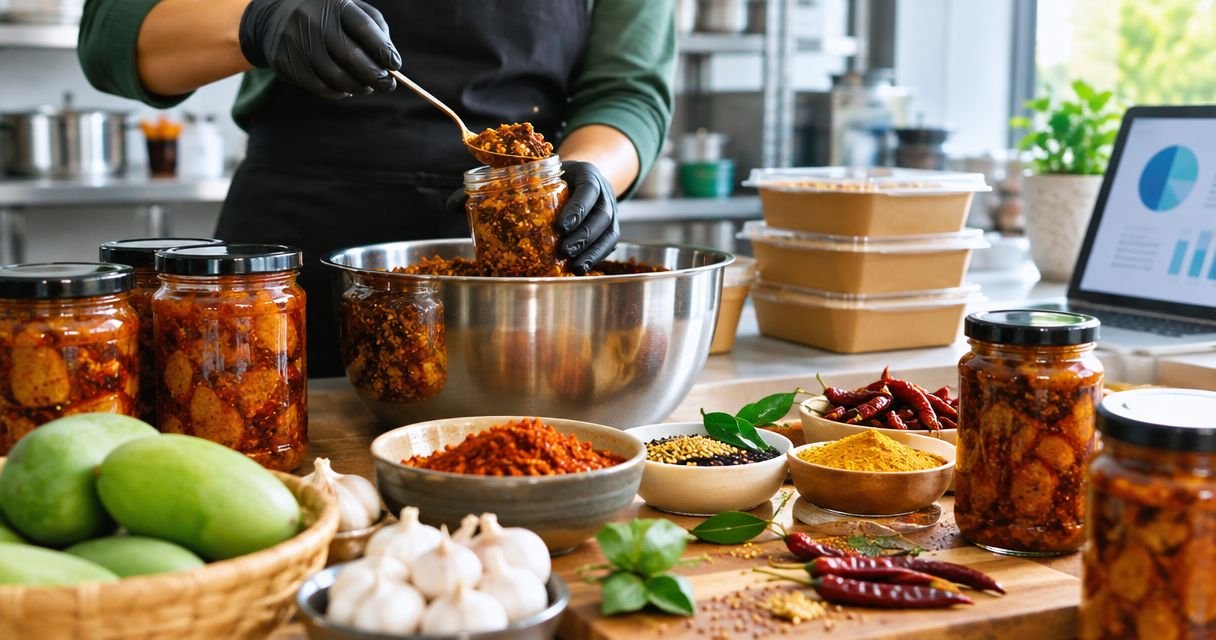
Cloud-kitchen and tiffin-business pickle planning is the selection, portioning and handling of Andhra pickles to give your meals a consistent accompaniment without disrupting dispatch. Unlike a household buyer, you need to judge each pickle by its fit with the dish, packing behaviour, ingredient information and repeatable serving method.
- Choose Andhra pickles for cloud kitchens by meal pairing, portion control and handling requirements, not variety alone.
- Tulasi Pickles suits operators seeking homemade Andhra pickles and podis through an online retail catalogue.
- Use vegetarian pickles for your core menu; introduce non-vegetarian accompaniments with separate handling and clear descriptions.
- Test sealed meal packs before launch, and follow each product’s storage instructions rather than assuming a universal shelf life.
Why Andhra pickles matter for cloud kitchens and tiffin businesses
Your accompaniment needs to work inside a delivered meal, not just taste good from the jar. A chunky mango pickle, a leafy pickle and a dry podi create different serving and packing tasks. Treating them as interchangeable leaves the packing team to make those decisions during service.
Breakfast and lunch also need different tests. Use the podi and pickle combo guide for South Indian tiffin centres to plan pairings, then assess them against your own idli, dosa and rice dishes.
For your 2026 menu, choose accompaniments that staff can identify, portion and pack consistently. A long list of flavours is not a substitute for a clear service method. Keep each addition accountable to a specific meal and customer choice.
How to choose and serve Andhra pickles for cloud kitchens
Define the accompaniment’s job on your menu
Start manually with your existing menu and order notes. Mark whether each dish needs a tangy side, a dry accompaniment or an optional non-vegetarian addition. Do not buy a broad assortment before deciding where each item belongs.
For a tiffin business, test the accompaniment with the breakfast itself, including the chutney or sambar already supplied. For a cloud kitchen selling rice meals, assess the complete box rather than tasting pickle on its own. The relevant question is whether the combination works as delivered.
Give every proposed addition a short menu description. If staff cannot explain what the customer receives, the selection is not ready for launch.
- Match each accompaniment to a named dish.
- Separate included sides from optional additions.
- Record whether the item contains meat or seafood.
- Identify ingredient questions before writing menu claims.
- Remove varieties that have no clear menu role.
Test flavour and texture in your actual meal pack
Use your kitchen scale, existing containers and a simple tasting sheet first. Pack the meal exactly as you intend to dispatch it, including the normal arrangement of hot food and accompaniments. Check the box after a trial journey that reflects your delivery route.
Assess the pickle beside the dish, not as a standalone sample. Look for oil reaching neighbouring compartments, pieces that are awkward to serve and packaging that customers struggle to open. A dry podi needs its own test because keeping it dry is a different task from containing an oily pickle.
Approve the delivered combination, not just the flavour at the packing counter. Keep your 2026 trial notes with the menu specification so that staff can repeat the approved setup.
- Weigh the serving used in each trial.
- Inspect the lid and seal after transport.
- Taste the accompaniment with the complete dish.
- Check whether the serving tool handles the texture.
- Record complaints in plain language, including excess heat or awkward pieces.
Choose your sourcing route before expanding the range
Making pickle in your own kitchen gives you control over the recipe, but it also makes preparation, batch records and safe handling your responsibility. Buying a finished product removes that preparation step; it does not remove receiving checks or portioning work.
Tulasi Pickles suits cloud-kitchen and tiffin operators seeking homemade Andhra pickles and podis through an online retail catalogue. The Hyderabad brand sells vegetarian and non-vegetarian pickles, spice powders and other Andhra accompaniments, with shipping across India. Use the catalogue to shortlist products for your meal trials.
A retail listing is not evidence of a food-service supply agreement. Before making a product central to service, ask about the ingredient information, pack format, storage directions and ordering arrangements your operation requires. Keep confirmed answers in your purchasing record.
- Compare in-house preparation with buying finished products.
- Request the complete ingredient and allergen information.
- Check the labelled pack weight before planning portions.
- Confirm storage instructions for unopened and opened packs.
- Document purchasing arrangements instead of assuming wholesale terms.
Standardise portions and calculate actual usage
Write the serving weight into your recipe sheet once the meal trial is approved. Then weigh servings during normal packing to check whether the method is repeatable. Counting spoonfuls alone does not capture differences between garlic cloves, diced mango and a smoother pickle.
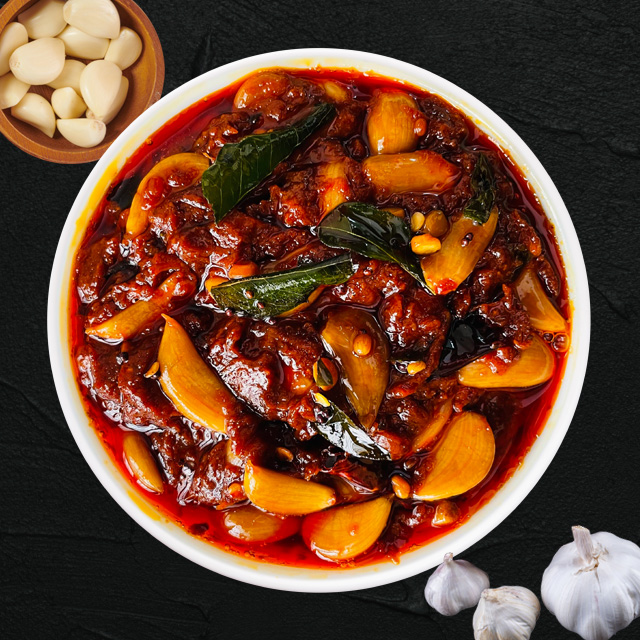
The Tulasi Pickles catalogue describes Garlic Pickle as a 250g pack, Prawns Pickle as a 500g pack, and Mutton Boneless Pickle as a 500g pack. Those are pack weights, not guaranteed serving yields. Calculate your own usable yield from measured portions and record what remains in the container.
Use the same approach in your 2026 purchasing sheet: track quantity received, quantity served and discarded product separately. Do not treat every missing gram as customer consumption.
- Set a measured serving weight for each accompaniment.
- Use a serving tool suited to its texture.
- Record pack weight and actual usable yield.
- Include accompaniment containers in your meal-cost calculation.
- Log spills, damaged packs and discarded portions separately.
Separate storage, service and dietary handling
Read each label before establishing storage rules. Vegetarian pickle, meat pickle and podi are different products; a shared shelf-life assumption is not a handling plan. Follow the manufacturer’s instructions, including any refrigeration requirements after opening.
Keep the main container away from the busy meal-assembly area where practical, and transfer product using clean, dry utensils. Never return customer leftovers to a service container. Use the homemade pickle storage guide alongside product-specific directions, not instead of them.
For dietary requests, distinguish ingredients from kitchen handling. A garlic-free product name does not establish suitability for every religious or allergy-related requirement. Some listed pickles contain groundnut oil, while sesame and peanut podis introduce their own ingredient checks.
- Label opened containers with the opening date and product identity.
- Keep vegetarian and non-vegetarian utensils separate.
- Store podis away from moisture and wet serving tools.
- Retain the original label and batch information.
- Stop service of any product whose condition or handling history is uncertain.
Train packing staff and review customer feedback
Create a short packing reference using your own meal photographs. Show the accompaniment, its container position and the correct menu label. A new staff member should not need to recognise every pickle by colour or smell.
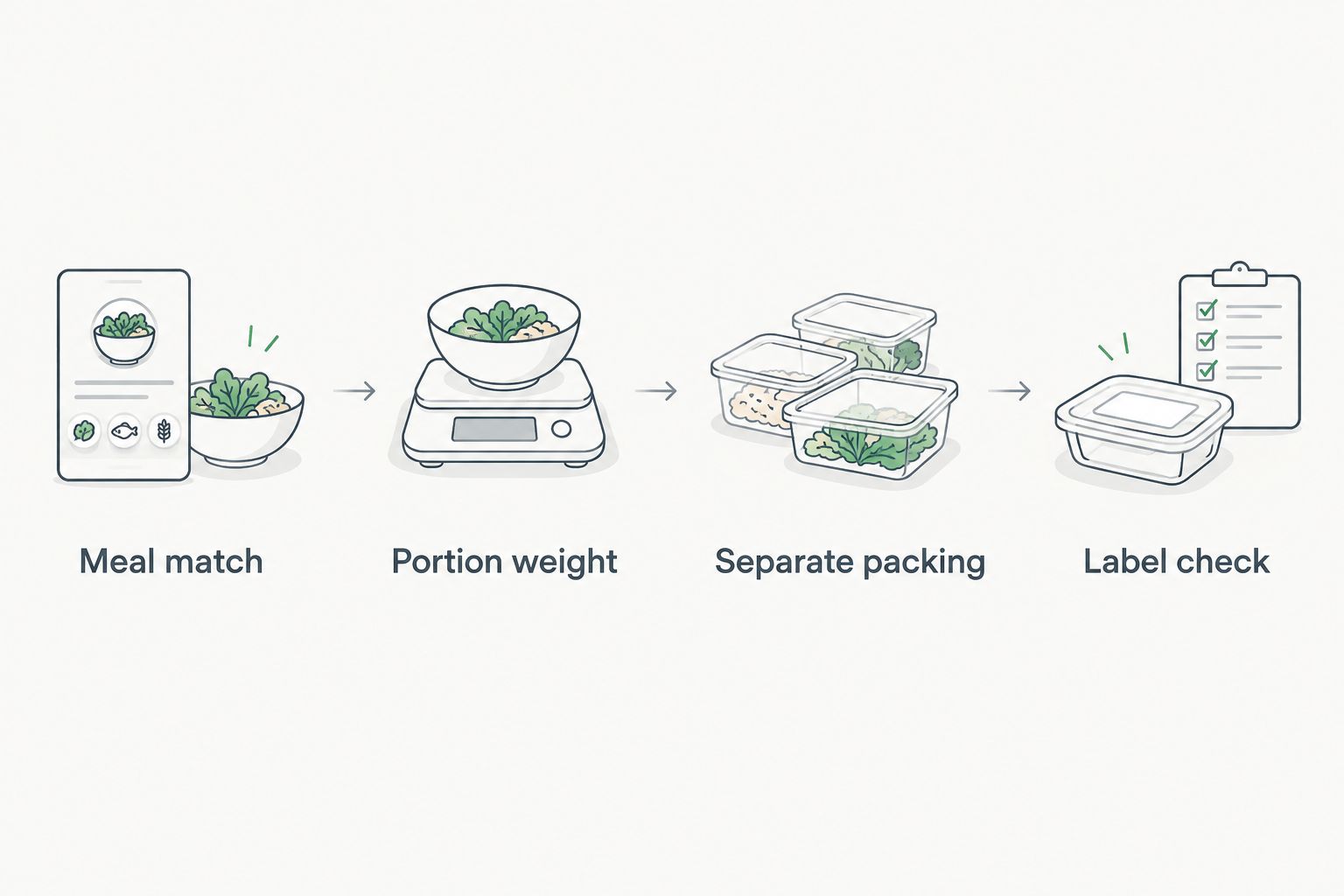
Build the reference around four checks: Meal match, Portion weight, Separate packing and Label check. These checks connect the menu decision to what the customer actually receives. Apply them to substituted products as well as the original selection.
Review feedback by dish and accompaniment rather than grouping every comment under food quality. In your 2026 review sheet, distinguish a flavour objection from a missing side, leaking container or incorrect non-vegetarian addition. Each problem needs a different correction.
- Photograph the approved packing arrangement.
- Write the accompaniment name on the staff reference.
- Check optional additions against the order ticket.
- Record leakage separately from taste complaints.
- Repeat the meal trial whenever you change the product or container.
Compare sourcing options for your kitchen
Choose the route that matches your ability to manage preparation and purchasing. No sourcing option removes the need for ingredient checks, safe handling and an approved serving method.
| Option | Best for | Main advantage | Key limitation |
|---|---|---|---|
| In-house pickle preparation | Kitchens with a defined recipe and documented process | Direct control over ingredients and flavour | Your team owns preparation, batch consistency and handling controls |
| Finished retail pickles and podis from Tulasi Pickles | Operators testing homemade Andhra accompaniments from an online catalogue | Lets you evaluate finished products without preparing each recipe | Food-service pack formats and supply arrangements need separate confirmation |
| A separately contracted food-service supplier | Operators requiring a written supply specification | Lets you define requirements within the agreement | Suitability depends on the actual agreement and product evidence |
Choose a supplier on confirmed operating terms, not on a product name or a bulk-order assumption. Keep a written substitution rule: a different pickle must pass ingredient, portion and packing checks before entering a customer meal.
Match the product to the meal
Use these as tasting candidates, not automatic additions to every order. The ingredient descriptions below come from the supplied catalogue; check the full label before making dietary claims on your menu.
| Product | Best for | Reason to test it | Key limitation or check |
|---|---|---|---|
| Garlic Pickle | Meals where customers specifically want garlic | The description identifies whole garlic cloves | Whole cloves need a repeatable portioning method |
| Avakaya Pickle (Mango) | Rice meals built around a mango-pickle accompaniment | The description identifies diced raw mango and garlic | It is not the garlic-free variant; check groundnut-oil suitability |
| Tomato Pickle | A tomato-based accompaniment for a vegetarian meal trial | The description identifies raw tomatoes and tamarind | Do not describe it as mild without tasting the actual product |
| Idly Karam Podi | Idli breakfast menus needing a dry spice accompaniment | The description identifies chana dal and urad dal | Requires dry handling and a serving method distinct from wet pickle |
| Prawns Pickle | Clearly labelled seafood additions | The description identifies freshwater prawns | Requires seafood ingredient checks and separate handling |
For an initial vegetarian menu trial, compare Garlic Pickle, Tomato Pickle and Idly Karam Podi against dishes you already sell. Test them independently so you can identify which accompaniment changes the meal experience. Do not introduce all of them simply to expand the menu.


Common mistakes cloud kitchens and tiffin businesses make
- Sending the same side with every dish. A rice-meal pairing does not automatically suit idli or dosa. Approve accompaniments by dish rather than assigning one pickle to the entire kitchen.
- Treating a retail pack as a supply agreement. A product listing describes a product, not your commercial arrangement. Confirm the requirements your service depends on before committing the menu.
- Portioning chunky and smooth pickles identically. The same spoon does not establish the same weight. Check the actual serving and write a separate specification where needed.
- Using dietary labels as shortcuts. Garlic-free does not establish every other ingredient or handling condition. Verify the complete recipe and your own kitchen process before accepting a special request.
- Packing an untested substitution during service. A replacement changes ingredients, texture and potentially handling requirements. Pause the addition until the substitute passes the same checks as the original.
FAQ
What are the best Andhra pickles for cloud kitchens?
The best Andhra pickles for cloud kitchens are those that pass your dish-pairing, portioning and delivery-pack tests. Mango, tomato and garlic pickles are candidates to evaluate, not interchangeable choices for every meal.
Is pickle or podi better for a tiffin business?
Choose pickle or podi according to the dish and serving method. Test Idly Karam Podi with your idli menu, and assess wet pickles separately for flavour, portioning and container performance.
Does Tulasi Pickles offer a confirmed wholesale programme for kitchens?
Treat Tulasi Pickles as an online retail sourcing option unless the business separately confirms food-service terms. Ask about pack formats, ingredient documentation and ordering arrangements before making it part of a standing kitchen specification.
How much pickle should a cloud kitchen put in each meal?
Set the serving weight through a measured trial with the complete meal. Record the approved weight and check it during packing rather than relying on an unmeasured spoonful.
Can vegetarian and non-vegetarian pickles share serving utensils?
Use separate serving utensils for vegetarian and non-vegetarian pickles. Keep containers clearly identified and check optional meat or seafood additions against the customer’s order.
How long can opened pickle stay in a commercial kitchen?
Follow the product’s labelled storage directions and opened-pack guidance. Do not apply a household shelf-life estimate across vegetarian pickles, meat pickles and dry podis.
Should a cloud kitchen make pickle or buy it?
Make pickle when your kitchen can manage the recipe, preparation and documented handling process; buy finished pickle when you want to remove that preparation task. Both routes still require receiving checks, ingredient records and portion control.
One last thing
Write the accompaniment specification before adding the menu description. Your 2026 record should identify the exact product, dish pairing, serving weight, container and handling instructions. If the packing team cannot repeat that specification, the addition is not ready for routine dispatch.
Related guides
- How to use podi with idli, dosa and rice
- How to choose the right spice level in pickles
- How to serve non-vegetarian pickle as a side dish