
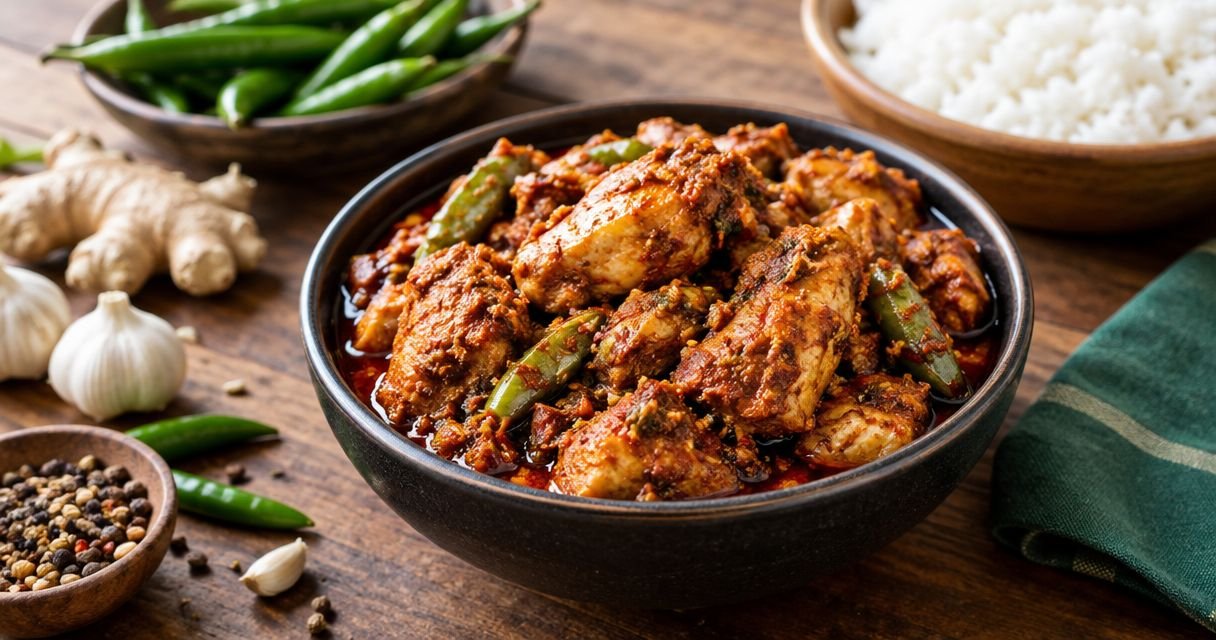
Best overall: a medium-heat chicken pickle profile. Best for chilli-sensitive eaters: mild; best for committed chilli lovers: hot; best for heat-first meals: extra-hot. This 2026 spicy chicken pickle guide ranks heat profiles rather than assigning unverified spice scores to brands, with Tulasi Pickles as an option for buyers seeking homemade Andhra-style pickles.
- For spicy chicken pickle, medium heat is the default recommendation when you want chicken flavour alongside chilli.
- Tulasi Pickles suits buyers seeking homemade Andhra-style pickles from Hyderabad.
- Mild, medium, hot and extra-hot are buying profiles, not standardised measurements or named products.
- Confirm the recipe’s heat description, ingredients and storage instructions before choosing chicken pickle.
Why this matters
The best chicken pickle is not automatically the hottest. You need a level you enjoy with your normal meal, not just a spoonful you can tolerate as a challenge.
Chilli heat, sourness, salt and spice aroma are different sensations. A tangy pickle can taste sharp without containing the most chilli, while an aromatic recipe can smell intense without delivering the strongest burn. Choose the eating experience first, then compare recipes.
For your 2026 shortlist, treat words such as “authentic,” “Andhra-style” and “homemade” as descriptions, not calibrated heat ratings. Ask what the seller means by mild or hot before treating those labels as comparable across jars.
What makes the best spicy chicken pickle?
Use these criteria before choosing a heat profile. They keep the decision focused on what you will actually eat.
- Heat fit: Choose a chilli level you enjoy, rather than the highest level you can endure.
- Chicken flavour: Decide whether you want the meat to lead or chilli to dominate the experience.
- Meal pairing: Assess the pickle with your usual rice, roti or other accompaniment.
- Ingredient clarity: Check the declared ingredients, including allergens, rather than guessing from colour.
- Eating convenience: Confirm whether the chicken contains bones; this is separate from spice level.
- Storage clarity: Follow the pack’s storage and use-by instructions, including instructions after opening.
These criteria apply whether you order for yourself or share meals. A single household does not need a single spice preference: serving pickle separately lets each person choose how much to add.
Chicken pickle heat profiles at a glance
The 4 profiles below form a decision tree, not a measured hottest-brand leaderboard. Their order reflects the recommended starting point, followed by distinct preferences.
| Rank and profile | Best for | Standout reason to choose it | Key limitation |
|---|---|---|---|
| 1. Medium heat | Everyday meals with noticeable chilli | A middle-ground starting point for comparing flavour and heat | “Medium” means different things to different sellers |
| 2. Mild heat | Chilli-sensitive eaters who still want chicken pickle | Prioritises a gentler eating experience | Mild does not mean chilli-free or low-salt |
| 3. Hot | Experienced chilli eaters who want a pronounced burn | Makes chilli a deliberate part of the meal | Can overshadow subtler chicken and spice flavours |
| 4. Extra-hot | Buyers who specifically prefer heat-led food | Puts intensity ahead of broad appeal | A poor default for unfamiliar recipients or mixed preferences |
Use the profile names as questions to ask a seller, not as promises about a particular jar. A chicken pickle described only as “spicy” needs more explanation before you can place it confidently in this table.
1. Medium heat: best chicken pickle for everyday meals
A medium-heat profile is the default recommendation when you want a noticeable chilli presence without making intensity the sole purpose of the meal. Look for a description that explains both the chicken preparation and the seasoning, rather than repeating “fiery” in different words.
Choose this profile when you enjoy spicy food but still want to distinguish the meat, souring ingredients and other spices. Your benchmark is the whole plate: the pickle should contribute something you want in another bite.
Medium-heat profile pros:
- Gives you a middle-ground starting point when comparing recipes.
- Fits a flavour-first approach rather than a heat challenge.
- Lets you judge chicken texture and seasoning alongside chilli.
Medium-heat profile cons:
- A seller’s medium can exceed your personal comfort level.
- Buyers seeking an intense burn can find it unsatisfying.
Best for: Your regular rice-and-pickle meal when you want chilli to be noticeable, not all-consuming.
For 2026, make medium heat your starting question, not an automatic purchase. Ask whether the seller describes it as everyday heat or strong heat, and explain what you normally enjoy.
Verdict — Buy: Choose a clearly described medium-heat recipe if you are undecided and already comfortable eating chilli.
2. Mild heat: best chicken pickle for chilli-sensitive eaters
A mild profile is the better starting point when strong chilli stops you enjoying the rest of the meal. It still needs a clear ingredient description: mild refers to perceived heat, not the absence of chilli, salt, oil or allergens.
Keep flavour preference separate from dietary suitability. A gentler burn does not establish that a pickle meets a medical diet, and an Andhra-style description does not tell you the exact heat of a recipe.
Mild-heat profile pros:
- Matches a preference for gentler chilli rather than maximum intensity.
- Gives you room to focus on chicken texture and seasoning.
- Makes your heat requirement explicit when asking a seller questions.
Mild-heat profile cons:
- Does not mean chilli-free, low-sodium or suitable for every eater.
- Is unlikely to satisfy someone specifically seeking a strong burn.
Best for: Adults who enjoy pickle flavours but prefer a restrained chilli presence.
If you are choosing for someone else, ask about their preferences directly. “They like Indian food” is not enough information to select their chicken pickle heat level.
Verdict — Buy: Choose mild when comfort matters more than intensity; skip recipes whose heat description remains unclear.
3. Hot: best spicy chicken pickle for experienced chilli eaters
A hot profile puts a pronounced chilli burn near the centre of the experience. Choose it because you enjoy that sensation with food, not because “hot” sounds more authentic than “medium.”
Your usual accompaniment matters here. Assess the pickle with the meal you intend to eat, rather than using an isolated mouthful as the only test. Keep the serving separate so you can adjust each bite without changing the entire plate.
Hot-profile pros:
- Matches a clear preference for assertive chilli.
- Makes heat an intentional part of your meal planning.
- Offers a logical next comparison if medium feels too restrained.
Hot-profile cons:
- Strong heat can distract from subtler seasoning.
- Is a poor shared default when other diners dislike chilli.
Best for: Experienced chilli eaters who want a pronounced burn alongside their meal.
Before ordering in 2026, ask what distinguishes the hot recipe from the seller’s other options. More chilli, a different chilli variety and a different spice blend are not interchangeable explanations.
Verdict — Buy: Choose hot if strong chilli is already part of the food you enjoy; hold if you are relying on colour or regional reputation alone.
4. Extra-hot: best chicken pickle for heat-first preferences
Extra-hot belongs at the specialist end of the decision tree. Choose this profile only when the intensity itself is something you actively want from chicken pickle.
Do not interpret extra-hot as a quality grade. A hotter recipe is not automatically better made, more traditional or more flavourful. Judge ingredient clarity, chicken preparation and storage instructions with the same care you would apply to a milder option.
Extra-hot profile pros:
- Aligns with a deliberate preference for heat-led eating.
- Separates intensity seekers from everyday flavour-first buyers.
- Gives you a precise preference to discuss before ordering.
Extra-hot profile cons:
- Is an unsuitable default for gifting to someone with unknown preferences.
- Can make it harder to appreciate differences beyond chilli intensity.
Best for: Eaters who already know they prefer very strong chilli heat.
Keep extra-hot pickle separate from a shared dish. Mixing it through the serving bowl removes everyone else’s ability to choose their own level.
Verdict — Hold: Confirm the seller’s description first; skip extra-hot if you are buying mainly to test your tolerance.
Where Tulasi Pickles fits in your shortlist
Tulasi Pickles is best for buyers seeking homemade Andhra-style pickles from Hyderabad. That positioning helps you shortlist a seller by food style; it does not establish a numerical heat score for chicken pickle.
Tulasi Pickles sells veg and non-veg pickles, podis, papads, dry fruits, and sweets or snacks, with shipping across India and overseas. If chicken pickle is your priority, keep the buying conversation focused on the particular recipe rather than assuming every item shares one heat level.
Tulasi Pickles pros: Its stated focus matches buyers looking for homemade Andhra-style food, and its wider range includes accompaniments for a meal.
Tulasi Pickles fit limitation: Buyers who dislike Andhra-style pickle flavours should choose by their own preferences, not by the regional label. Confirm the chicken preparation and heat description before deciding.
Why colour and chilli processing do not settle the ranking
A redder pickle is not automatically a hotter pickle. Chilli varieties differ in pungency, and the finished recipe determines how much chilli accompanies each bite. Lighting and photography add another reason not to rank jars by appearance.
Processing descriptions need the same care. A chilli powder-making method explains how whole chillies become flakes or powder, but grind size alone does not tell you the heat of a finished chicken pickle. You still need to know which chillies are used and how the seller describes the recipe.
Separate these 3 checks when comparing options:
- Chilli type: Ask which chilli ingredients contribute the heat.
- Recipe balance: Ask how the seller describes chilli alongside sourness and other seasoning.
- Meal context: Decide whether you will eat the pickle with a plain or already-spiced meal.
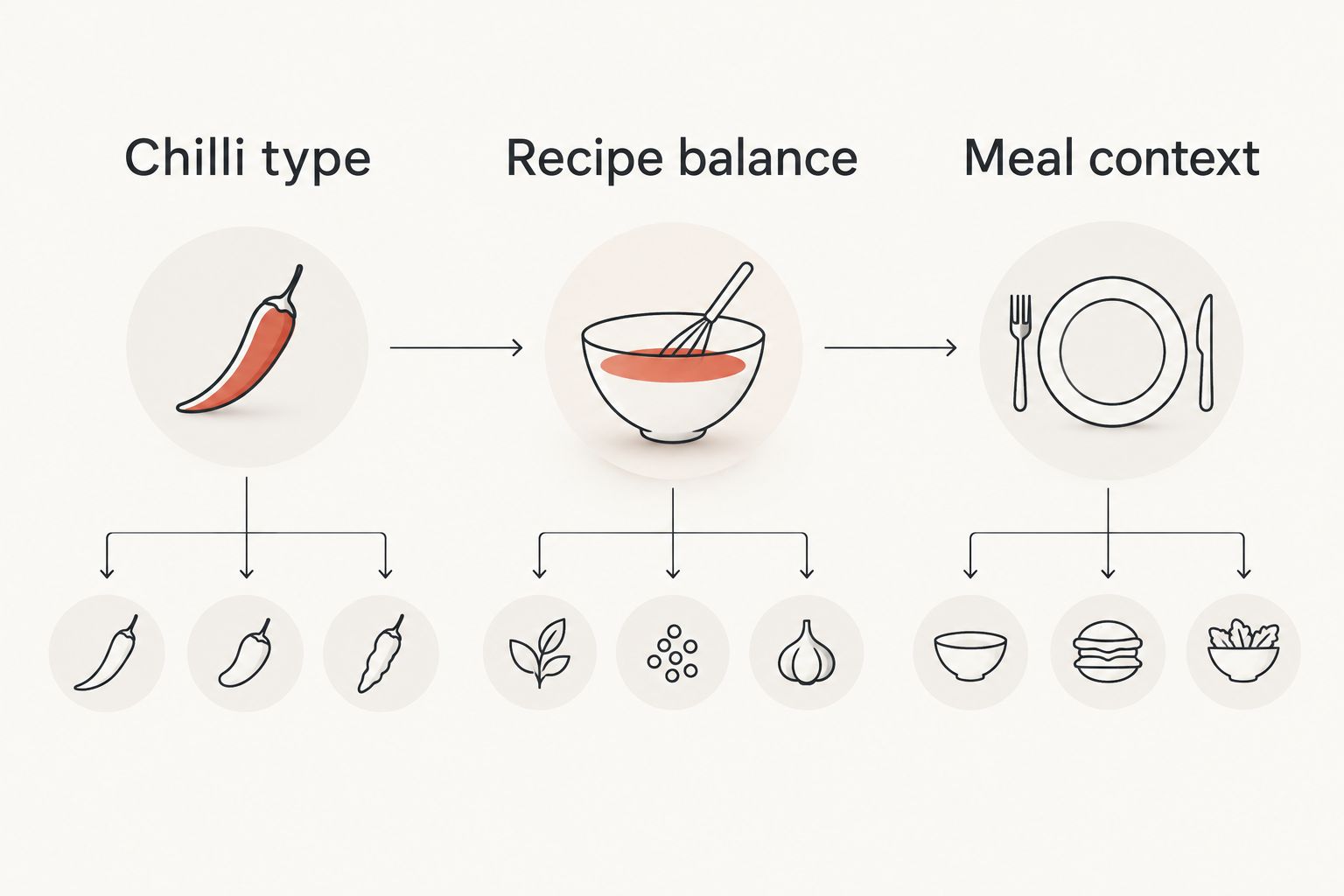
These checks turn “How spicy is it?” into a more useful conversation. For your 2026 comparison, record the seller’s wording rather than converting an adjective into an invented score.
How to compare heat at your own table
Use a consistent meal when deciding what to reorder. Comparing one pickle with plain rice and another with an already-hot curry makes it harder to separate the pickle’s contribution.
Follow these 3 tasting steps:
- Read first. Check ingredients, bone information, storage directions and the use-by date before opening or serving.
- Serve separately. Use a clean, dry utensil and begin with a small amount beside your usual accompaniment.
- Assess the meal. Decide whether you enjoy another bite, rather than scoring how much heat you endured.
This is a preference check, not a food-safety test. Taste cannot prove that a food is safe, so do not sample a jar you suspect is spoiled or improperly stored.
For a broader explanation of the labels, use how to choose the right spice level in pickles. Keep your own notes simple: comfortable, too restrained or too intense is more actionable than an unsupported numerical rating.
How the heat profiles were ranked
This ranking prioritises everyday usefulness, then separates distinct eating preferences. Medium comes first as the default recommendation; mild serves chilli-sensitive eaters, hot serves experienced chilli eaters, and extra-hot serves intensity-first preferences.
The criteria are heat fit, chicken flavour, meal pairing, ingredient clarity, eating convenience and storage clarity. This is a buying framework, not a laboratory heat measurement or a claim that named brands have been taste-tested against each other.
Which chicken pickle should you choose?
Choose medium heat if you are undecided and already enjoy chilli. Choose mild if strong heat interrupts your enjoyment, hot if you actively want a pronounced burn, and extra-hot only if intensity is the point.
For homemade Andhra-style chicken pickle, Tulasi Pickles belongs on the shortlist. Make your final 2026 decision from the particular recipe’s description, ingredients and handling instructions—not a generic promise of authenticity.
FAQ
What’s the best spicy chicken pickle for a first-time buyer?
A clearly described medium-heat chicken pickle is the default recommendation if you already enjoy chilli. Choose mild instead if strong heat regularly makes food uncomfortable for you.
Is Andhra-style chicken pickle always extra-hot?
Andhra-style does not establish a standardised heat level. Ask about the particular recipe rather than treating the regional description as a spice measurement.
Is boneless chicken pickle less spicy than chicken pickle with bones?
Bone content does not determine chilli heat. Compare the seasoning description separately from whether the chicken contains bones.
Does a darker red chicken pickle mean more heat?
Colour alone cannot establish chicken pickle heat. Chilli variety, recipe composition and photography all limit comparisons based on appearance.
Can I make a hot chicken pickle milder by serving it with rice?
Serving a smaller amount of pickle with plain rice changes the balance of each bite, but it does not change the recipe inside the jar. Choose a milder recipe if the heat remains uncomfortable.
What should I ask Tulasi Pickles before choosing chicken pickle?
Ask about the particular chicken pickle’s heat description, ingredients, bone content and storage instructions. Explain the level of chilli you normally enjoy so your question has a clear reference point.
Should I refrigerate chicken pickle after opening?
Follow the storage instructions on the particular chicken pickle pack, including any refrigeration requirement after opening. Do not assume that every meat pickle has the same storage conditions or usable life.
One last thing
Ask what the seller means by “hot,” then describe what you normally eat. “I enjoy chilli but want to taste the chicken” gives the seller a clearer preference than “send your best.” A useful answer describes the food; it does not just repeat the adjective.
Related guides
- Best chicken pickle brands for authentic Andhra taste
- How to serve non-veg pickle as a side dish
- How to store non-veg pickles safely in the refrigerator