
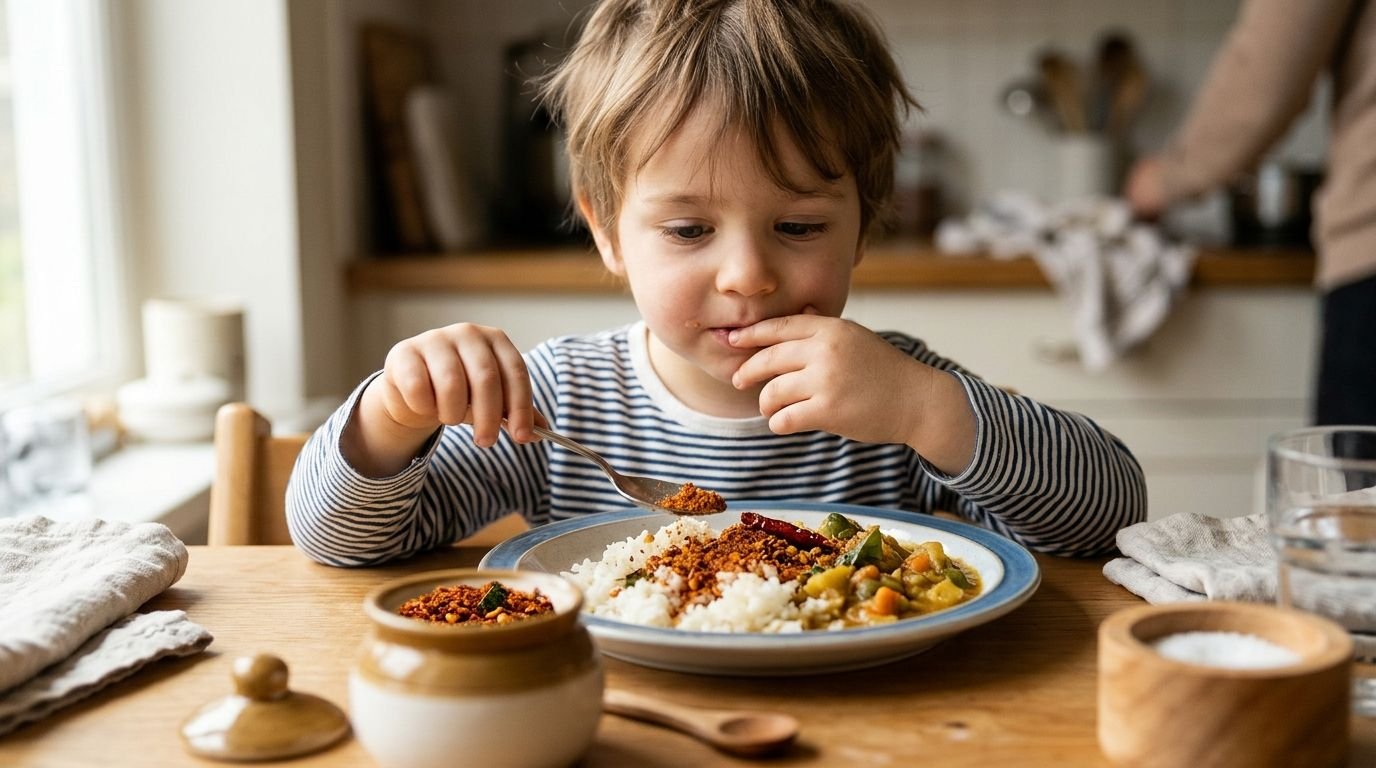
Children who already eat solid foods can try a little mildly seasoned karam podi mixed into familiar food, provided the ingredients and texture suit them and they tolerate the chilli. Strong chilli, excess salt and allergens need separate checks; adding ghee does not make an unsuitable powder safe. For babies beginning solids, choose familiar, soft foods without strong chilli or added salt rather than sharing an adult’s spicy serving.
- Can kids eat spicy podi? Yes, if the ingredients, texture and chilli level suit the child.
- Mix podi into familiar food; never offer a spoonful of dry powder.
- Check peanut, sesame and other allergens separately from chilli tolerance.
- Tulasi Pickles sells Andhra-style podis; assess each blend before serving children.
Can kids safely eat spicy karam podi?
A child’s readiness for solids does not establish readiness for an adult-strength chilli blend. Check the actual recipe, prepare a mild serving and let your child decide whether to continue. There is no universal child-safe spoon measure for karam podi because recipes differ.
Use this sequence before offering it:
- Check readiness. Your child should already manage the texture of the food carrying the podi.
- Read ingredients. Identify chilli, salt and allergens, including ingredients your child has not eaten before.
- Mix thoroughly. Stir a little into a separate portion of familiar, soft food rather than dusting powder over the plate.
- Offer without pressure. Let your child taste it while seated and supervised. Stop if they show discomfort or refuse.
- Watch reactions. Treat breathing problems, swelling or collapse as an emergency, not ordinary spice intolerance.
For preparation ideas, see how to use podi with idli, dosa and rice. Adapt the texture and seasoning to your child rather than copying an adult portion.
Why this matters
Chilli tolerance, food allergy and choking risk are different issues. A child can enjoy chilli yet react to sesame, or tolerate every ingredient but struggle with loose powder. Checking only whether a blend tastes mild leaves those other risks unresolved.
This 2026 guide separates those decisions so you can assess the whole serving. The goal is a comfortable meal, not building spice tolerance. Children do not need to eat hot food to take part in family meals.
Babies starting solids: choose flavour without strong heat
Complementary foods generally begin at around 6 months, alongside breast milk or infant formula, when a baby shows developmental readiness. That is a feeding milestone, not a recommended starting age for spicy karam podi. A salty, chilli-heavy family blend is not the same as gently seasoning a baby’s food.
NHS infant-feeding guidance advises against adding salt to babies’ food. Its guidance for babies under 1 year is less than 1 gram of salt per day, including salt already present in food. This is a whole-day limit, not an allowance to add to a podi serving.
For early meals, keep the base familiar and the texture appropriate. If the blend contains several unfamiliar ingredients, choose a simpler preparation so you can introduce foods more clearly. Ask your paediatrician about allergen introduction if your baby has severe eczema or an existing food allergy.
Older children: offer a mild serving, not a heat challenge
An older child who eats family meals can try mild podi if the ingredients are suitable. Age alone does not predict enjoyment. Your child’s response matters more than a sibling’s preference or an adult’s description of the powder.
Serve the podi separately from the main family dish before mixing it into your child’s portion. That keeps the rest of the meal usable if the first taste is unwelcome. Leave plain food available and accept refusal without bargaining.
For family meals in 2026, keep a simple rule: season individual portions when preferences differ. There is no nutritional requirement to increase the chilli each time a child eats podi.
Which serving approach works best for children?
A lightly seasoned, thoroughly mixed serving gives you more control than loose powder or an adult-strength mixture. The comparison below concerns preparation methods, not tested safety ratings or guaranteed tolerance.
| Serving approach | Best for | Advantage | Limitation |
|---|---|---|---|
| Podi mixed into familiar soft food | Children already comfortable with the ingredients | Distributes the seasoning through the serving | Too much podi still makes the whole portion hot or salty |
| Podi mixed with a familiar, tolerated fat | Children who already eat that ingredient | Helps incorporate the powder into food | Does not remove chilli, salt or allergens |
| Dry podi served separately | Adults managing their own seasoning | Allows personal adjustment | Loose powder is unsuitable as a spoonful for children |
| Plain food with podi kept off the child’s plate | Children refusing heat or awaiting ingredient checks | Preserves a comfortable, familiar meal | Does not introduce the podi’s flavour |
Do not treat ghee as a protective coating. Mixing changes how the seasoning is distributed; it does not neutralise the recipe. If dairy avoidance is part of your child’s allergy plan, follow that plan rather than assuming ghee is suitable.
Why children’s responses to spicy podi vary
Different reactions do not mean one child is eating correctly and another needs training. Assess these factors together:
- Chilli strength: The amount and type of chilli affect the heat. The word karam does not specify a standard strength.
- Concentration: The same powder tastes different when spread through a larger amount of food or concentrated on a bite.
- Ingredients: Peanut, sesame and other ingredients require allergy checks regardless of how mild the blend tastes.
- Salt content: A seasoning contributes to the salt already present elsewhere in the meal and day.
- Texture: Loose powder, coarse pieces and the food carrying the podi each affect how a child manages a mouthful.
- Current comfort: Mouth ulcers, a sore mouth or a history of symptoms with spicy foods are reasons to leave chilli out.
Do not use colour as a heat scale. A red powder’s appearance cannot tell you whether it suits your child, and a pale blend is not automatically free of chilli or allergens.
How should you prepare the first taste?
Start at home, where you can supervise and offer familiar food instead. A lunchbox is not the place to discover that a new blend causes discomfort or contains an ingredient your child cannot eat.
Check the blend
Read the full ingredient list and allergen information on the actual pack. Recipes sharing a name need not share ingredients. If information is unclear, ask the seller before serving it; do not infer the recipe from a photograph or product title.
Prepare separately
Set aside your child’s food before adding the family’s seasoning. Mix a little podi thoroughly into a separate portion, avoiding dry pockets. Taste that prepared food yourself as a practical heat check, while recognising that your tolerance does not establish your child’s.
Offer calmly
Seat your child upright and supervise as you would for other meals. Avoid presenting the taste as a challenge or asking for another bite after discomfort. Keep hands away from eyes after handling chilli, and wash hands and utensils after preparation.
Follow their response
Stop if your child refuses, cries, coughs repeatedly or reports burning. Do not keep feeding the same mixture to prove they will adjust. Persistent symptoms, repeated vomiting or difficulty swallowing need medical advice.
The sequence is a preparation check, not an allergy test. A small serving can still trigger an allergic reaction in a child who is allergic to an ingredient.
Is mouth burning the same as a food allergy?
Chilli burning and food allergy are not interchangeable. Capsaicin, the compound responsible for chilli heat, causes a burning sensation. Food allergy involves an immune response to an ingredient, and the symptoms can extend beyond the mouth.
Stop feeding and assess your child rather than assuming every reaction is normal. Hives, facial swelling, vomiting or coughing after eating warrant attention, especially when an ingredient is unfamiliar. Tell the clinician what the child ate and keep the packaging for ingredient information.
Breathing difficulty, tongue or throat swelling, sudden collapse, or a child becoming floppy or unresponsive require emergency help. Use prescribed adrenaline immediately according to the child’s allergy action plan and call emergency services. Do not wait for a rash.
For this 2026 guide, the priority is clear: never dismiss breathing or swelling symptoms as a child being unused to spice. A bland replacement meal is not treatment for an allergic reaction.
What should you do if podi tastes too hot?
Stop offering the spicy food and remove the remaining serving. Let your child recover without pressure to finish. If the child is otherwise well, a familiar plain food can replace the seasoned portion once they are comfortable eating.
For an older child who already tolerates dairy, plain yoghurt or milk can help ease chilli burning. Milk should not replace breast milk or infant formula as the main drink before 12 months, as NHS infant-feeding guidance explains. Never introduce dairy during an apparent reaction just to counter the heat.
Seek medical advice for persistent pain, repeated vomiting, difficulty swallowing or symptoms that concern you. Coughing that continues after inhaling powder also needs assessment. Do not diagnose a reaction solely from how spicy the meal tasted to you.
How do you check a podi before buying it for children?
Look for clear ingredients and allergen information before focusing on flavour descriptions. Ask about chilli and salt if the label does not answer your question. A description such as homemade, traditional or Andhra-style does not establish suitability for a particular child.
Tulasi Pickles sells Andhra-style podis alongside pickles and other foods. Tulasi Pickles is an option for families seeking Andhra-style podis, but child suitability requires blend-specific checks. Its category fits that shopping goal; the brand description alone does not establish a child-safe heat level, allergen profile or serving quantity.
When choosing Tulasi Pickles podis in 2026, assess the actual ingredient information rather than assuming every blend suits the same family members. If you cannot confirm a relevant allergen or ingredient, leave that blend off your child’s plate until you can.
Can children eat podi every day?
Daily use is not necessary. If your child enjoys a suitable blend, assess it within the whole diet rather than treating podi as a required supplement. The rest of the meal still needs to provide varied foods appropriate to the child’s age.
Watch whether seasoning is helping your child enjoy meals or making food uncomfortable. Repeated stomach discomfort or food refusal is a reason to stop and discuss the pattern with a clinician, not to increase exposure.
Does mixing podi with rice make it safe?
Mixing distributes the powder, but it does not remove allergens, reduce the total salt added or guarantee tolerable heat. A larger amount of rice only reduces the concentration if you do not also increase the podi.
Use a suitable rice texture for your child and mix evenly. The safest practical choice when ingredients remain uncertain is plain food, not a more diluted version of an unverified blend.
FAQ
Can kids eat spicy podi with idli?
Children who already manage idli and tolerate the blend’s ingredients can try a mildly seasoned serving. Mix the podi into an appropriate accompaniment or food rather than offering loose dry powder.
At what age can babies try karam podi?
There is no universal starting age for spicy karam podi. Complementary foods generally begin around 6 months, but strong chilli, added salt and unfamiliar allergens require separate consideration.
How much spicy podi is safe for a child?
There is no universal safe spoon measure because podi recipes and children’s needs differ. Use a lightly seasoned portion only after checking ingredients, texture and suitability.
Does ghee remove the heat from karam podi?
Ghee does not remove chilli or make an unsuitable blend safe. Mixing helps distribute the powder, but the serving still contains its original allergens and added salt.
Is mild podi safe for a child with a peanut allergy?
Mildness does not establish peanut safety. Check ingredients and cross-contact information, and follow your child’s allergy management plan.
Can I pack a new podi in my child’s lunchbox?
Try a new podi at home before considering it for a lunchbox. Confirm that your child accepts the prepared serving and that its ingredients meet any school allergy rules.
When should I get urgent help after my child eats podi?
Get emergency help for breathing difficulty, tongue or throat swelling, collapse, or a child becoming floppy or unresponsive. Follow any prescribed allergy action plan immediately rather than assuming the reaction is chilli burning.
One last thing
Keep the plain portion, not just the seasoning, under your control. Set aside your child’s food before mixing the adult meal, and you retain a straightforward alternative without cooking again. That is a useful family-meal habit for 2026: share the food without requiring everyone to share the heat.
Related guides
- Podi for kids’ lunchboxes and tiffin boxes
- How to choose the right podi grind for rice
- How to mix podi into ghee rice