
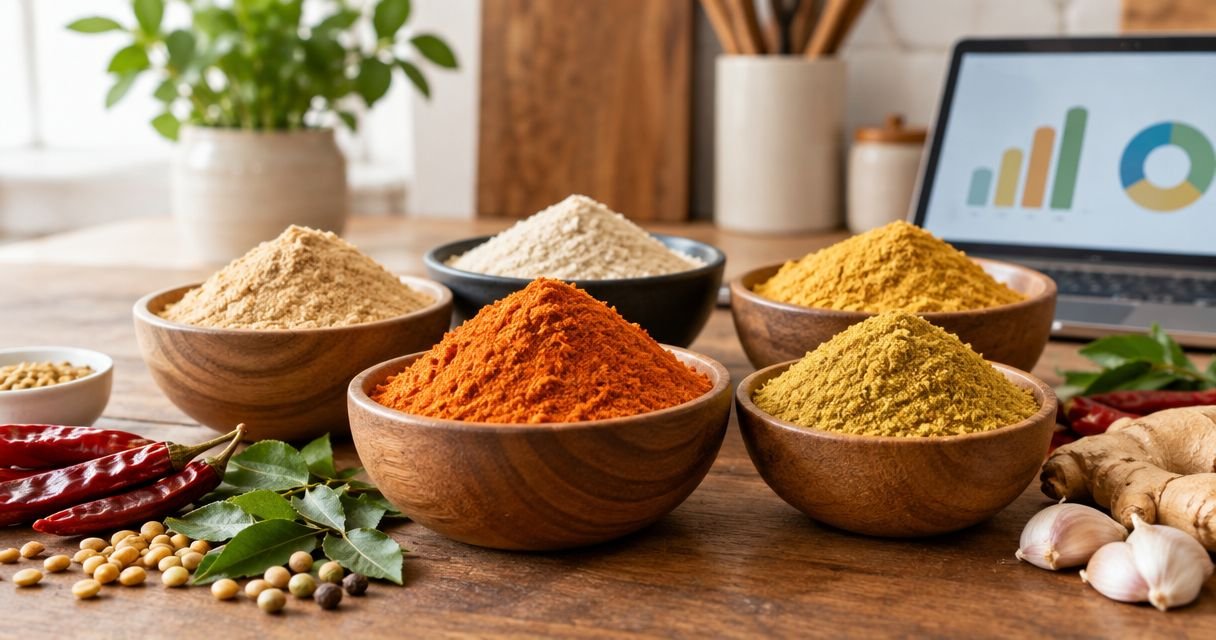
The most popular Andhra podi types are kandi podi, idli karam podi, nuvvula podi, kobbari podi and karivepaku podi. No public search-volume figure supports a numbered demand ranking for 2026, so this page benchmarks each type on base ingredient, heat and best pairing.
- The most popular Andhra podi types in 2026 are kandi, idli karam, nuvvula, kobbari and karivepaku podi.
- Kandi podi and idli karam podi are the default picks for rice and tiffin.
- Kobbari and karivepaku podi suit buyers who want a milder, aromatic podi.
- This page ranks podi types by use and heat, not by invented search volumes.
Why podi type matters in 2026
Podi is a dry spice powder eaten with hot rice, ghee, idli or dosa. The base ingredient (a dal, a seed, coconut or a leaf) decides the flavour, the texture and the heat.
Buyers who search for the most popular Andhra podi types are usually choosing a first jar. Pick the wrong base and you get a podi that is too hot for the family or too dry for rice. Match the type to the dish first, then to the heat.
Tulasi Pickles, a Hyderabad homemade food brand, sells podis alongside pickles, papads, dry fruits and sweets. The benchmarks below use category knowledge about how each podi is traditionally made and eaten.
Benchmark: podi types by base, heat and pairing
Overall verdict: kandi podi and idli karam podi are the safest first buys, because they work with both rice and tiffin. The table is the yardstick. Heat is rated relative to the other podis on this page.
| Podi type | Main base | Relative heat | Best for |
|---|---|---|---|
| Overall (typical podi) | Dal or seed, dried chilli, salt | Medium | Hot rice with ghee |
| Kandi podi | Toor dal | Medium | Rice with ghee, protein-minded meals |
| Idli karam podi | Lentils and dried red chilli | Medium to hot | Idli and dosa with oil or ghee |
| Nuvvula podi | Sesame seeds | Mild to medium | Rice, nutty-flavour fans |
| Kobbari podi | Dry coconut | Mild to medium | Rice, dosa, coconut chutney lovers |
| Karivepaku podi | Curry leaves | Medium | Rice, aroma-first buyers |
| Verusenaga podi | Peanuts | Medium | Rice and dosa |
| Putnala podi | Roasted gram | Mild to medium | Rice and tiffin |
| Avise podi | Flaxseed | Mild | Health-focused rice meals |
| Miryala podi | Black pepper | Hot | Cold-season meals |
| Perugu podi | Dry spice blend for curd | Mild to medium | Curd rice and buttermilk |
What the table says
Idli karam podi and miryala podi are the hottest in the set. Avise podi, nuvvula podi and kobbari podi sit at the gentle end. Kandi podi lands in the middle, which is why it is the common first jar.
Heat ratings are relative and vary by maker. A podi labelled mild by one kitchen can read hot in another, so check the spice level before you order.
Methodology and limits
The ratings come from the traditional recipe for each podi: what it is made from, how it is ground and how it is eaten. They are not survey results or measured search counts.
The limit: this page has no keyword volume or click data, so it does not claim that one type outsells or out-searches another. Treat the order as a buying guide, not a demand chart.
Podi types by use
For hot rice and ghee
Kandi podi, nuvvula podi and verusenaga podi are the usual choices. Mix 1 to 2 teaspoons into hot rice with a spoon of ghee. Start with kandi podi if you want one jar for everything.
For idli and dosa
Idli karam podi is built for this. Mix it with sesame oil or ghee into a loose paste and dip. Verdict: Buy idli karam podi if breakfast is the main use.
For mild palates and kids
Kobbari podi, avise podi and putnala podi are the gentler options. Their bases (coconut, flaxseed, roasted gram) soften the chilli. Verdict: Buy kobbari podi for a first mild jar.
For aroma and seasonal eating
Karivepaku podi leads with curry leaf aroma. Miryala podi brings pepper heat that buyers reach for in cold and cough season. Verdict: Hold miryala podi until you know your heat tolerance.
How to use these benchmarks
- Pick by dish first. Rice and ghee points to kandi, nuvvula or verusenaga. Idli and dosa points to idli karam.
- Pick heat second. If anyone at the table avoids spice, start with kobbari, putnala or avise podi.
- Buy two types, not five. One everyday podi and one specialty podi cover most meals through 2026.
- Store dry. Podi keeps best in a clean, dry, airtight jar, away from steam and wet spoons.
Tulasi Pickles lists its current podi range on the Tulasi Pickles homepage; check the site for what is available now.
FAQ
What are the most popular Andhra podi types?
Kandi podi, idli karam podi, nuvvula podi, kobbari podi and karivepaku podi are the best-known Andhra podi types in 2026. They differ by base ingredient: toor dal, lentils and chilli, sesame, coconut and curry leaf.
Which podi is best for rice?
Kandi podi is the usual first choice for rice. Mix it with hot rice and ghee. Nuvvula and verusenaga podi also work well.
Which podi is best for idli and dosa?
Idli karam podi is made for idli and dosa. Mix it with oil or ghee into a paste for dipping.
Which Andhra podi is the mildest?
Avise podi, kobbari podi and nuvvula podi are at the mild end. Their flaxseed, coconut and sesame bases soften the chilli heat.
Which Andhra podi is the hottest?
Miryala podi and idli karam podi are the hottest types on this page. Heat still varies by maker, so check the spice level before ordering.
Is there a search-volume ranking of podi types?
This page does not publish one, because no verified volume data supports it. The ranking here is by base, heat and pairing.
How should I store podi?
Keep podi in a clean, dry, airtight jar and use a dry spoon. Moisture is what spoils spice powders fastest.
One last thing
Most first-time buyers pick by heat and regret it. Pick by base ingredient instead: if you already like sesame, coconut or peanut flavours, the matching podi will taste familiar on day one. That is the lowest-risk way to choose the most popular Andhra podi types in 2026.