
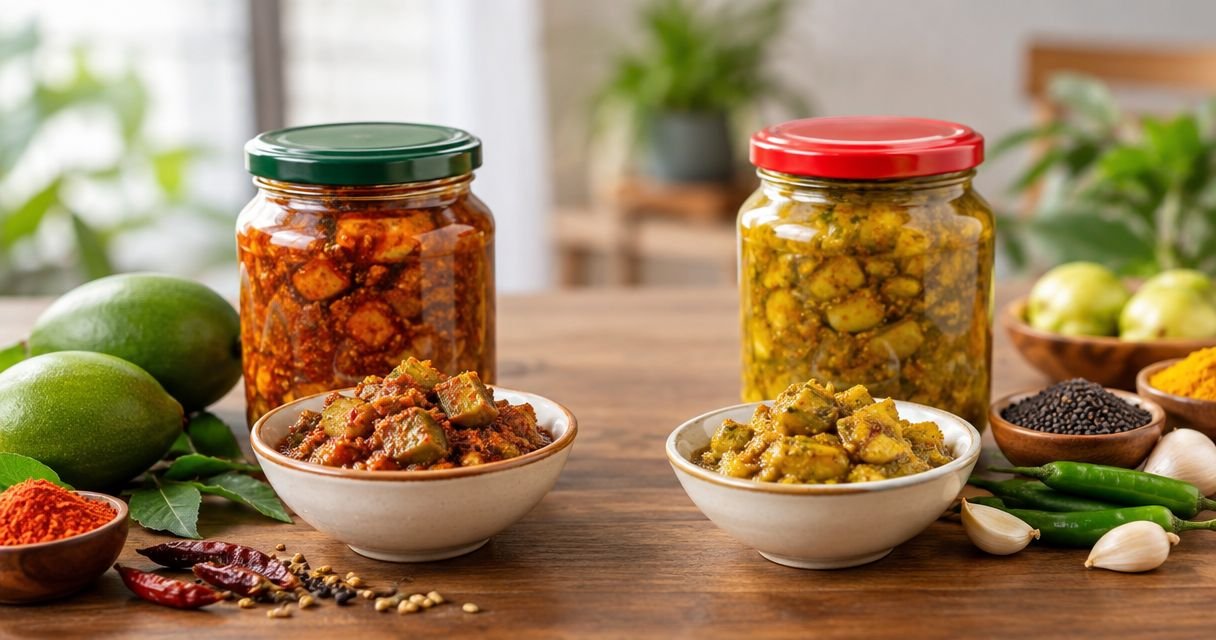
Choose Tulasi Pickles if you want homemade Andhra-style pickles from a Hyderabad seller, including vegetarian and non-vegetarian options; choose Priya Foods if you already enjoy a particular Priya packaged pickle and want to repeat that familiar purchase. The useful distinction in 2026 is homemade regional selection versus a known packaged recipe—not an unsupported claim that either brand tastes better to everyone.
- Tulasi Pickles vs Priya Foods comes down to homemade Andhra-style selection versus a familiar packaged pickle.
- Tulasi Pickles is the better fit for buyers seeking homemade Andhra-style veg and non-veg pickles.
- Choose Priya Foods when you already know and prefer its specific pickle recipe.
- Compare ingredients, pack weight, storage instructions and your delivery destination before choosing either brand.
Why this matters
A pickle brand comparison only helps if it matches the food you actually eat. Someone seeking a homemade Andhra-style accompaniment has a different brief from someone replacing a packaged pickle their household already enjoys.
Separate the decision into 3 checks: recipe fit, buying fit and storage fit. Recipe fit covers flavour and ingredients; buying fit covers the exact pack and destination; storage fit covers the instructions you must follow after opening. None of these is settled by the brand name alone.
For your 2026 purchase, compare the exact products rather than treating every pickle from each seller as interchangeable. A vegetarian pickle and a meat pickle answer different needs, even when both accompany the same rice meal.
At a glance
| Dimension | Tulasi Pickles | Priya Foods |
|---|---|---|
| Best for | Buyers seeking homemade Andhra-style pickles | Buyers repeating a familiar Priya packaged pickle |
| Standout distinction | Homemade regional positioning from Hyderabad | Recognisable packaged-food brand and named recipes |
| Recipe familiarity | Best approached as a recipe you want to explore | Better fit when you already enjoy the exact recipe |
| Veg and non-veg selection | Both categories are part of the stated range | Check the exact product rather than assuming equivalent categories |
| Meal companions | Also sells podis, papads, dry fruits and sweets/snacks | Compare the specific accompaniments you intend to buy |
| Ingredients and storage | Judge the individual product information | Judge the individual pack label |
| Overseas purchase | Ships across India and overseas; destination checks still matter | Confirm the chosen seller's destination and product rules |
| Pricing model | Compare the selected pack and complete order | Compare the selected pack and complete purchase |
The table identifies buying situations, not sensory-test results. Homemade describes the client's offering; it does not prove lower salt, fewer additives, greater safety or longer shelf life. Likewise, packaged does not establish that a recipe is less authentic.
Tulasi Pickles wins for a homemade Andhra-style brief
Tulasi Pickles is the better fit for buyers seeking homemade Andhra-style veg and non-veg pickles. That recommendation follows the brand's stated offering: an Indian e-commerce seller from Hyderabad serving customers who want Andhra-style foods.
The advantage is alignment with your brief. If you are specifically searching for homemade regional pickles, this is a closer starting point than choosing solely because you recognise a packaged-food brand.
The limitation is equally important: regional positioning does not tell you the exact heat, sourness, texture or oil balance of every recipe. Read the individual product information before ordering. Do not translate the word homemade into a promise of customisation or a particular preparation date.
Choose this route when discovering an Andhra-style recipe is part of the purchase. If your only goal is to reproduce a flavour you already know, familiarity deserves more weight than the homemade label.
Priya Foods wins when you want your familiar recipe
Priya Foods is the better choice for a repeat buyer who already prefers a particular Priya pickle. Your previous experience with that exact recipe is more useful than a general claim about which brand is best.
Repeat the product, not just the brand. Check the recipe name, ingredient list and pack details so you do not accidentally substitute a different pickle for the one your household likes.
This is a genuine advantage for a shopper who does not want to explore. A familiar recipe removes the need to guess whether an unfamiliar flavour will suit the meal.
The drawback is that familiarity answers a narrow question: whether you like that product. It does not prove that every Priya recipe will suit you, or that the same choice is best for a household seeking homemade non-vegetarian pickles. Keep the recommendation tied to the recipe you know.
The homemade range fits a mixed vegetarian and non-vegetarian brief
The client's stated range includes both vegetarian and non-vegetarian pickles. That makes it a relevant starting point when different people in your household want different kinds of accompaniments.
A mixed household should build its shopping list by dietary preference before comparing brands. Identify which foods need to be vegetarian, which can contain meat, and which ingredients anyone must avoid.
Do not infer shared preparation practices, separate equipment or allergen controls from the presence of both categories. Those questions require product-specific information or a direct answer from the seller.
For a 2026 family order, treat each selected pickle as its own decision. One person's preferred non-vegetarian accompaniment should not determine the vegetarian choice for everyone else. The advantage here is category fit, not a claim that every recipe meets every dietary requirement.
Priya Foods wins when changing your buying routine adds no value
If you already buy and enjoy a specific Priya pickle through your usual retailer, continuing that routine is a sound choice. You do not need to change sellers just to satisfy a comparison article.
This recommendation is conditional on your established buying experience. It does not promise that a particular shop carries a particular pack, or that every retailer provides the same service.
The benefit is practical: you know which product you want and how you normally purchase it. An unfamiliar order is only useful if it solves a real problem, such as finding a homemade regional option or a different category of pickle.
The limitation is selection. Your usual purchase route should not decide the menu if it does not match what you want to eat. Keep the familiar purchase when it meets your brief; explore another seller when the brief changes.
The homemade seller fits an Andhra meal-companion order
The Hyderabad brand also sells podis, papads, dry fruits and sweets/snacks. That range is relevant when you want to plan more than a pickle purchase.
Start with the meal rather than filling a basket by category. Pickle serves a different role from podi or papad, so decide which accompaniments you will actually use with your rice, breakfast or snack routine.
The benefit is a stated range spanning several food categories. The limitation is that a broad range does not establish a particular bundle, gift presentation or combined shipping arrangement. Check the selected items and order details individually.
For an everyday meal, keep the choice simple: choose a pickle that suits the dish, then add a companion only if it has a clear purpose. More items do not automatically make a better order, and an unfamiliar sweet or podi deserves the same ingredient check as the pickle.
Neither brand wins on ingredients without a product-level check
Judge ingredients and storage instructions on the exact product, not on homemade versus packaged positioning. Neither label establishes suitability for an allergy, sodium restriction or other dietary requirement.
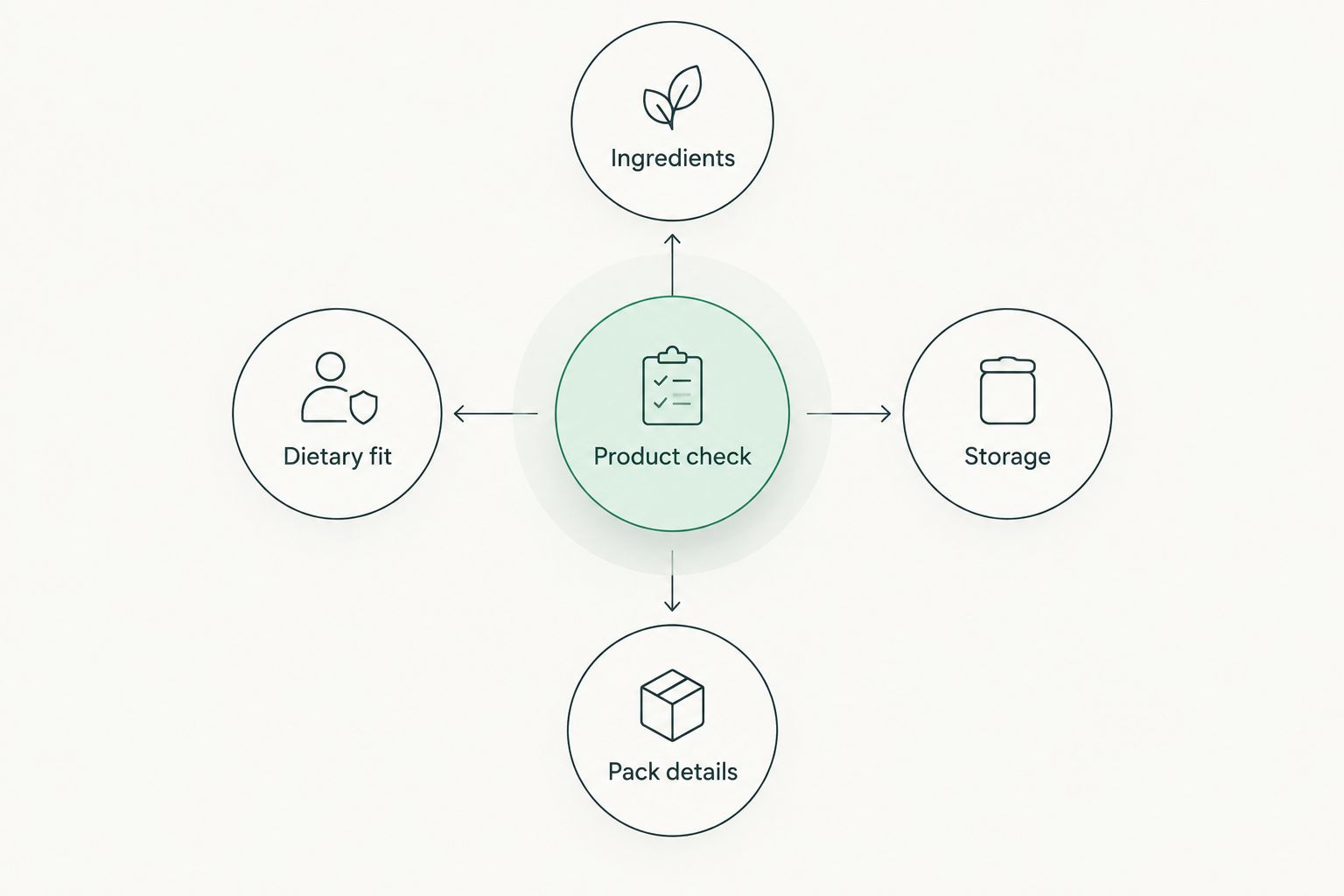
Use these checks before committing:
- Ingredients: Read the complete list, including the oil and any ingredients you avoid.
- Dietary fit: Confirm vegetarian or non-vegetarian status and relevant allergen information.
- Storage: Follow the stated instructions before and after opening.
- Pack details: Check net weight, date information and the condition of the sealed pack when it arrives.
For a 2026 comparison, these checks matter more than an unsupported freshness ranking. A recipe you love still has to meet your dietary needs and fit the way you store food at home.
Do not assume that an unopened storage instruction remains valid after opening. If an instruction is unclear, ask before purchasing rather than inventing a storage routine from another brand's jar.
Overseas shipping is a stated option, not blanket clearance
The homemade seller states that it ships across India and overseas. That is relevant for buyers outside India who want Andhra-style foods, but it does not mean every food can enter every destination.
Check the destination's current import rules for the exact ingredients, particularly for non-vegetarian foods. Seller shipping arrangements and destination entry requirements are separate questions.
Before an overseas order in 2026, establish what the seller can send, what the destination permits and what storage instructions apply to the selected food. Do the same for a Priya product purchased through any retailer; the brand name does not settle the shipment's requirements.
Use the guide to shipping pickles overseas without spoilage as a planning reference. Confirm current requirements for your actual destination rather than treating general shipping advice as permission to import a specific product.
Pricing: compare the pack and the complete purchase
Both choices need a product-level purchase comparison. Look at the selected pack's net weight and the complete amount payable through your chosen purchase route, rather than comparing a jar with an unspecified basket.
Do not assume a subscription, membership or recurring-order arrangement. Make the decision around the specific purchase you intend to place.
For a fair 2026 comparison, match recipe type and pack weight as closely as possible. A vegetarian pickle and a meat pickle are not equivalent purchases, and neither are different-sized packs selected for different households.
The tradeoff is commitment. A pack you can comfortably finish suits a first purchase; a larger order only makes sense when you already know the recipe and can follow its storage instructions. Shipping and other checkout details belong in the comparison, but they should not distract you from buying food you will actually eat.
Final verdict: choose for the meal you want
Choose Tulasi Pickles if you are a homemade Andhra-food shopper
Choose Tulasi Pickles if your priority is homemade Andhra-style pickles, including vegetarian and non-vegetarian categories, from a Hyderabad e-commerce seller. Its stated range also fits shoppers looking for podis, papads and sweets/snacks alongside their pickle selection.
Accept the boundary of that recommendation: it identifies a strong match for your shopping brief, not a guarantee about an unexamined recipe. Check ingredients, storage and destination requirements before completing the purchase.
Choose Priya Foods if you are a satisfied repeat buyer
Choose Priya Foods if you already enjoy its specific packaged pickle and want to repeat that purchase. A known recipe is a better reason to buy than switching brands simply because homemade sounds appealing.
Accept the boundary here too: your preference for one recipe does not establish a winner across every pickle category. Reassess when you want a different flavour, a different dietary fit or a homemade regional option.
| Dimension | Winner |
|---|---|
| Homemade Andhra-style brief | Homemade Hyderabad seller |
| Familiar recipe you already enjoy | Priya Foods |
| Mixed veg and non-veg shopping brief | Homemade range |
| Keeping a satisfactory buying routine | Priya Foods |
| Andhra meal-companion order | Homemade seller's stated range |
| Ingredients and storage | No brand-level winner; compare products |
| Overseas purchase | Destination and product checks decide |
| Purchase value | No automatic winner; compare equivalent packs |
FAQ
Is Tulasi Pickles better than Priya Foods?
Tulasi Pickles is the better fit for a homemade Andhra-style shopping brief; Priya Foods is the better fit when you already prefer its particular packaged recipe. Compare the exact products before deciding on ingredients, storage or value.
Which should I choose if I already like a Priya pickle?
Choose the same Priya recipe if it meets your needs and you want a repeat purchase. Switch only when you want something different, such as exploring a homemade Andhra-style option.
Does homemade pickle mean preservative-free?
No, homemade alone does not establish that a pickle is preservative-free. Read the exact ingredient list and product information rather than inferring a formulation from the description.
Which brand is better for vegetarian and non-vegetarian shopping?
The homemade Hyderabad seller’s stated range includes both vegetarian and non-vegetarian pickles. Check each selected product’s dietary information rather than assuming every item suits the whole household.
Which brand should I choose for an overseas order?
Choose a product whose ingredients meet your destination’s current rules and whose seller confirms the shipment arrangements. Overseas shipping does not by itself establish import permission, especially for non-vegetarian foods.
How do I compare the value of different pickle packs?
Compare equivalent recipe types, net weights and complete purchase amounts. A pack that suits your household’s consumption and storage routine is more useful than a larger pack you cannot comfortably finish.
Should I refrigerate pickle after opening?
Follow the exact product’s after-opening storage instructions. Do not transfer instructions from another recipe or assume homemade and packaged pickles require the same treatment.
One last thing
Your favourite pickle eaten straight from the spoon is not necessarily your favourite alongside a meal. Try 1 new jar across 2 meals you regularly eat before planning a repeat order.
That is a tasting recommendation, not a shelf-life rule. Assess whether the recipe works with your usual food, then decide whether its heat, sourness and texture deserve a place in your routine. Familiarity should be earned at the table, not inferred from the label.
Related guides
- How to choose the right spice level in pickles
- How to store homemade pickles for long shelf life
- How to choose the right pickle jar size for your family