
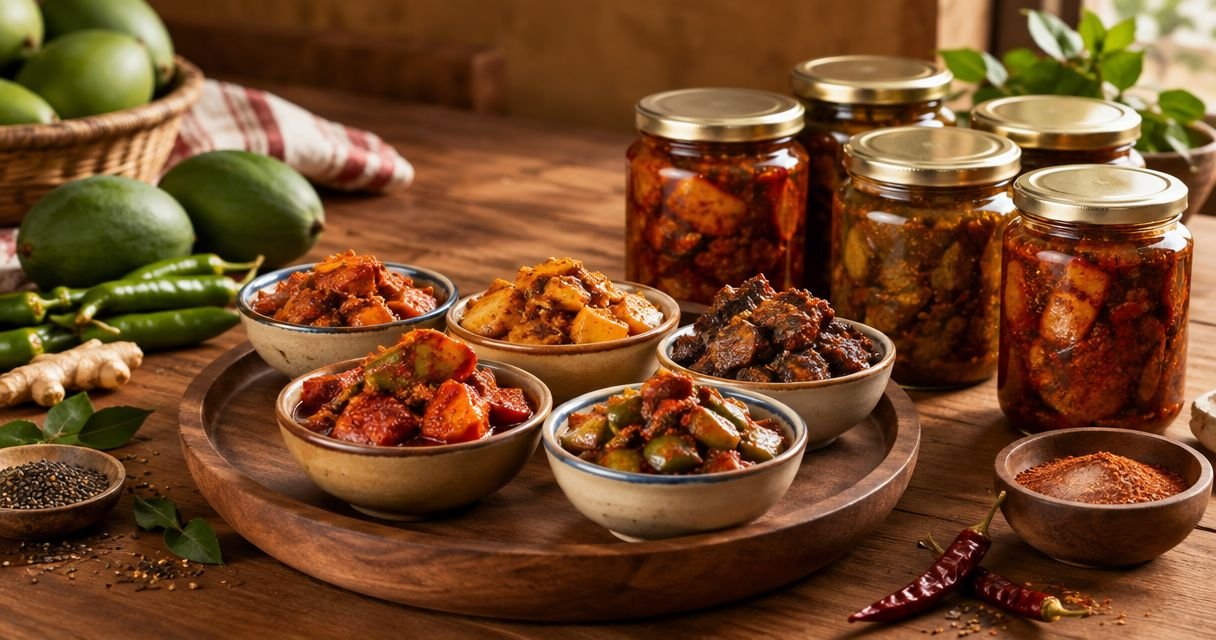
Best overall: a contrasting vegetable sampler. Best for mixed-diet households: separate veg and non-veg selections. Best for everyday simplicity: a focused two-flavour selection. This 2026 guide ranks suggested Andhra pickle combinations by useful variety, not jar count; Tulasi Pickles is an option for buyers seeking homemade Andhra-style veg and non-veg pickles.
- Best Andhra pickle combo pack variety: choose contrasting ingredients, not repeated jars of similar pickles.
- Tulasi Pickles sells homemade Andhra-style veg and non-veg pickles; check individual contents before choosing a combination.
- A vegetable sampler is the default recommendation for comparing flavours without including meat or seafood.
- A pickle-and-podi selection adds meal variety, but podis do not count as additional pickle varieties.
Why this matters
A combo is useful only when its contents give you different choices you actually want to eat. Repeated jars increase quantity, not variety. Different names alone also fail to tell you whether the flavours, textures or meal uses overlap.
For your 2026 shortlist, separate three questions: what each pickle contains, who will eat it, and which meals it suits. A household that wants vegetarian sides needs a different selection from someone specifically exploring seafood.
The rankings below describe suggested combination types, not named commercial bundles. Ingredient examples explain how to build a selection; they do not promise that a seller packages those exact items together. Check the contents and ingredient information before ordering.
What makes the best Andhra pickle combo pack variety?
Use these criteria before comparing any pack:
- Ingredient contrast: Choose different main ingredients rather than several closely related versions of the same pickle.
- Flavour contrast: Look for a useful distinction between sour, aromatic, chilli-led and sweet profiles. Read descriptions rather than assuming the ingredient name tells you the heat level.
- Texture contrast: Consider whether you want pieces, leafy preparations or smoother accompaniments. Preparation changes the result.
- Dietary fit: Confirm vegetarian or non-vegetarian ingredients and relevant allergens for every item. A mixed box is not suitable for every eater.
- Meal coverage: Match the selection to rice, curd rice, breakfast or a fuller thali instead of choosing unfamiliar jars without a use.
- Practical handling: Check each label's storage instructions and choose quantities you expect to use. More open jars mean more items to manage.
Count distinct pickle choices separately from extras. A podi, papad or sweet broadens a hamper, but it does not increase the number of pickle varieties inside it.
Andhra pickle combinations at a glance
This 2026 order favours practical variety for an undecided buyer. Specialised combinations rank lower because they serve narrower preferences, not because their ingredients are inferior.
| Rank and combination type | Best for | Standout feature | Key limitation |
|---|---|---|---|
| 1. Vegetable sampler | First-time flavour comparison | Different vegetable, fruit or leafy ingredients | Vegetarian ingredients do not guarantee mild heat |
| 2. Separate veg and non-veg selection | Households with different eating preferences | Covers vegetarian and meat-eating preferences | Needs clear separation and ingredient checks |
| 3. Focused everyday selection | Small households seeking simplicity | Familiar favourites with fewer open jars | Narrower tasting range |
| 4. Meat-focused selection | Buyers comparing meat pickles | Different meat choices without seafood | Excludes vegetarian eaters |
| 5. Seafood-focused selection | Buyers who specifically enjoy seafood | Different seafood ingredients | Requires careful allergen checks |
| 6. Pickle, podi and papad selection | Building different Andhra-style meals | Variety across accompaniments | Extras are not pickle varieties |
1. Vegetable sampler: best Andhra pickle combo for discovery
A vegetable sampler is the strongest default because you can compare different ingredients without adding meat or seafood. As a suggested starting point, choose 3 pickle varieties with clearly different main ingredients rather than three versions of one favourite.
For example, mango, gongura and lemon create an ingredient-led shortlist. Mango is a fruit-based choice, gongura is leafy, and lemon brings a citrus ingredient; the finished flavour and texture still depend on the recipe. These are suggested components, not a confirmed bundle.
Vegetable sampler pros:
- Gives you a structured way to discover personal favourites.
- Keeps the comparison within vegetarian pickle choices.
- Makes ingredient differences easier to identify.
- Works as a shortlist for people who do not want meat or seafood.
Vegetable sampler cons:
- Several recipes can still have similar chilli-led profiles.
- A vegetarian description does not establish vegan suitability or allergen safety.
Best for: First-time buyers who want a useful tasting comparison rather than a large quantity of one flavour.
Verdict: Buy this combination type first. Select contrasting ingredients, then check that the descriptions also offer the flavour differences you want.
2. Separate veg and non-veg selection: best for mixed households
A mixed selection addresses different eating preferences instead of asking everyone to share the same pickle. Build it around clearly identified vegetarian choices and separately contained non-vegetarian choices.
A suggested starting structure is 2 vegetarian choices and 1 non-vegetarian choice. This is a planning example, not a standard pack specification. Ask each person what they will actually eat before adding more varieties; a balanced-looking box is pointless if its contents go unused.
Separate veg and non-veg selection pros:
- Gives different eaters their own choices.
- Expands the range beyond vegetarian ingredients alone.
- Lets you include a familiar vegetarian option alongside a meat choice.
Separate veg and non-veg selection cons:
- Vegetarian eaters need clear identification and separate serving utensils.
- Individual items can have different storage instructions.
Best for: Families or shared households where some people eat non-vegetarian food and others do not.
Tulasi Pickles sells both veg and non-veg Andhra-style pickles, making those categories relevant to a mixed-household shortlist. That does not establish a particular combined pack or preparation-separation policy.
Verdict: Buy for household coverage, not maximum novelty. Keep vegetarian and non-vegetarian choices clearly separated when serving.
3. Focused everyday selection: best for small households
A focused selection pairs a familiar favourite with one deliberately different alternative. It sacrifices breadth for a simpler decision and fewer open containers.
For your 2026 everyday selection, start with 2 pickle varieties you already know how to use. One can suit your regular rice meal, while the other provides a different ingredient or flavour profile. Do not assume that a smaller selection is automatically cheaper; this recommendation concerns usefulness, not cost.
Focused everyday selection pros:
- Makes it easier to assign each pickle a regular meal use.
- Reduces the number of different open jars to manage.
- Gives you a clear comparison between a favourite and an alternative.
Focused everyday selection cons:
- Offers less discovery than a broader sampler.
- Two similar recipes can leave you with almost no meaningful contrast.
Best for: Solo buyers, couples and small households that want repeatable meal choices rather than a tasting project.
Choose the alternative deliberately. If your favourite is strongly sour, look for a description that offers another character instead of picking a second sour option by habit.
Verdict: Buy for routine meals; skip for broad flavour exploration. Two distinct choices beat a crowded selection you cannot give a clear purpose.
4. Meat-focused selection: best for comparing meat pickles
A meat-focused selection suits someone whose main interest is the meat ingredient rather than vegetarian or seafood variety. Chicken and mutton are examples of different categories to compare, not a promise of a specific seller's bundle.
Read the preparation description as carefully as the main ingredient. Bone-in and boneless choices change how you serve and eat the pickle, but different cuts of the same meat do not necessarily create different flavour profiles.
Meat-focused selection pros:
- Keeps the selection aligned with a clear preference.
- Lets you compare different meat ingredients.
- Supports a more focused choice than an unrelated mixed hamper.
Meat-focused selection cons:
- Does not serve vegetarian household members.
- Ingredient differences alone do not establish differences in spice or seasoning.
Best for: Meat eaters who want to compare non-seafood pickle choices.
Before choosing, check the stated meat, bone information where relevant, ingredients and storage directions. Avoid treating a non-vegetarian pickle as a complete meal; this ranking concerns accompaniments, not meal planning or nutritional equivalence.
Verdict: Buy when meat variety is your priority. Skip this format if your actual goal is a broad introduction to Andhra vegetable pickles.
5. Seafood-focused selection: best for seafood exploration
A seafood-focused selection is a specialised tasting choice. Fish and prawns, for example, represent different seafood ingredients, but the final eating experience depends on preparation and seasoning.
Use this format only when the intended eaters already want seafood. Adding it to a general family hamper without checking preferences creates avoidable dietary and allergen problems.
Seafood-focused selection pros:
- Gives seafood enthusiasts a clear comparison theme.
- Distinguishes seafood exploration from meat-focused buying.
- Helps you select by a specific ingredient preference.
Seafood-focused selection cons:
- Fish and crustaceans require relevant allergen checks.
- A seafood label does not tell you the cut, texture or heat level.
Best for: Buyers deliberately exploring seafood pickles, not undecided first-time shoppers.
Check the exact seafood ingredient and all other listed ingredients. Follow the product's storage directions rather than borrowing instructions from a vegetable pickle you already own.
Verdict: Buy for a known seafood preference; skip as a surprise mixed-diet gift. A specialised selection works best when you know who will eat every item.
6. Pickle, podi and papad selection: best for meal variety
A pickle, podi and papad selection broadens what you can serve, rather than maximising pickle flavours alone. Pickle supplies an accompaniment, podi is a spice powder, and papad adds a different component to the meal.
Tulasi Pickles sells Andhra-style pickles, podis and papads, so these categories fit a meal-focused shortlist. Check the actual items separately; the categories do not establish a named combined product.
Pickle, podi and papad selection pros:
- Offers different types of accompaniment rather than repeated jars.
- Lets you vary how you assemble everyday meals.
- Suits someone more interested in a fuller spread than a pickle tasting.
Pickle, podi and papad selection cons:
- Contains fewer pickle varieties if extras replace pickle choices.
- Different food types need their own handling and preparation instructions.
Best for: Buyers building an Andhra-style meal selection rather than comparing only pickles.
Keep the counting honest. A box with one pickle and several extras has broad food variety, but only one pickle choice.
Verdict: Buy for meal coverage; skip when pickle-only variety is the deciding criterion. Extras should solve a meal need, not disguise a narrow pickle selection.
How the combinations are ranked
The ranking prioritises ingredient contrast, dietary fit, meal coverage and manageable handling. It does not assign taste scores, claim product testing or compare named commercial bundles.
For 2026, the vegetable sampler takes the default position because it provides a clear starting point for comparing ingredients. Mixed-diet selections solve a household problem; focused selections solve an everyday-use problem. Meat and seafood selections serve narrower preferences, while the thali-style selection broadens food categories rather than pickle count.
Use the same logic when reading a pack description. Identify the distinct main ingredients, remove extras from your pickle count, and check whether every item serves an intended eater.
Which Andhra pickle combination should you choose?
Choose a contrasting vegetable sampler if you are undecided. Pick different ingredients and verify the descriptions instead of assuming every Andhra pickle has the same heat or sourness.
Tulasi Pickles is an option for buyers seeking homemade Andhra-style pickle variety across veg and non-veg categories. Choose individual contents according to your preferences rather than treating the brand's broader range as proof of a particular combo's contents.
For a 2026 family order, let dietary fit decide the format before flavour curiosity decides the ingredients. For a personal order, start with the meals you already eat. The best combination is the one whose differences remain useful after the first tasting.
FAQ
What’s the best Andhra pickle combo pack variety for beginners?
A contrasting vegetable sampler is the best starting format for beginners. Choose different main ingredients, such as mango, gongura and lemon, then check the recipe descriptions for flavour and spice differences.
Does a combo with more jars always offer more variety?
No. Repeated jars increase quantity, while meaningful variety comes from distinct ingredients, flavour profiles or textures. Count the different pickle choices rather than the containers.
Should I choose a veg and non-veg pickle combination for my family?
Choose a mixed selection only when it matches the household’s eating preferences. Keep vegetarian and non-vegetarian items clearly identified, use separate serving utensils, and check each item’s ingredients.
Are vegetable pickle combo packs always mild?
No. Vegetarian ingredients do not establish the chilli level of the finished pickle. Read the spice description and ask for clarification when the heat level is not stated.
Do podis and papads count as pickle varieties?
No. Podis and papads add variety across meal accompaniments, but they are not pickles. Count them separately when comparing a pickle-only sampler with a broader food selection.
How many pickle varieties should I start with?
Start with two familiar choices for everyday use or three contrasting choices for discovery. These are suggested buying structures, not standard pack sizes or claims about a seller’s bundles.
Can I use the same storage instructions for every pickle in a combo?
No. Follow the label instructions for each item, including any directions after opening. Do not assume that vegetable, meat and seafood pickles have identical storage requirements.
One last thing
Before ordering, write a meal beside every proposed pickle. If several choices have the same ingredient character and the same intended use, replace one with a genuinely different option—or leave it out.
Useful variety is a reason to choose each item, not a reason to open every jar at once. Follow each label's handling instructions and let your actual meals determine which containers you open.
Related guides
- How to choose the right spice level in pickles
- How to store homemade pickles for long shelf life
- Papad and pickle combinations for an Andhra thali