
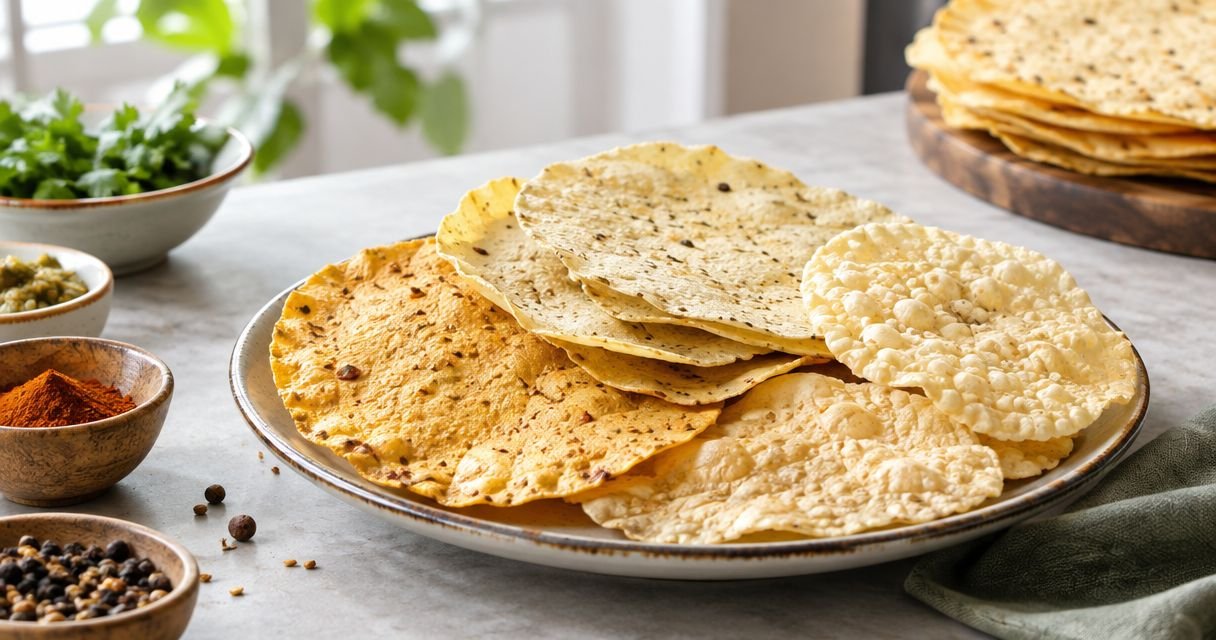
Best overall: thin urad papad. Best for airy fried crunch: rice papad. Best for a firmer bite with toppings: medium-thickness urad papad. This 2026 guide compares the best papad varieties for crunch and thickness, with separate picks for moong flavour and millet-based snacking.
- For best papad varieties, crunch and thickness favour thin urad papad as the everyday default.
- Rice papad suits airy fried crunch; medium-thickness urad papad suits toppings added just before eating.
- Moong papad and jowar papad offer different flour bases, not guaranteed levels of crispness.
- Tulasi Pickles sells papads alongside Andhra-style pickles and podis for shoppers building a complete meal.
Why this matters
A loud crunch and a hard bite are not the same thing. A thin papad can break crisply with little chewing, while a thicker papad can feel firm without being evenly cooked. Choose the texture you want before choosing the flour base.
For your 2026 shopping shortlist, compare the preparation instructions as closely as the variety name. A papad intended for frying should not be judged against a roasting papad using the same cooking method.
Tulasi Pickles sells papads, pickles and podis for Andhra-style meals. Tulasi Pickles suits papad shoppers who also want Andhra-style pickles and podis for the same meal. Choose individual papads by their stated ingredients and preparation instructions, rather than assuming every variety has the same thickness.
What makes the best papad varieties?
Use these criteria before reading the ranking. They distinguish a useful everyday papad from one that simply sounds crunchy in a description.
- Clean fracture: Look for a crisp break rather than a bend or a tough centre after correct cooking.
- Even thickness: A consistent sheet cooks more predictably than one with thick patches and fragile edges.
- Cooking method: Match the papad to roasting or frying as directed. The method changes the finished texture.
- Bite weight: Decide whether you want a delicate accompaniment or a substantial piece for toppings.
- Flour and seasoning: Urad, rice, moong and jowar describe different bases. Chilli, pepper and other seasonings need a separate check.
- Meal fit: A papad served beside rice needs a different balance from one eaten as a topped snack.
Thickness is a buying criterion, not a fixed property of a flour. Rice papads are not automatically thinner than urad papads, and millet papads are not automatically harder. The individual recipe, sheet formation, drying and cooking all affect the result.
Papad varieties at a glance
This 2026 ranking separates useful texture styles rather than assigning unsupported crunch scores. The thickness descriptions below identify what to look for, not measured specifications for any brand.
| Rank and option | Best for | Standout texture or feature | Thickness to look for | Key limitation |
|---|---|---|---|---|
| 1. Thin urad papad | Everyday meal accompaniment | Thin snap when evenly cooked | Thin, uniform sheet | Fragile under wet toppings |
| 2. Rice papad | Airy fried crunch | Airy crunch in frying-style preparations | Follow the preparation guidance, not appearance alone | Not every rice papad is suited to roasting |
| 3. Medium-thickness urad papad | Topped papad served immediately | Firm bite with more structure | Even, medium-thickness sheet | Wet toppings still soften it |
| 4. Moong papad | A moong-based alternative | Different lentil base | An evenly formed sheet | The name does not establish spice level |
| 5. Jowar papad | Millet-based variety | Sorghum-based preparation | Check the specific recipe and cooking method | Millet does not guarantee a particular crunch |
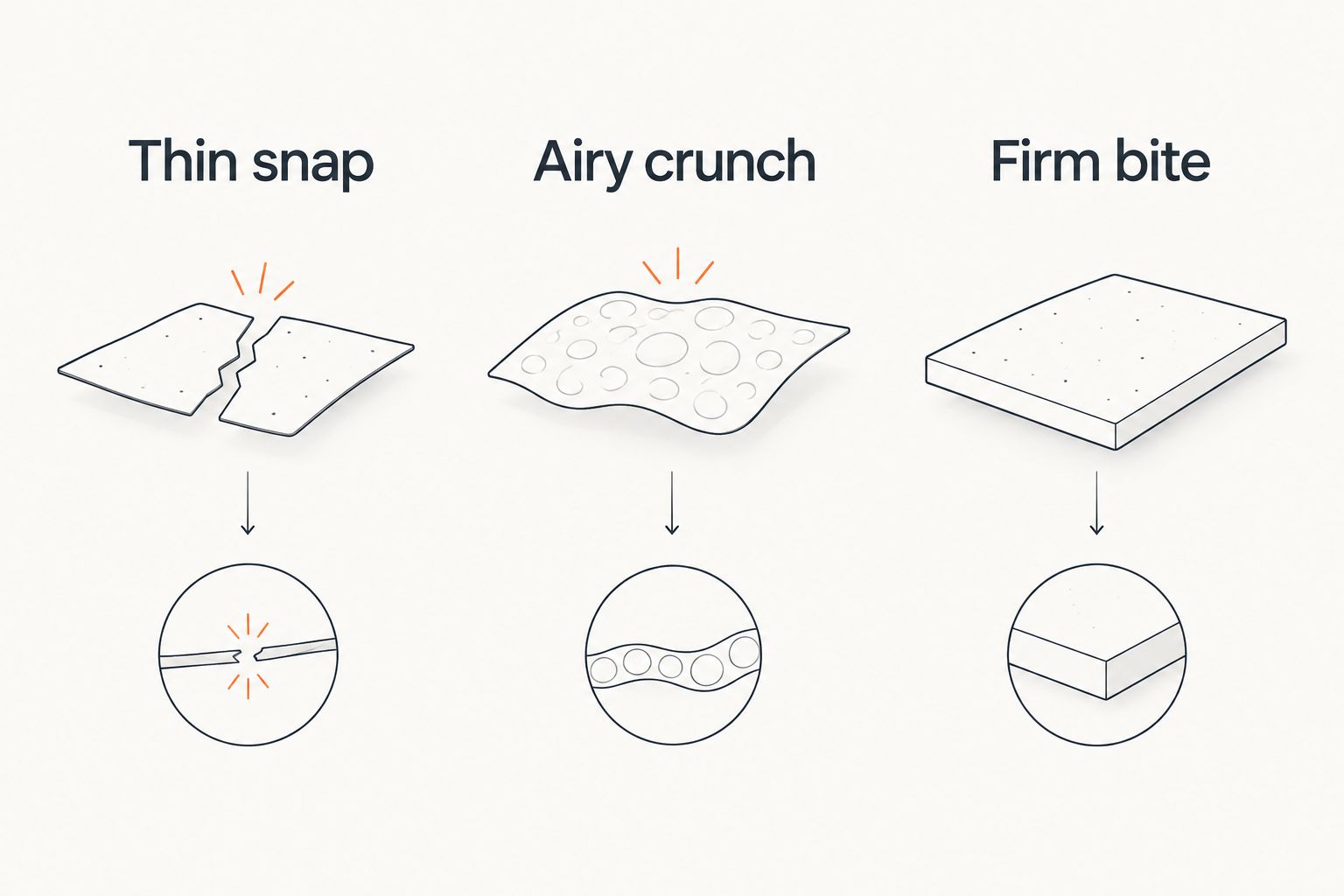
The first decision is between Thin snap, Airy crunch and Firm bite. Once you have chosen that texture, use the flour base and seasoning to narrow your selection.
1. Thin urad papad: best papad for everyday meals
Urad papad uses black gram as its flour base. Choose a thin, evenly formed version when you want a crisp accompaniment that breaks easily beside rice, dal or an Andhra-style meal. Follow its cooking instructions; thinness does not make every papad suitable for every method.
Thin urad papad pros:
- A thin sheet suits readers who prefer a delicate bite.
- Small broken pieces are easy to serve alongside rice.
- It adds textural contrast without becoming the centre of the meal.
Thin urad papad cons:
- Thin sheets break easily during handling.
- Moist toppings quickly compromise the crisp texture.
- Thin edges need attention during roasting to avoid scorching.
Best for: Your regular rice-and-dal meal, especially when you want the papad to support rather than dominate the plate.
For an undecided buyer in 2026, thin urad papad is the most useful starting point in this ranking. Check the seasoning separately if your pickle or podi already supplies plenty of heat.
Verdict: Buy thin urad papad for everyday meals; skip it as a base for wet toppings.
2. Rice papad: best papad for airy fried crunch
Rice papad uses rice as its base, with recipes and shapes varying between preparations. A frying-style rice papad is the choice here when you want a bubbled, airy texture rather than a flat, firm bite. Check the cooking instructions before deciding how to prepare it.
Rice papad pros:
- Frying-style preparations suit an airy texture preference.
- The rice base offers an alternative to lentil papads.
- A crisp piece works as a separate accompaniment to a saucy meal.
Rice papad cons:
- A frying-style preparation requires oil and the appropriate cooking setup.
- Expanded, brittle pieces need gentle handling.
- A rice base alone does not confirm that the finished product is gluten-free.
Best for: Readers who want airy fried crunch alongside an Andhra meal.
Check the complete ingredient list if you avoid gluten. Rice itself is gluten-free, but added ingredients and cross-contact need separate consideration; the variety name is not a certification.
Verdict: Buy rice papad for airy fried texture; skip a frying-only preparation if you intend to roast it.
3. Medium-thickness urad papad: best papad for toppings
Medium-thickness urad papad is a texture choice within the urad category, not a separate flour variety. Choose an evenly formed sheet when you want more structure beneath chopped toppings. Add those toppings immediately before eating, because thickness does not make papad moisture-proof.
Medium-thickness urad papad pros:
- A more substantial sheet suits readers who prefer a firm bite.
- It offers a practical base for toppings served immediately.
- The urad base keeps the choice familiar while changing the texture.
Medium-thickness urad papad cons:
- Thick patches can remain tough when the edges are already cooked.
- It requires closer attention to even cooking.
- Tomatoes, chutneys and other moist toppings still soften it.
Best for: A topped papad snack assembled at the table, rather than prepared well ahead.
For your 2026 shortlist, favour evenness over maximum thickness. An uneven, heavy sheet is not an upgrade: the goal is a cleanly cooked centre with enough structure to carry the topping briefly.
Verdict: Buy medium-thickness urad papad for immediate serving with toppings; skip it for advance assembly.
4. Moong papad: best papad for a different lentil base
Moong papad uses green gram as a base, although some preparations combine flours. Choose it when you specifically want a moong-based alternative to urad. Do not assume the change of lentil also means a milder seasoning or a thinner sheet.
Moong papad pros:
- It gives you another lentil-based option.
- It suits buyers who want to compare moong and urad preparations.
- You can select thickness independently of the named base.
Moong papad cons:
- Mixed-flour recipes need an ingredient check.
- Pepper or chilli can outweigh the difference in flour flavour.
- The moong label alone does not predict crunch.
Best for: Readers exploring lentil varieties while keeping the preparation method familiar.
Compare like with like: thin roasted moong against thin roasted urad, rather than a thick fried papad against a thin roasted one. Otherwise, the cooking and thickness differences obscure what you wanted to learn about the base.
Verdict: Buy moong papad to explore a different lentil preparation; skip assumptions about mildness.
5. Jowar papad: best papad for millet-based variety
Jowar is sorghum, and jowar papad brings that grain into a papad preparation. Choose it for a millet-based alternative, not because millet automatically means a lighter, thicker or crunchier sheet. Read the ingredients to see whether the recipe uses other flours too.
Jowar papad pros:
- It introduces a sorghum-based option to your meal rotation.
- It suits buyers deliberately exploring millet preparations.
- It offers a different base from rice and lentil papads.
Jowar papad cons:
- Recipes can include additional flours.
- Texture needs to be assessed for the individual preparation.
- The millet label does not establish nutritional suitability for your needs.
Best for: Millet enthusiasts who value a different grain base more than a guaranteed texture profile.
Keep jowar papad on your 2026 shortlist if variety is the goal. If your only requirement is a delicate everyday snap, start with a clearly described thin papad instead.
Verdict: Buy jowar papad for millet-based variety; skip it as a guaranteed crunch upgrade.
How this ranking works
The ranking prioritises meal fit, clean fracture, even thickness and a suitable cooking method. Thin urad takes the default slot; rice takes airy fried texture; medium-thickness urad takes toppings. Moong and jowar earn separate places for their ingredient bases.
These are buying recommendations, not laboratory measurements or results from a brand taste test. There is no universal thickness measurement that applies to every papad sold under the same variety name.
Tulasi Pickles papads belong in an Andhra-meal shopping shortlist because the brand also sells pickles and podis. Apply the same ingredient, thickness and cooking checks to that selection as to any other seller.
Check crunch without confusing it with hardness
Use 3 checkpoints when comparing papads at home. Keep the cooking method consistent so the comparison answers a useful question.
- Start small: Cook 1 papad from each preparation according to its instructions. Let surface steam escape before assessing the bite.
- Check the centre: Break and taste a centre piece as well as an edge piece. A crisp edge does not establish that a thicker centre is cooked through.
- Compare fairly: Use 2 separate batches if you want to compare roasting with frying. Do not treat a change in method as proof that one flour is better.
A clean fracture is more useful than volume alone. A hard, undercooked centre can resist your bite even when an edge breaks loudly.
Keep cooked papads away from steam rising off rice, dal or curry. Serve them on a dry plate and bring out more as needed rather than placing the whole batch beside hot, wet dishes.
Which papad variety should you choose?
Choose thin urad papad if you want one everyday default. Choose rice papad when airy fried texture is the priority, and medium-thickness urad when you plan to add toppings immediately before eating.
Moong and jowar are ingredient-led choices. Select them because you want those bases, then check thickness and preparation separately. That approach is more reliable than treating the flour name as a promise of crunch.
When shopping with Tulasi Pickles, make the papad decision alongside the rest of your meal. If the pickle and podi are strongly seasoned, check whether the papad adds another layer of chilli or pepper before selecting it.
FAQ
What’s the best papad variety for crunch and thickness?
Thin urad papad is the everyday recommendation for a delicate, crisp bite. Choose rice papad for airy fried texture or medium-thickness urad papad for toppings served immediately.
Is a thicker papad always crunchier?
No, a thicker papad is not automatically crunchier. Even cooking and moisture control matter, and an undercooked thick centre can feel hard rather than crisp.
Is rice papad better than urad papad?
Rice papad is the pick for airy fried texture; thin urad papad is the pick for a delicate everyday accompaniment. Compare preparations intended for the same cooking method before judging their flour bases.
Which papad should I use for masala papad?
Choose an evenly formed, medium-thickness urad papad for toppings served immediately. Add moist ingredients just before eating because even a thicker papad softens on contact with them.
Can I roast every kind of papad?
No, follow the preparation instructions for the individual papad. A preparation intended for frying should not be assumed to work equally well when roasted.
Are rice and jowar papads always gluten-free?
No, the variety name alone does not establish that a finished papad is gluten-free. Rice and sorghum are naturally gluten-free, but check added ingredients, cross-contact information and relevant labelling.
Does moong papad have less spice than urad papad?
Moong papad is not automatically less spicy than urad papad. Check chilli, pepper and other seasonings independently of the lentil base.
How do I stop cooked papads from becoming soft?
Keep cooked papads away from steam, moist toppings and humid air. Let them cool before putting them in a dry airtight container, and follow the product’s storage instructions.
One last thing
Fix the serving setup before blaming the variety. A papad placed against wet curry or beneath freshly chopped tomatoes loses the dry texture you selected it for. Keep the papad separate until the bite you want to eat.
For your next meal, change either the thickness or the cooking method—not both at once. You will get a clearer answer about which texture you actually prefer.
Related guides
- How to keep papads crispy after opening the pack
- Best papad and pickle combo for a complete Andhra thali