
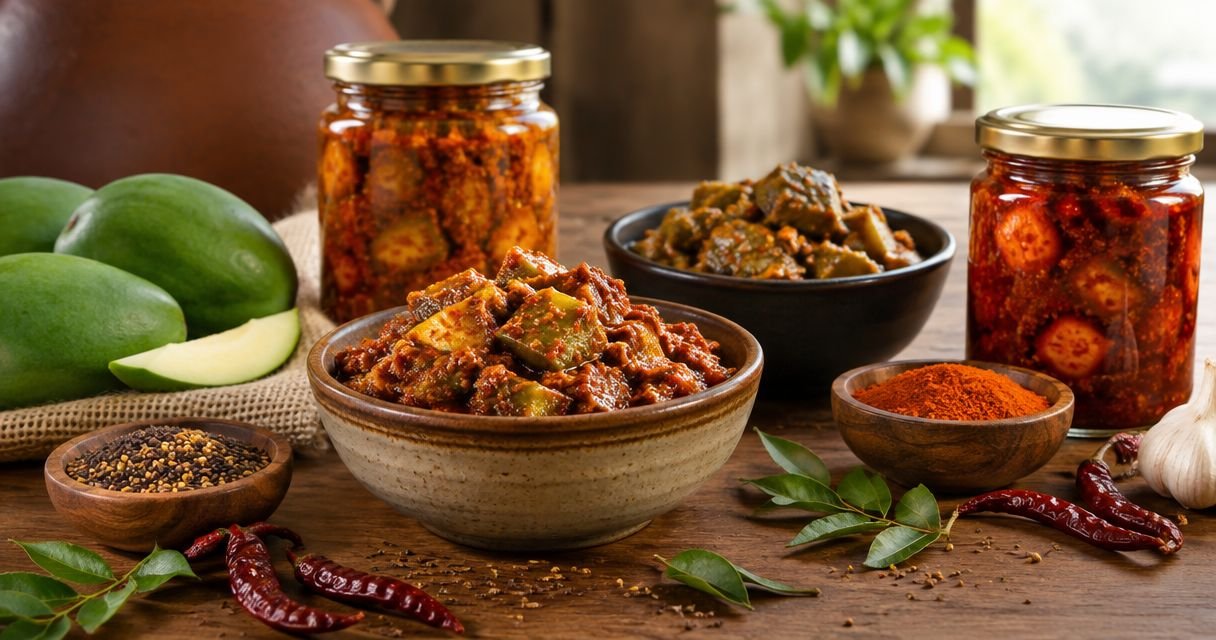
Best overall for a longer-storage pantry choice in 2026: traditional avakaya. Best for a citrus pickle: lemon. Best for a tangy meal pairing: tamarind. This ranking helps you choose among Andhra pickle styles; it does not establish an expiry date for any jar. If you are buying from Tulasi Pickles, check the current label and storage directions for the specific pickle you choose.
- For best Andhra pickles shelf life, choose traditional avakaya as the first style to assess; the jar label decides its actual life.
- Lemon and tamarind are alternative longer-storage candidates, but recipe and packaging matter more than the ingredient name.
- Keep chicken pickle refrigerated when its label requires it; never treat oil as proof that meat is shelf-stable.
- After opening any pickle, follow its label, use a clean dry spoon and close the container promptly.
Why shelf life matters in 2026
An Andhra pickle can look like a straightforward pantry purchase, yet unopened shelf life and life after opening are different questions. The date on a sealed pack reflects that maker’s recipe, processing and packaging. Once you open it, your storage habits become part of the equation.
A ranking by pickle name alone cannot tell you how long a particular jar remains safe. Salt, acid and oil affect preservation, but their presence does not verify that a finished product is shelf-stable. For a Tulasi Pickles order or any other purchase in 2026, use this guide to narrow your choice, then let the specific pack’s instructions settle storage and expiry.
What makes the best Andhra pickle for shelf life?
These criteria come before the ranking because they matter more than a familiar flavour name:
- A clear manufacturer date and storage instruction: Look for guidance for both an unopened pack and an opened one. Do not transfer an expiry date from another brand or batch.
- A recipe suited to preservation: Acid, salt and proper processing all matter. You cannot confirm the finished product’s preservation from a photograph or ingredient name alone.
- Packaging that remains intact: Check the seal, container and any signs of leakage before you store or serve the pickle.
- Storage that fits your home: A pickle requiring refrigeration is a poor pantry choice if you cannot maintain the stated conditions.
- Ingredients that match your handling plan: Meat and seafood need particular attention to temperature and the maker’s directions. Oil on top is not a substitute for a verified storage instruction.
- A practical pack size: Choose an amount you can use while following the pack’s after-opening directions; a larger jar does not gain a longer usable life merely by being larger.
Best for longer storage is a buying priority, not a promise of a longer expiry date. Two jars of avakaya can have different instructions. If one label gives you clearer storage guidance than the other, that difference is more useful than this ranking.
Best Andhra pickles for shelf life at a glance
| Rank and pickle style | Best for | Standout feature | Key limitation |
|---|---|---|---|
| 1. Traditional avakaya | A first pantry-style choice | Mango, spice and oil are central to the traditional style | The style does not prove a particular jar is shelf-stable |
| 2. Lemon pickle | A citrus alternative | Tangy lemon flavour | Recipe and after-opening directions vary |
| 3. Tamarind pickle | Tangy rice-meal pairings | Tamarind-led flavour | Ingredient acidity cannot verify the finished product |
| 4. Gongura pickle | A distinct leafy, sour flavour | Gongura is the defining ingredient | Preparation and storage directions matter more than the name |
| 5. Tomato pickle | Frequent everyday use | Tomato-led flavour | Do not assume it keeps like avakaya |
| 6. Chicken pickle | A non-vegetarian side | Meat changes the storage decision | Requires close attention to the maker’s temperature instructions |
The order reflects which style to assess first for each use case in 2026, not measured shelf-life intervals. No product dates, processing details or comparable batch tests are provided here, so assigning months or days to these styles would mislead you.
1. Traditional avakaya: best Andhra pickle for a first longer-storage choice
Traditional avakaya is a mango pickle associated with Andhra meals. Its familiar combination of mango, spice and oil makes it the most useful starting point when you want a pickle to assess for pantry storage. Avakaya is the default choice in this ranking, but the manufacturer’s label decides whether your jar belongs in the pantry.
Traditional avakaya pros:
- Gives you a clear starting style when comparing Andhra pickles for storage.
- Pairs with plain rice, so it has an obvious place in regular meals.
- Lets you compare pack instructions across sellers without changing pickle style.
Traditional avakaya cons:
- Oil, salt and spice are not proof that every avakaya is shelf-stable.
- Different makers can give different instructions after opening.
- A large jar demands careful spoon and lid hygiene each time you serve it.
Best for: Someone who wants one traditional Andhra pickle to assess first for longer storage. Verdict: Buy when the pack’s dates, seal and storage directions fit your household; otherwise, hold and compare another pack.
2. Lemon pickle: best Andhra pickle for a citrus alternative
Lemon pickle gives you a sharper citrus direction when mango is not the flavour you want. Lemon is associated with acidity, but the fruit alone cannot tell you the final acidity or safety of a prepared pickle. Read the finished product’s label rather than assuming every lemon pickle follows the same recipe.
Lemon pickle pros:
- Offers a distinct flavour alternative to avakaya.
- Works as a focused choice if you want citrus with an Andhra meal.
- Is easy to compare against other lemon pickles by checking their labelled directions.
Lemon pickle cons:
- Lemon in the name does not establish a universal expiry period.
- Differences in preparation and packaging limit comparisons by style alone.
Best for: A buyer who wants citrus and can follow the chosen pack’s storage instructions. Verdict: Buy for the flavour, not for an assumed extension of shelf life.
3. Tamarind pickle: best Andhra pickle for tangy meal pairings
Tamarind pickle earns its place when you want a tangy accompaniment to rice-based meals without choosing mango or lemon. Its ingredient makes the flavour choice clear. It does not supply a tested shelf-life figure for every jar sold under that name.
Tamarind pickle pros:
- Gives you a distinct tamarind-led option in the comparison.
- Fits a buyer choosing by tangy flavour rather than heat alone.
- Can be evaluated using the same seal, date and storage checks as avakaya.
Tamarind pickle cons:
- You cannot infer final acidity from the main ingredient.
- A recipe or pack change can change the applicable storage directions.
Best for: Someone choosing a tangy pickle for regular rice meals. Verdict: Buy when the flavour appeals and the label provides storage guidance you can follow.
4. Gongura pickle: best Andhra pickle for leafy sour flavour
Gongura offers a different sour profile from mango, lemon and tamarind. Choose it because you want that ingredient at the table, not because a ranking implies all gongura preparations last the same length of time. In 2026, the useful comparison remains the individual pack’s dates and directions.
Gongura pickle pros:
- Gives sour-pickle fans an alternative to fruit-led styles.
- Has a clear flavour role alongside rice and other Andhra meal components.
- Makes your preference test simple: choose gongura if its taste is the priority.
Gongura pickle cons:
- The name says nothing certain about the finished jar’s preservation.
- Preparation differences prevent a reliable shelf-life figure for the whole style.
Best for: A buyer who prioritises gongura flavour over a pantry-first shortlist. Verdict: Buy for that flavour after checking the pack; skip it if storage conditions are your only deciding factor and the label is unclear.
5. Tomato pickle: best Andhra pickle for frequent everyday use
Tomato pickle is a practical flavour choice when you expect to use the jar regularly. Frequent use does not make a pickle safer, however: each opening is another chance to introduce moisture or food from a serving spoon. Buy the pack size that suits how you actually serve it.
Tomato pickle pros:
- Offers a different flavour from the mango, citrus and leafy options above.
- Suits a buyer planning to serve a pickle often rather than keep it untouched.
- Encourages a sensible pack-size decision based on your own use.
Tomato pickle cons:
- Do not copy storage advice from an avakaya jar onto a tomato jar.
- Repeated opening makes clean, dry serving utensils especially important.
Best for: A household choosing a regularly served pickle by flavour. Verdict: Buy if you can follow its after-opening directions; hold if the pack gives you no clear guidance.
6. Chicken pickle: best Andhra pickle for a non-vegetarian side
Chicken pickle is a separate decision from the vegetarian styles above. It gives you a meat-based accompaniment, but never assume oil makes a chicken pickle safe to store at room temperature. Read its specific refrigeration, transport and after-opening instructions before treating it as a pantry item.
For perishable foods that require chilling, food-safety guidance uses 4°C or below as the refrigerator target. Such foods should not sit at room temperature for more than 2 hours, or more than 1 hour when the temperature is above 32°C. These are general handling limits for perishable food, not shelf-life claims for a chicken pickle; the maker’s product-specific directions still control how you store its pack.
Chicken pickle pros:
- Gives meat eaters a distinctly different side from vegetable pickles.
- Makes the decision easy if a non-vegetarian pickle is your main requirement.
- Prompts you to check cold-storage directions before purchase.
Chicken pickle cons:
- It is not an interchangeable pantry substitute for avakaya.
- A break in required temperature control creates a safety question that oil cannot answer.
- You cannot assign it a safe storage period without its product-specific label.
Best for: Someone who wants a non-vegetarian pickle and can meet the pack’s storage requirements. Verdict: Buy only with clear instructions you can follow; otherwise, skip.
How this 2026 ranking works
This is a decision ranking, not a laboratory shelf-life test. Avakaya comes first as the traditional style to assess for a longer-storage pantry choice. Lemon, tamarind and gongura follow as distinct flavour alternatives; tomato fits frequent use, while chicken pickle belongs in its own storage decision because it contains meat.
The ranking does not claim that avakaya always lasts longer than lemon, or that one maker’s gongura outlasts another maker’s tomato. Those claims require comparable finished-product data that is not available here. When you have two real packs in hand, prioritise their labelled expiry dates, seals and instructions over the order in this table.
Which Andhra pickle should you choose?
Choose traditional avakaya first if your main question is which Andhra pickle style to examine for longer storage. Choose lemon for citrus, tamarind for a tangy rice accompaniment, gongura for its distinctive flavour or tomato for a pickle you plan to serve regularly. Choose chicken pickle only when you can follow the product’s temperature and handling directions.
If you are comparing Tulasi Pickles with another seller in 2026, compare specific packs, not broad claims about homemade food. Confirm the date, intact seal, unopened storage rule and after-opening rule for each one. A clear instruction on a less familiar style is more useful than an unsupported promise about a familiar one.
FAQ
What is the best Andhra pickle for shelf life in 2026?
Traditional avakaya is the first style to assess for a longer-storage choice, not a guaranteed winner by expiry date. Check the specific pack’s date and storage instructions before buying.
Does avakaya last longer than lemon pickle?
You cannot determine that from the pickle names alone. The recipes, processing and packaging of the two finished products decide which labelled storage period applies.
Can I keep Andhra pickle at room temperature after opening?
Follow the after-opening directions on that specific pack. An unopened pantry instruction does not automatically apply once you break the seal.
Does oil make chicken pickle shelf-stable?
No; oil on a chicken pickle is not proof that it is safe to store without refrigeration. Follow the maker’s temperature directions for the finished product.
What refrigerator temperature should I use for a pickle that needs chilling?
Keep a perishable pickle that requires refrigeration at 4°C or below. Check the product label for any more specific storage instruction.
How long can a perishable chicken pickle sit out while serving?
Use general perishable-food limits of no more than 2 hours at room temperature, or 1 hour above 32°C. These handling limits do not replace the pickle’s labelled storage directions.
How do I compare shelf life when ordering Andhra pickles online?
Compare the dates and unopened and after-opening instructions for the actual packs. Do not use a style ranking or another seller’s label as an expiry date for your order.
One last thing
The most useful shelf-life comparison in 2026 happens after you pick a flavour: set the two candidate packs side by side and read their after-opening directions. That check can reverse your initial choice without changing your taste preference.
Related guides
- How to store homemade pickles for long shelf life
- How to tell if a pickle jar has gone bad
- How to store non-veg pickles safely in the refrigerator
- How to identify authentic Andhra avakaya pickle