
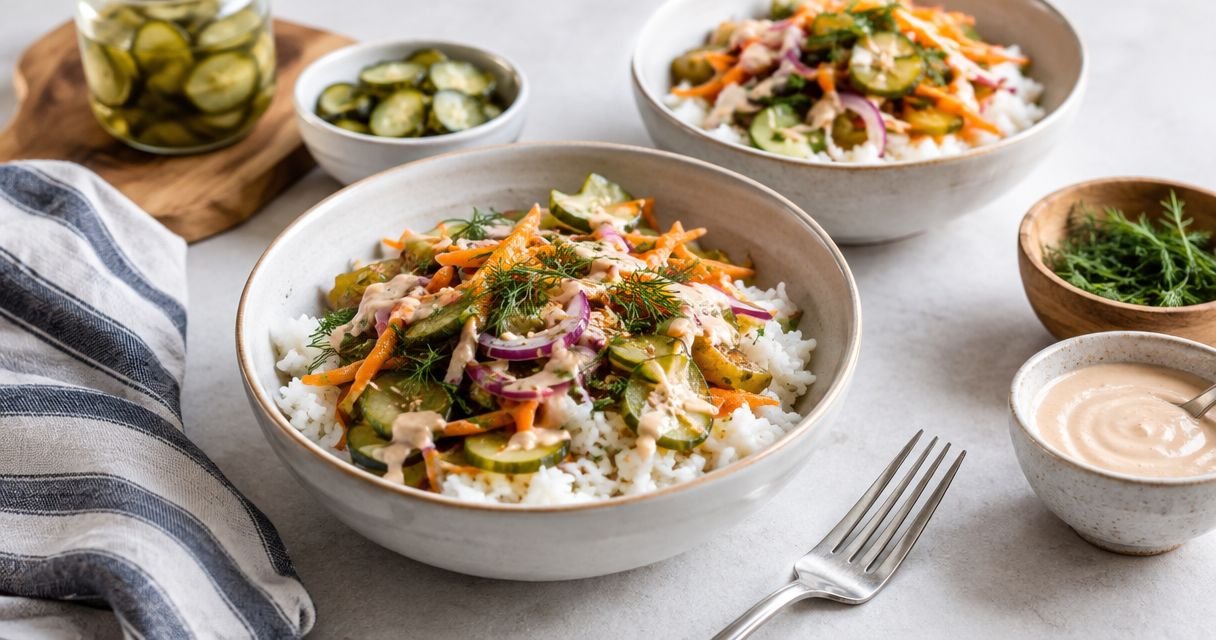
A pickle rice bowl is hot steamed rice topped with a spoon of Andhra-style pickle, a protein or vegetable add-in, and a crunchy finisher like podi or fried papad — the whole thing comes together in under 10 minutes if the rice is already cooked. The hidden time cost isn't the rice or the pickle, it's the protein: a boiled egg or leftover chicken makes this a 10-minute bowl, but starting raw meat from scratch pushes it past 25 minutes.
- A pickle rice bowl recipe takes 10 minutes when rice and protein are pre-cooked, using 2 tsp of pickle per bowl.
- Three variants cover most weeknights in 2026: veg, non-veg, and podi-only bowls.
- Tulasi Pickles’ avakaya and gongura work as the base flavor layer; podi adds the dry crunch on top.
- Oil-rich pickles need less added ghee or oil in the rice — cut it by half to avoid a greasy bowl.
Why this matters
Weeknight dinners in 2026 run on shortcuts that don't taste like shortcuts, and the pickle rice bowl fills that gap for anyone who grew up on Andhra food but doesn't have an hour to cook after work. It also solves the real problem with plain rice-and-curry meals: reheated rice tastes flat, and a spoon of pickle fixes that instantly because the tamarind, chili, and oil in the pickle carry more punch per teaspoon than most fresh curries. Tulasi Pickles ships several pickle varieties that work for exactly this use case, from tangy gongura to rich chicken pickle, so the flavor layer is already done before you touch the stove.
How to make a pickle rice bowl recipe
The method stays the same whether you're building a veg or non-veg bowl — only the middle layer changes.
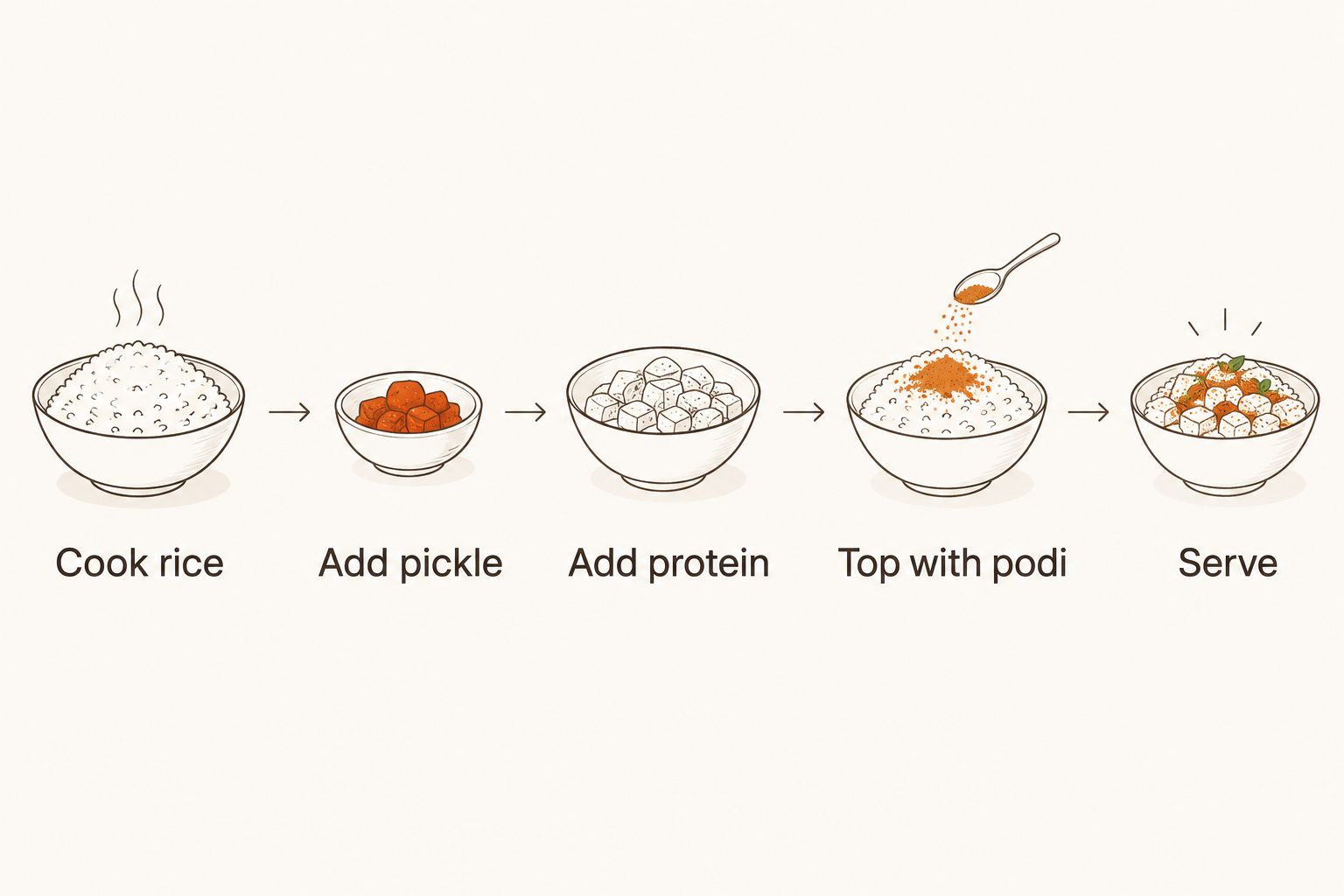
- Cook or reheat 1 cup of rice — plain steamed rice, leftover fried rice, or curd rice all work.
- Add 1-2 tsp of pickle oil or ghee to the warm rice and mix so the grains separate.
- Stir in 2 tsp of your chosen pickle — avakaya, gongura, or a non-veg pickle like chicken or prawns.
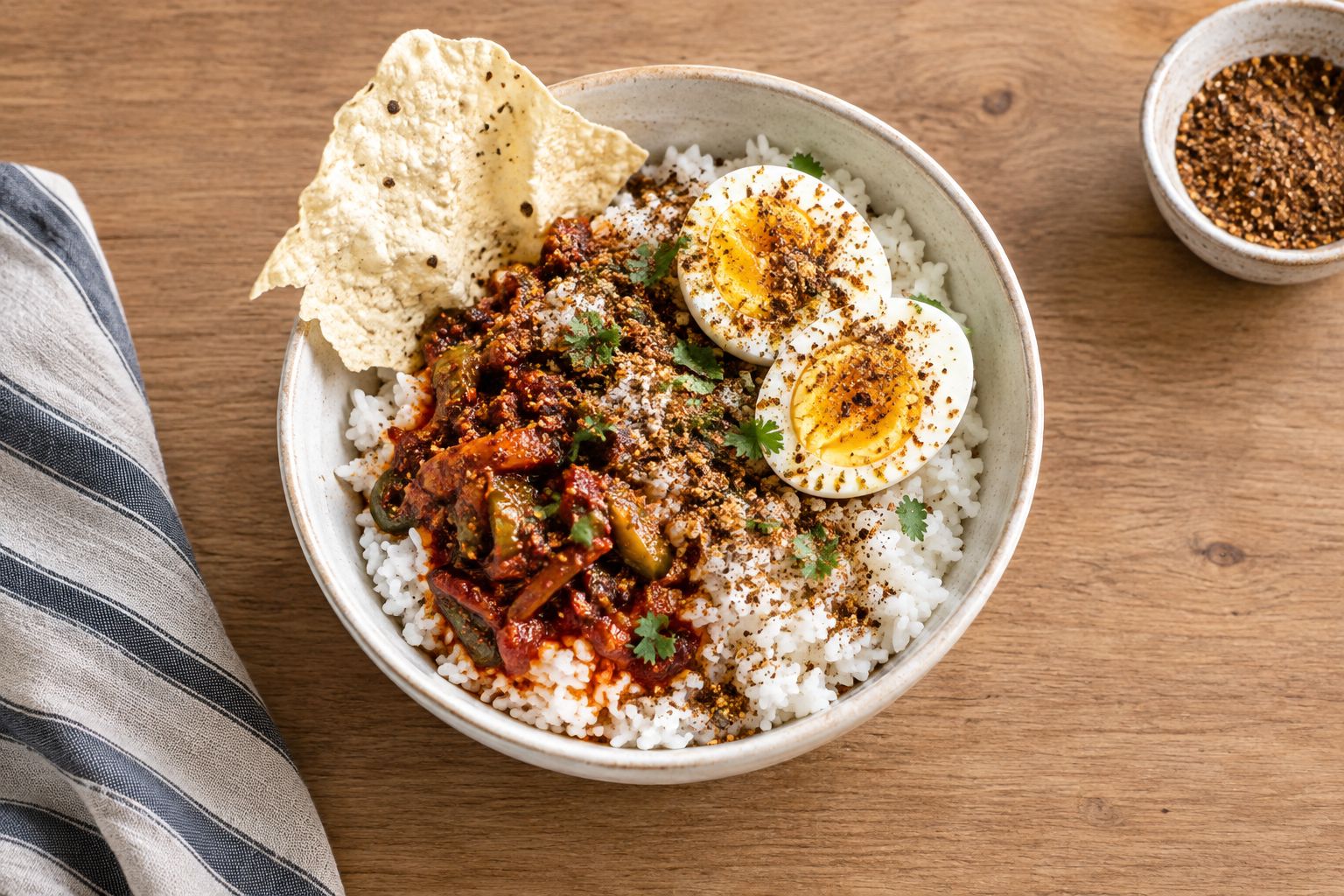
- Add a protein or vegetable layer — a boiled egg, shredded leftover chicken, or sauteed vegetables.
- Top with 1 tsp of podi for dry heat and crunch, plus a fried or roasted papad crumbled on top.
- Serve immediately — the bowl loses its texture if it sits for more than 20-30 minutes.
Veg pickle rice bowl: ready in 10 minutes
Use plain rice, 2 tsp of avakaya or gongura pickle, a handful of roasted peanuts or sauteed beans, and a sprinkle of karam podi on top. This is the fastest version because nothing needs cooking beyond the rice itself — the veg bowl is the one to default to on a busy Tuesday in 2026.
Non-veg pickle rice bowl: ready in 15-25 minutes
Shredded leftover chicken or a boiled egg turns the same base into a protein-heavy dinner. Non-veg pickles like chicken or boneless mutton pickle already carry meat in the jar, so stirring in 2-3 tsp of a non-veg pickle alone can replace the separate protein step entirely — that shortcut alone saves close to 15 minutes over cooking fresh meat.
Podi-only rice bowl: ready in 5 minutes
Skip pickle altogether and mix 1-2 tsp of podi with ghee and rice for a drier, spicier bowl — this is the version most South Indian households already make without calling it a "bowl." It's the quickest of the three but has the least moisture, so pair it with curd on the side.
Comparing the three variants
| Variant | Prep time | Key ingredient | Best for | Verdict |
|---|---|---|---|---|
| Veg pickle rice bowl | 10 minutes | Avakaya or gongura pickle | Fast vegetarian dinners | Buy the pickle jar, skip the extra cooking — Buy |
| Non-veg pickle rice bowl | 15-25 minutes | Chicken or mutton pickle | Protein-heavy weeknight meals | Best with leftover meat on hand — Buy |
| Podi-only rice bowl | 5 minutes | Karam or kandi podi | Fastest, driest option | Good for a 5-minute fix, not a full meal alone — Hold |
“If you already have cooked rice, a pickle rice bowl comes together in under 10 minutes with two spoons and a jar.”
Why a pickle rice bowl recipe varies
Not every bowl tastes or takes the same time, and the differences come down to a short list of variables:
- Pickle oil content — oil-heavy pickles like avakaya need less added ghee in the rice; lean pickles need more.
- Protein source — leftover meat cuts 15+ minutes off the recipe versus cooking raw chicken or mutton.
- Spice level of the pickle — Guntur-style hot pickles need less podi on top; milder pickles can take a heavier dusting.
- Rice type — leftover fried rice or curd rice changes the texture more than the pickle does.
- Podi grain size — coarse podi adds crunch, fine podi dissolves into the rice and adds only heat.
- How long the bowl sits — pickle oil separates from rice after 20-30 minutes, so bowls made ahead lose texture fast.
Can I use podi instead of pickle in a rice bowl?
Yes, podi can replace pickle entirely in a rice bowl — mix 1-2 tsp of podi with ghee and rice for a drier, spicier version with no oil-based pickle at all. The trade-off is moisture: podi bowls need curd or buttermilk on the side because they don't carry the wet, tangy base a pickle provides.
What's the best pickle for a quick rice bowl?
Avakaya and gongura work best for a quick rice bowl because both pack tang and heat into a small 2 tsp serving without needing extra spices. For a heartier weeknight bowl, a non-veg pickle like chicken or boneless mutton pickle from Tulasi Pickles doubles as both the pickle layer and the protein layer in one spoon.
How long can a pickle rice bowl sit before it gets soggy?
A pickle rice bowl holds its texture for about 20-30 minutes before the pickle oil separates and the rice turns soggy. If you're meal-prepping, keep the pickle and podi in separate containers and mix them into the rice only right before eating.
One last thing
The fastest bowl of the three isn't the one with the most ingredients — it's the podi-only version at 5 minutes, but it's also the one that runs dry without curd on the side. Keep a jar of pickle and a jar of podi open at the same time in 2026 and you can switch between wet and dry bowls depending on how much time you actually have that night.
FAQ
How much pickle should I use per rice bowl?
Use 2 tsp of pickle per bowl of rice — more than that and the oil overwhelms the grains. Adjust down for very oily pickles like avakaya.
Can I make a pickle rice bowl vegan?
Yes, a pickle rice bowl recipe is naturally vegan when you use a vegetable pickle and skip ghee for plain oil. Add roasted peanuts or lentils for protein instead of egg or meat.
Is a pickle rice bowl the same as pulihora?
No, pulihora is a specific tamarind rice dish cooked with tempering, while a pickle rice bowl is a quicker assembly of rice, ready-made pickle, and toppings with no cooking of the flavor base.
What protein works best in a non-veg pickle rice bowl?
A boiled egg is the fastest protein at under 10 minutes total, while shredded leftover chicken or a spoonful of chicken pickle itself doubles as both flavor and protein in one step.
Do I need to heat the pickle before adding it to rice?
No, pickle goes into warm rice straight from the jar — heating it isn’t necessary and can dull the tang that makes the bowl work.
How do I stop the rice bowl from getting too oily?
Cut the added ghee or oil in the rice by half when using an oil-rich pickle like avakaya, since the pickle itself already carries enough fat for the bowl.
Can I use leftover curd rice for a pickle bowl?
Yes, curd rice makes a cooling base that pairs well with a spicier pickle or podi on top, and it needs no extra oil at all.
What podi works best for topping a rice bowl?
A coarse karam or kandi podi adds crunch without dissolving into the rice, while a fine sesame or peanut podi blends in and adds heat but no texture.
Related guides