
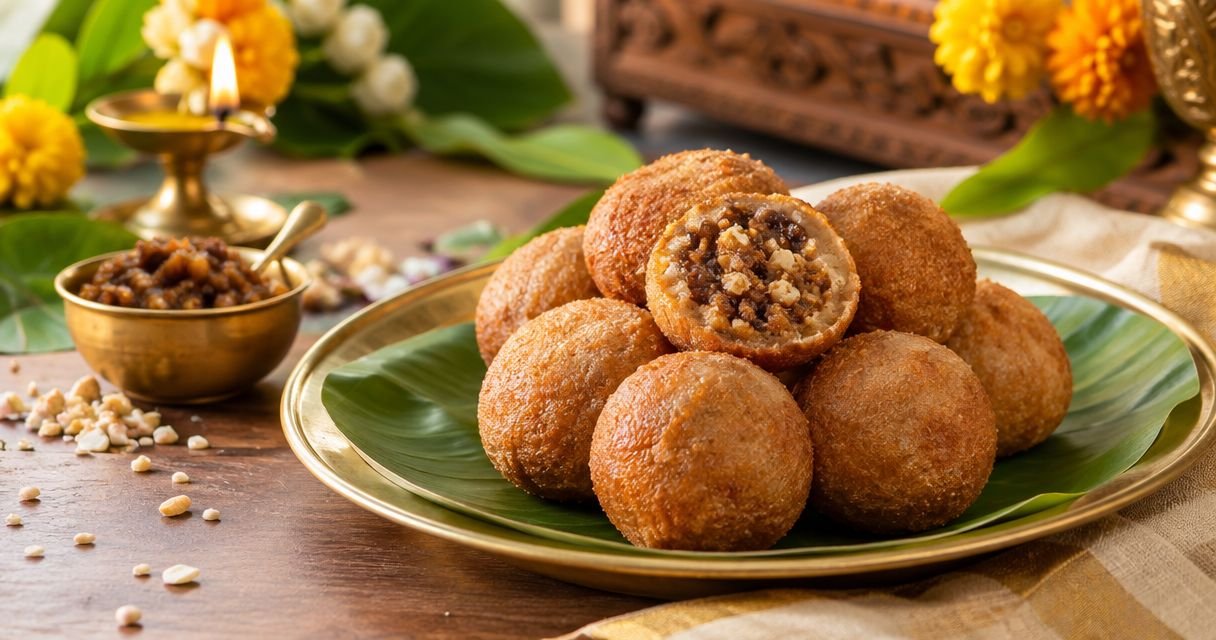
Boorelu for festive Andhra celebrations is a deep-fried sweet dumpling packed with jaggery, roasted dal and coconut, made in bulk for Sankranti, weddings and temple prasadam because a well-fried batch holds its shape and flavor for days. Hosts organizing a festival or a gifting round need more than a family recipe: they need batch math, a storage plan, and a backup for the week the kitchen runs out of time.
- Boorelu andhra sweet needs jaggery-dal filling, rice batter, and hot oil for a crisp, festival-ready finish.
- Homemade batches suit small gatherings; a festive sweets combo suits weddings, Sankranti, and overseas gifting in 2026.
- Airtight storage keeps boorelu from turning oily or stale through a multi-day festival.
- Tulasi Pickles ships festive Andhra sweets and pickle combos across India and overseas for 2026 celebrations.
Why boorelu matters for festive Andhra hosts
Boorelu, also called poornam boorelu, is a customary Sankranti and temple-offering sweet across Andhra and Telangana households, not a casual tea-time snack. That changes what a host actually needs: consistent frying across a large batch, a filling that doesn't leak during transport, and a sweet that still tastes right on day three of a festival week, not just fresh off the stove.
Anyone building a full festive spread usually pairs boorelu with other traditional items rather than serving it alone. The Andhra sweets for festival celebrations roundup covers how boorelu sits alongside ariselu, laddus and pootharekulu on a typical Sankranti or wedding table, and where each one fits in the meal order.
The real planning problem for this segment isn't the recipe. It's timing a multi-hour frying job against guest counts, gifting boxes, and a household that's already stretched thin during festival week.
Steps that solve the actual bottleneck
How to plan and make boorelu for a festival, step by step
Calculate your batch size before you shop
Most festival hosts underestimate boorelu by guessing per-person servings the same way they would for a main course. Boorelu gets eaten in twos and threes across a full day of visitors, not once at a sit-down meal.
- Count total expected footfall across the full festival day, not just the main sitting
- Plan 2-3 pieces per adult guest for tasting, more if boorelu is the featured sweet
- Add 15-20% extra for prasadam offerings that get set aside before serving
- Set aside a separate batch for gift boxes if you're sending sweets home with relatives
- Round batch size up to a full poornam mix, since half-batches of filling waste jaggery and dal
Cook the poornam filling to the right texture
The filling is where most home batches fail — either too wet to hold a ball shape, or too dry to melt through the fried shell.
- Cook chana dal or moong dal until soft enough to mash by hand, not just al dente
- Melt jaggery separately and combine off heat to avoid a grainy filling
- Roast grated coconut lightly before mixing in for aroma without added moisture
- Add a pinch of cardamom powder at the end, once the mix has started to cool
- Cool the filling fully before rolling; warm filling won't hold a ball shape
Get the outer rice-lentil batter right
The rice-urad dal batter is what gives boorelu its crisp shell, and it's the step most first-time festival cooks rush.
- Soak raw rice and urad dal separately for several hours before grinding
- Grind to a batter thick enough to coat the poornam ball without dripping off
- Rest the batter for 15-20 minutes before the first fry to let it settle
- Test consistency on one ball first; a batter that's too thin gives a pale, soggy shell
Fry at the correct oil temperature and stage
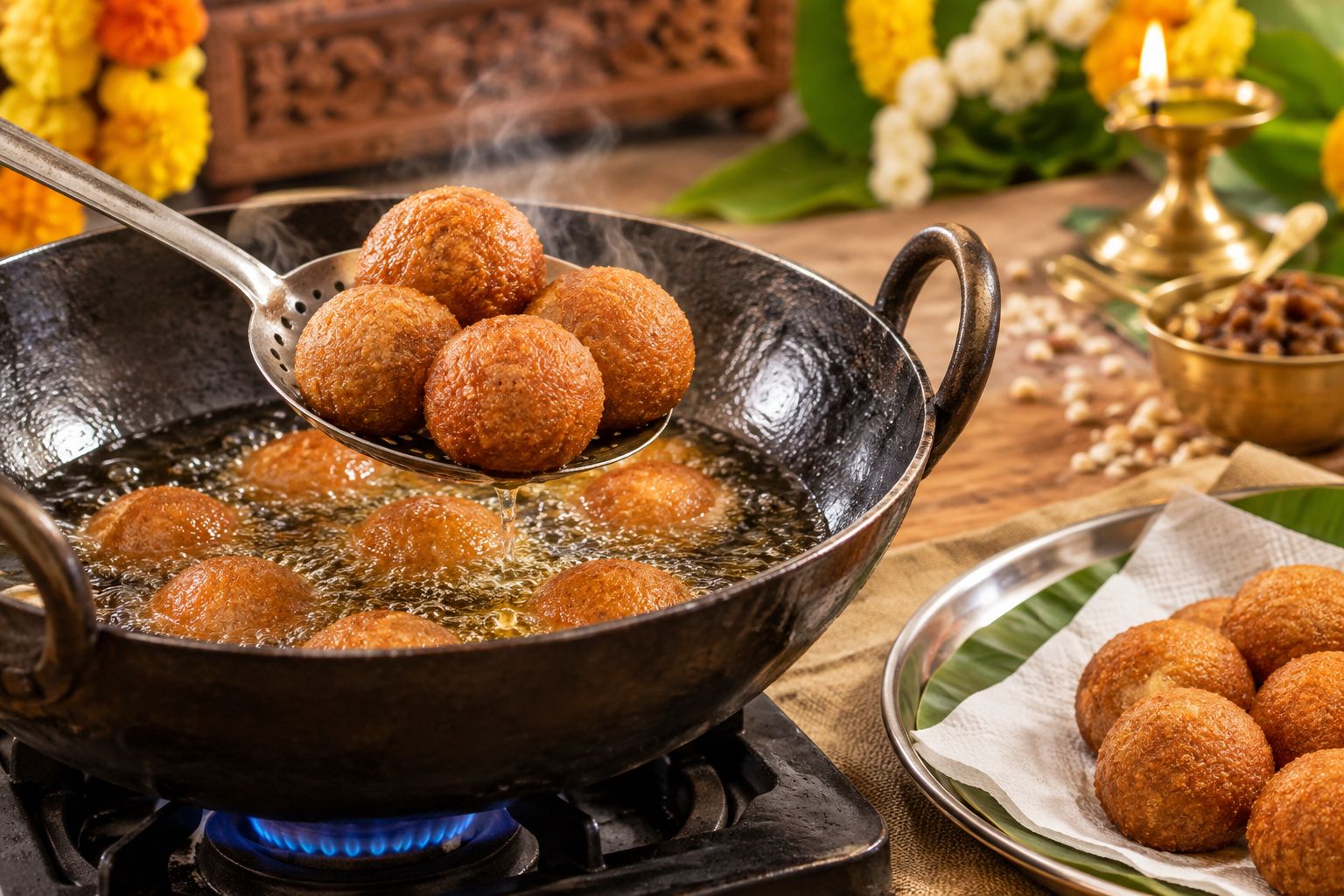
Oil temperature decides whether boorelu comes out crisp or greasy, and it's the step where a large festival batch goes wrong fastest.
- Heat oil to a medium-hot stage before the first piece goes in — too cool and the shell absorbs oil instead of crisping
- Fry in small batches of 5-6 pieces so the oil temperature doesn't drop
- Turn pieces gently so the shell browns evenly on all sides
- Drain on a wire rack instead of paper towels for the first few minutes to avoid a soggy underside
- Let the oil come back up to temperature between batches rather than rushing the next round
Order ready-made festive sweets when the timeline is tight
Frying a full boorelu batch for a wedding-size guest list or an overseas courier deadline eats an entire day in the kitchen. When festival week collides with work, travel or a shipping cutoff, ordering a finished combo is the faster path, not a compromise.
- Check whether the combo includes boorelu alongside other traditional sweets rather than a single item
- Confirm the combo is packed for the courier window if it's shipping outside Hyderabad
- Pick a combo that pairs sweets with pickles or podi if the gifting occasion calls for a full Andhra spread
- Order early enough to allow for festival-week shipping delays
Tulasi Pickles ships Andhra sweets alongside its pickle and podi range across India and overseas, and a festive sweets and snacks combo is built for exactly this scenario — a full spread arriving pre-packed instead of a solo fry-athon two days before the festival.
Order a festive sweets combo
Skip the frying marathon before Sankranti or a wedding.
Store boorelu so it stays fresh through the festival week
A festival calendar rarely finishes in one day, so boorelu needs to survive the gap between frying and the last round of guests.
- Cool boorelu completely before sealing it in a container — trapped steam turns the shell soft
- Store in an airtight container at room temperature for short festival stretches
- Move to the refrigerator if the gap between frying and serving runs past a couple of days
- Reheat briefly in a dry pan or oven rather than a microwave to bring back some crispness
- Keep gift-box portions separate from the household batch so they aren't opened early
Pair and present boorelu for gifting or prasadam
Boorelu rarely travels alone at a festival table or in a gift box — it sits next to pickles, podi, or other sweets.
- Pair a sweets box with a tangy pickle for contrast when gifting a full Andhra spread
- Use compartmentalized boxes so boorelu doesn't crush softer items like pootharekulu
- Label boxes if you're sending a mixed sweets-and-pickle hamper to relatives abroad
- Keep prasadam portions in a separate, undisturbed container until the pooja is done
Boorelu options for festive hosts in 2026
| Option | Best for | Key limitation |
|---|---|---|
| Homemade boorelu | Small family gatherings, close control over sweetness | Full-day time commitment for a large festival batch |
| Local Hyderabad sweet shop | Same-day pickup, last-minute quantity | Quality varies by shop and by batch |
| Festive sweets combo, ordered online | Weddings, gifting, overseas shipping deadlines | Less control over exact sweetness or filling ratio |
| Alternative sweet like pootharekulu or bandar laddu | Guests who prefer a lighter, non-fried option | Not a substitute where boorelu is the customary offering |
Verdict: for a Sankranti or wedding spread in 2026, homemade boorelu wins on cost and control if you have a full day to fry, and an online festive sweets combo wins on time when the calendar is tight.
Common mistakes festive hosts make with boorelu
- Frying the whole batch on the day of the event. Boorelu holds well for a few days when stored airtight — frying everything the morning of a wedding function creates unnecessary kitchen chaos.
- Skipping the batter rest time. A batter fried immediately after grinding gives a pale, oil-heavy shell instead of a crisp one.
- Overfilling the poornam ball. A filling-to-batter ratio that's too heavy on filling causes bursting mid-fry, wasting both oil and jaggery.
- Packing gift boxes before boorelu fully cools. Sealed warmth turns the shell soggy within hours, ruining a hamper meant to travel.
- Not planning for shipping cutoffs when ordering online. Overseas or out-of-state festival deliveries need lead time; ordering the week of the festival risks missing the occasion entirely.
FAQ
What is boorelu and how is it different from other Andhra sweets?
Boorelu is a deep-fried dumpling filled with jaggery, roasted dal and coconut, coated in a rice-lentil batter before frying. Unlike laddus or pootharekulu, its crisp outer shell comes specifically from the fry, not from rolling or layering.
How far in advance can I make boorelu for a festival?
Boorelu can be fried a few days ahead of a festival and stored airtight at room temperature or in the refrigerator for longer gaps. Reheating briefly in a dry pan restores some crispness before serving.
Is boorelu the same as ariselu or bandar laddu?
No. Ariselu is a flat, sesame-topped rice-jaggery sweet and bandar laddu is a rolled besan-based sweet, while boorelu is a fried, filled dumpling with a distinct crisp shell. All three appear on Andhra festival tables but serve different roles in the spread.
How long does boorelu stay fresh after frying?
Boorelu stays fresh for several days when cooled fully and sealed in an airtight container, longer if refrigerated. Freshness depends heavily on frying it to a deep golden shell rather than a pale one, which holds up better against moisture.
Can boorelu be shipped or ordered online for festivals like Sankranti?
Yes, festive sweets combos that include boorelu-style Andhra sweets can be ordered online and shipped within India and overseas ahead of Sankranti or wedding season. Order with enough lead time to account for courier schedules during festival weeks.
What is the traditional filling used in boorelu?
The traditional filling combines cooked chana dal or moong dal with jaggery and roasted coconut, flavored with cardamom. The filling is cooled fully before being rolled into balls and dipped in batter.
Is boorelu suitable for Vinayaka Chavithi prasadam?
Yes, boorelu is a common offering across Andhra festival occasions including Vinayaka Chavithi, alongside other traditional sweets. Prasadam portions are usually kept separate from the household batch until the pooja is complete.
Can I make boorelu without deep frying?
Deep frying is what gives boorelu its characteristic crisp shell, and there is no widely used shallow-fry or baked version that produces the same texture. Hosts short on time typically order a finished combo instead of substituting the cooking method.
One last thing
The difference between a boorelu batch that survives a five-day Sankranti week and one that turns soggy by day two almost always comes down to one step: letting it cool completely before sealing it. Steam trapped in a warm container does more damage than a slightly thin batter ever will, and it's the mistake that costs festival hosts the most sweets by the final day of celebrations in 2026.
Related guides
- Andhra pickles for Ugadi festival celebrations
- Pickles and podi combo for Sankranti festival feasts
- Bandar laddu for authentic Andhra sweet cravings