
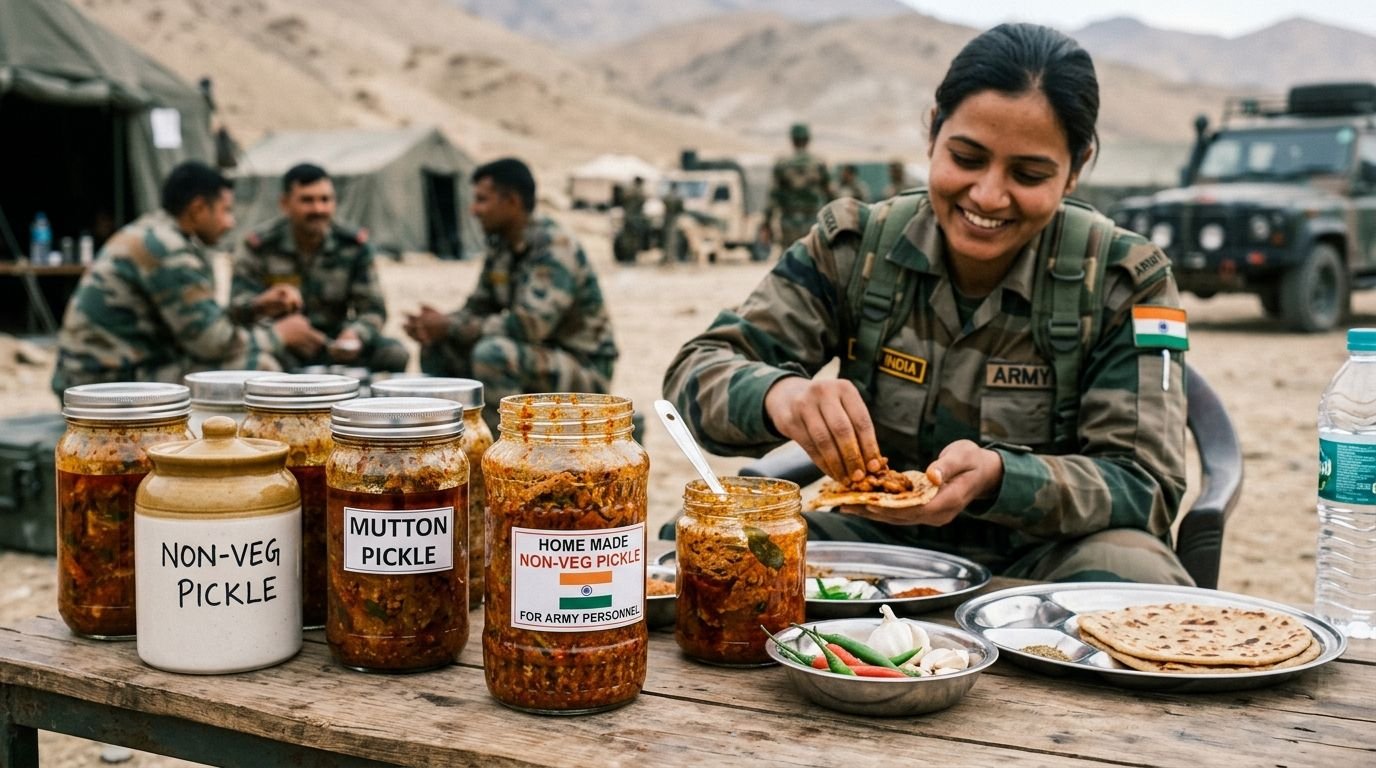
Non-veg pickles for army and defense personnel abroad solve one specific problem: authentic Andhra-style flavor that survives weeks in transit and months of storage without refrigeration. Personnel posted at remote bases, ships, or overseas assignments can't run to a Hyderabad kitchen when they crave home food, and their families need a pickle that travels sealed, doesn't leak in a kit bag, and holds its taste through 2026's longer deployment cycles.
What makes this segment different from a regular home buyer: no fridge access at most postings, strict customs and ration rules at some overseas bases, and a real need for protein-dense, ready-to-eat food that pairs with plain rice or roti when fresh vegetables run short.
- Oil-cured non-veg pickles from Tulasi Pickles hold at room temperature for months, making them fit for army and defense postings with no cold storage.
- Boneless chicken and mutton pickles work best for kit bags and mess halls because there’s no bone waste to manage.
- Frozen-shipping options exist for overseas orders, but oil-based jars are the safer pick for personnel without freezer access at their posting.
- Glass jars are the top packaging mistake for field postings — pouch or tin packing survives transit better.
Why non-veg pickles for army personnel matter
Deployment cuts personnel off from home-cooked Andhra food for months at a stretch. A pickle that's shelf-stable, protein-rich, and packed for rough transit becomes one of the few direct links to home food a soldier gets at a forward post or an overseas base in 2026.
Families ordering for someone posted abroad also face a narrower problem than a typical online shopper: they need packaging that survives customs handling, postal transfer points, and weeks without a fridge — not next-day delivery to a home address.
Choose oil-cured over frozen for postings without cold storage
Most forward bases and overseas postings don't guarantee freezer space. Oil-based Andhra pickles are traditionally preserved in a thick oil layer that keeps out air and moisture, which is why they've been the standard travel food for generations of Andhra families sending pickles to relatives working away from home.
- Pick jars where oil visibly covers the pickle surface — that layer is doing the preservation work
- Avoid pickles marketed as "fresh" or "low-oil" for long-transit orders; they're built for quick home consumption, not months in storage
- Check the how to store homemade pickles for long shelf life guide before deciding between a fridge-dependent and a shelf-stable batch
- Reserve frozen non-veg pickle formats only for postings where the base has cold storage, since frozen jars fail without it
Pack for transit, not for a kitchen shelf
A jar that's fine on a kitchen counter can shatter inside a duffel bag or get flagged at a customs checkpoint. Packaging decisions matter more for this segment than flavor does.
- Prefer pouch or food-grade plastic packing over glass for any order headed to a field posting
- Ask about double-sealing or vacuum packing before the order ships, since a leaked jar ruins everything else in the same bag
- Read the shipping pickles overseas without spoilage guide if the order is going through an APO/FPO route or a third-country transfer point
- Split a large order into two smaller sealed packs instead of one large jar, so a single leak or breakage doesn't cost the whole batch
Match spice level to the destination mess, not to home preference
A jar that's perfect for a Hyderabad dinner table can be too aggressive for a shared mess where not everyone grew up on Guntur-level heat, or too mild if the whole unit is craving real spice after months of standard rations.
- Order a medium-spice batch as the default when the pickle is going into a shared mess rather than a single soldier's kit
- For personal consignments meant for one person, match the spice level they'd order at home — deployment doesn't change palate
- Use the how to choose the right spice level in pickles guide as a reference before placing a bulk order for a unit
Prioritize boneless cuts for field conditions
Bone-in chicken or mutton pickle tastes closer to home-style cooking, but bones are dead weight in a kit bag and awkward to eat one-handed in a mess tent or barracks.
- Choose boneless chicken pickle or boneless mutton pickle for anyone eating out of a tin or a field mess, not a dining table
- Bone-in versions work fine for personnel posted at a base with a proper mess hall and time to eat seated
- Compare cuts using the how to pick the right chicken pickle for your budget guide before ordering in bulk for a unit
Verify customs and import rules before an overseas order
Meat-based products face tighter import scrutiny than vegetarian pickles at several overseas bases and civilian customs checkpoints. Skipping this check is the single most common reason a package gets held or returned.
- Confirm whether the destination country or base permits processed meat imports before placing a non-veg order
- Keep a vegetarian backup option in the same shipment — gongura, mango, or lemon pickle — for postings with meat-import restrictions
- Check the non-veg pickles shipped frozen safe to USA and Canada guide if the posting is in North America, since frozen and oil-cured formats face different rules
Order with a buffer before the actual departure date
Military postings and deployment schedules shift. Ordering the week before departure leaves no room for a delayed shipment, a customs hold, or a packaging remake.
- Place the order 2-3 weeks ahead of the departure or posting date, not the same week
- Confirm delivery to the sender's home address first if the posting address isn't finalized, then have the person carry the pickle in checked luggage
- Build in one extra week of buffer for any order routed through international postal transfer points
Order for a posting abroad
Homemade Andhra non-veg pickles packed for long transit, ordered from Hyderabad.
Comparison: non-veg pickle formats for army and defense postings
| Format | Best for | Shelf stability | Key limitation |
|---|---|---|---|
| Boneless chicken pickle (oil-cured) | Kit bags, forward postings, single soldiers | Months at room temperature, sealed | Less bone-in richness some prefer |
| Boneless mutton pickle (oil-cured) | Personnel wanting a heavier, richer profile | Months at room temperature, sealed | Higher fat content, smaller comfortable portion sizes |
| Frozen non-veg pickle | Bases with confirmed cold storage or freezer access | Depends entirely on continuous cold chain | Fails completely without a freezer at destination |
| Gongura or veg pickle (backup) | Postings with meat-import restrictions | Months at room temperature, sealed | No non-veg protein content |
Verdict: boneless chicken or mutton pickle in oil-cured form is the safest default for army and defense personnel abroad in 2026 — it needs no cold chain, survives rough transit, and clears more customs checks than frozen non-veg options.
Common mistakes army families make when ordering
- Choosing glass jars for field postings. Glass breaks in duffel bags and gets flagged more often at security checkpoints than sealed pouches.
- Skipping the customs check on meat products. A jar held at customs for weeks defeats the entire purpose of sending it.
- Ordering bone-in cuts for kit bag consumption. Bones add weight and mess that a soldier eating standing up doesn't need.
- Timing the order too close to departure. A single shipping delay means the person leaves without it.
- Assuming the whole unit shares one spice tolerance. A jar too hot for half the mess goes uneaten; split into a milder batch when ordering for a group.
“Oil-cured pickles, not frozen ones, are the format built for a soldier with no fridge and a departure date.”
FAQ
What’s the best non-veg pickle for army personnel posted abroad?
Boneless chicken or mutton pickle cured in oil is the best choice for army personnel abroad in 2026 because it needs no refrigeration and survives weeks of transit sealed in a jar or pouch.
How long do non-veg pickles last without a fridge?
Traditional oil-cured Andhra non-veg pickles stay shelf-stable at room temperature for several months once sealed, which is why they’ve long been the standard food sent to family working away from home.
Can chicken or mutton pickle be shipped overseas to a military base?
It depends on the destination country’s customs rules for processed meat imports; confirming this before ordering avoids a package being held or returned.
Is bone-in or boneless pickle better for a kit bag?
Boneless chicken or mutton pickle is better for a kit bag or field mess because there’s no bone weight or waste to deal with while eating on the move.
Should the pickle be frozen or oil-cured for a remote posting?
Oil-cured is the safer choice for any posting without confirmed freezer access, since frozen pickle fails completely once the cold chain breaks.
How spicy should a pickle order be for a shared army mess?
Order a medium spice level as the default for a shared mess, since palates vary across a unit more than they do for a single home order.
How far in advance should families order pickles before a deployment?
Order 2-3 weeks before the departure date to leave room for shipping delays, customs checks, or a packaging remake.
What’s a good vegetarian backup for postings with meat import restrictions?
Gongura or lemon pickle works as a vegetarian backup, since vegetable-based pickles clear import checks more easily than meat-based ones at several overseas bases.
One last thing
The detail families miss most often: it's not the spice level or the cut of meat that decides whether a pickle survives a posting abroad — it's whether the oil layer stays intact through transit. A jar with a broken oil seal starts losing shelf life the moment air gets in, no matter how well it was packed at the Chanda Nagar kitchen it came from.
Related guides
- Best chicken pickle brands for authentic Andhra taste
- Travel-friendly pickle packs for road trips and camping
- Pickles from Hyderabad for NRIs