
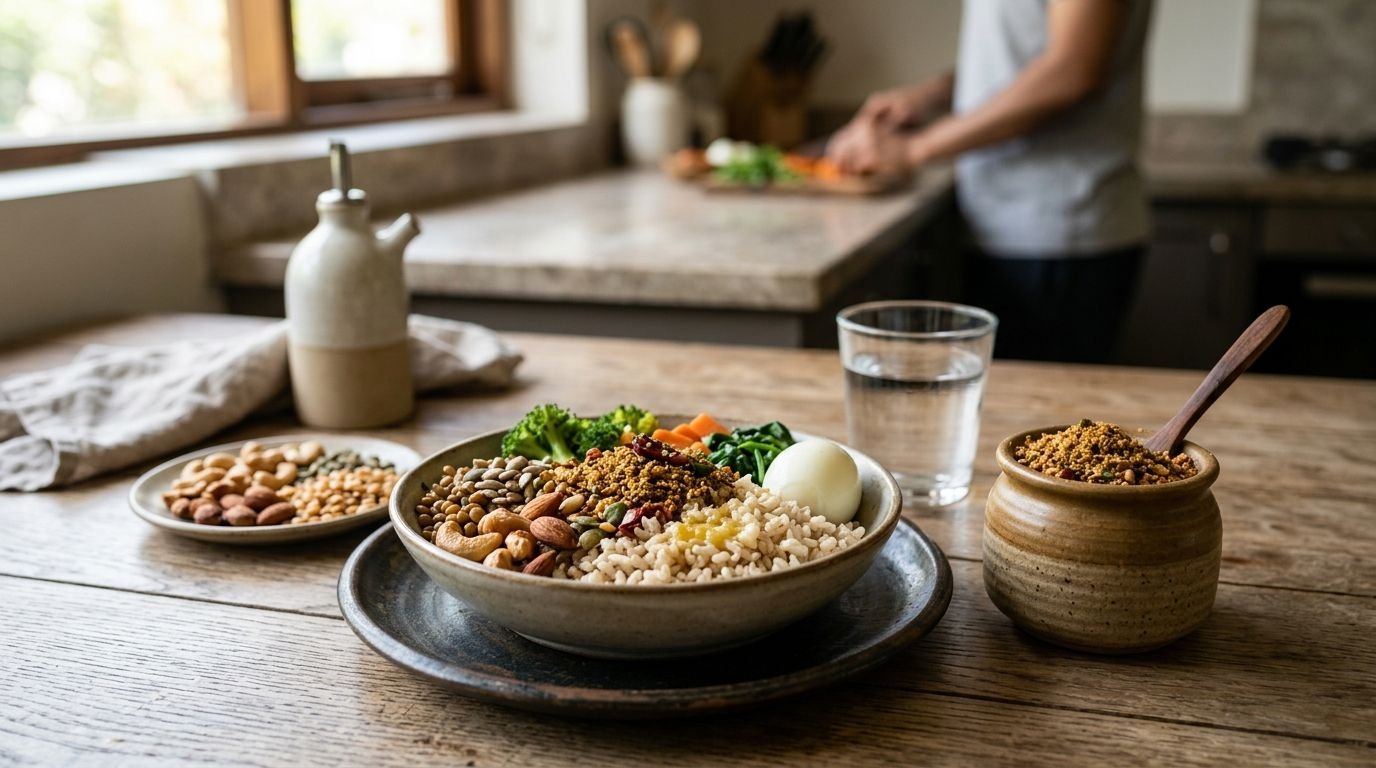
Building muscle or trying to gain weight on an Indian diet needs calorie-dense, protein-rich additions you'll actually eat every day — and the right podi for weight gain does exactly that without extra cooking. Kandi Podi wins overall for muscle-building diets, Verusenaga Podi (peanut) wins for calorie-dense workout nutrition, and Nuvvula Podi (sesame) wins for daily fat and mineral support. Every pick below comes from traditional Andhra spice powders made with dal, peanuts, sesame, coconut or flaxseed as the protein and fat base.
- Kandi Podi is the best overall podi for weight gain because toor dal carries roughly 22g of protein per 100g.
- Verusenaga Podi (peanut) packs about 25g protein and 570 kcal per 100g for calorie-dense muscle building.
- Nuvvula Podi (sesame) adds healthy fat plus calcium — useful when you need weight gain without excess carbs.
- Kobbari Podi (coconut) is the fastest way to add calories to plain rice or idli in 2026 diets.
- Avise Podi (flaxseed) rounds out the list with omega-3 fat for a well-balanced weight-gain podi rotation.
Why this matters
Most weight-gain advice in 2026 focuses on protein powders and supplements, but a spoon of the right Kandi Podi mixed into hot rice with ghee delivers dal-based protein without a shaker bottle. Andhra households have used dal- and seed-based podis for generations specifically because they're calorie-dense and shelf-stable — no refrigeration drama, no mixing schedule.
For anyone tracking a bulking diet, the goal is simple: more protein and more usable calories per spoon, without bloating from powders. Tulasi Pickles makes several podi varieties built around exactly this — dal, peanut, sesame, coconut and flaxseed bases — and this guide ranks five of them by what a weight-gain diet actually needs.
What makes the best podi for weight gain
- Protein per serving — dal- and legume-based podis outperform plain chili powders for muscle building.
- Calorie density — peanut and coconut bases pack more usable energy per spoon than watery chutneys.
- Healthy fat content — sesame, peanut and flaxseed carry fat your body needs for calorie surplus, not just filler oil.
- Versatility across meals — a podi that works with rice, idli, dosa and curd rice gets eaten daily, not occasionally.
- Shelf stability — no refrigeration requirement matters for hostel students and daily gym-goers who can't plan around spoilage.
- Digestibility — some legume podis sit heavier than others; that matters if you're eating three extra spoons a day for weight gain.
Podi for weight gain: at a glance
| Podi | Best for | Standout feature | Key limitation |
|---|---|---|---|
| Kandi Podi | Overall muscle-building base | Toor dal protein, roughly 22g/100g | Needs oil or ghee to round out calories |
| Verusenaga Podi (peanut) | Calorie-dense workout nutrition | About 25g protein and 570 kcal per 100g | Too rich for daily use if you're not training hard |
| Nuvvula Podi (sesame) | Daily fat and mineral support | High calcium alongside 18g protein/100g | Strong sesame flavor isn't for everyone |
| Kobbari Podi (coconut) | Fast calorie top-up | Dense in saturated fat for quick energy | Not a strong protein source on its own |
| Avise Podi (flaxseed) | Omega-3 and fiber balance | Rich in ALA omega-3 fat | Lower protein than the dal or peanut options |
1. Kandi Podi: best podi for weight gain overall
Kandi Podi is made from roasted toor dal (split pigeon pea) ground with red chillies and spices, and it's the podi most Andhra households already mix into rice for extra protein. Toor dal carries roughly 22g of protein per 100g, which is why this podi anchors most weight-gain rotations rather than sitting on the side. Stir two spoons into hot rice with a spoon of ghee and you've added both protein and calories to a plain meal in under a minute.
Kandi Podi pros:
- Highest protein-to-spoon ratio among the podis on this list
- Works with rice, idli and dosa without needing extra prep
- Long shelf life, no refrigeration required
Kandi Podi cons:
- Needs added ghee or oil to hit real weight-gain calorie targets
- Dense flavor that some first-time buyers find too earthy
Best for: anyone building a daily muscle-building meal around rice or idli.
Verdict: Buy.
2. Verusenaga Podi (peanut): best for calorie-dense workout nutrition
Verusenaga Podi grinds roasted peanuts with chillies and garlic into a thick, calorie-heavy powder. Peanuts carry about 25g of protein and roughly 570 kcal per 100g, making this the single densest calorie source among Tulasi Pickles' podi range. If your weight-gain plan struggles with eating enough volume, a spoon of this on rice or with dosa adds real calories without a bigger plate.
Verusenaga Podi pros:
- Highest calorie density on this list — useful post-workout
- Peanut protein pairs well with rice-based carb loading
- Strong flavor means less quantity needed per meal
Verusenaga Podi cons:
- Too rich for daily use if you're sedentary or not training
- Peanut allergy makes this a hard no for some households
Best for: people training hard who need extra calories fast.
Verdict: Buy.
3. Nuvvula Podi (sesame): best for daily fat and mineral support
Nuvvula Podi uses roasted sesame seeds as its base, and sesame is one of the richest plant sources of calcium available, carrying close to 975mg of calcium per 100g alongside around 18g of protein. For a weight-gain diet, that combination of fat, protein and bone-supporting minerals makes it a good everyday companion rather than an occasional treat.
Nuvvula Podi pros:
- Calcium content most other podis can't match
- Mild enough to eat daily without spice fatigue
- Good with curd rice when you want fat without heat
Nuvvula Podi cons:
- Lower calorie density than the peanut or coconut versions
- Distinct sesame taste doesn't suit every palate
Best for: daily rotation alongside a higher-calorie podi like Verusenaga.
Verdict: Buy.
4. Kobbari Podi (coconut): best for a fast calorie top-up
Kobbari Podi is ground dried coconut blended with chillies and lentils, and dried coconut runs dense in saturated fat, which is exactly the kind of quick energy a weight-gain diet needs between meals. It's less about protein and more about adding usable calories to something you're already eating — plain rice, idli or even a chapati.
Kobbari Podi pros:
- Fastest way to raise the calorie count of a plain meal
- Naturally sweet-savory flavor works with breakfast and lunch
- No prep beyond opening the jar
Kobbari Podi cons:
- Weak protein contributor compared to dal or peanut podis
- Rich fat content means a little goes a long way
Best for: breakfast or snack-time calorie boosts without cooking.
Verdict: Buy for the calorie boost, pair with a protein podi.
5. Avise Podi (flaxseed): best for omega-3 and fiber balance
Avise Podi is built on roasted flaxseed, which carries roughly 18g of protein per 100g and stands out for its omega-3 (ALA) fat content, higher than any other seed on this list. For a weight-gain diet that's leaning too heavily on saturated fat from peanut and coconut podis, this one rounds out the fat profile.
Avise Podi pros:
- Best omega-3 fat source among the podi options
- Adds fiber, which most bulking diets underuse
- Nutty flavor works well mixed with rice or curd rice
Avise Podi cons:
- Lower protein and calories than the dal or peanut podis
- Less familiar taste for first-time flaxseed eaters
Best for: rounding out fat quality in an otherwise calorie-heavy diet.
Verdict: Buy as a supplement to the top three, not a standalone.
How we ranked these podis
Each podi was scored against the six criteria above — protein per serving, calorie density, healthy fat, versatility, shelf stability and digestibility — using the ingredient each podi is built on rather than marketing claims. Kandi Podi topped the overall protein-to-versatility ratio; Verusenaga Podi topped raw calorie density; Nuvvula Podi topped mineral and fat balance for daily eating.
“A weight-gain diet built on podi works when you rotate a protein base with a calorie base, not when you pick just one jar.”
Which podi should you choose for weight gain in 2026?
If you only buy one, Kandi Podi is the default pick — it delivers the most protein per spoon and works across rice, idli and dosa without extra effort. Add Verusenaga Podi on training days when you need more calories fast, and keep Nuvvula Podi in rotation for the fat and calcium your diet otherwise misses. Skip building an entire weight-gain plan on Kobbari or Avise alone — they're strong supporting players, not the base.
Order podi for your weight-gain diet
Browse Tulasi Pickles’ full range of homemade Andhra podis shipped across India.
FAQ
What is the best podi for weight gain?
Kandi Podi, made from roasted toor dal, is the best overall podi for weight gain because it carries roughly 22g of protein per 100g and works daily with rice, idli or dosa.
Is peanut podi good for muscle building?
Yes. Verusenaga Podi (peanut) carries about 25g of protein and roughly 570 kcal per 100g, making it one of the most calorie-dense podis for muscle-building diets in 2026.
Can I eat podi every day while trying to gain weight?
Yes, podi is shelf-stable and traditionally eaten daily in Andhra households mixed with rice, idli or dosa, and rotating a dal-based podi with a peanut or coconut podi covers both protein and calorie needs.
Which podi has the most protein?
Kandi Podi (toor dal) and Verusenaga Podi (peanut) carry the highest protein among common podi varieties, each around 22-25g of protein per 100g of raw ingredient.
Is sesame podi good for weight gain?
Nuvvula Podi (sesame) supports weight gain through healthy fat and roughly 18g of protein per 100g, plus calcium near 975mg per 100g, though it’s lower in calories than peanut or coconut podis.
How much podi should I eat daily for weight gain?
There’s no universal number, but most weight-gain diets add two to three spoons of podi with ghee across meals; adjust based on your total daily calorie target and training load.
Is coconut podi better than dal podi for weight gain?
Kobbari Podi (coconut) adds calories faster than Kandi Podi (dal) but contributes far less protein, so it works best as a calorie top-up alongside a protein-focused podi, not as a replacement.
Does flaxseed podi help with weight gain?
Avise Podi (flaxseed) carries roughly 18g of protein per 100g and adds omega-3 fat and fiber, making it a useful supporting podi rather than a standalone weight-gain base.
One last thing
Most people chasing a podi for weight gain buy one jar and expect it to do everything — the actual gains come from rotating a protein-heavy podi like Kandi Podi with a calorie-heavy one like Verusenaga Podi across the week, not from doubling down on a single flavor. Andhra households have run this exact combination for generations before anyone called it a bulking diet.
Related guides