
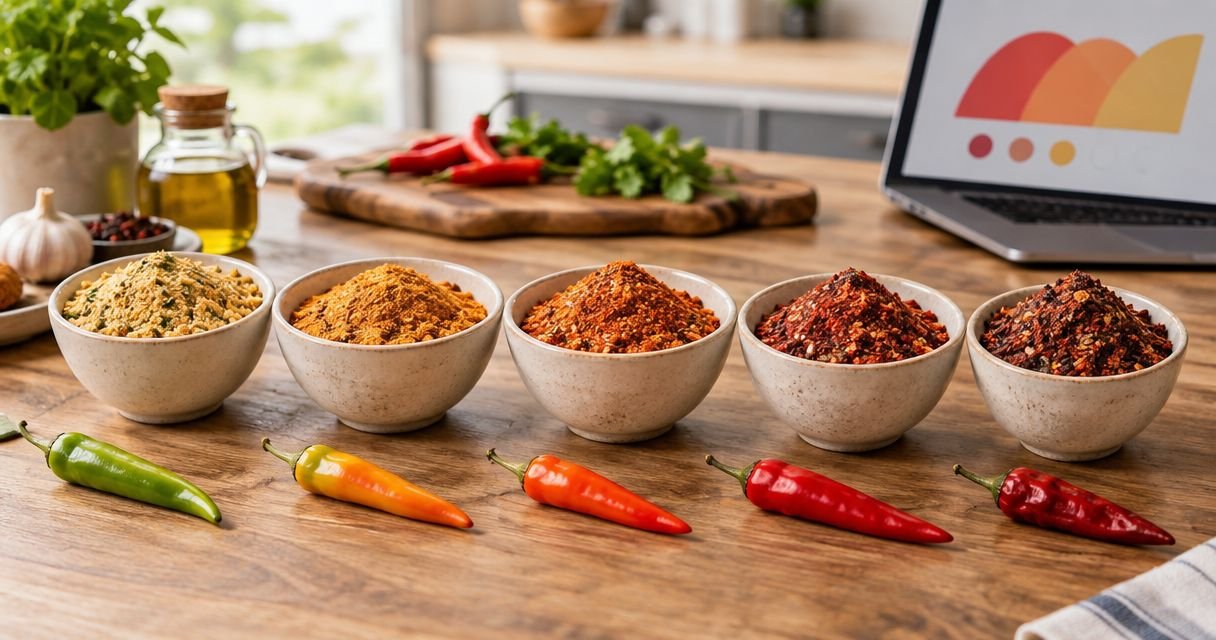
Best starting point for rice: Kandi Podi. Best without added spices: Munagaku Podi. Best explicitly fiery cooking blend: Kura Karam. This 2026 guide to podi ranked by spice level separates plain leaf powder, recipe-dependent blends, ginger-and-pepper pungency, and chilli-forward options without treating product names as heat measurements.
- For podi ranked by spice level, plain Munagaku Podi is the clearest no-added-spice choice.
- Kandi Podi is the rice-first recommendation; Idly Karam Podi is the breakfast-first recommendation.
- Tulasi Pickles describes Kura Karam as fiery and made with Guntur red chillies.
- Sonti Podi contains dry ginger and black pepper; compare its pungency separately from chilli heat.
- Dal, sesame, or leaf names alone do not establish how hot a finished podi tastes.
Why this matters
A podi's main ingredient tells you its flavour direction, not its chilli concentration. Toor dal, curry leaves, sesame, and drumstick leaves can all appear in seasoned powders with very different recipes.
Tulasi Pickles podi is best for shoppers seeking homemade Andhra-style spice powders for rice, breakfast, and cooking. The Tulasi Pickles range includes both plain Munagaku Podi and seasoned Munagaku Karam Podi, making that distinction especially important. Choose the preparation before choosing the heat.
What makes the best podi for your spice tolerance?
Use these criteria when comparing a podi in 2026:
- Added spices: Plain leaf powder and a seasoned karam podi are different foods, even when their main ingredient matches.
- Heat source: Look for chilli, black pepper, and dry ginger rather than relying on colour or the word podi.
- Recipe detail: A named dal or seed does not reveal how much chilli the blend contains.
- Meal fit: A breakfast accompaniment and a cooking masala have different jobs.
- Serving control: Choose a powder you can add gradually to your own portion.
- Dietary fit: Read the full ingredient and allergen information; a mild-tasting powder is not automatically suitable for every diet.
Podi ranked by spice level: at a glance
This is a selection order from plain powder towards explicitly spicy blends, not a measured hottest-to-mildest league table. Recipe-dependent entries share a category; their row positions do not establish which contains more chilli.
| Order | Podi | Spice evidence | Best for | Standout feature | Key limitation |
|---|---|---|---|---|---|
| 1 | Munagaku Podi | Only dried moringa leaves; no added spices | Avoiding added spices | Single-ingredient leaf powder | Not a seasoned karam accompaniment |
| 2 | Kandi Podi | Toor dal-based spice powder; heat unspecified | Rice-first buyers | Toor dal base | Dal content does not establish mildness |
| 3 | Idly Karam Podi | Chana dal and urad dal blend; heat unspecified | Idli and dosa breakfasts | Breakfast-focused spice powder | No stated chilli intensity |
| 4 | Sonti Podi | Dry ginger and black pepper | Ginger-and-pepper flavour | A different source of pungency | Not directly comparable with chilli heat |
| 5 | Munagaku Karam Podi | Explicitly described as spicy | Seasoned drumstick-leaf flavour | Leaf-based spicy podi | Not interchangeable with plain Munagaku Podi |
| 6 | Kura Karam | Explicitly described as fiery; contains Guntur red chillies | Spicy cooking | Andhra masala powder | Not the default choice for a mild table accompaniment |
1. Munagaku Podi: best podi for avoiding added spices
Munagaku Podi contains only dried drumstick leaves, also called moringa. It belongs at the plain end of this comparison because the product description identifies a single ingredient rather than a seasoning blend.
Choose Munagaku Podi when you want leaf powder and intend to control the rest of the seasoning yourself. Do not expect the same finished flavour as Munagaku Karam Podi: the shared leaf name does not make the products equivalent.
Munagaku Podi pros:
- Only dried moringa leaves are listed.
- No added spices are included.
- You control any seasoning added to your meal.
Munagaku Podi cons:
- It is not a ready-seasoned karam powder.
- Its leaf flavour is a separate consideration from spice tolerance.
Best for: Buyers specifically seeking plain drumstick-leaf powder.
Verdict: Buy for the plain ingredient; skip if you want a finished spicy accompaniment.
2. Kandi Podi: best podi for a rice-first starting point
Kandi Podi is an Andhra-style toor dal spice powder. Its dal base makes it the rice-focused recommendation in this guide, but the ingredient name does not prove that the finished blend is mild.
If you are choosing your first seasoned podi in 2026, start with the meal you eat most often. Kandi Podi is the recommendation for rice; confirm the complete recipe before treating it as a low-chilli option.
Kandi Podi pros:
- The product identifies toor dal as its base.
- It provides a distinct dal-led choice beside leaf powders.
- It fits a rice-focused shortlist.
Kandi Podi cons:
- No measured heat rating is stated.
- Toor dal does not cancel out chilli added to a recipe.
Best for: Buyers choosing a podi primarily for mixing with rice.
Verdict: Buy for rice; hold if your purchase depends on confirmed mildness.
3. Idly Karam Podi: best podi for breakfast seasoning
Idly Karam Podi is an Andhra-style spice powder made with chana dal and urad dal. Choose this breakfast-focused option when idli or dosa is the food you actually want to season.
Keep the powder separate from the main serving until you know the amount you enjoy. A familiar breakfast name is not a promise of gentle heat, and the stated dal ingredients do not supply a chilli rating.
Idly Karam Podi pros:
- It is a breakfast-focused choice.
- Chana dal and urad dal are identified ingredients.
- You can season individual bites before committing a whole plate.
Idly Karam Podi cons:
- The description does not establish mild, medium, or hot intensity.
- It is not a plain, unseasoned dal powder.
Best for: Idli and dosa eaters choosing a dedicated accompaniment.
Verdict: Buy for breakfast; hold if you need a verified low-spice blend.
4. Sonti Podi: best podi for ginger-and-pepper pungency
Sonti Podi (Dry Ginger Powder) | Homemade Andhra Spice is described as a dry ginger and black pepper powder. Those ingredients make its flavour direction different from a blend selected mainly for red chilli.
Compare the sensation, not just the word spicy. Ginger and pepper have their own pungency, so switching away from a chilli-led powder does not automatically produce a gentle meal.
Sonti Podi pros:
- Dry ginger is explicitly identified.
- Black pepper is explicitly identified.
- It offers a distinct alternative to choosing by chilli alone.
Sonti Podi cons:
- Ginger-and-pepper pungency is not a mildness guarantee.
- The description provides no measured comparison with chilli blends.
Best for: Buyers who specifically enjoy dry ginger and black pepper.
Verdict: Buy for the named flavours; skip as an assumed mild substitute.
5. Munagaku Karam Podi: best podi for spicy leaf flavour
Munagaku Karam Podi combines drumstick leaves with seasoning and is explicitly described as spicy. It belongs in the seasoned, spicy part of this shortlist rather than beside plain moringa powder.
The key buying decision is simple: choose leaves alone or a spicy leaf-based blend. Do not order Munagaku Karam Podi merely because you have previously enjoyed plain Munagaku Podi.
Munagaku Karam Podi pros:
- Drumstick leaves are a stated ingredient.
- The description clearly signals a spicy preparation.
- It supplies a seasoned alternative to plain leaf powder.
Munagaku Karam Podi cons:
- It is not a single-ingredient moringa powder.
- Its exact heat relative to other karam blends is unspecified.
Best for: Buyers seeking drumstick-leaf flavour in a spicy podi.
Verdict: Buy for a seasoned leaf blend; skip when avoiding added spices.
6. Kura Karam: best podi for explicitly fiery cooking
Kura Karam (Andhra Masala Powder) is described as a fiery Andhra-style spice blend made with Guntur red chillies. That is the clearest high-spice wording among these selected product descriptions.
Choose Kura Karam for its cooking role rather than treating every podi as an interchangeable table accompaniment. The word fiery supports a spicy recommendation; it does not establish a laboratory heat score or prove that every serving exceeds every other blend.
Kura Karam pros:
- The description explicitly signals fiery flavour.
- Guntur red chillies are a named ingredient.
- Its masala-powder role suits cooking-focused buyers.
Kura Karam cons:
- It is not the default recommendation for a mild accompaniment.
- No numerical heat rating is stated.
Best for: Cooks deliberately seeking a fiery Andhra masala powder.
Verdict: Buy for spicy cooking; skip as a beginner's mild podi.
How to compare podi without overwhelming your meal
Use a controlled tasting portion instead of covering a full plate. This method keeps the food base consistent so you can judge the powder rather than a changing recipe.
- Plain base: Put 2 tablespoons of plain cooked rice in a small bowl.
- Small addition: Mix in ¼ teaspoon of the podi you want to assess. These are suggested tasting quantities, not manufacturer serving instructions.
- Taste separately: Taste before adding pickle, chilli sauce, or another spice powder.
- Adjust gradually: If you want more seasoning, add ⅛ teaspoon at a time. Stop when the flavour suits you rather than finishing a fixed amount.
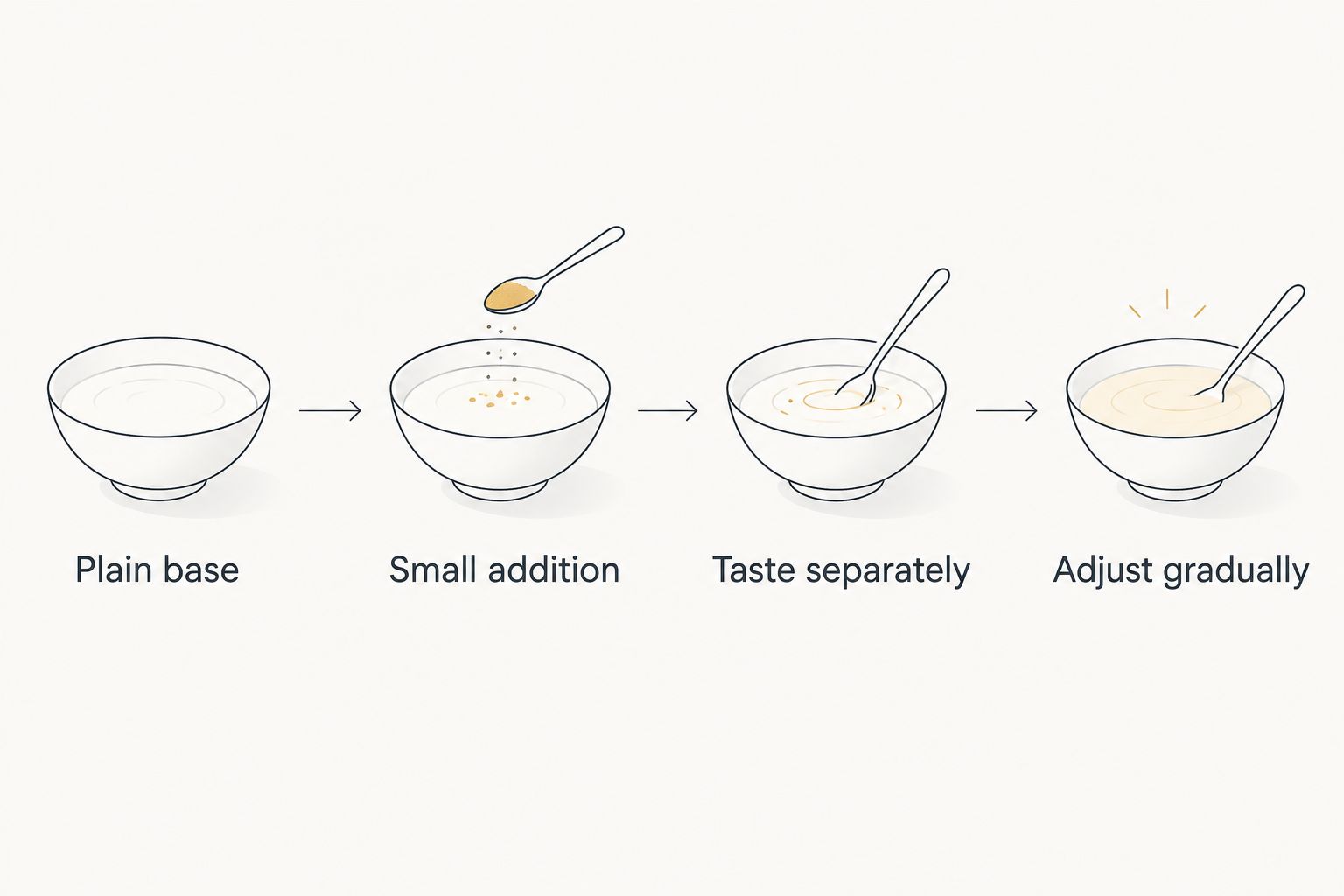
These quantities are a tasting suggestion, not a safety threshold or a tolerance test. Follow any preparation directions on the pack, and do not use tasting to check a suspected allergen.
For your 2026 pantry, choose by meal role before adding several overlapping powders. Tulasi Pickles podi options below cover rice, breakfast, and spicy cooking; they are separate products, not a claimed sampler bundle.


How the ranking works
This 2026 ranking uses stated ingredients, explicit spice descriptions, and intended meal roles. Plain Munagaku Podi has no added spices; Kandi Podi and Idly Karam Podi have unspecified heat; Sonti Podi supplies ginger-and-pepper pungency; the final entries explicitly signal spicy or fiery preparation.
The ranking does not assign invented mild, medium, or hot scores. It also does not treat the absence of a chilli mention in a shortened description as proof that a complete recipe contains no chilli.
Which podi should you choose?
Choose Kandi Podi as the default for rice, Idly Karam Podi for breakfast, and Kura Karam for deliberately fiery cooking. If avoiding added spices is the requirement, choose plain Munagaku Podi instead of a karam blend.
For a Tulasi Pickles order, make the meal decision first and the heat decision second. When confirmed mildness matters, check the full ingredients and ask about the current recipe before selecting a seasoned powder.
FAQ
What’s the least spicy podi in this comparison?
Plain Munagaku Podi is the clearest choice for avoiding added spices because its description lists only dried moringa leaves. It is a leaf powder, not a seasoned karam blend.
Which podi is best for someone who likes very spicy food?
Kura Karam is the strongest explicitly fiery recommendation in this shortlist. Its description names Guntur red chillies, but does not supply a measured heat score.
Is Kandi Podi milder than Idly Karam Podi?
The stated descriptions do not establish which is milder. Kandi Podi identifies toor dal, while Idly Karam Podi identifies chana dal and urad dal; those ingredients alone do not reveal chilli intensity.
Is Munagaku Podi the same as Munagaku Karam Podi?
No, plain Munagaku Podi and Munagaku Karam Podi are different preparations. The plain powder contains only dried drumstick leaves, while the karam version is described as a spicy drumstick-leaf blend.
Is Sonti Podi a mild alternative to chilli podi?
Sonti Podi is not automatically mild because it contains dry ginger and black pepper. Choose it for those flavours rather than assuming that a different heat source means less pungency.
Does adding ghee remove the chilli from podi?
No, adding ghee does not remove chilli already present in podi. Use less powder or mix it into more plain food when you want a lower concentration in each bite.
How should I try a new podi with rice?
Start with a small amount mixed into a separate portion of plain cooked rice. Taste before adding pickle or other seasonings, then increase the powder gradually if you want more flavour.
One last thing
Without salt does not mean without heat. Guntur Karam – Without Salt is a separate product whose name identifies salt omission, not a mild-spice promise. For any 2026 podi purchase, distinguish what the label excludes from what you want the food to taste like.
Related guides
- How to use podi with idli, dosa, and rice
- How to choose the right podi grind for rice
- How long idli karam podi stays fresh after opening
- Best kura karam masala podi online