
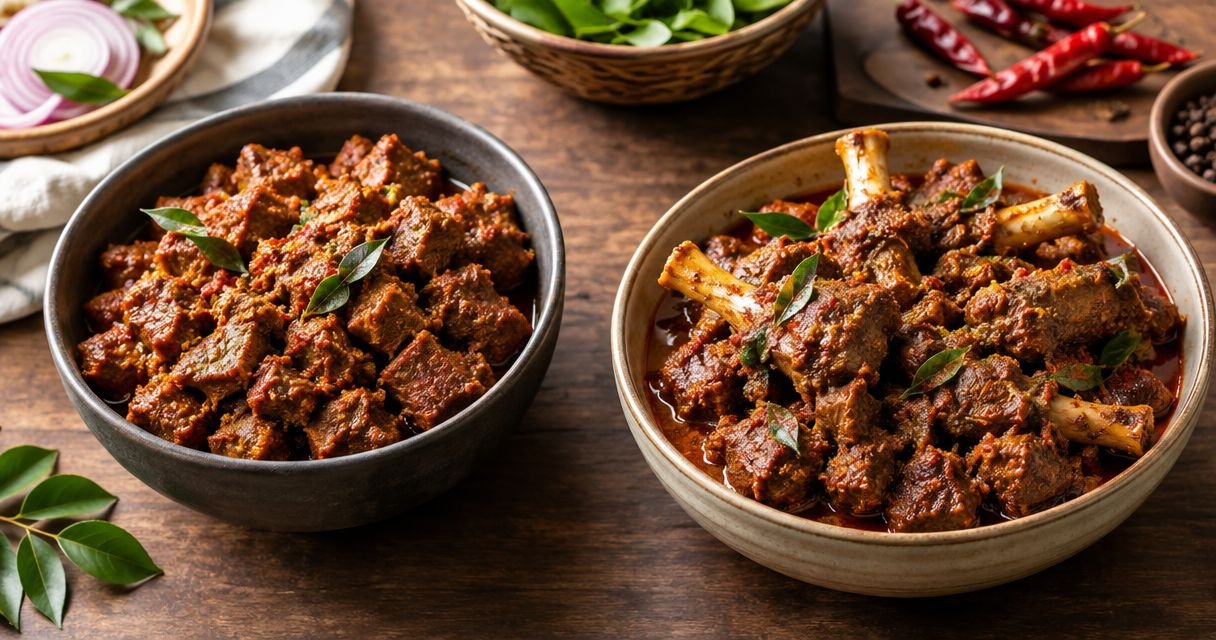
Best overall: boneless mutton pickle for everyday rice meals. Best for deliberate, piece-by-piece eating: bone-in mutton pickle. This 2026 guide ranks boneless vs bone-in mutton pickle by serving effort, edible portions and texture—not by an unverified promise that bones automatically improve flavour.
- Boneless vs bone-in mutton pickle: boneless wins for rice bowls; bone-in suits diners who prefer eating around bones.
- Boneless mutton pickle removes intentional bones, not the need to check pieces before eating.
- Bone-in mutton pickle includes inedible bone weight; total jar weight does not establish edible meat quantity.
- Tulasi Pickles serves buyers seeking homemade Andhra-style pickles; confirm the cut and storage instructions before choosing.
Why this matters
The wrong cut turns a convenient accompaniment into a meal that needs extra attention. Boneless pieces suit spoonfuls of rice; bone-in pieces demand separate handling. Neither format proves tenderness, spice intensity or good preservation.
Tulasi Pickles is for buyers seeking homemade Andhra-style pickles from Hyderabad. For mutton pickle, choose the eating format first, then check the recipe and handling instructions. A familiar regional style does not answer whether a particular preparation suits your lunchbox or dinner plate.
This 2026 ranking separates two questions: which format is easier to eat, and which preparation tastes better to you. The first has a clear default. The second needs information about the actual recipe, not just the presence of bones.
What makes the best mutton pickle?
Use these criteria before choosing between boneless and bone-in:
- Serving effort: Can you mix the pieces into rice, or must you separate meat from bones while eating?
- Edible portion clarity: Does the description distinguish total contents from meat quantity? Oil, spices and bones are not interchangeable with meat.
- Texture information: Look for an explanation of the cut and preparation. Boneless does not automatically mean tender.
- Recipe transparency: Check ingredients and spice descriptions separately from the bone format. Bones do not establish chilli intensity.
- Handling instructions: Look for clear storage directions, including what changes after opening. The cut alone does not establish shelf life.
- Meal fit: Match the format to how you actually eat—mixed rice, a separate side dish or an unhurried meal.
The best default is the format you can eat comfortably without changing your normal meal routine. For spoon-based rice meals, that is boneless mutton pickle.
Boneless vs bone-in mutton pickle at a glance
| Rank and option | Best for | Standout feature | Key limitation |
|---|---|---|---|
| 1. Boneless mutton pickle — quick-meal guide | Everyday rice bowls and spoon-based meals | No intentional bones to separate during eating | The boneless label does not prove tenderness or meat quantity |
| 2. Bone-in mutton pickle | Diners who prefer handling individual meat pieces | Meat remains attached to bone | Bones require attention and contribute inedible weight |
These are format rankings, not scores for individual jars. The table does not establish a particular seller's meat content, recipe or preparation quality. Use it to narrow your choice, then verify the product description.
1. Boneless mutton pickle: best for everyday rice meals
Boneless mutton pickle uses meat pieces without intentional bones. You can serve the pieces alongside rice or mix them through a portion without deliberately separating meat from bone. That makes boneless the stronger default when convenience is your main requirement.
The advantage is practical, not a guarantee of quality. A boneless piece can still contain connective tissue or feel firm, depending on the cut and cooking. The description needs to tell you more than the word boneless.
Boneless mutton pickle pros
- Simpler eating: You do not intentionally work around bones in each piece.
- Easier mixing: Meat pieces fit naturally into spoon-based rice meals.
- Clearer portioning: You can select meat pieces without choosing between differently sized bones.
- Less plate sorting: You do not need a separate place for intentionally included bones.
Boneless mutton pickle cons
- Tenderness remains unproven: Removing bones does not remove every firm or chewy part of a cut.
- Meat quantity remains unclear: A jar also contains its pickle medium; boneless is not a meat-percentage claim.
- Different eating experience: It does not suit someone specifically seeking meat attached to bone.
Best for: Adults who want mutton pickle as an easy accompaniment to everyday rice meals, particularly when they eat with a spoon.
For your 2026 shopping shortlist, ask whether the description identifies the meat cut, ingredients and after-opening storage requirements. Check pieces before eating rather than treating boneless as a guarantee that no fragment can exist.
Verdict: Buy boneless mutton pickle when straightforward serving matters most. Choose it for convenience, not because the label proves a better recipe.
2. Bone-in mutton pickle: best for piece-by-piece eating
Bone-in mutton pickle retains bones within the meat pieces. You separate the edible meat while eating, rather than mixing every piece freely through rice. This format suits someone who actively prefers that way of eating.
Bone-in is not a universal upgrade. The presence of bones does not establish greater tenderness, stronger spice or a better finished pickle. Those qualities depend on the preparation, and they need evidence beyond the format name.
Bone-in mutton pickle pros
- A distinct eating format: You can choose it specifically for meat attached to bone.
- Separate-side serving: Individual pieces fit a meal where the pickle stays beside the rice.
- Deliberate handling: You can inspect each piece while separating the meat.
Bone-in mutton pickle cons
- More eating effort: You must identify and set aside bones.
- Inedible weight: The bones contribute to total contents without being edible meat.
- Poor fit for mixed bowls: Concealing pieces in rice makes bone identification less straightforward.
Best for: Adults who prefer eating meat from the bone and are comfortable keeping the pickle as a separate accompaniment.
When choosing bone-in mutton pickle in 2026, look for a clear description of the cut. Ask whether pieces contain large bones, smaller chopped bones or a mixture; do not infer this from a photograph alone.
Verdict: Buy bone-in mutton pickle only when eating around bones is part of what you want. Skip it for meals where fast, uninterrupted spoonfuls are the priority.
How the formats are ranked
Boneless ranks first because it requires less bone separation and fits more naturally into mixed rice meals. Bone-in ranks second because its benefit is preference-specific: it serves diners who want meat attached to bone.
This ranking uses the criteria above, not a claimed taste test. It does not assign flavour scores, compare brands without evidence or assume that one format contains more meat in every jar. For Tulasi Pickles shoppers comparing mutton pickle, the useful next move is to confirm the actual cut and preparation details.
Bone format does not decide spice or flavour
If you want a strongly seasoned Andhra-style accompaniment, evaluate the seasoning description separately. Boneless and bone-in describe the meat format. They do not tell you how much chilli, salt, souring ingredient or oil a recipe contains.
A useful distinction is eating texture versus recipe flavour. Bones change how you handle a piece; ingredients and preparation determine the finished seasoning. Treating these as separate decisions prevents a disappointing purchase based on the wrong signal.
Likewise, do not assume that bone-in always means a richer pickle. Bones can contribute to flavour in suitable cooking methods, but that general cooking principle does not prove the result in a particular jar. Cooking method and the finished recipe still matter.
For a 2026 comparison, ask a specific question: “What distinguishes the seasoning and preparation of these options?” That produces a more useful answer than asking which format is more authentic. Both formats can be used in Andhra-style preparations; neither word alone certifies a recipe's origin.
Compare edible portions, not just the jar size
A jar's net contents are not the same thing as its edible meat content. In bone-in mutton pickle, those contents include bones. In both formats, they also include the pickle medium and other ingredients.
That distinction matters when you expect a jar to provide meat pieces across several meals. Two jars with the same stated weight do not necessarily contain equal amounts of edible meat. Without a stated composition, you cannot calculate the difference accurately.
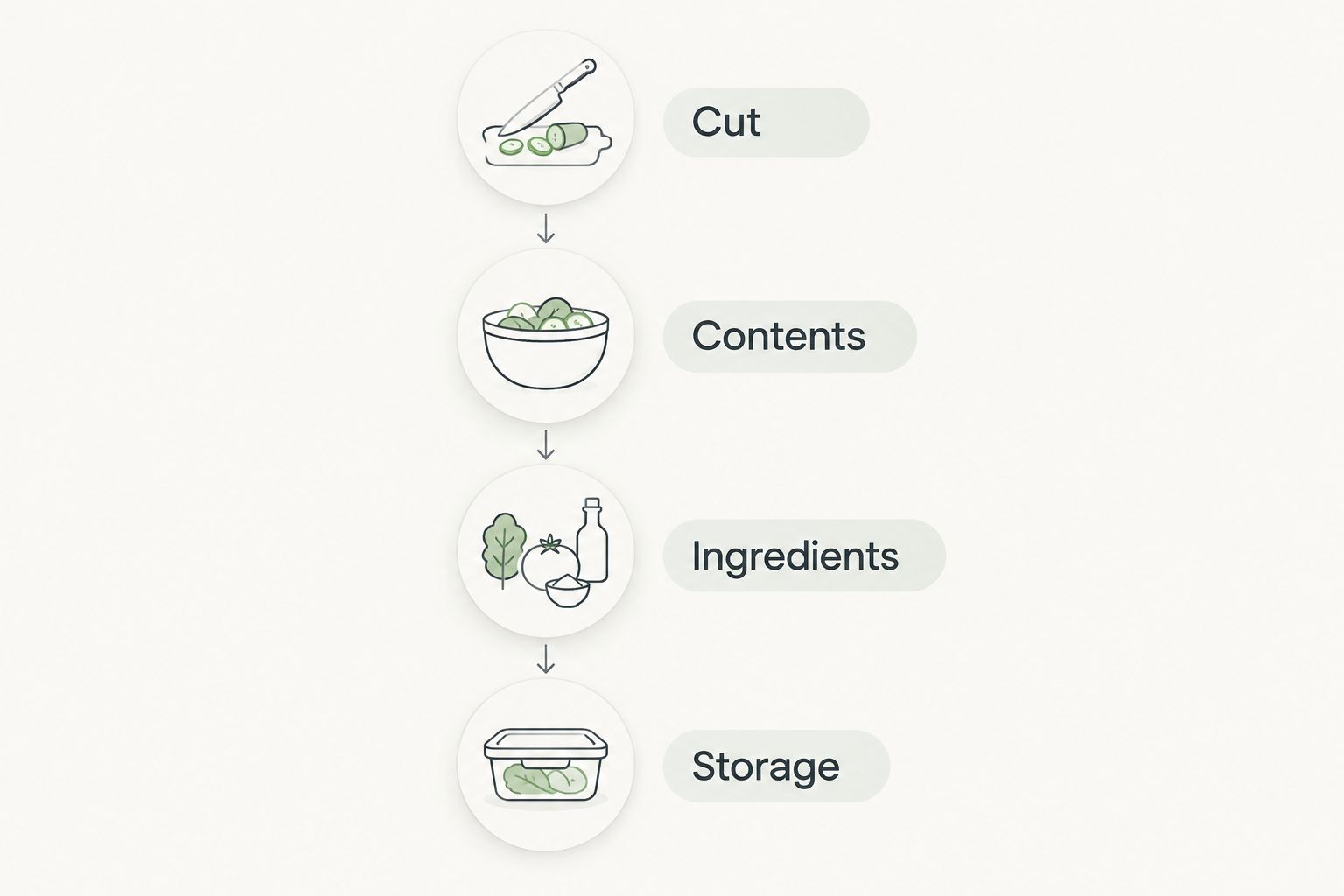
Use this reading order:
- Cut: Establish whether the preparation is boneless or bone-in.
- Contents: Read what the stated quantity measures; do not reinterpret it as pure meat.
- Ingredients: Identify the pickle medium and any ingredients you avoid.
- Storage: Confirm how the product must be handled before and after opening.
Follow that order before judging convenience. A clear description of the cut helps you choose the format; a clear ingredient list helps you choose the recipe. Neither substitutes for storage instructions.
Serve each format in the meal it suits
Boneless mutton pickle works best when the meat joins the rice. Put a serving on your plate, inspect the pieces and mix according to your taste. Keeping the main jar separate from the meal also makes it easier to avoid returning a used eating spoon to it.
Bone-in mutton pickle works best as a visible side. Keep the pieces identifiable rather than burying them through a bowl of rice. Set bones aside as you eat, and avoid offering an unfamiliar bone-in preparation without telling the diner what it contains.
Do not confuse easier serving with suitability for every person. Someone with swallowing difficulties or a prescribed dietary restriction needs advice suited to that condition. Boneless mutton pickle is not automatically an appropriate food simply because intentional bones have been removed.
For shared meals, explain the format before serving. That small step is more useful than expecting everyone to recognise bones beneath a coating of pickle spices.
Storage: bones are not a preservation method
Neither boneless nor bone-in establishes whether a meat pickle is shelf-stable. Oil coverage, a spicy taste or a homemade description does not replace validated preservation and clear handling instructions. Follow the product's label rather than borrowing the storage routine used for a different pickle.
For a meat pickle that requires refrigeration, established USDA perishable-food guidance provides useful limits:
- Keep the refrigerator at 4°C or below.
- Refrigerate perishable food within 2 hours of being left out.
- Reduce that limit to 1 hour when the surrounding temperature exceeds 32°C.
These are general limits from USDA Food Safety and Inspection Service guidance for refrigerated perishable foods, applied here as a 2026 handling reference. They are not a shelf-life claim for a specific mutton pickle, and they do not validate an unknown preparation as safe.
Read the after-opening instructions before the first serving. If those instructions are unclear, ask the seller rather than deciding from smell, appearance or the presence of oil. Use a clean utensil and avoid transferring meal leftovers back into the jar.
Which mutton pickle should you choose?
Choose boneless mutton pickle if you are undecided. It removes the intentional bone-separation step and suits the straightforward rice meals that make pickle useful as an accompaniment.
Choose bone-in mutton pickle when you already know that you prefer meat attached to bone. Keep it visible on the plate, accept the extra handling and judge the recipe on its own merits.
Tulasi Pickles sells homemade veg and non-veg pickles alongside other Andhra-style accompaniments. Use the format ranking to sharpen your questions, not to assume an unlisted cut, ingredient or storage policy. A clear answer about the actual preparation matters more than the word best.
FAQ
What’s best in boneless vs bone-in mutton pickle?
Boneless mutton pickle is the best default for everyday rice meals because you do not intentionally separate meat from bones. Bone-in suits diners who specifically prefer eating meat attached to bone.
Is bone-in mutton pickle tastier than boneless?
Bone-in mutton pickle is not automatically tastier than boneless. The finished flavour depends on the ingredients and cooking method, so compare the actual preparations rather than the bone format alone.
Does boneless mutton pickle contain more edible meat?
Boneless mutton pickle excludes intentional bones, but the label alone does not establish its meat quantity. Compare stated composition when provided; total jar contents also include the pickle medium and other ingredients.
Is boneless mutton pickle always tender?
Boneless mutton pickle is not always tender. Meat cut, connective tissue and cooking affect texture, so removing bones does not guarantee soft pieces.
Which mutton pickle is better for mixing with rice?
Boneless mutton pickle is better for mixing with rice because intentional bones do not need to be separated during eating. Inspect the pieces before mixing and keep the main jar separate from your eating utensils.
Does bone-in mutton pickle last longer?
Bone-in mutton pickle does not have a longer shelf life simply because it contains bones. Preservation, packaging and storage instructions determine handling requirements; follow the specific product label.
What should I check before choosing mutton pickle from Tulasi Pickles?
Check the stated cut, ingredients and storage instructions before choosing mutton pickle from Tulasi Pickles. Confirm any details the description does not explain instead of assuming boneless, bone-in or a particular spice level.
One last thing
Ask what makes the piece easy to eat, not just whether it has a bone. Boneless answers the bone question, but it does not answer the tenderness question. A description that explains both the cut and preparation gives you a better basis for choosing than a format label alone.
Related guides
- How to choose the right spice level in pickles
- How to store non-veg pickles safely in the refrigerator
- How to serve non-veg pickle as a side dish