
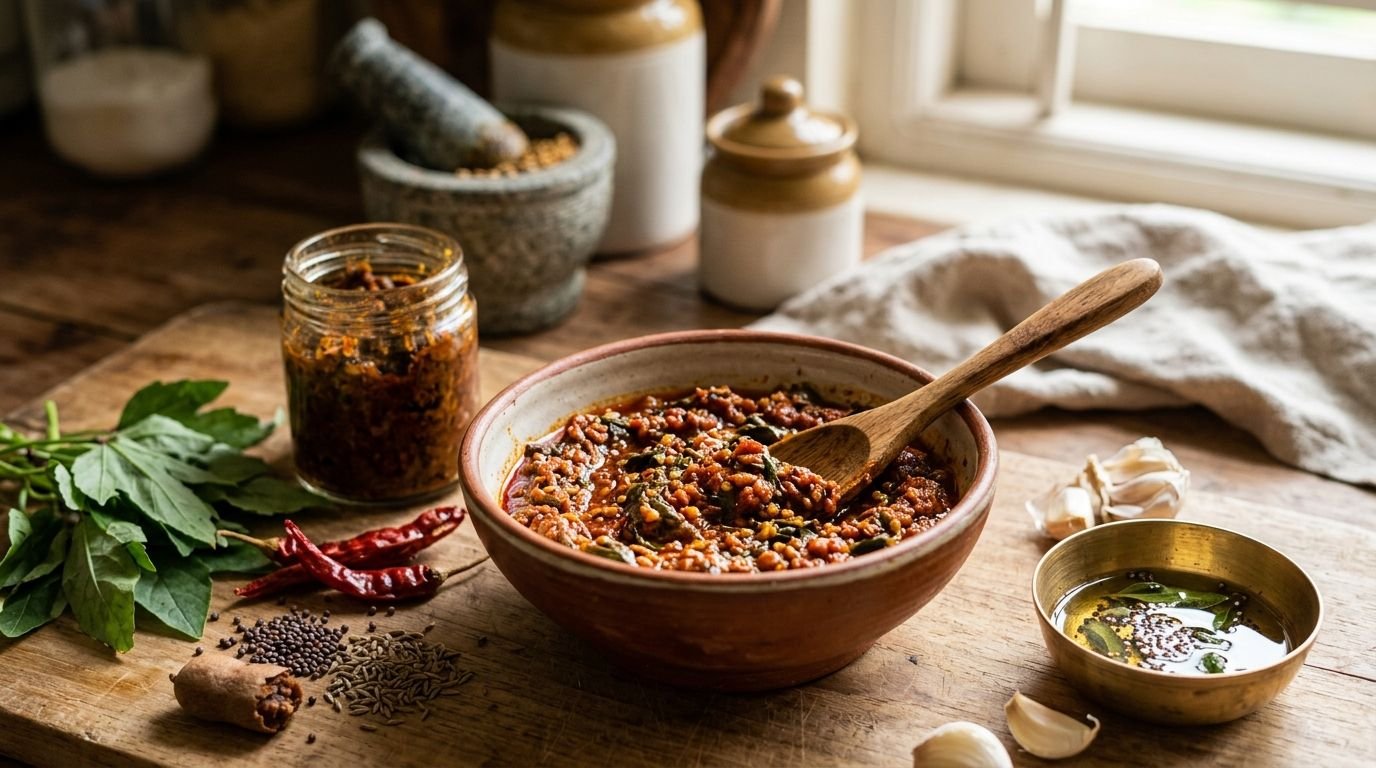
Turning a jar of gongura pickle into gongura pachadi takes about 10 minutes and one small pan. This page gives you the exact method, three variations, and the reasons your result tastes different from the last batch.
- Gongura pachadi from gongura pickle is ready in 10 minutes with no fresh leaf prep.
- A mustard-cumin-curry leaf tempering plus 3-4 tbsp pickle is the entire recipe.
- Quick tempering stays chunky for hot rice; the curd version mellows sourness for a side dish.
- Taste swings jar to jar based on oil level, chili heat, tamarind content and leaf maturity.
- Finished pachadi keeps 2-3 days refrigerated, far less than the sealed pickle jar it came from.
Making gongura pachadi from gongura pickle takes roughly 10 minutes: temper mustard seeds, cumin, a dried red chili and curry leaves in a teaspoon of oil, then stir in 3-4 tablespoons of gongura pickle, mashing the leaves so the pulp loosens into a spreadable pachadi. You skip the leaf washing, wilting and cooking-down stage that a from-scratch gongura pachadi needs, because the gongura pickle already carries the sour tang and the oil-cured spice base the dish depends on. The one thing the shortcut does not carry over is shelf life — the pachadi you make is a 2-3 day dish, not a jar you keep for months.
Why this matters
Fresh gongura (red sorrel) leaves are seasonal and mostly a Telangana-Andhra market find. Outside that belt, and certainly outside India, a sealed jar is often the only gongura available in any given week of 2026.
Converting that jar into pachadi consistency instead of eating it straight gives you a rice-mixing chutney without hunting for leaves or running a stove for 20 minutes. It is a distinct method with its own ratios, not a compromise version of the real thing.
How to make gongura pachadi using gongura pickle
The process has two halves: build a fresh tempering, then fold the pickle into it. Doing it in that order keeps the tempering crisp and distinct against the softer, oil-cured pickle.
- Heat 1 teaspoon of oil in a small pan over medium heat. Plain oil works; the oil floating on top of the pickle jar works better and adds no extra ingredient. More uses for that leftover jar oil are in this pickle oil guide.
- Add 1/2 teaspoon mustard seeds. Let them pop — 15 to 20 seconds.
- Add 1/2 teaspoon cumin seeds, 1 broken dried red chili and 6-8 curry leaves. Fry 20 to 30 seconds, until the curry leaves go crisp and the cumin darkens a shade.
- Add a pinch of hing (asafoetida) and drop the heat to low immediately. Hing burns in seconds.
- Stir in 3-4 tablespoons of gongura pickle, mashing with the back of the spoon so the leaf pulp breaks down and coats evenly instead of sitting in lumps.
- Cook 2-3 minutes on low, stirring often, until the mixture pulls together into a thick, glossy pachadi.
- Taste and correct. A pinch of jaggery tames a sharp, tamarind-heavy batch. A tablespoon of water loosens a batch that has gone too dense.
Turn off the heat the moment the pachadi looks cohesive rather than oily and loose. It tightens slightly as it cools, so stop just before the texture you actually want.
“If it still looks like oil and chunks after three minutes on low, it needs mashing, not more heat.”
Ratios that work
Three to four tablespoons of pickle makes enough pachadi for 2-3 servings mixed into rice. Scale the tempering proportionally — double the pickle, double the mustard, cumin and curry leaves, but keep the oil closer to 1.5 teaspoons rather than a full two, because the pickle itself brings oil to the pan.
Quick tempering version: 5 minutes
Stop after step 4, then pour the hot tempering straight over cold pickle in a bowl and stir. No extended cooking.
This keeps the mustard seeds and curry leaves crunchy and the leaf pulp chunky. Best for mixing into hot steamed rice with a spoon of ghee, where you want texture contrast rather than a smooth spread. It is also the fastest version and stays fully vegan, since nothing dairy goes in.
Downside: the flavors sit side by side rather than merging. If you want the tempering to taste built-in, you need the full 10-minute method.
Curd-mixed version: 10 minutes
Follow all seven steps, cool the pachadi for two minutes off the heat, then fold in 2-3 tablespoons of fresh curd.
This mellows the sourness and turns the pachadi into a proper side dish rather than a rice-mixer — closer to how gongura is served alongside a full Andhra thali. Best for feeding mixed groups, including anyone who finds straight gongura too sharp.
Downside: shelf life drops. A curd-mixed batch is a same-day or next-day dish, so make only what gets eaten.
Onion-gongura version: 12 minutes
After the tempering in step 4, add half a finely chopped small onion and fry 3-4 minutes until translucent, then continue with the pickle. The onion adds sweetness and bulk, stretching 3 tablespoons of pickle across 4 servings.
Best for stretching a nearly empty jar. Skip it if you are cooking for a Jain or no-onion household — the plain tempering version is the one that fits there.
| Version | Time | Texture | Best for |
|---|---|---|---|
| Quick tempering | 5 minutes | Chunky, oil-forward | Hot rice with ghee |
| Curd-mixed | 10 minutes | Smooth, tangy-mild | Side dish, mixed groups |
| Onion-gongura | 12 minutes | Soft, slightly sweet | Stretching a low jar |
The quick tempering version wins if you are eating within the hour; the curd-mixed version is the safer choice when you are serving guests a full meal.
Start with a real gongura pickle
Andhra-style gongura pickle from Hyderabad, shipped across India and overseas.
Why gongura pachadi tastes different from jar to jar
Two cooks following the same seven steps in 2026 can land on completely different results. The variables sit in the pickle, not the method:
- Oil content of the pickle. Jars packed heavier in oil need less added oil in the tempering, or the pachadi turns greasy on the plate.
- Chili level of the base pickle. A hot batch needs the curd version to stay edible for children or spice-sensitive eaters.
- Tamarind versus raw mango in the base recipe. Tamarind-forward gongura pickle reads sourer and usually needs the jaggery correction.
- Leaf maturity at harvest. Young, tender gongura breaks down into smooth pachadi in two minutes; older fibrous leaves stay stringy and need more mashing.
- Curing time in the jar. A freshly made pickle tastes brighter; one that has cured for weeks tastes rounder and more oil-soaked.
- Salt level. Gongura pickle is salted for preservation, so taste before adding any salt to the pachadi. Most batches need none.
If you buy pickle specifically to make pachadi, a medium-heat, mango-soured batch is the most forgiving starting point. Tulasi Pickles sells gongura among its Andhra pickle range, and the same jar doubles as a straight pickle if the pachadi experiment does not land.
Is gongura pachadi the same as gongura pickle?
No — gongura pachadi is the softer, rice-mixing preparation, while gongura pickle is the oil-cured jar version built to last. Traditional pachadi is cooked fresh from wilted leaves and eaten within a day or two. Pickle sits in oil, salt and chili for weeks or months without spoiling. Making pachadi from pickle borrows the pickle's flavor base and accepts the pachadi's shorter life.
Can I make gongura pachadi without tempering?
You can, but the result reads as a condiment rather than a pachadi. Straight jar pickle mashed with a spoon misses the fresh mustard-and-curry-leaf aroma that defines the dish, and the texture stays uneven. A 30-second tempering closes that gap using ingredients already in any South Indian kitchen.
How long does gongura pachadi made from pickle last?
Gongura pachadi made this way keeps 2-3 days in the refrigerator, much shorter than the sealed pickle it came from, because the fresh tempering and any added curd cut its stability. Always use a clean dry spoon in the parent jar, and never return leftover pachadi into it — that is the fastest way to shorten the whole jar's life.
What to serve gongura pachadi with
Hot steamed rice with ghee is the default and the best pairing — the fat balances the sourness directly. Beyond that:
- Curd rice, where a small spoon adds tang without overwhelming it
- Roti or chapati, using the thicker curd-mixed version as a spread
- Khichdi, where gongura replaces the usual pickle side entirely
- Dosa or idli, as a sharp alternative to coconut chutney
- Papad and rice, as part of a full Andhra thali in 2026
FAQ
How do I make gongura pachadi from gongura pickle quickly?
Temper mustard seeds, cumin, a dried red chili and curry leaves in a teaspoon of oil for under a minute, then stir in 3-4 tablespoons of gongura pickle and cook 2-3 minutes on low. Total time is about 10 minutes and no fresh leaves are needed.
Is gongura pachadi spicy?
The heat comes entirely from the base pickle, so a mild jar makes a mild pachadi and a Guntur-chili jar makes a fierce one. Folding in 2-3 tablespoons of curd is the fastest way to bring the heat down.
What do you eat gongura pachadi with?
Hot steamed rice with a spoon of ghee is the classic pairing. It also works with curd rice, roti, khichdi and as a sharper alternative to coconut chutney beside idli.
Can I use pickle oil instead of fresh oil for the tempering?
Yes, spoon the oil floating on top of the jar into the pan in place of fresh oil. It carries spice flavor already and means nothing in the jar goes to waste.
Does adding curd change the shelf life of gongura pachadi?
Yes, a curd-mixed batch is best eaten the same day and lasts about 2 days refrigerated. The plain tempered version stretches to 3 days in the fridge.
Why does my gongura pachadi taste too sour?
Excess sourness usually comes from a tamarind-heavy base pickle or a jar that has cured for several weeks. A pinch of jaggery stirred in on low heat balances it without changing anything else.
Can I make gongura pachadi vegan?
Yes, the 5-minute quick tempering version uses only oil, whole spices and the pickle itself. Skip the curd variation and the dish is fully plant-based.
How much gongura pickle do I need per serving?
Three to four tablespoons of gongura pickle makes enough pachadi for 2-3 servings mixed into rice. Add half a chopped onion to stretch the same quantity to 4 servings.
One last thing
The curd-mixed version is not a modern shortcut. It mirrors how gongura is often served at Andhra weddings and functions, where the sourness has to be gentle enough for a large group eating rice over a couple of hours. If you are cooking for guests in 2026, make the curd version by default and put a small bowl of the plain pickle on the side for whoever wants it sharper — that one decision prevents most of the complaints a first-time gongura cook hears.
Related guides
- How to pair pickles with curd rice and khichdi
- How to store homemade pickles for long shelf life
- Best Andhra pickles for authentic homemade taste