
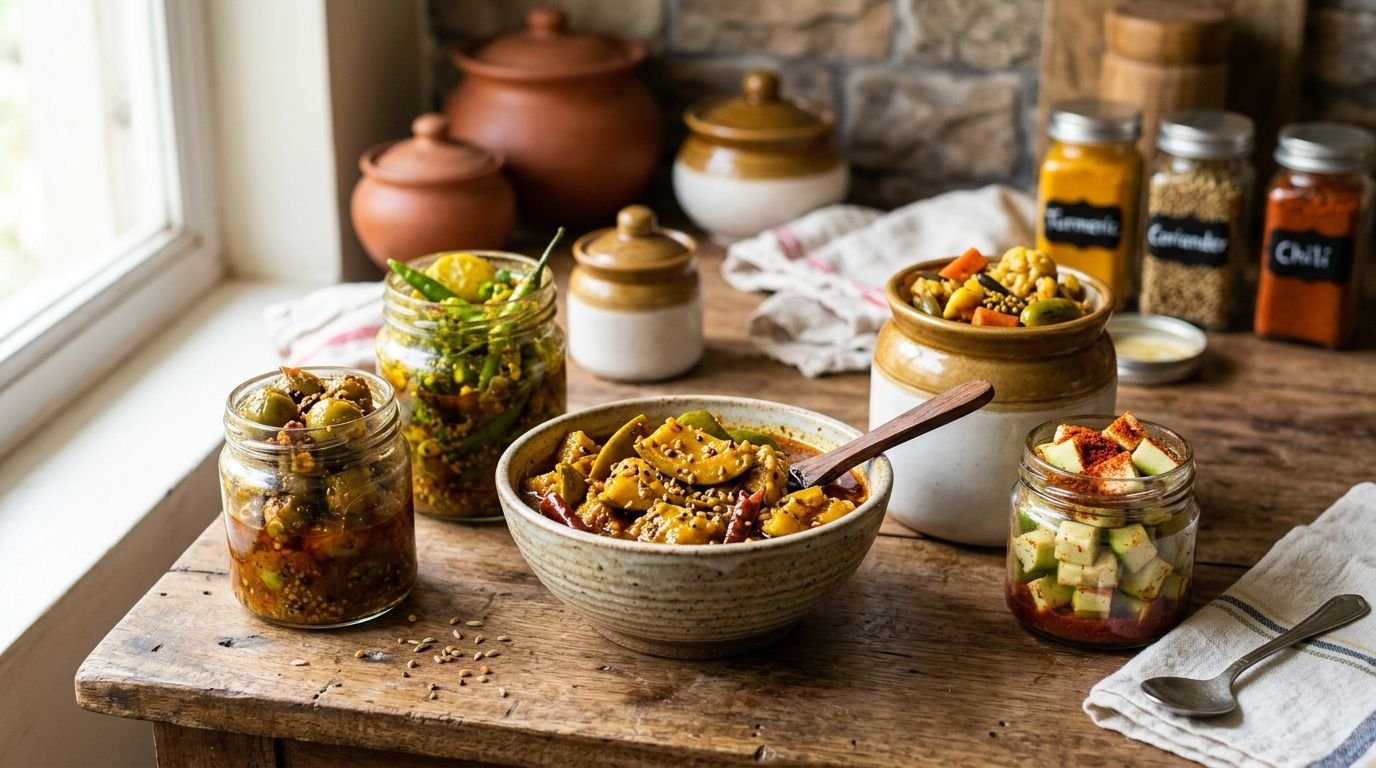
Jain diners looking for pickles without onion and garlic have real options among Andhra-style recipes — this list ranks six. Best overall: Avakaya (raw mango) pickle. Best for tangy cravings: Gongura pickle. Best for first-time buyers: Lemon pickle. Best for daily curd rice: Tamarind pickle. All four, plus two more onion-garlic-free varieties, are made using traditional Andhra recipes that never call for either bulb in the first place.
- Avakaya mango pickle is the best overall jain pickle: no onion, no garlic, classic Andhra recipe.
- Gongura pickle wins for tangy, sour-forward eaters who avoid onion and garlic.
- Lemon pickle is the mildest onion-garlic-free pick for first-time Jain-diet buyers.
- Tamarind pickle pairs best with daily curd rice and khichdi, still onion-garlic-free.
- Six Jain-safe pickle varieties ship from Hyderabad across India and overseas in 2026.
Why this matters
Most Andhra pickle recipes never included onion or garlic to begin with — the base is oil, red chilli, salt, and a souring agent like raw mango, tamarind, or gongura leaf. That makes jain pickles an easier find in Andhra kitchens than in, say, Punjabi or Gujarati pickle traditions, where onion-laced achaar is common.
The confusion buyers run into is labeling. A jar marked simply "mixed pickle" or "chutney podi" can quietly contain garlic paste as a preservative booster, especially from mass-market brands. Tulasi Pickles makes its jars from home-style Andhra recipes out of Hyderabad, and none of the six varieties below use onion or garlic as an ingredient in 2026.
What makes the best Jain pickle without onion and garlic
- Zero onion and zero garlic anywhere on the ingredient list — not even as a paste base
- A traditional souring agent (mango, tamarind, lemon, gongura) instead of onion for depth
- Cold-pressed oil base, typically sesame or groundnut, not refined vegetable oil
- Small-batch spice blends that don't rely on garlic to mask flatness
- Shelf-stable at room temperature once sealed, so it travels well for gifting or shipping
- A recipe that reads as authentic Andhra-style, not a diluted "diet" reformulation
At a glance
| Pickle | Best for | Standout feature | Key limitation |
|---|---|---|---|
| Avakaya (mango) | Overall daily use | Classic Andhra sourness, works with any meal | Needs raw mango season for freshest batches |
| Gongura | Tangy, sour cravings | Sharp leafy tartness, distinct from fruit pickles | Strong flavor isn't for mild-palate eaters |
| Lemon | First-time buyers | Mildest heat of the six, easy on new palates | Less complex than mango or gongura |
| Tamarind | Daily curd rice pairing | Thick, tangy base built for mixing into rice | Sticky texture, not eaten straight off a spoon |
| Bitter gourd | Health-conscious eating | Bitter-forward profile some diets specifically seek | Acquired taste, smallest audience of the six |
| Drumstick | Traditional thali | Texture holds up in a full Andhra meal spread | Fewer occasions call for it outside a thali |
1. Avakaya (Raw Mango) Pickle: best jain pickle overall
Avakaya is the reference point for Andhra pickle-making — raw mango cut into chunks, cured in red chilli and mustard powder, finished in sesame oil. No onion, no garlic, ever, in the traditional recipe. It's the pickle most Andhra households default to for daily meals.
Avakaya pros:
- Works across rice, curd rice, dosa, and roti equally well
- Long shelf life once sealed, good for stocking up
- Recognizable, well-documented recipe with no ambiguity about ingredients
Avakaya cons:
- Quality depends heavily on the mango batch used
- Sourness can be sharp for palates used to milder pickles
Best for: anyone new to Jain pickle shopping who wants the single safest, most traditional choice. Verdict: Buy.
2. Gongura Pickle: best jain pickle for tangy cravings
Gongura uses sorrel leaf instead of a fruit or vegetable base, giving it a sharper, more herbal tartness than mango or tamarind pickles. It's a defining Andhra flavor and, like avakaya, never needed onion or garlic in its original form.
Gongura pros:
- Distinct flavor profile you won't find outside Andhra cooking
- Pairs well with rice and roti without needing a side dish
- Leaf-based recipe stays onion-garlic-free by tradition, not reformulation
Gongura cons:
- Sourness is more intense than fruit-based pickles
- Leafy texture isn't to every eater's liking
Best for: eaters who specifically want sour-forward flavor over sweet or mild. Verdict: Buy.
3. Lemon Pickle: best jain pickle for first-time buyers
Lemon pickle is built from whole lemon pieces cured in salt, chilli, and oil — simpler and milder than mango or gongura pickle. It's the easiest entry point for someone testing whether Andhra-style pickles suit their diet before committing to a full jar rotation.
Lemon pickle pros:
- Mildest heat profile of the six varieties here
- Familiar citrus base that's easy to introduce to new eaters
- Onion-garlic-free by default in the traditional recipe
Lemon pickle cons:
- Less complex flavor than mango or gongura
- Some batches skew salty rather than balanced
Best for: first-time Jain-diet pickle buyers who want to start mild. Verdict: Buy.
4. Tamarind Pickle: best for daily curd rice and khichdi
Tamarind pickle is a thick, tangy paste-style preparation meant for mixing rather than eating straight. It's built for stirring into curd rice, khichdi, or plain rice as a daily accompaniment, and the traditional recipe has no onion or garlic in it.
Tamarind pickle pros:
- Purpose-built for mixing into rice dishes
- Strong tang that needs only a small spoonful per meal
- Long shelf life due to tamarind's natural preservative quality
Tamarind pickle cons:
- Sticky, paste-like texture some eaters find less appealing on its own
- Not a stand-alone side dish the way avakaya can be
Best for: anyone who eats curd rice or khichdi regularly and wants a daily onion-garlic-free mix-in. Verdict: Buy.
5. Bitter Gourd Pickle: best for health-conscious eating
Bitter gourd pickle keeps the vegetable's sharp bitterness intact, cured in oil and chilli without any onion or garlic base. It's a narrower-audience pickle than the first four, built for eaters who already seek out bitter gourd for its taste profile.
Bitter gourd pickle pros:
- Distinct bitter profile some diets specifically look for
- Traditional Andhra preparation, no onion or garlic in the recipe
- Pairs well with a full thali spread
Bitter gourd pickle cons:
- Acquired taste, smallest audience of the six on this list
- Not a good starting pickle for someone new to bitter gourd
Best for: eaters who already enjoy bitter gourd and want it in pickle form. Verdict: Hold unless bitter gourd is already a known favorite.
6. Drumstick Pickle: best for a traditional Andhra thali
Drumstick pickle uses the vegetable's fibrous pods, cured until the texture softens into a pickle consistency. It's less of a daily-use pickle and more of a thali component, served alongside rice, dal, and a vegetable curry.
Drumstick pickle pros:
- Textured, filling addition to a full meal spread
- Traditional South Indian preparation with no onion or garlic
- Distinct from the fruit- and leaf-based pickles on this list
Drumstick pickle cons:
- Fewer everyday occasions call for it compared to avakaya or lemon
- Texture takes getting used to for pickle newcomers
Best for: thali-style meals where a textured pickle rounds out the plate. Verdict: Buy for regular thali eaters, Wait if you eat pickle standalone most days.
How we ranked these
Each pickle was checked against the six criteria above: no onion, no garlic, traditional souring agent, cold-pressed oil, small-batch spicing, and room-temperature shelf stability. Avakaya and gongura rank highest because they're the most universally eaten of the six in Andhra households, not because the others fall short on the onion-garlic rule — every pickle on this list passes that test in 2026.
Order Jain-safe Andhra pickles online
Homemade pickles shipped from Hyderabad across India and overseas.
Which jain pickle should you choose?
If you want one jar to start with, avakaya mango pickle is the safest default — it's the most-eaten Andhra pickle and has no onion or garlic in the traditional recipe. If your palate leans tangy and sour, pick gongura instead. If you're easing into Andhra pickles for the first time, start with lemon pickle, and add tamarind pickle once you're mixing pickle into curd rice or khichdi regularly. Bitter gourd and drumstick are worth adding once you know your household already likes those vegetables.
FAQ
What makes a pickle safe for a Jain diet?
A Jain-safe pickle has no onion and no garlic anywhere in the ingredient list or the oil base. Traditional Andhra recipes like avakaya, gongura, and lemon pickle were built this way from the start, not reformulated for the diet.
Is avakaya pickle jain-friendly?
Yes, traditional avakaya mango pickle uses raw mango, red chilli, mustard powder, salt, and oil with no onion or garlic in the recipe. It is one of the most common onion-garlic-free pickles in Andhra households in 2026.
Do all Andhra pickles avoid onion and garlic?
No, some varieties like onion pickle and garlic pickle are built specifically around those ingredients. Mango, gongura, lemon, tamarind, bitter gourd, and drumstick pickles are the onion-garlic-free options within the Andhra pickle range.
What is the best jain pickle for someone new to Andhra pickles?
Lemon pickle is the mildest option and the easiest entry point for a first-time buyer. It has less heat and complexity than mango or gongura pickle while still being fully onion-garlic-free.
How long do onion-garlic-free pickles last once opened?
Oil-based Andhra pickles like avakaya and gongura stay shelf-stable at room temperature once sealed, thanks to the oil and salt curing method. Always use a dry spoon and keep the jar tightly closed after opening.
Can jain pickles be shipped overseas?
Traditional oil-cured pickles like the ones on this list are shelf-stable and travel well without refrigeration, which is why Andhra pickle brands regularly ship them across India and overseas in 2026.
Is gongura pickle spicier than avakaya?
Gongura pickle is tangier and more herbal than spicy, while avakaya carries more direct chilli heat. Neither uses onion or garlic in the traditional recipe.
Are tamarind and lemon pickle the same thing?
No, tamarind pickle is a thick paste meant for mixing into rice or khichdi, while lemon pickle uses whole lemon pieces and is eaten more like a side condiment. Both are onion-garlic-free.
One last thing
The fastest way to spot a mislabeled jar is to check for garlic paste listed under a generic "seasoning" line rather than a named ingredient — traditional Andhra recipes list every component by name because there's nothing to hide. Six varieties, zero onion, zero garlic: that's the actual scope of what's safely available in 2026, not a workaround diet reformulation.
Related guides