
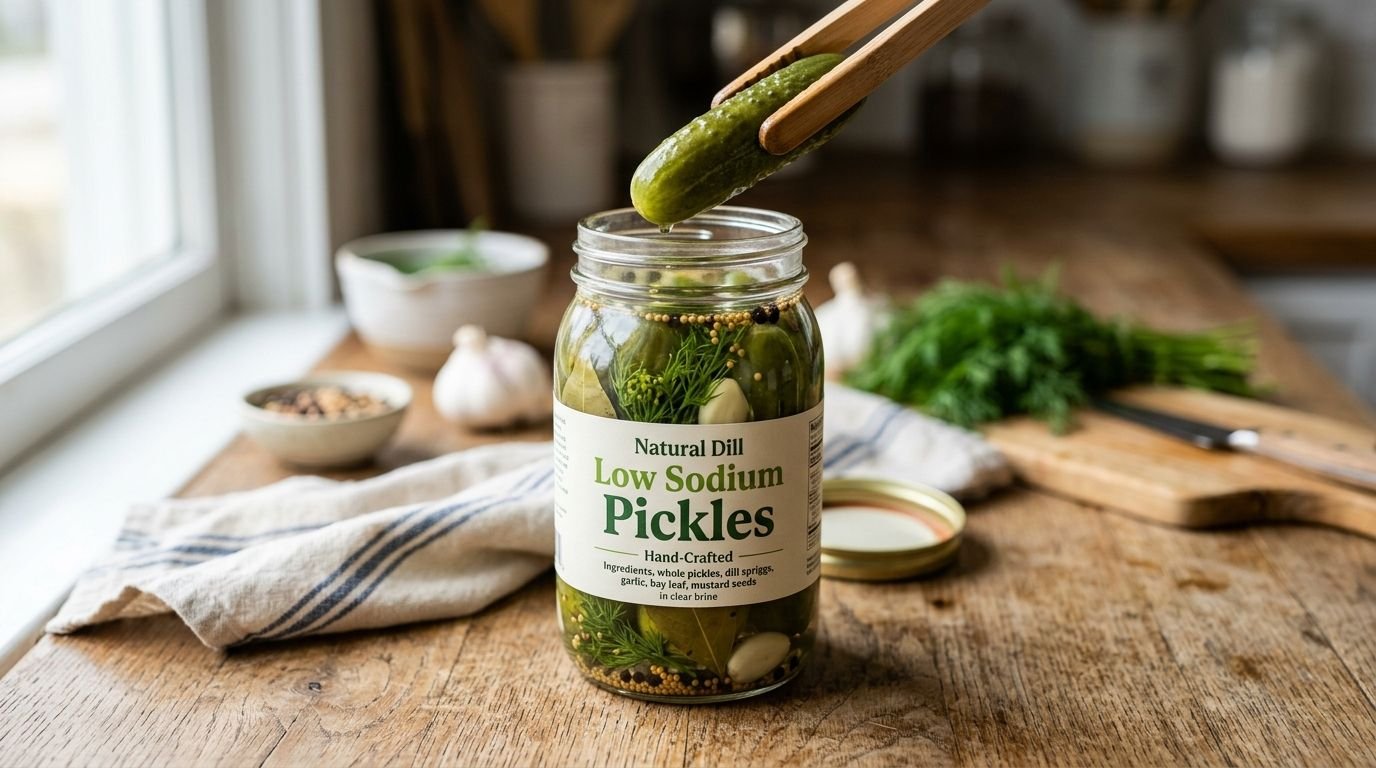
Low sodium pickles are a myth in traditional Andhra-style pickle making — salt is the preservative that keeps oil-based pickles shelf-stable without refrigeration, so no pickle jar is truly "low sodium" the way a low-sodium soup can be. If you're managing blood pressure in 2026, the real decision is between oil-free formats, smaller jar sizes for portion control, and pickles built on spices and fruit that carry flavor without needing extra salt. This guide ranks six practical picks from Tulasi Pickles' Andhra-style range by the use case each one actually solves.
- No pickle is genuinely low sodium — salt preserves the oil-based mix, so portion control matters more than the label.
- Oil-free pickles from Tulasi Pickles are the best overall pick for daily sodium-conscious eating in 2026.
- Low-spice pickles for elderly parents suit blood pressure patients who also need gentler chili levels.
- Amla pickle and curry leaf pickle work as light, small-portion options between meals.
- WHO guidance caps adult salt intake at under 5 grams a day — a single teaspoon of any pickle already contributes to that.
Why this matters
The World Health Organization recommends adults keep total salt intake under 5 grams a day, and that limit gets tighter once a doctor flags blood pressure. Traditional Andhra pickles are built on an 8-12% salt-by-weight ratio because that's what keeps oil-cured vegetables and meat shelf-stable without refrigeration — pull the salt down much further and the pickle spoils.
That means the honest fix for blood pressure patients in 2026 isn't hunting for a pickle that claims zero sodium. It's picking formats that let you eat a smaller, more controlled spoonful without losing the flavor that makes rice, curd rice, or khichdi palatable. Tulasi Pickles doesn't publish independent lab-tested sodium values for its jars, so treat every recommendation below as a portion and format strategy, not a medical clearance — check with a doctor or dietitian before changing a hypertension diet.
One place to start: reducing oil in store-bought pickles cuts calorie load even when salt stays the same, which matters if blood pressure management is paired with weight goals.
What makes the best low sodium pickle pick
- Oil-free base — no added oil means the pickle doesn't need extra salt to stop rancidity
- Portion-friendly format — smaller jars or naturally strong flavors that satisfy in a smaller spoonful
- No added preservatives beyond salt — nothing stacking on top of the existing salt load
- Mild-to-moderate chili levels — lower spice reduces the urge to reach for extra pickle to balance heat
- Clear ingredient transparency — no vague "spice mix" labels hiding salt-heavy additions
- Suitability for daily small servings — works as a condiment, not a side dish
At a glance
| Pickle type | Best for | Standout feature | Key limitation |
|---|---|---|---|
| Oil-Free Pickles | Overall sodium-conscious eating | No added oil, salt is the only preservative doing work | Still salt-cured; portion control still applies |
| Low-Spice Pickles for Elderly Parents | Elderly blood pressure patients | Milder chili, gentler on digestion | Milder taste feels bland to spice-lovers |
| Amla Pickle | Antioxidant-rich light snacking | Vitamin C-heavy fruit base | Sourness limits how much you'll want per meal |
| Ginger Pickle | Digestion-friendly daily use | Warming spice satisfies in a small serving | Still oil-based; watch the spoon size |
| Lemon Pickle | Tangy flavor without heavy oil | Citrus cuts through low-salt meals well | Traditional recipes can still run salt-heavy |
| Curry Leaf Pickle | Micronutrient-dense small portions | Iron and calcium from the leaf base | Strong flavor means only small servings work |
1. Oil-Free Pickles: best low sodium pickle for daily eating
Oil-free pickles drop the oil layer that traditional Andhra pickles use for shelf life, relying on salt and spice alone. That doesn't make the jar sodium-free, but it removes the calorie and fat load that often accompanies pickle habits, which matters for anyone managing blood pressure alongside weight.
Oil-free pickle pros:
- No oil means fewer calories per spoonful
- Pairs cleanly with steamed rice, curd rice, or khichdi
- Works for anyone already avoiding fried or oily condiments
Oil-free pickle cons:
- Salt content is unchanged from traditional recipes
- Shorter shelf life than oil-sealed jars once opened
Best for: daily sodium-conscious eaters who still want pickle flavor without oil.
Verdict: Buy — the strongest overall pick on this list for 2026.
2. Low-Spice Pickles for Elderly Parents: best for blood pressure patients
Low-spice pickles built for elderly parents tone down the chili without stripping the tamarind and garlic base that gives Andhra pickles their character. Lower spice means less urge to eat a bigger spoonful just to chase the heat, which indirectly keeps portions — and salt intake — in check.
Low-spice pickle pros:
- Gentler on digestion for older adults and blood pressure patients
- Easier to pair with bland, low-salt diets already recommended for hypertension
- Retains traditional tamarind and garlic flavor base
Low-spice pickle cons:
- Less punch for anyone used to Guntur-level heat
- Salt content still follows standard preservation ratios
Best for: elderly parents or anyone on a doctor-recommended low-spice, low-salt diet.
Verdict: Buy — the clearest fit for the blood pressure use case specifically.
3. Amla Pickle: best for light, antioxidant-focused snacking
Amla pickle uses Indian gooseberry as its base, a fruit widely recognized for vitamin C content. The natural sourness of amla means a small spoonful goes further than an oil-heavy meat or vegetable pickle.
Amla pickle pros:
- Fruit-based, vitamin C-rich profile
- Sharp tang satisfies with less quantity
- Fits well as an occasional condiment rather than a daily staple
Amla pickle cons:
- Sourness can be overwhelming in large servings
- Not a substitute for a daily rice-pairing pickle
Best for: health-conscious snackers who want antioxidants without a big serving.
Verdict: Buy — best used in small, deliberate portions.
4. Ginger Pickle: best for digestion-friendly daily use
Ginger pickle leans on a warming, pungent spice profile that satisfies with a genuinely small serving. It's also traditionally used for digestion support alongside meals, which pairs well with the general dietary caution that comes with blood pressure management.
Ginger pickle pros:
- Strong flavor means smaller portions feel complete
- Works well mixed into rice or curd rice in tiny amounts
- Familiar Andhra-style preparation
Ginger pickle cons:
- Still oil-based like most traditional Andhra pickles
- Not a distinct low-salt formulation
Best for: anyone who wants a daily pickle habit that stays self-limiting by intensity.
Verdict: Hold — fine in small amounts, not the top pick if oil is the bigger concern.
5. Lemon Pickle: best for tangy flavor without heavy oil
Lemon pickle brings citrus acidity that can make otherwise bland, low-salt meals feel more complete without reaching for extra salt at the table. It's a lighter option than meat-based pickles in terms of fat content.
Lemon pickle pros:
- Citrus tang adds perceived flavor without added table salt
- Lighter fat profile than non-veg pickles
- Familiar South Indian comfort pairing
Lemon pickle cons:
- Traditional recipes can still run salt-heavy depending on preparation
- Not marketed as a specific low-sodium formulation
Best for: meals that feel flat on a reduced-salt diet and need acidity instead.
Verdict: Hold — good flavor strategy, not a sodium reduction strategy on its own.
6. Curry Leaf Pickle: best for micronutrient-dense small portions
Curry leaf pickle is built on a leaf base rather than a vegetable or meat base, which naturally limits how much anyone eats per sitting — the flavor is strong and concentrated.
Curry leaf pickle pros:
- Small servings deliver full flavor
- Leaf-based ingredients bring iron and calcium to the plate
- Distinct from oil-heavy mango or chicken pickle formats
Curry leaf pickle cons:
- Intensity limits it to a condiment role, not a main pairing
- Less familiar to first-time buyers compared to mango or lemon pickle
Best for: buyers who want a small-portion pickle that isn't the default mango or lemon.
Verdict: Hold — a good rotation option, not a daily staple.
How this list was ranked
Each pick was judged against the six criteria above: oil content, portion-friendliness, absence of extra preservatives, spice intensity, ingredient transparency, and fit for daily small servings. Oil-free pickles and the elderly-focused low-spice line scored highest because they directly address both the oil and the portion-control problem that drives most pickle-related salt overconsumption in 2026 diets.
Ask about portion-friendly jar sizes
Check current oil-free and low-spice pickle options before you order.
Which low sodium pickle should you choose?
If you're managing blood pressure and want one default answer: start with oil-free pickles for daily use, and switch to low-spice pickles for elderly parents if the household needs gentler chili too. Keep every pickle to a small spoonful regardless of which type you pick — that single habit does more for salt intake than any product label claim.
FAQ
Are there truly low sodium pickles for blood pressure patients?
No traditional oil-based pickle is genuinely low sodium — salt at 8-12% by weight is what preserves it. The realistic strategy in 2026 is smaller portions and oil-free formats, not a sodium-free jar.
How much pickle can a blood pressure patient eat per day?
WHO guidance caps total daily salt at under 5 grams for adults, and a doctor managing hypertension may set a lower target. A small teaspoon of pickle already contributes meaningfully, so treat it as a condiment, not a side dish.
Is oil-free pickle better than regular pickle for blood pressure?
Oil-free pickle removes the added fat and calorie load, which helps if weight management is part of the blood pressure plan, but the salt content stays roughly the same as regular pickle. It’s a calorie fix more than a sodium fix.
Are low-spice pickles actually lower in sodium?
Not automatically. Low-spice pickles reduce chili intensity, which often means people eat smaller portions, indirectly lowering salt intake, but the base salt ratio used for preservation doesn’t change.
Can elderly parents with high blood pressure eat Andhra pickles?
Yes, in small, controlled portions, and low-spice pickles built for elderly parents are the gentler option on both chili and digestion. Confirm quantity limits with the parent’s doctor first.
Does amla pickle help with blood pressure?
Amla pickle isn’t a treatment for blood pressure, but its natural sourness means a small serving satisfies, which supports portion control better than a milder-tasting pickle would.
What’s the best pickle to pair with a low-salt diet?
Lemon pickle and ginger pickle add strong flavor in small amounts, which helps a low-salt meal feel less bland without adding extra table salt.
Should I check with a doctor before adding pickle to a hypertension diet?
Yes. Pickle salt content varies by recipe and isn’t independently lab-tested by most Indian pickle sellers, so a doctor or dietitian should confirm how it fits your specific sodium target.
One last thing
The single biggest lever for blood pressure patients isn't which pickle jar you buy — it's the spoon size. A teaspoon of any Andhra-style pickle, oil-free or not, sits well within a 5-gram daily salt budget; three heaped tablespoons across a day does not. Measure once with an actual spoon and you'll likely find your usual serving is bigger than you assumed.
Related guides