
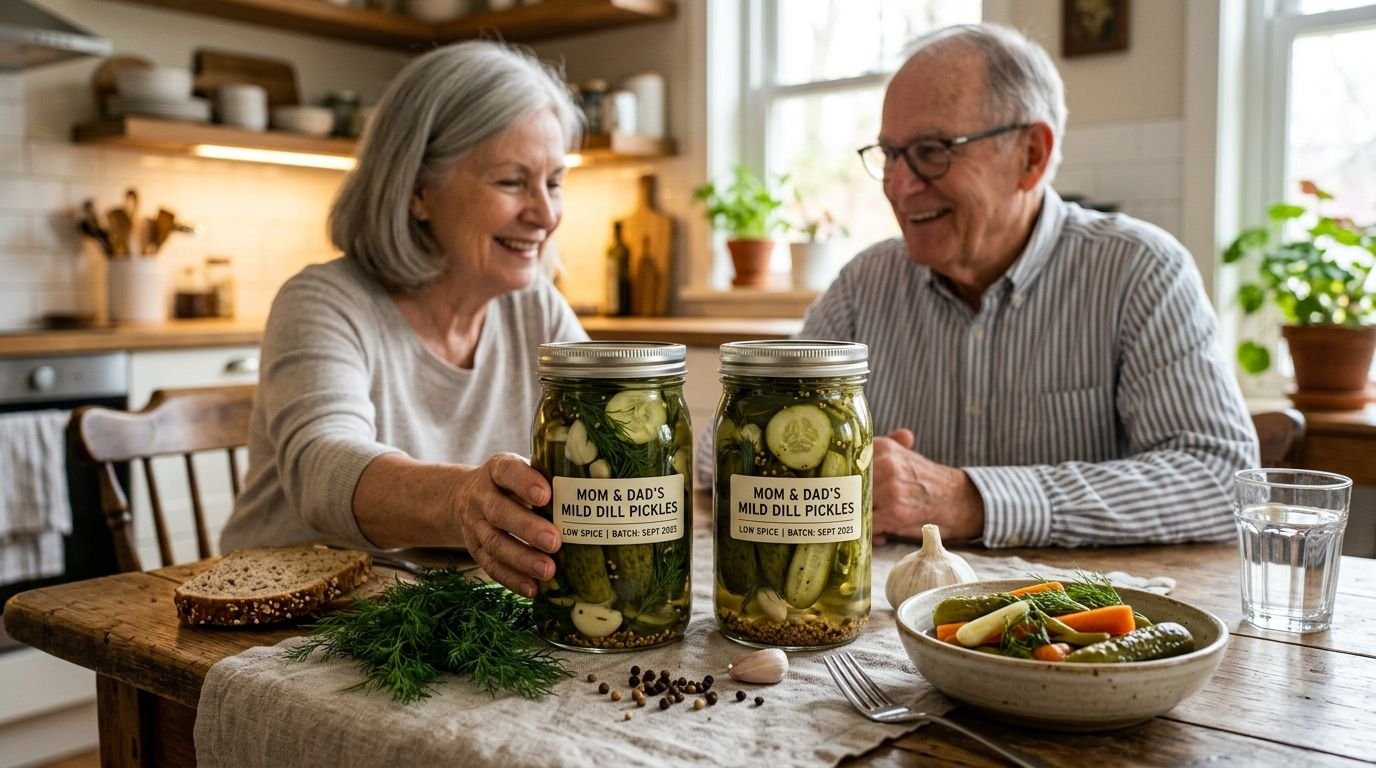
Best overall low spice pickle for elderly parents: Ginger Pickle. Best for tangy flavor without chili heat: Sweet Mango Pickle (Bellam Pachadi). Best for low-oil diets: Oil-Free Pickles. Best for light daily meals: Beerakaya (Ridge Gourd) Pickle. Best for antioxidant-focused snacking: Amla Pickle. Each option below is ranked for elderly parents managing diabetes, low-sodium diets, digestion issues or chewing difficulty in 2026.
- Ginger Pickle is the safest low spice pickle for elderly parents managing digestion issues in 2026.
- Sweet Mango Pickle (Bellam Pachadi) trades chili heat for jaggery sweetness — skip it for diabetic diets.
- Oil-Free Pickles suit heart-conscious and cholesterol-managed elders who still want Andhra flavor.
- Beerakaya Ridge Gourd Pickle is the mildest daily option for a parent new to pickles.
- Amla Pickle needs a chewability check before serving parents with dental issues.
Why this matters
Traditional Andhra pickles like avakaya and gongura are built around raw chili powder and mustard oil — strong on a younger palate, harder on an aging digestive system. Elderly parents managing diabetes, acid reflux, low-sodium diets or dental sensitivity need flavor without the burn. Before ordering for a parent, read how to choose the right spice level in pickles — some jars use whole chilies you can pick out, others grind chili into the base and can't be toned down after the fact.
This guide narrows Tulasi Pickles' range to five low spice pickles that hold up against common elder dietary restrictions in 2026, with honest limitations on each so you're not guessing.
What makes a good low spice pickle for elderly parents
- Chili form, not just quantity — whole dried chilies can be removed from a bite; ground chili powder can't.
- Oil content — lower oil suits cholesterol-managed and heart-conscious diets.
- Salt level — matters for parents on sodium-restricted diets.
- Texture and chewability — soft vegetable pieces work better than fibrous or fried textures for weaker teeth.
- Digestive ease — ingredients like ginger and amla are traditionally used to settle digestion, not irritate it.
- Flavor per spoon — a pickle that tastes complete in half a teaspoon beats one that needs three spoons to register any flavor.
Low spice pickles at a glance
| Pickle | Best for | Standout feature | Key limitation |
|---|---|---|---|
| Ginger Pickle | Digestion-sensitive elders | Built on ginger, not chili powder | Heat still varies batch to batch — confirm before ordering |
| Sweet Mango Pickle (Bellam Pachadi) | Tangy flavor without chili heat | Jaggery sweetness replaces the burn | Higher sugar content — skip for diabetic diets |
| Oil-Free Pickles | Low-oil, heart-conscious diets | Reduced oil without losing Andhra flavor | Shorter shelf life, needs refrigeration sooner |
| Beerakaya (Ridge Gourd) Pickle | Light daily meals | Mild vegetable base, easy to digest | Can taste bland to a lifelong chili eater |
| Amla Pickle | Antioxidant-focused snacking | Tart amla flavor in small portions | Firmer texture — check chewability first |
1. Ginger Pickle: best low spice pickle for digestion-sensitive elders
Ginger Pickle from Tulasi Pickles uses ginger as its base instead of chili powder, so any heat comes from the ginger itself rather than raw chili. It's a traditional Andhra pairing with rice and curd rice when digestion needs settling, and it delivers flavor in small quantities.
Ginger Pickle pros:
- Naturally milder than chili-forward Andhra pickles
- Pairs well with rice, curd rice and khichdi for elders with weak digestion
- Strong flavor per spoon keeps portion sizes small
Ginger Pickle cons:
- Ginger's natural pungency can still surprise a parent unused to any spice at all
- Heat level varies by batch — ask before a first order for an elderly parent
- Still made with oil, so it's not automatically right for cholesterol-restricted diets
Best for: parents dealing with digestion issues or acid reflux who need mild flavor with rice-based meals.
Ginger Pickle verdict: Buy — the safest starting point among low spice pickles in 2026.
2. Sweet Mango Pickle (Bellam Pachadi): best for tangy flavor without chili heat
Sweet Mango Pickle, also known as Bellam Pachadi, swaps most of the chili for jaggery, giving a sweet-tangy profile instead of a spicy one. It's a familiar Andhra flavor for parents who grew up on mango pickle but can't handle the heat anymore.
Sweet Mango Pickle pros:
- Jaggery sweetness replaces chili burn while keeping the mango tang
- Softer mango pieces are easier to chew than raw mango pickle
- Familiar flavor for elders who already know Andhra-style mango pickle
Sweet Mango Pickle cons:
- Sugar content is higher than most Tulasi Pickles varieties — not suited to diabetic diets
- Still a pickle, so portion control matters regardless of spice level
- Availability shifts with mango season
Best for: non-diabetic elders who want tang and sweetness without any chili heat.
Sweet Mango Pickle verdict: Buy for general diets, Hold if the parent is managing diabetes.
3. Oil-Free Pickles: best for low-oil, heart-conscious diets
Oil-Free Pickles cut down the oil that traditional Andhra pickles rely on for preservation and richness, without dropping the base Andhra flavor profile. This matters for parents whose doctors have flagged cholesterol or heart concerns alongside spice restrictions.
Oil-Free Pickles pros:
- Lower oil content suits heart-conscious and cholesterol-managed diets
- Retains recognizable Andhra taste despite the oil reduction
- Generally easier on digestion for elders than oil-heavy pickles
Oil-Free Pickles cons:
- Shorter shelf life than oil-preserved pickles — refrigerate sooner after opening
- Flavor can taste less rounded than the traditional oil-based version
- Not every Tulasi Pickles vegetable variety comes in an oil-free version
Best for: parents on a cholesterol-managed or low-oil diet who still want pickle with their meals.
Oil-Free Pickles verdict: Buy — the right call when a doctor has restricted oil, not just spice.
4. Beerakaya (Ridge Gourd) Pickle: best for light daily meals
Beerakaya Pickle uses ridge gourd as its base — a naturally light, watery vegetable that carries a mild pickle blend without the intensity of avakaya or gongura. It works as an everyday accompaniment rather than an occasional treat.
Beerakaya Pickle pros:
- Naturally light vegetable base with a mild spice profile
- Easy to digest, suited to daily use rather than occasional servings
- Pairs well with rice and curd rice for a gentle daily meal
Beerakaya Pickle cons:
- Milder flavor can taste bland to someone used to strong Andhra heat
- Vegetable availability is seasonal, so batches can vary
- Smaller quantity typically eaten per meal compared to punchier pickles
Best for: parents who want a pickle with every meal, not just an occasional bite.
Beerakaya Pickle verdict: Buy for daily use; Skip if the parent still wants noticeable heat.
5. Amla Pickle: best for antioxidant-focused snacking
Amla Pickle is built on Indian gooseberry, prized in Andhra kitchens for its tartness and its traditional association with immunity support. It's a smaller-portion pickle by nature — a little goes a long way.
Amla Pickle pros:
- Gentle tang from amla rather than chili heat
- Traditionally linked to immunity support in Andhra households
- Small portions work well for elders watching sodium intake
Amla Pickle cons:
- Tart flavor isn't for every palate, especially those expecting mango or lime pickle
- Texture is firmer and chewier than mango or vegetable pickles
- Less familiar to elders who grew up on mainstream Andhra pickle varieties
Best for: parents who like tart flavors and don't have chewing difficulty.
Amla Pickle verdict: Hold — check with a dentist or dietician on texture before ordering.
How we ranked
Each pickle above was checked against the six criteria: chili form, oil content, salt level, texture, digestive ease and flavor delivered per spoon. Ginger Pickle and Oil-Free Pickles scored highest on digestive ease and oil content; Sweet Mango Pickle scored highest on flavor without heat but lost points on sugar; Amla Pickle scored well on portion control but lost points on texture.
Which low spice pickle should you choose?
Default to Ginger Pickle if you're ordering for the first time and don't know a parent's full dietary picture — it's the most broadly tolerated of the five. Switch to Oil-Free Pickles if a doctor has restricted oil or cholesterol specifically. Choose Sweet Mango Pickle only when diabetes isn't a concern, and treat Amla Pickle as a texture-first decision rather than a flavor-first one. Beerakaya Pickle is the right pick for a parent who wants pickle at every meal without the intensity of a full Andhra spice blend.
“If a pickle burns before it tastes tangy, it’s the wrong pickle for an elderly parent.”
Order low spice pickles for your parents
Homemade Andhra pickles from Hyderabad, shipped across India.
FAQ
What is the best low spice pickle for elderly parents in 2026?
Ginger Pickle is the safest starting point because it’s built on ginger rather than chili powder and works well with rice-based meals. Oil-Free Pickles are the better pick specifically when oil or cholesterol is the restriction.
Are Andhra pickles too spicy for older adults?
Standard Andhra pickles like avakaya and gongura use ground chili and can be intense for elders with digestion or acid reflux issues. Low spice pickles like Ginger Pickle, Sweet Mango Pickle and Beerakaya Pickle carry Andhra flavor without that chili load.
Is oil-free pickle better for elderly diets?
Oil-Free Pickles suit elders on a cholesterol-managed or heart-conscious diet because they cut the oil traditional pickles rely on. They do need refrigeration sooner after opening than oil-preserved versions.
Can diabetic parents eat sweet mango pickle?
Sweet Mango Pickle (Bellam Pachadi) uses jaggery instead of chili for flavor, which means higher sugar content. It’s best held back for diabetic diets and swapped for Ginger Pickle or Beerakaya Pickle instead.
Which pickle is easiest to digest for elders?
Ginger Pickle and Beerakaya (Ridge Gourd) Pickle are the easiest to digest among Tulasi Pickles’ range, since ginger and ridge gourd are both traditionally used for gentle daily meals rather than heavy occasional ones.
How much pickle can an elderly person eat daily?
A small spoon per meal is standard for low spice pickles, since most of these varieties deliver full flavor in a small portion. Parents on sodium-restricted diets should stick closer to half a teaspoon per meal.
Do low spice pickles taste bland compared to regular Andhra pickles?
Beerakaya Pickle and Amla Pickle taste milder by design, which can feel bland to someone used to avakaya-level heat. Sweet Mango Pickle and Ginger Pickle carry more noticeable flavor while staying low on chili.
Which Tulasi Pickles product is gentlest on the stomach?
Ginger Pickle is generally the gentlest on the stomach among Tulasi Pickles’ range because ginger is traditionally used to settle digestion rather than irritate it. Oil-Free Pickles are the second choice for elders sensitive to heavy oil.
One last thing
The single biggest factor in picking a low spice pickle isn't the pickle name — it's whether the chili is whole (removable) or ground into the base (permanent). Ask before you order, especially for a parent on a strict sodium or diabetic diet. Tulasi Pickles takes calls between 10:30 AM and 8:30 PM if you want to confirm a specific jar's chili form before gifting it to an elderly parent in 2026.
Related guides