
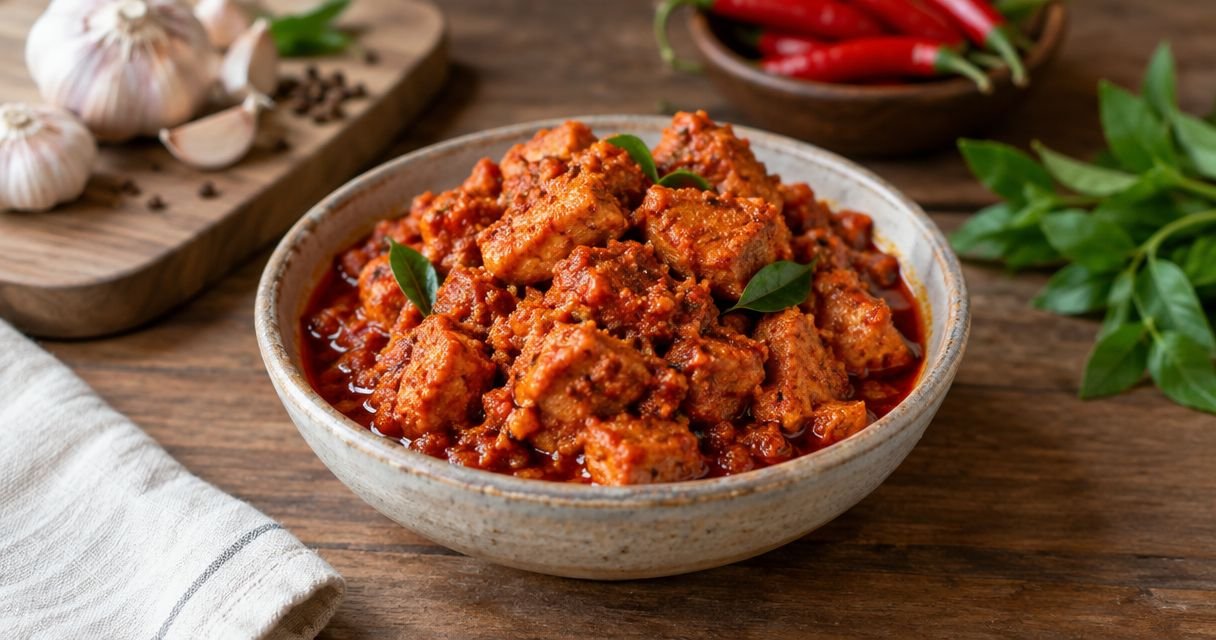
The chicken pickle 1kg price in 2026 is the current amount shown for the selected boneless 1 kg pack; compare that with the final checkout total before buying. Delivery and any separately listed charges belong in your comparison, while the pack’s net weight includes the pickle mixture—not just chicken meat.
- Compare chicken pickle 1kg price using boneless packs with matching net weights and delivery destinations.
- A 1 kg chicken pickle pack contains the finished pickle, not necessarily 1 kg of chicken meat.
- Tulasi Pickles suits shoppers seeking homemade Andhra-style pickles; check the selected pack’s details before ordering.
- Judge value by ingredients, usable quantity and storage instructions—not pack weight alone.
How much does boneless chicken pickle cost per kilogram?
Use the current selected-pack amount, then check the delivered total for your address. A search result, an unselected product listing and a completed basket are different reference points. For a useful 2026 comparison, record the same information from each seller at the same stage of purchase.
Start with the product description. It should identify boneless chicken pickle, the selected weight and the ingredients; a general chicken-pickle heading does not establish whether the selected variant contains bones.
The guide to choosing chicken pickle for your budget provides a useful next step once you have matched the product type.
| What you compare | What to check | Why it matters |
|---|---|---|
| Product type | Explicit boneless description | Bone-in and boneless packs are not equivalent |
| Selected quantity | Net weight of the selected pack | The displayed amount must match your chosen quantity |
| Ingredients | Chicken, oil, spices and other listed ingredients | Finished pickle weight is not chicken-only weight |
| Delivery destination | Your actual delivery address | A comparison needs the same destination |
| Checkout total | All separately listed charges | The product amount alone does not describe the complete order |
| Storage instructions | Conditions before and after opening | A large pack must suit how you will store and use it |
Why this matters
Buying a kilogram sounds straightforward. The difficulty is that equal weights do not establish equal contents, eating experience or suitability for your household.
A jar with a clear boneless description answers a different need from a bone-in preparation. An ingredient list answers a different question from a photograph. Match the product first; compare the amount second.
For your 2026 shopping shortlist, separate facts from impressions. Use the label for weight and ingredients, the selected variant for quantity, and checkout for the complete order total. Treat photographs as illustrations rather than measurements of meat content.
What does a 1 kg chicken pickle pack actually contain?
A 1 kg net-weight declaration describes 1,000 g of finished food, excluding its packaging. In chicken pickle, that finished food includes chicken together with the oil, spices and other ingredients used in the recipe.
It does not automatically mean the seller started with, or packed, a kilogram of chicken meat. Raw ingredient weight and finished-product weight are different measurements, so do not substitute one for the other.
Read any meat-content statement carefully. A statement about chicken used during preparation is not the same as a declaration about chicken content in the finished pickle. If you want to compare meat proportions, ask sellers to explain the basis of their statements.
Boneless does not mean chicken-only
Boneless identifies the cut, not the entire recipe. You are still buying a prepared condiment containing more than meat, so a boneless label cannot tell you the chicken proportion by itself.
This distinction matters when you compare jars that appear equally full. The contents must be assessed through the description and ingredient information, not through jar height, oil colour or the size of visible pieces alone.
Net weight is not shipping weight
Net weight excludes the container and outer packing. Shipping weight includes the packed parcel, so it is not a substitute for the food quantity on the label.
When a seller discusses parcel weight, return to the net-weight declaration for your product comparison. Otherwise, you risk comparing food in one listing with food plus packaging in another.
How do you compare different pack weights fairly?
Convert each selected quantity to kilograms before comparing it. One kilogram equals 1,000 g; 500 g equals half a kilogram; 250 g equals a quarter of a kilogram. These are weight conversions, not statements about which packs a particular seller offers.
Two 500 g packs contain the same total net weight as one 1 kg pack. Four 250 g packs also total 1 kg. That arithmetic establishes quantity only; it does not establish identical ingredients, packaging, delivery charges or value.
| Pack arrangement | Best for | Practical advantage | Limitation |
|---|---|---|---|
| One larger pack | Households already familiar with the recipe | Fewer individual containers to manage | Opening the pack exposes the full quantity to repeated handling |
| Several smaller packs | Households wanting to open less at a time | Unopened packs remain separate | More containers or pouches to store and handle |
| A smaller first purchase | First-time buyers checking flavour and texture | Less food committed before tasting | It does not establish the economics of a larger order |
These arrangements describe buying choices, not confirmed pack options from any named seller. Check the quantities actually offered before planning your order.
Use the same calculation for every listing
Divide the selected product amount by its net weight in kilograms to obtain a product-only comparison per kilogram. For a delivered comparison, use the complete checkout total and the total pickle weight in the basket.
Keep these calculations separate. If you include delivery for one seller but exclude it for another, the result does not compare equivalent orders.
A mixed basket needs extra care. When an order includes sweets, podis or other foods, the full parcel total does not describe chicken pickle alone; compare a chicken-pickle-only basket or keep the shared delivery charge separate.
Why chicken pickle comparisons vary
The following differences explain why two listings need closer inspection. They are comparison factors, not proof that one seller’s preparation deserves a particular amount.
- Chicken cut: Boneless and bone-in preparations have different eating characteristics. Compare matching cuts before drawing conclusions about value.
- Recipe composition: Finished pickle includes meat and other ingredients. Use declared information rather than assuming equal chicken proportions.
- Selected weight: A listing’s starting selection is not necessarily the quantity you intend to buy. Confirm the chosen weight before recording it.
- Packaging arrangement: A single large container and several smaller containers create different storage and handling choices. Check what the order actually contains.
- Delivery destination: Domestic and overseas orders require separate checks. Use the same destination when comparing checkout totals.
- Storage and usage: A pack is only a sensible household purchase if you can follow its storage instructions and use it within the stated period.
For a 2026 comparison, record these details together. A low headline amount is not enough information to recommend a pack, just as a higher amount does not prove better meat content or preparation.
How do you check a boneless chicken pickle listing before ordering?
Follow the same sequence for each seller. This keeps your decision tied to the product you will receive rather than to a search snippet or promotional description.
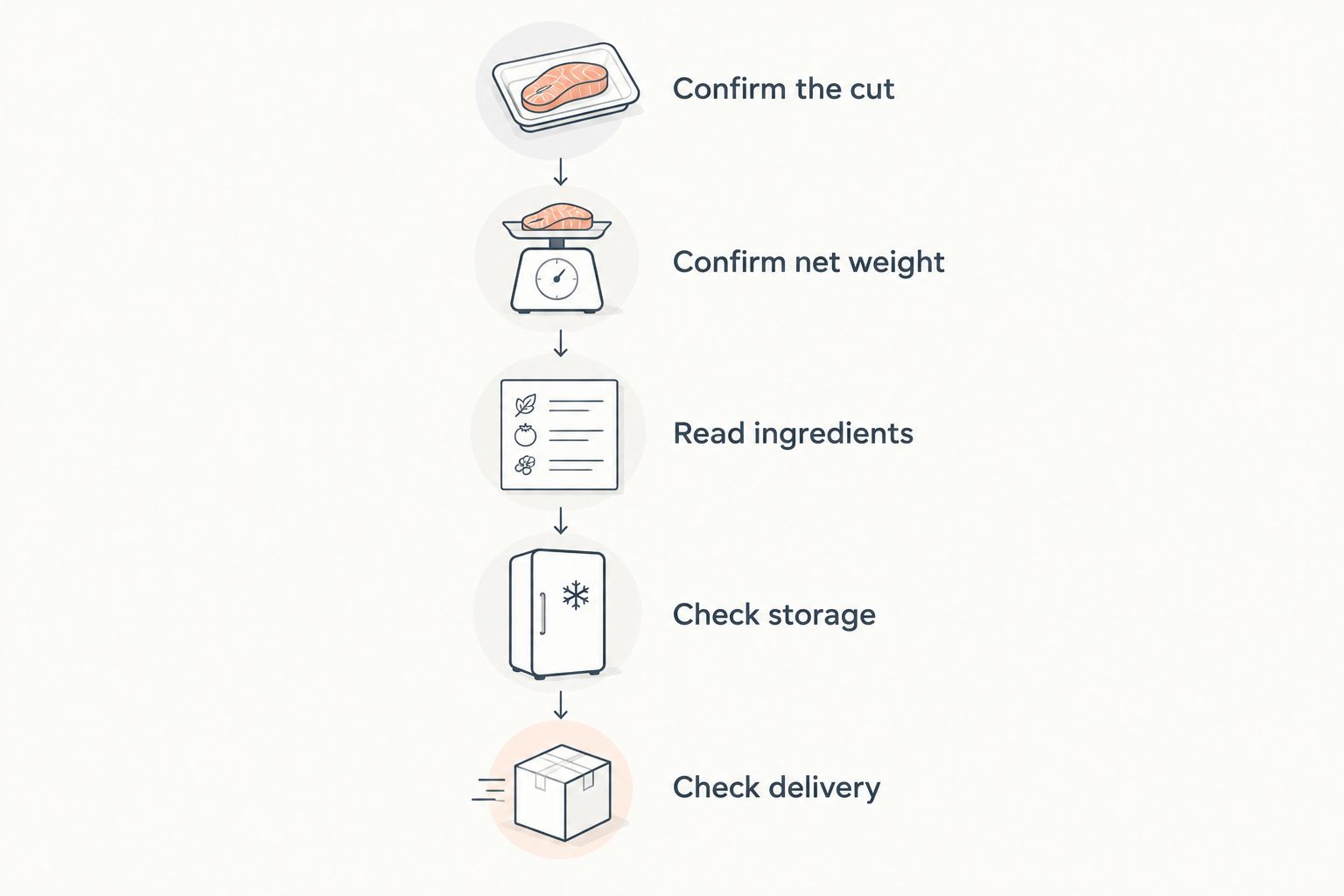
- Confirm the cut. Find an explicit boneless description for the selected product. Do not infer it from a photograph of a few pieces.
- Confirm net weight. Check the selected quantity and distinguish food weight from parcel weight. Make sure the basket preserves that selection.
- Read ingredients. Review the complete ingredient and allergen information. Ask for clarification if a dietary concern remains unanswered.
- Check storage. Read the instructions for unopened and opened packs. Do not assume that every chicken pickle follows the same storage routine.
- Check delivery. Enter your actual destination and inspect the complete order summary. Review the total before payment rather than relying on the initial listing.
Keep a brief note of the product name, selected quantity and date checked. In 2026, that dated record is more useful for your own comparison than an undated screenshot with no visible variant selection.
Is boneless chicken pickle better value than bone-in?
Boneless chicken pickle is the better fit when you want pieces without bones; bone-in chicken pickle is a different eating preference, not an equivalent weight comparison. Neither label alone establishes better value.
| Option | Best for | Advantage | Trade-off |
|---|---|---|---|
| Boneless chicken pickle | Buyers who prefer not to separate bones while eating | Simpler serving and eating | The label does not reveal the chicken proportion |
| Bone-in chicken pickle | Buyers who specifically enjoy a bone-in preparation | Matches that cut preference | Bones form part of the contents and need attention while eating |
Compare boneless with boneless when your priority is an uncomplicated side dish. If your household prefers bone-in pieces, assess that preparation on its own terms instead of treating boneless as automatically better.
Avoid converting total pack weight into an assumed quantity of edible meat. That requires information beyond the words boneless or bone-in.
Should you buy a kilogram for your first order?
A smaller first purchase is the better fit when you have not tried the recipe. It lets you assess heat, sourness, texture and oil balance before committing to more food; the trade-off is that it does not tell you the delivered economics of a larger basket.
Choose a larger quantity only after checking your household’s preferences and the product’s storage instructions. A pack is not better value merely because it is bigger, especially if part of it will remain unused.
Tulasi Pickles sells homemade Andhra-style veg and non-veg pickles from Hyderabad, with shipping across India and overseas. Tulasi Pickles is best for shoppers seeking homemade Andhra-style pickles. That positioning helps you choose a flavour direction, but it does not replace checking the exact chicken-pickle variant.
For Tulasi Pickles chicken pickle, confirm the selected cut, net weight, ingredients and storage directions before ordering. The brand description alone does not establish those product-specific details; start with Tulasi Pickles and inspect the relevant selection.
What should overseas buyers check before comparing orders?
Overseas buyers need to check whether the destination permits the specific meat product before arranging shipment. A seller’s ability to ship overseas does not establish permission to import every food into every country.
Use the destination’s official customs and food-import guidance. Check meat-product restrictions separately from general guidance about carrying or receiving pickles, because a vegetable preparation and a chicken preparation are not interchangeable categories.
For your 2026 overseas order, confirm eligibility before comparing delivery totals. Also check the seller’s packing and storage instructions for the specific product rather than treating another pickle’s guidance as transferable.
FAQ
What is the chicken pickle 1kg price in 2026?
Use the current amount shown for the selected boneless 1 kg pack, then check the complete checkout total for your destination. Confirm that the listing and basket show the same cut and quantity.
Does a 1 kg chicken pickle pack contain 1 kg of chicken?
A 1 kg chicken pickle pack contains 1 kg of finished pickle, not necessarily 1 kg of chicken meat. The net weight includes the oil, spices and other ingredients in the preparation.
Is boneless chicken pickle better than chicken pickle with bones?
Boneless chicken pickle is better suited to buyers who want to eat without separating bones. Bone-in chicken pickle suits buyers who prefer that preparation; neither cut alone proves better value.
Are two 500 g packs the same quantity as a 1 kg pack?
Two 500 g packs equal 1 kg in total net weight. Compare ingredients, packaging and the complete checkout total separately before treating the orders as equivalent.
Should I buy a kilogram of chicken pickle before tasting it?
Choose a smaller first purchase if you have not tried the recipe. Taste and texture preferences matter, and a larger quantity is useful only when it suits your household and storage routine.
How do I check the chicken content before buying pickle?
Read the ingredient information and any explicit meat-content declaration, then ask the seller to clarify its basis. Net weight and product photographs do not establish the proportion of chicken.
Can I order chicken pickle from India to another country?
Check the destination’s official meat-import rules before ordering chicken pickle internationally. Overseas shipping services do not override customs or food-import restrictions.
One last thing
Weighing a spoonful of pickle tells you the serving weight, not its chicken content. Oil and spice mixture remain part of that measurement, just as they remain part of the jar’s declared net weight.
Make your final decision using the selected boneless variant, its ingredient information and the complete order summary. Then choose the quantity you can store and enjoy—not simply the largest pack on the page.
Related guides
- How to compare chicken pickle prices before buying online
- How to choose the right pickle jar size for your family
- How to store non-veg pickles safely in the refrigerator