
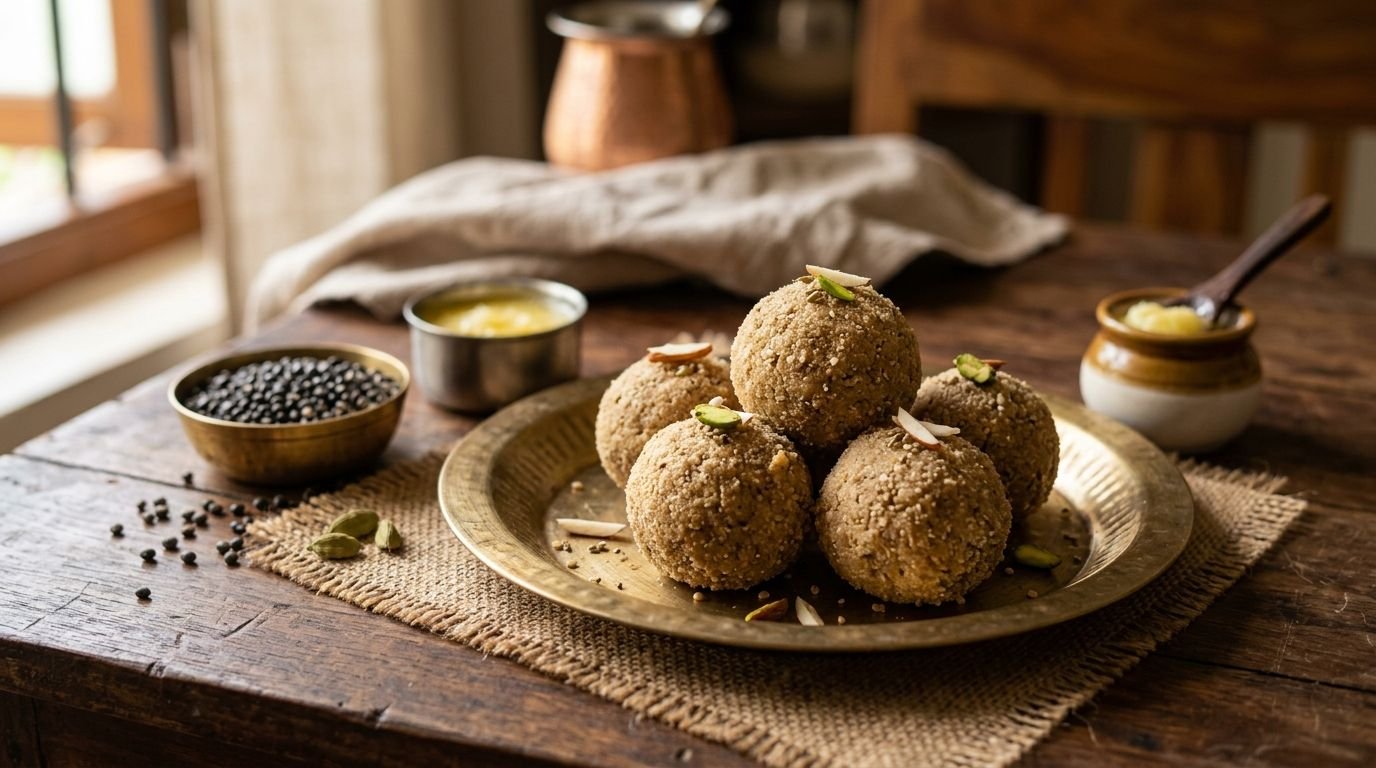
Sunnundalu is the protein-forward Andhra laddu made from roasted urad dal, ghee and jaggery that fitness-minded snackers reach for when a sweet craving hits but a sugar bomb won't do. Traditional Andhra households have served it for generations after childbirth and during winter months specifically because urad dal carries more protein per gram than most lentils used in Indian sweets.
- Sunnundalu is made from roasted urad dal, which carries roughly 24-25g of protein per 100g, dry weight.
- Tulasi Pickles makes sunnundalu the traditional Andhra way: no shortcuts on dal roasting time.
- Three to four pieces a day is a realistic serving — treat sunnundalu as a snack, not a meal replacement.
- Compare sunnundalu against whey bars and roasted chana before you pick a daily protein snack for 2026.
- Buying from a homemade source matters more here than with most sweets because rancid ghee ruins both taste and protein quality.
Why sunnundalu matters for protein-conscious snackers
Most "protein snacks" sold in 2026 are built around whey isolate, soy protein powder, or dates and nuts pressed into a bar. Sunnundalu takes a different route: urad dal (split black gram) is dry-roasted, ground, and bound with ghee and jaggery, which keeps the protein source whole-food rather than isolate-based.
This matters for anyone tracking macros without wanting to give up traditional Andhra sweets during festivals or family visits. A protein-conscious snacker cares about two things a generic sweet-eater doesn't: how much of the calorie load is actually protein, and whether the fat used is real ghee or a cheaper substitute that dilutes both taste and nutrition. If you're already comparing protein-dense options, the same logic applies to protein-rich podi that Andhra households mix into rice for the same reason.
Check the protein source before you buy
Not every laddu labeled "sunnundalu" online in 2026 uses the same dal-to-sugar ratio. Ask before you order.
- Confirm the primary ingredient is urad dal, not a blend padded with besan or wheat flour
- Ask whether the dal is roasted whole or pre-ground and roasted (whole roasting preserves more texture and nutrient integrity)
- Check the ghee source — cow ghee versus a vegetable-oil blend changes both flavor and fat profile
- Look for jaggery instead of refined sugar as the sweetener, which is the traditional Andhra approach
- Ask about batch size — small-batch homemade sunnundalu is roasted in smaller lots, which usually means fresher dal
Compare sunnundalu to other protein snacks in your diet
Before sunnundalu becomes your go-to protein snack, weigh it against what you're already eating.
- Whey protein bars: higher protein density per gram, but often built on isolates and added sugar alcohols
- Roasted chana: cheaper and higher in fiber, but flavor-flat next to a jaggery-sweetened laddu
- Dry fruit laddus: comparable calorie load, different protein-to-fat ratio since nuts replace dal
- Sunnundalu: whole-food protein source plus the taste of an actual Andhra sweet, at the cost of more ghee-driven calories per piece
Read the ingredient list for hidden sugar and oil
A laddu marketed as "protein-rich" can still carry more added sugar than the dal justifies.
- Check whether jaggery or refined sugar is listed first — order indicates quantity
- Ask if any refined oil is added beyond ghee to cut cost
- Avoid versions using palm oil substitutes marketed as "pure ghee"
- Confirm no preservatives are added — traditional sunnundalu doesn't need them if made in small batches
Portion your sunnundalu into a diet-friendly serving
The protein pitch falls apart if the serving size quietly triples.
- Treat one sunnundalu (roughly golf-ball sized) as a single serving, not a handful
- Cap daily intake at three to four pieces if you're tracking calories alongside protein
- Pair it with a protein-light meal rather than stacking it after a protein-heavy lunch
- Split a larger batch into daily portions immediately after it arrives, rather than eating from the full jar
Store sunnundalu the right way to protect protein quality
Ghee-based sweets degrade fast in Indian heat, and rancid ghee changes both the smell and the nutrient value.
- Store in an airtight container away from direct sunlight
- Refrigerate if your kitchen runs above 30°C for extended stretches, which is common across Indian summers
- Avoid repeated exposure to humidity — condensation inside the container speeds spoilage
- Consume within the freshness window stated by the seller rather than stockpiling for months
Pair sunnundalu with your existing protein routine
Sunnundalu doesn't have to replace your other protein sources — it works better as an addition.
- Use it as a post-workout sweet treat instead of a dessert after dinner
- Pair with a protein shake on days you skip a full meal, rather than doubling up on sugar
- Rotate it with Bandar Laddu if you want variety without giving up the Andhra sweet category entirely
- Keep it out of pre-workout windows since the ghee content slows digestion
Order from a homemade source instead of a mass-market brand
This is where most protein-conscious buyers get it wrong in 2026 — they assume any packaged sunnundalu is equal.
- Mass-produced versions often use hydrogenated fat blends to extend shelf life, which cuts into the actual nutrition profile
- Homemade batches from an Andhra kitchen tend to use fresher dal and real ghee, which is the entire point of choosing sunnundalu over a protein bar
- Ask directly about the ghee and dal source before ordering online — a seller who can answer specifically is usually the safer bet
Order homemade sunnundalu online
Traditional Andhra sunnundalu made with roasted urad dal and real ghee.
Sunnundalu versus other protein snacks: a side-by-side
| Option | Best for | Protein profile | Key limitation |
|---|---|---|---|
| Homemade sunnundalu | Traditional sweet-eaters wanting real protein | Urad dal carries roughly 24-25g protein per 100g, dry weight | Ghee-heavy, so calorie-dense per piece |
| Whey protein bars | Gym-goers tracking exact protein grams | Highest protein density per gram | Often built on isolates and added sweeteners |
| Roasted chana | Budget-conscious daily snackers | Solid protein and fiber combination | Lacks the sweet-craving payoff sunnundalu delivers |
| Dry fruit laddus | Buyers wanting nut-based fat and protein | Protein comes from nuts, not dal | Different flavor profile, often costlier per batch |
Verdict: sunnundalu wins for anyone who wants a genuine Andhra sweet with a whole-food protein source, not the highest protein-per-gram number on the market. If raw protein density is your only metric, a whey bar beats it. If taste, tradition and whole-food ingredients matter as much as the protein line, sunnundalu is the better pick for 2026.
Common mistakes protein-conscious snackers make with sunnundalu
- Counting only the protein and ignoring the jaggery — a diet built around "it's protein-rich" while eating six pieces a day undoes the calorie math fast
- Buying the cheapest packaged version online — low-cost sunnundalu often cuts corners on ghee quality, which is where most of the flavor and nutrient value lives
- Stacking sunnundalu with other ghee-heavy sweets in the same sitting — pairing it with Bandar Laddu or Boondi Laddu in one snack session doubles the fat load without doubling the benefit
- Storing it loosely in a hot kitchen for weeks — rancid ghee is the most common complaint with home-shipped sunnundalu, and it's almost always a storage issue, not a quality one
- Treating it as a pre-workout snack — the ghee content slows digestion, making it a better post-workout or between-meals choice
FAQ
What is sunnundalu made of?
Sunnundalu is a traditional Andhra laddu made from roasted and ground urad dal, ghee and jaggery. It is one of the few Indian sweets built around a lentil rather than flour, nuts or condensed milk.
Is sunnundalu actually high in protein?
Urad dal, the main ingredient, carries roughly 24-25g of protein per 100g dry weight, which is higher than most flours or besan used in other Indian sweets. The final protein percentage in a laddu drops once ghee and jaggery are added, but it still beats a typical sugar-based sweet.
How many sunnundalu can I eat in a day?
Three to four pieces a day is a reasonable serving if you’re tracking calories alongside protein. Treat it as a snack addition, not a meal replacement, since the ghee content adds up fast.
Is sunnundalu better than a protein bar?
Sunnundalu uses a whole-food protein source (urad dal) instead of isolated whey or soy protein, which appeals to buyers avoiding processed protein powders. A protein bar usually wins on raw protein grams per serving; sunnundalu wins on ingredient simplicity and taste.
How long does homemade sunnundalu stay fresh?
Freshness depends heavily on storage — keep it airtight and away from heat and humidity. Refrigeration extends shelf life significantly if your kitchen regularly runs above 30°C, which is common across Indian summers.
Can sunnundalu be shipped overseas?
Ghee-based sweets like sunnundalu require careful packaging to survive transit without the ghee melting or the laddu breaking apart, especially on longer overseas routes. Ask the seller directly how they handle temperature and packaging before ordering internationally.
What’s the difference between sunnundalu and Bandar Laddu?
Sunnundalu is built from urad dal, ghee and jaggery, giving it a denser, more protein-forward profile. Bandar Laddu is a besan-based sweet from Machilipatnam known for its distinct texture and is not positioned as a protein snack.
Is sunnundalu suitable for diabetics?
Traditional sunnundalu uses jaggery, which still raises blood sugar, so it isn’t automatically diabetic-friendly. Buyers managing blood sugar should look at sugar-free alternatives instead of assuming the protein content offsets the sugar load.
One last thing
Urad dal is one of the few ingredients in Indian sweet-making that actually earns the "protein-rich" label on paper — most sweets marketed that way lean on nuts or dairy instead. That's exactly why Andhra families have historically served sunnundalu to new mothers during postpartum recovery: it was never a diet trend, it was a practical protein source wrapped in a dessert people would actually eat. Approach it the same way in 2026 — as a real food with a real nutrition profile, not a guilt-free excuse to eat sweets without limit.
Related guides
- Boondi Laddu for festive Andhra sweet cravings
- Andhra sweets for festival celebrations
- Sugar-free sweets for diabetic-friendly festive gifting