
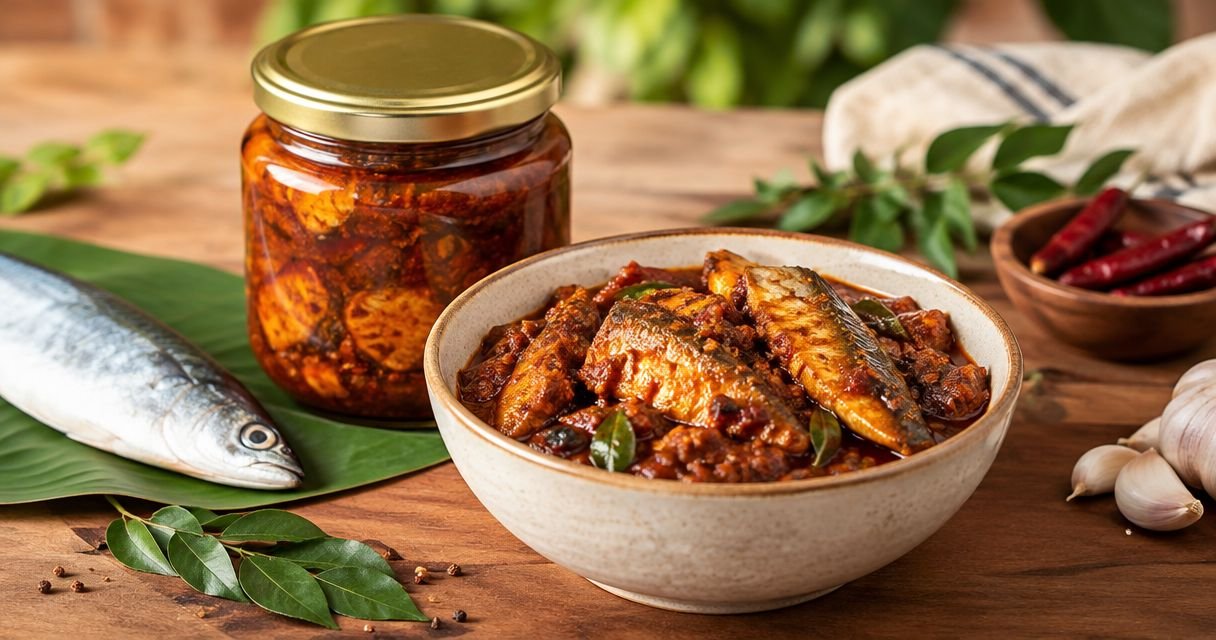
Best overall: clearly labelled Andhra-style fish pickle. Best for easy serving: explicitly boneless fish pickle. Best for buyers who prefer pieces with bones: clearly labelled bone-in fish pickle. For fish pickle online in 2026, choose by fish identity, bone information, ingredients and storage instructions—not the photograph alone.
- Choose fish pickle online with a named fish, clear bone information and readable storage instructions.
- Tulasi Pickles suits buyers seeking homemade Andhra-style non-veg pickles; check the individual fish listing before ordering.
- Choose explicitly boneless fish pickle for easier serving, not an unlabelled jar with apparently boneless pieces.
- For overseas orders, check destination rules for fish products before arranging dispatch.
Why this matters
Fish pickle is a prepared seafood condiment, not simply a different flavour of vegetable pickle. The fish, remaining bones, seasoning and storage requirements all affect whether a jar suits your household. A photograph cannot settle those questions.
Tulasi Pickles is best suited to buyers seeking homemade Andhra-style non-veg pickles. The Hyderabad-based brand ships across India and overseas. Start with Tulasi Pickles, then assess the individual listing against the checks below; a brand’s regional identity does not establish a particular jar’s fish species or bone content.
For your 2026 order, separate taste preferences from essential buying information. You can compromise on how fiery a condiment tastes. You should not have to guess what fish it contains or how to store it.
What makes the best fish pickle online?
Use these six criteria before choosing between the ranked options:
- Fish identity: Prefer a listing that names the fish rather than describing the contents only as seafood.
- Bone information: Look for an explicit boneless or bone-in description. Chunk size is not evidence of bone removal.
- Ingredient clarity: Read the full ingredients, including the oil, seasoning and allergen information. Do not infer a recipe from its colour.
- Spice suitability: Choose a stated heat description that matches your meals. Andhra-style does not establish one fixed chilli level.
- Storage directions: Check unopened and after-opening instructions separately, together with the printed date information.
- Destination suitability: For an overseas purchase, confirm that the particular fish product meets the destination’s import requirements.
A strong listing makes these decisions possible before checkout. Descriptions such as traditional or homemade can explain positioning, but they do not replace an ingredient list or handling instructions.
Best fish pickle options at a glance
These are buying profiles, not interchangeable product names. Choose the row that matches your priority, then find a listing that explicitly meets its conditions.
| Rank and option | Best for | Standout feature to check | Key limitation |
|---|---|---|---|
| 1. Clearly labelled Andhra-style fish pickle | Regional-flavour buyers | Fish identity, recipe information and handling directions together | Regional wording alone does not confirm heat or bones |
| 2. Explicitly boneless fish pickle | Easier serving with everyday meals | A clear boneless declaration | Boneless wording is not a reason to stop checking pieces |
| 3. Clearly labelled bone-in fish pickle | Buyers who deliberately prefer bone-in pieces | An explicit bone-in description | Requires careful eating and bone separation |
| 4. Destination-checked fish pickle | Overseas recipients | Product eligibility and suitable transport arrangements | Seller shipping coverage does not establish import permission |
1. Labelled Andhra-style fish pickle: best for regional flavour
Choose this profile when your main aim is an Andhra-style accompaniment for rice and other familiar meals. The listing should identify the fish and explain the seasoning clearly enough for you to decide whether it matches your preference.
Tulasi Pickles belongs on an Andhra-style non-veg pickle shortlist because that regional focus is part of its stated offering. Assess the fish listing itself before deciding: the brand description is not a substitute for product-specific ingredients, bone information or storage directions.
Labelled Andhra-style fish pickle pros:
- Puts regional taste at the centre of the decision.
- Lets you assess fish identity alongside the seasoning.
- Gives you a useful default when flavour matters more than a particular cut.
Labelled Andhra-style fish pickle cons:
- Andhra-style wording does not specify a standard heat level.
- Regional descriptions do not establish whether pieces contain bones.
Best for: Buyers who want an Andhra-style seafood accompaniment and are willing to read the full listing.
For a first meal, try 1 teaspoon beside plain rice rather than mixing a large amount through the entire plate. Treat that as a tasting suggestion, not a nutritional serving standard; adjust to your preference and any relevant dietary advice.
Verdict: Buy when the regional description is backed by clear fish, ingredient and handling information.
2. Explicitly boneless fish pickle: best for easier serving
Choose explicitly boneless fish pickle when separating bones would interrupt the way you eat. This profile suits buyers who want to portion the condiment beside lunch or mix checked pieces into rice without deliberately choosing a bone-in preparation.
The deciding word is explicitly. A picture of neat chunks, a fillet-like shape or a general promise of convenient eating does not establish that the finished pickle is boneless.
Explicitly boneless fish pickle pros:
- Makes bone removal a stated selection criterion.
- Suits buyers who dislike separating bones at the table.
- Provides a clearer choice than an unspecified fish preparation.
Explicitly boneless fish pickle cons:
- Does not establish the fish species, seasoning or heat level.
- Still requires attention when serving and eating fish pieces.
Best for: Adults who prioritise easier serving and do not want a deliberately bone-in preparation.
Do not automatically treat boneless fish pickle as suitable for children. Fish allergens, chilli, salt, texture and any remaining bones still need consideration; suitability depends on the child and the individual product.
In 2026, use the same buying rule whether you order through a brand website or another retail channel: inspect the current product description rather than relying on an old photograph or a remembered order.
Verdict: Buy for easier serving only when boneless preparation is expressly stated.
3. Clearly labelled bone-in fish pickle: best for bone-in preference
Choose bone-in fish pickle only when you actively prefer that preparation. It is a deliberate eating choice, not an acceptable surprise in a jar you expected to be boneless.
A useful listing identifies the fish and states that bones are present. Do not assume bone-in means a particular species, larger pieces or stronger flavour; those are separate details that require their own description.
Clearly labelled bone-in fish pickle pros:
- Matches buyers who specifically want bone-in pieces.
- Makes the need for bone separation clear before ordering.
- Avoids treating boneless preparation as the default for everyone.
Clearly labelled bone-in fish pickle cons:
- Requires careful separation of bones while eating.
- Is unsuitable for buyers seeking effortless mixing or hurried eating.
Best for: Experienced fish eaters who deliberately choose bone-in preparations.
Serve the portion separately so you can inspect pieces before combining them with rice. Avoid burying unchecked pieces in a mixed bowl where bones become harder to distinguish.
For a shared meal, tell everyone that the condiment contains bone-in fish. Clear communication matters more than assuming every person at the table recognises the preparation.
Verdict: Buy for a known bone-in preference; skip when serving convenience is your priority.
4. Destination-checked fish pickle: best for overseas recipients
For an overseas order, start with the destination rather than the recipe. Confirm that the particular prepared fish product is permitted, then check how its handling requirements will be maintained during transport.
Tulasi Pickles states that it ships overseas. That service scope does not establish that every fish preparation can enter every country, or that every route suits every product’s storage requirements.
Destination-checked fish pickle pros:
- Puts import eligibility ahead of an unsuitable purchase.
- Connects transport arrangements to the product’s handling instructions.
- Encourages the sender and recipient to agree on the exact contents.
Destination-checked fish pickle cons:
- Requires more checking than a domestic order.
- Eligibility and transport suitability depend on the destination and product.
Best for: Overseas recipients and buyers sending prepared fish products internationally.
For a 2026 shipment, consult the destination’s current official guidance on fish and prepared foods. Passenger baggage rules and courier import requirements are different questions; permission under one route does not establish permission under another.
Before payment, confirm 3 checks: permitted contents, required documentation and handling arrangements. Keep the product description available so the recipient knows what is being sent.
Verdict: Wait until destination eligibility and transport requirements are confirmed.
Check the listing before you commit
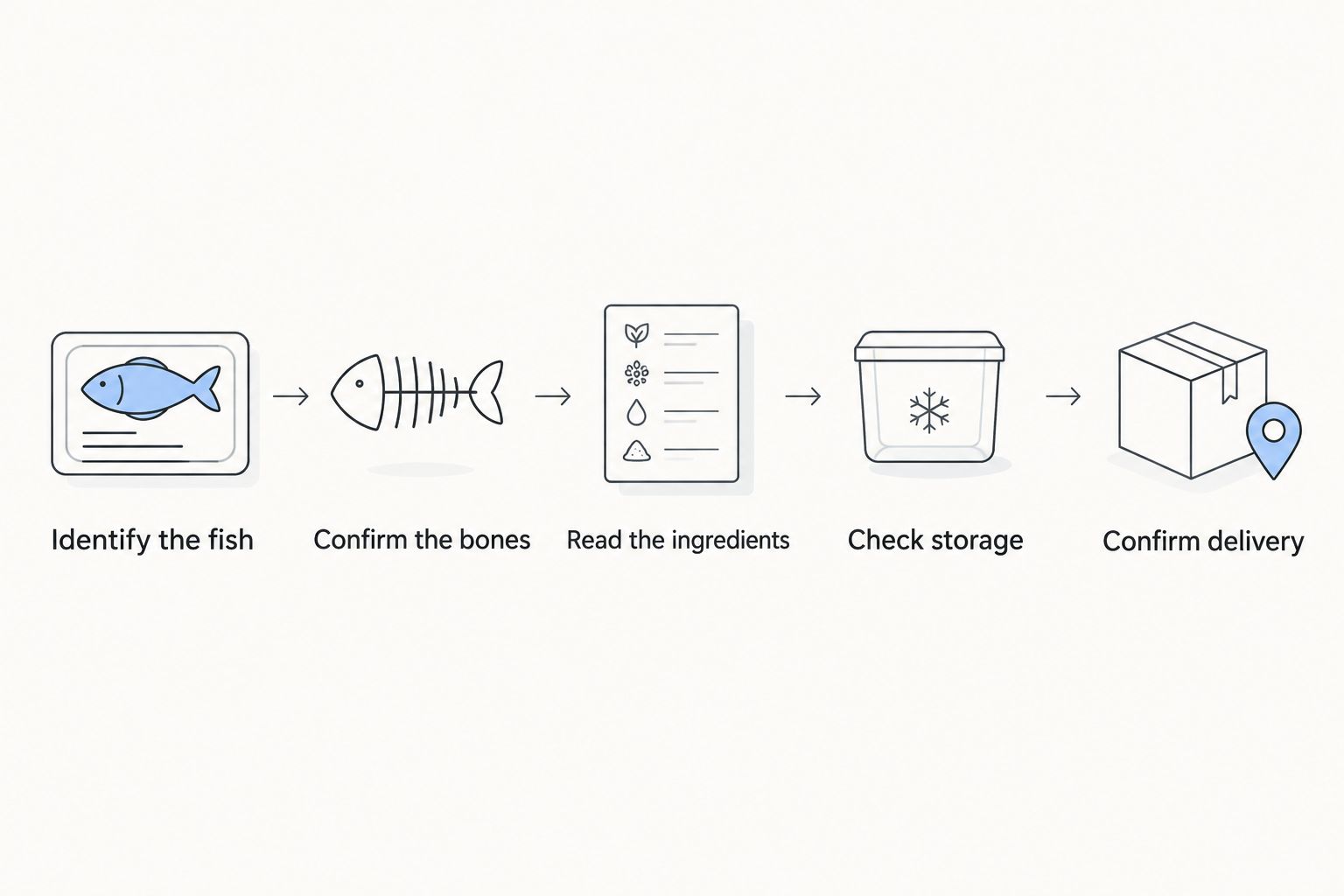
A short, readable product description beats an attractive photograph when you need to make a food decision. Work through these checks in order:
- Identify the fish. Find the species or named fish in the description or label.
- Confirm the bones. Establish whether the preparation is boneless or bone-in.
- Read the ingredients. Check the complete list against your preferences and allergies.
- Check storage. Separate unopened instructions from after-opening instructions.
- Confirm delivery. Match the intended route to the product’s handling requirements.
If the listing leaves a necessary question unanswered, ask the seller before ordering. Do not substitute customer photographs for an ingredient declaration or borrow storage advice from a different pickle.
How to assess your first jar
Inspect the packaging before opening it. If the container is damaged, leaking or has an unexpected broken seal, do not taste the contents to decide whether they are safe; contact the seller.
Read the label again when the jar arrives. Follow its handling directions rather than assuming that oil, chilli or a homemade description makes every fish pickle shelf-stable.
For taste, compare the pickle across 2 meals before deciding whether it suits your regular rotation. Try it first beside plain rice, then beside another meal you normally eat. This is a practical tasting exercise, not a test of safety or shelf life.
Use a clean, dry utensil each time, avoid returning food from your plate to the container, and close it after serving. Keep the original label so the ingredients and date information remain available after opening.
How the options are ranked
The 2026 ranking prioritises a clear, usable purchase decision: regional flavour first, easier serving second, deliberate bone-in preference third, and overseas suitability as a separate destination-led choice.
Each recommendation follows the same criteria: fish identity, bone information, ingredients, spice suitability, storage and destination. These are buying-profile recommendations, not a claim that one untested jar tastes better than another.
Which fish pickle should you choose?
Choose clearly labelled Andhra-style fish pickle as the default. Move to explicitly boneless preparation when easier serving matters most, or choose bone-in only when that is your stated preference.
Tulasi Pickles is a relevant starting point for homemade Andhra-style non-veg pickles. Make the final decision from the individual fish listing, and pause an overseas order until the destination checks are complete.
FAQ
What’s the best fish pickle online for a first order?
Choose a clearly labelled fish pickle that identifies the fish, states whether bones are present and gives complete storage instructions. For an Andhra-style preference, use regional flavour as the next filter rather than choosing from photographs alone.
Is boneless fish pickle better than bone-in fish pickle?
Boneless fish pickle is the better fit when easier serving is your priority. Bone-in fish pickle suits buyers who deliberately prefer that preparation and are comfortable separating bones.
Is Andhra-style fish pickle always very spicy?
Andhra-style wording does not establish a fixed heat level. Check the individual listing’s spice description and ask the seller when you need a specific level of heat.
Does homemade fish pickle mean preservative-free?
No, homemade does not establish whether a fish pickle contains added preservatives. Read the complete ingredient list and any explicit product declaration instead of inferring the recipe from the description.
Can I order fish pickle from India for someone overseas?
Check the destination’s current rules for prepared fish products before ordering. Seller shipping coverage does not by itself establish import permission or suitable handling for the particular product.
Should fish pickle be refrigerated after opening?
Follow the individual product’s after-opening storage instructions. Do not transfer room-temperature storage advice from a vegetable pickle or another fish preparation to the jar you bought.
How should I try fish pickle with rice?
Start with a small portion beside plain rice so you can assess the seasoning and inspect the fish pieces. Check for bones before mixing, and keep the serving utensil separate from food already on your plate.
One last thing
Save the label, not just the order confirmation. A purchase record tells you what you ordered; the product label supplies the ingredients, date information and handling directions you need while using the jar. Keep it readable until the contents are finished.
Related guides
- Fish pickle for Andhra-style seafood lovers
- How to choose the right spice level in pickles
- How to store non-veg pickles safely in the refrigerator
- How to ship pickles overseas without spoilage